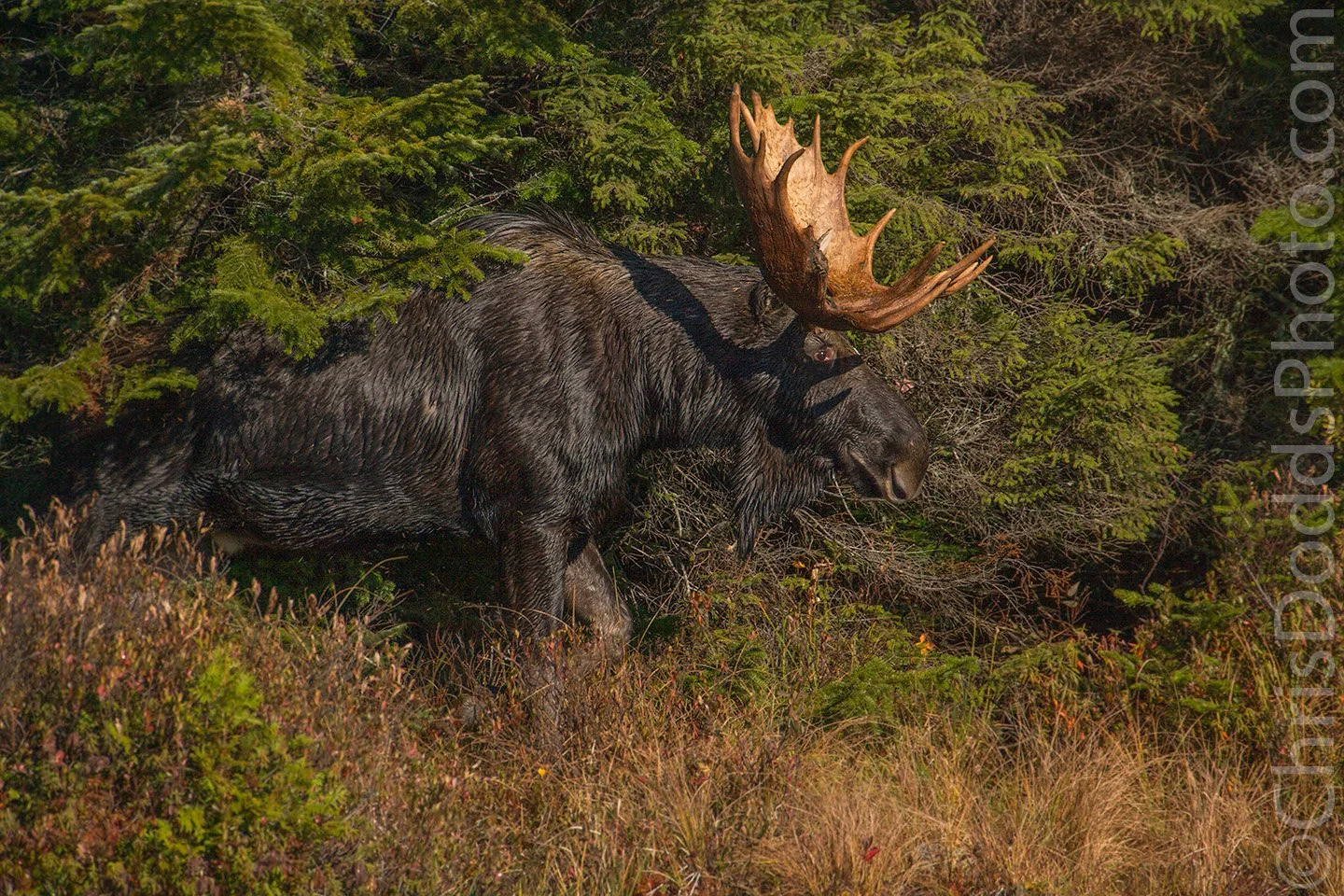
“Hi Chris - Love your photos and a question- why are there such fewer moose in Algonquin now as compared with years ago do you think?” - Ashley Hockenberry
Where Have All the Moose Gone?
Understanding Algonquin’s Changing Moose Population
In my last post, I shared a favourite moose encounter from Algonquin’s misty wetlands. Many readers asked the same question:
“Why are there so many fewer moose in Algonquin now than there used to be?”
It’s something I’ve noticed too on those quiet dawn drives when the roadsides seem empty. The truth is, there’s no single reason. The decline of Algonquin’s moose population — and across much of Ontario — is the result of several overlapping pressures: climate, parasites, habitat change, and human activity.
1. Climate Change and Parasites
Warmer winters and shorter snow seasons have allowed winter ticks (Dermacentor albipictus) to thrive. A single moose can carry tens of thousands of ticks, leading to blood loss, hair loss, and sometimes death — especially for calves.
Hotter summers add stress too: moose overheat easily, rest more, and feed less, entering winter with lower fat reserves and reduced survival odds.
2. Brainworm from Expanding Deer Populations
As white-tailed deer move north, they bring brainworm (Parelaphostrongylus tenuis), a parasite harmless to deer but fatal to moose. The growing overlap between deer and moose ranges in Algonquin has increased the risk of infection, further straining the herd.
3. Habitat Changes
Moose depend on young, regenerating forests full of birch, aspen, and willow shoots. Early logging and natural fires once created this type of habitat.
Today, Algonquin’s forests are maturing under selective management — beneficial for many species, but offering less prime browse for moose. Beyond the park, large-scale clearcutting and fragmented landscapes have also reduced food availability and safe travel corridors.
4. Past Overharvesting
Earlier wildlife policies once allowed calf hunting and issued higher tag numbers. These practices contributed to declines across several regions. Ontario has since tightened hunting regulations, but recovery is slow, and occasional poaching near the park boundaries continues to raise concern.
5. Predation and Population Health
Wolves and bears remain vital parts of Algonquin’s ecosystem. While predation is natural, moose weakened by ticks, heat stress, or poor nutrition become easier prey, especially calves. These interactions can magnify the effects of other stressors.
6. Human Disturbance: The Problem with Calling-In Moose
A newer issue is the use of moose calls by photographers hoping for a closer shot. While often well-intentioned, this can harm the animals. Responding to calls forces moose — especially bulls during the rut — to waste precious energy and move away from feeding or resting areas. It can also lead them toward roads or confuse them during the breeding season.
“A bull chasing a phantom call isn’t resting or tending to actual cows,” notes one park warden.
Frequent exposure to artificial calls can habituate moose to people, increasing the risk of vehicle collisions. Algonquin staff strongly encourage passive, respectful viewing instead.
📸 Ethical Moose Photography: 3 Quick Tips
Keep Your Distance – Use a long lens; let the moose control the space.
No Calls or Bait – Avoid techniques that alter natural behaviour.
Be Patient – Early mornings and quiet observation often lead to the best shots.
“Patience always pays off — the wild moments come to those who wait.”
Working Toward Balance
The picture isn’t all bleak. Researchers, Indigenous knowledge holders, and park staff are studying these challenges together. A more holistic management approach — one that considers climate, disease, habitat, and cultural perspectives — offers hope for a sustainable moose population in Algonquin and beyond.
A Personal Reflection
Even with fewer sightings, every moose encounter in Algonquin still feels like a gift. They’re out there — deep in the spruce, wading through dawn mist, quietly living the rhythms of a changing forest.
“The forest is never static — it’s a living system, always in motion. Moose reminds us of that.”
If you’ve noticed changes in moose activity or have stories from your own Algonquin visits, I’d love to hear them in the comments below.