National Geographic Traveller rates Gaspé #3 Best-Rated Travel Destination in the world

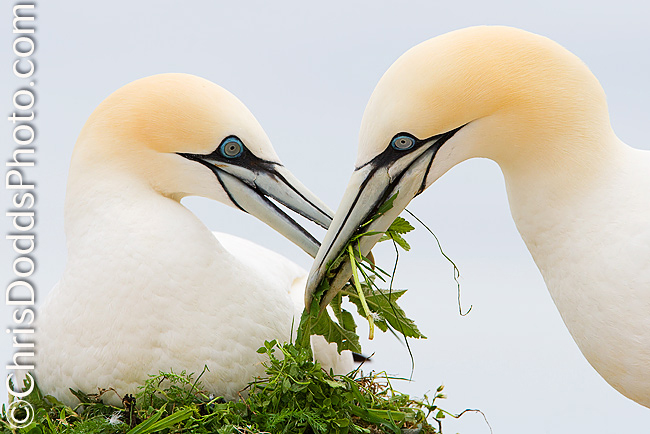
Northern Gannets LOVE, Morus Bassanus, Fou de Bassan Bonaventure Island, Quebec ©Christopher Dodds www.chrisdoddsphoto.com All Rights Reserved. Canon EOS 1DsMKII, 300mm F2.8 and 1.4XII Tele-converter  ISO 250, F8 1/800s Manual. CLICK HERE TO PURCHASE A PRINT or LICENSE AN IMAGE FOR PUBLICATION.

National Geographic Traveler Magazine rates Gaspé number 3 destination in the world:

Subject to development, mass tourism, pollution, globalization - are the world's great places still...great? Jay Walljasper writes on page 50 of the November / December 2009 edition of National Geographic Traveler Magazine, Gaspé ranks # 3 in the world - Congratulations Gaspé!
jutting into the Gulf of St. Lawrence, the colorful Gaspé Peninsula  offers "oceanfront, islands, and inland mountains" within "excellent parks and reserves," along with "authentic Francophone" villages. A big part of the area's appeal is "tourism development largely on a human scale." READ MORE HERE

Click HERE for more information on the Gannets of Bonaventure Island Photo Safari at The Parc National de l'Île-Bonaventure-et-du-Rocher-Percé and my very favorite bird photography location on planet Earth!

Testimonial

"I just returned from attending my first workshop, my first time in “the Gaspé” and my first experience with shooting birds in flight and I thought I’d share a bit about the experience…

The workshop was given by Christopher Dodds who is often referred to as one of the very best nature photographers in Canada. We were going to spend three days shooting Gannets on L’Ile Bonaventure, Québec (about 30 minutes off the Percé harbour and close to the famous Percé Rock). The Island is a protected habitat for Gannets and access to the Island is only allowed when the Parks Canada staff are there from about 9am to 5pm.

It’s a long uphill climb from the wharf to the top where the birds are, and Park staff say most people take about 45 minutes to an hour. Chris and I made it in about 30 minutes the first day (and got it down to about 25 minutes the following days but if he wanted to, I’m sure Chris could do it in 15!). We could hear the Gannets long before we got to the top and the first view of them – literally thousands and thousands of them – was breathtaking. The unofficial current estimate is at over 500,000 Gannets, now making this the largest colony in the world!

I can't speak highly enough about the experience of shooting with Chris Dodds. Chris is absolutely amazing. He's got tremendous experience and a great eye. The whole experience was way better than my expectations. He’s a far better photographer and workshop leader than I expected. Not only does he produce incredible work, he has the technical knowledge and experience to make this a really worthwhile learning experience. And he gives what is truly a “workshop”, in that he gives constant tips and coaching to make sure all participants are learning (no matter what their experience is or how stubborn and set in their ways they might be – like myself). He doesn’t just lead you to a subject (as many other workshops do), but he gives all the technical support and training you could wish for; he makes sure you are learning the photo techniques needed to improve. Chris and I knocked heads quite a bit those first days (he was right – I was wrong) as he stuck with trying to get me to improve and get out of my comfortable rut.

I liked those three days (and the one pre-workshop day) so much that I decided to stay for a second three-day workshop and luckily Chris still had a spot available. Not only that, but I’m certainly going to return to shoot those Gannets again, hopefully with Chris. In fact I’d love to take any workshop Chris was leading.

We were shooting ALL day... from the time we got to the top until we had to leave. There was absolutely no shortage of birds or birds in flight and that's unlike any other avian photography venue in the world from what everyone was saying. Elsewhere you only have a few hours to shoot and then the birds are gone. We were always the first ones on the Island (with the Park staff) and the last ones to leave (again with the staff).

Chris is so well known there (and so highly regarded) that he and his group were certainly given privileges and access that someone on their own wouldn't get. If (I should say when) I do this again, I'm going to do it with Chris on one of his workshops.

And with Chris, everything was organized for us including lunches; access and transportation to the island, accommodations and of course the great training. I wouldn't do it any other way.

Believe me, if you took such a workshop with Chris you wouldn't regret it! And his repeat clients (of which there were many in both the 3-day workshops I attended) had nothing but raves for him.

An absolutely fabulous time!
"

Eldor Gemst | Montreal | QC | Canada

Comments welcome & appreciated.
 

The Many Moose of Baxter State Park. Trip Report Part III

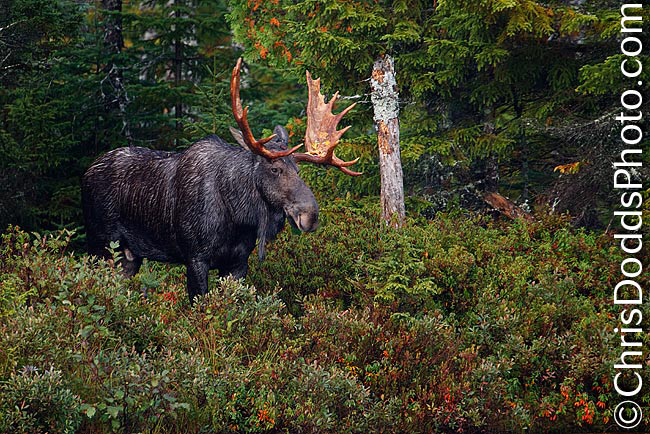
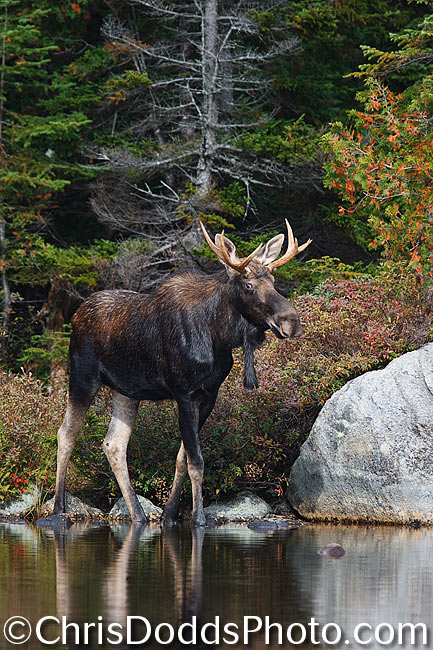
Bull Moose Vertical (Alces, Elan, Orignal) Baxter State Park, Maine ©Christopher Dodds www.chrisdoddsphoto.com All Rights Reserved. Canon EOS 1DsMKIII, 500mm F4 and 1.4XII tele-converter Gitzo 1325 Tripod and Wimberley Head II. ISO 500, F5.6 1/200s Manual.

As mentioned in earlier posts, this years trip to Baxter State Park in Maine was one of my most productive. Here's just a few of the 13 Moose we spent time photographing. It's always a thrill to get close, and close we got on a few occasions; It's best to let Moose come to you, rather than go off chasing them around the forest & remember that Bull Moose that are about two and a half years old (like the Moose in the photo above) are the most unpredictable and therefore the most dangerous; If you find yourself feeling a little uncomfortable, then slowly move away. Moose of this age are starting to "feel their oats" for the first time, and unsure of how to behave during this time of hormonal change.

Bull Moose Giant of the Northwoods (Alces, Elan, Orignal) Baxter State Park, Maine ©Christopher Dodds www.chrisdoddsphoto.com All Rights Reserved. Canon EOS 1DsMKIII, 500mm F4 and 2XII tele-converter Gitzo 1325 Tripod and Wimberley Head II. ISO 400, F8 1/160s Manual.

Named from the Algonquin term meaning "twig-eater", Moose rely most on their strongest senses: Hearing and smell. Their vision isn't the best, but with the placement of their eyes they can see almost 360°. Inhabiting dense forests throughout Canada, Maine and Alaska, Moose (Alces alces) are the giants of the deer family. They may lack the grace of other deer, but they are among North America's most magnificent mammals. A bull moose crashing through the underbrush in a northern bog is a sight not soon forgotten.
Alaska boasts the largest males: they weigh some 1,800 pounds, stand seven feet tall at the shoulder, and have antlers with a spread of over six feet. In addition to a massive body and a big, overhanging muzzle, the moose is characterized by a fold of skin on the throat (its function unknown) called the "bell" or "Dewlap". You may be able to distinguish particular moose by their distinctive dewlaps. Though long and spindly-looking, its legs are well suited for moving swiftly across snow, wading in water, and swimming.
During the fall rutting season, when their low, mooing calls echo through the forest, bulls battle over cows in savage antler-to-antler confrontations. By December the contests end and the bulls shed their hefty headgear.
In summer, moose wade into ponds and streams to eat aquatic plants, and in winter they browse on twigs and bark. Once exterminated in parts of their range- they were used as food by native peoples and early settlers, and their antlers have always been prized as trophies- moose have lately made quite a comeback.

Bull Moose Vertical Portrait (Alces, Elan, Orignal) Baxter State Park, Maine ©Christopher Dodds www.chrisdoddsphoto.com All Rights Reserved. Canon EOS 1DsMKIII, 500mm F4 and 2XII tele-converter Gitzo 1325 Tripod and Wimberley Head II. ISO 400, F8 1/125s Manual.

Do consider joining me for the Moose and fall colors of Maine Workshop next year.

Comments welcome & appreciated.


American Black Bears of Baxter State Park. Trip Report Part II

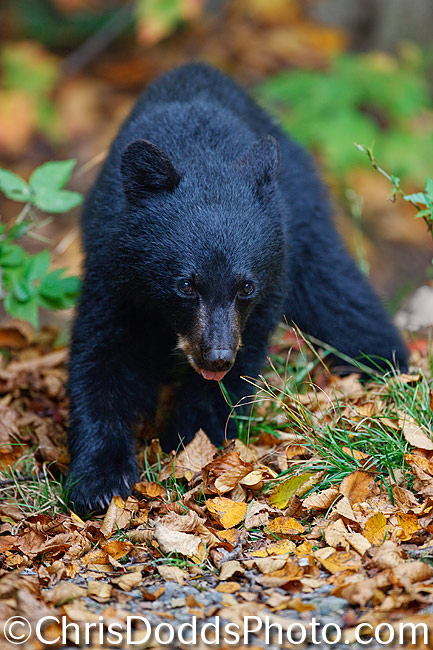
American Black Bear Curious Cutie  (Ursus americanus, Ours Noir) Roaring Brook Campground, Baxter State Park, ME ©Christopher Dodds www.chrisdoddsphoto.com Canon EOS Ids Mark III, 500mm F4, Gitzo 1325 Tripod & Wimberley Head II. ISO 640, F4 1/200s Manual mode.

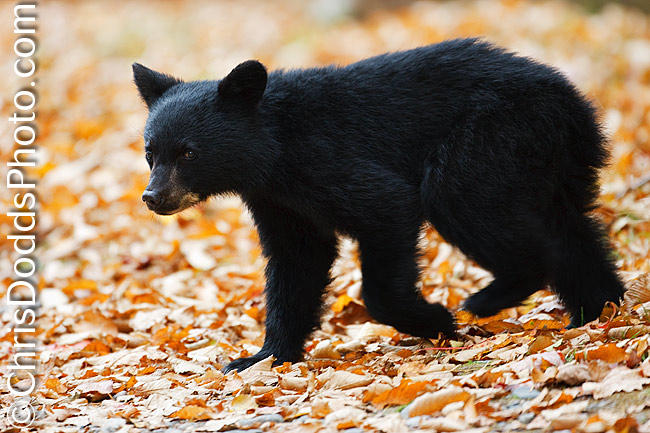
We were pleased to photograph these two Black Bear cubs at the Roaring Brook campground parking area of Baxter State Park in Maine, but saddened by their future. Though the park staff called them problem bears, the problem is the people who offered hand-outs and simply didn't listen to the Park Rangers pleas to lock all food inside vehicles. By the time you read this, I hope they have been relocated, as planned, to a rehabilitation centre in New Brunswick in Canada.
American Black Bear Autumn Stroll  (Ursus americanus, Ours Noir) Roaring Brook Campground, Baxter State Park, ME ©Christopher Dodds www.chrisdoddsphoto.com Canon EOS Ids Mark III, 500mm F4, Gitzo 1325 Tripod & Wimberley Head II. ISO 500, F4 1/200s Manual mode.

Do consider joining me for this unique workshop next year. Details HERE.

American Black Bear facts: There are three species of bear in North America: Polar Bear, Brown Bear (commonly called Grizzly Bear), and Black Bear. The Black Bear, Ursus americanus, is the only bear that lives in Maine where they are generally deep brown or black with a tan muzzle. Current estimates place the Black Bear population at around 30,000 in Maine; with as many as 300-400 of these in Baxter State Park.

The average life expectancy of Maine bears is only about 5-6 years; whereas a typical life expectancy in the wild might be 25 years. Most Black Bears are killed well before the end of their natural lifespan by human-related factors like hunting or  vehicular collision. Baiting (or feeding) is legal while hunting bear in Maine: READ THIS

Comments welcome & appreciated.


White-tailed Deer of Baxter State Park. Trip Report Part I

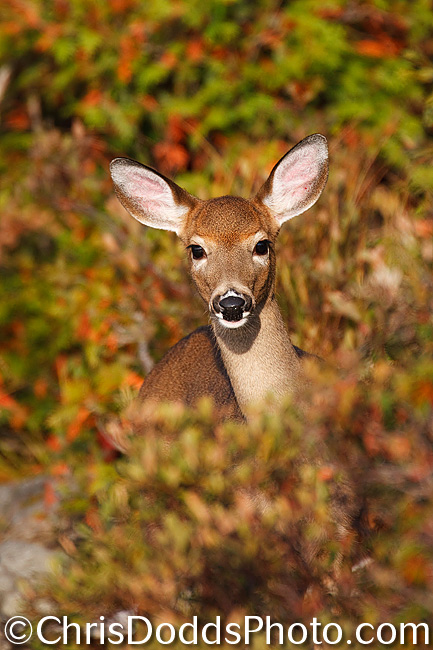
Eastern White-tailed Deer Fawn Portrait (Odocoileus virginianus, Cerf de Virginie) Sandy Stream Pond (Roaring Brook Campground), Baxter State Park, Maine, USA ©Christopher Dodds www.chrisdoddsphoto.com Canon EOS 1Ds Mark III, 500mm F4, 2X II Tele-converter Gitzo 1325 Tripod and Wimberley Head II. ISO 400, F8 1/500s Manual mode.

This years trip to Baxter State Park in Maine was, without doubt, my most productive. We had a great time photographing two Black Bear Cubs, an Eastern White-tailed Deer doe and her twin fawns, Common Goldeneyes, Common Mergansers, amazing fall foliage and did I mention the 13 Moose? I thought I would make my first post about the Eastern White-tailed Deer that live in the park, but until this visit I had never seen there. Shortly after setting-up for Moose one afternoon, we watched as a doe brought her twin fawns out to the water's edge across the lake from us. She slowly made her way around the lake until they were about forty feet from us.

White-tailed Deer Doe & twin fawns at Sandy Stream Pond (Odocoileus virginianus, Cerf de Virginie) Sandy Stream Pond (Roaring Brook Campground), Baxter State Park, Maine, USA ©Christopher Dodds www.chrisdoddsphoto.com Canon EOS 5D Mark II, 24-70mm F2.8 @ 70mm, ISO 400, F14 1/200s Manual mode.

White-tailed Deer facts

Our only animals with antlers, North America's deer include three giants; Moose, caribou , and wapiti, or elk. The most widespread and abundant members of the family, however, are the alert, elegant bucks, graceful does, and dappled fawns of the white-tailed and mule deer.
Especially common throughout the East, the delicate white-tailed, or Virginia, deer prefers woodland edges but can also be found in many suburban areas. Up to 3 1/2 feet tall and weighing as much as 250 pounds, it is a fast, elusive creature that, when frightened, flashes the white underside of its tail like a banner. White-tailed deer can run at speed up to 36 mph (58 km/h), it can make vertical leaps of 8.5 feet (2.6m) and horizontal leaps of 30 feet (9m). The stockier, long-eared mule deer lives in the west on forested mountain slopes and deserts. The black-tailed deer of the North-West is a subspecies of the mule deer.
Both white-tails and mule deer browse by day and on moonlit nights on the buds and twigs of trees, feeding on tender grass, berries, and acorns when they are available. During hard winters they barely subsist on the meager food that is available, and starvation is common.
Male deer, or "bucks", are easily recognizable in the summer and fall by their prominent set of antlers, which bear a number of tines, or sharp points. In the fall, the antlered males battle other bucks  for mates. About seven months later, first-time mothers generally give birth to a single fawn, while older does commonly bear twins. The young have spotted coats that provide much needed camouflage when they crouch motionless on the forest floor or in tall grass. And they are scentless, which further protects them from predators.

Kudos

from multiple workshop participant Eleanor Kee Wellman (thanks, Eleanor):

Since I first met Chris he has been telling me I should go with him and photograph the Northern Gannets on Bonaventure Island.  He knows I love to capture behavior and there, you are surrounded by the many behaviors of the gannets as they go about their daily lives.
Chris is super organized and extremely well prepared!  He knows what lenses and flash combinations are needed to maximize your opportunities.  He genuinely wants his participants to go home with the best and most varied images possible. His early morning zodiac trips aren’t available through anyone else.
Lots of people, me included, dislike bad weather but Chris relishes it!  The more dramatic the better for photography!  Gannets in rain, fog, drizzle and sun, too.  Eagles at Homer in the rain!  Snowy Owls in white snowy haze!  Hey, there’s going to be a big snowstorm!  Why don’t you leave now and meet us for some great photo ops!  He is ever enthusiastic and helpful.
He inspires everyone to do their best and he knows the greatest places to eat, too!
Thanks, Chris!!!!!

Eleanor Kee Wellman - Balla, Ontario (www.eleanorkeewellman.com)