
There are mornings when the weather doesn't cooperate.
And then there are mornings when you realize Mother Nature has a better idea than you did.
The day before my first Florida Osprey Workshop began on April 4, I was out well before sunrise scouting locations, checking bird activity and making sure everything was lined up before clients arrived. Instead of the colourful sunrise I had hoped for, I was greeted by dense fog.
Perfect.
Not because it was what I expected, but because over the years I've learned that conditions most photographers complain about often create the most memorable photographs.
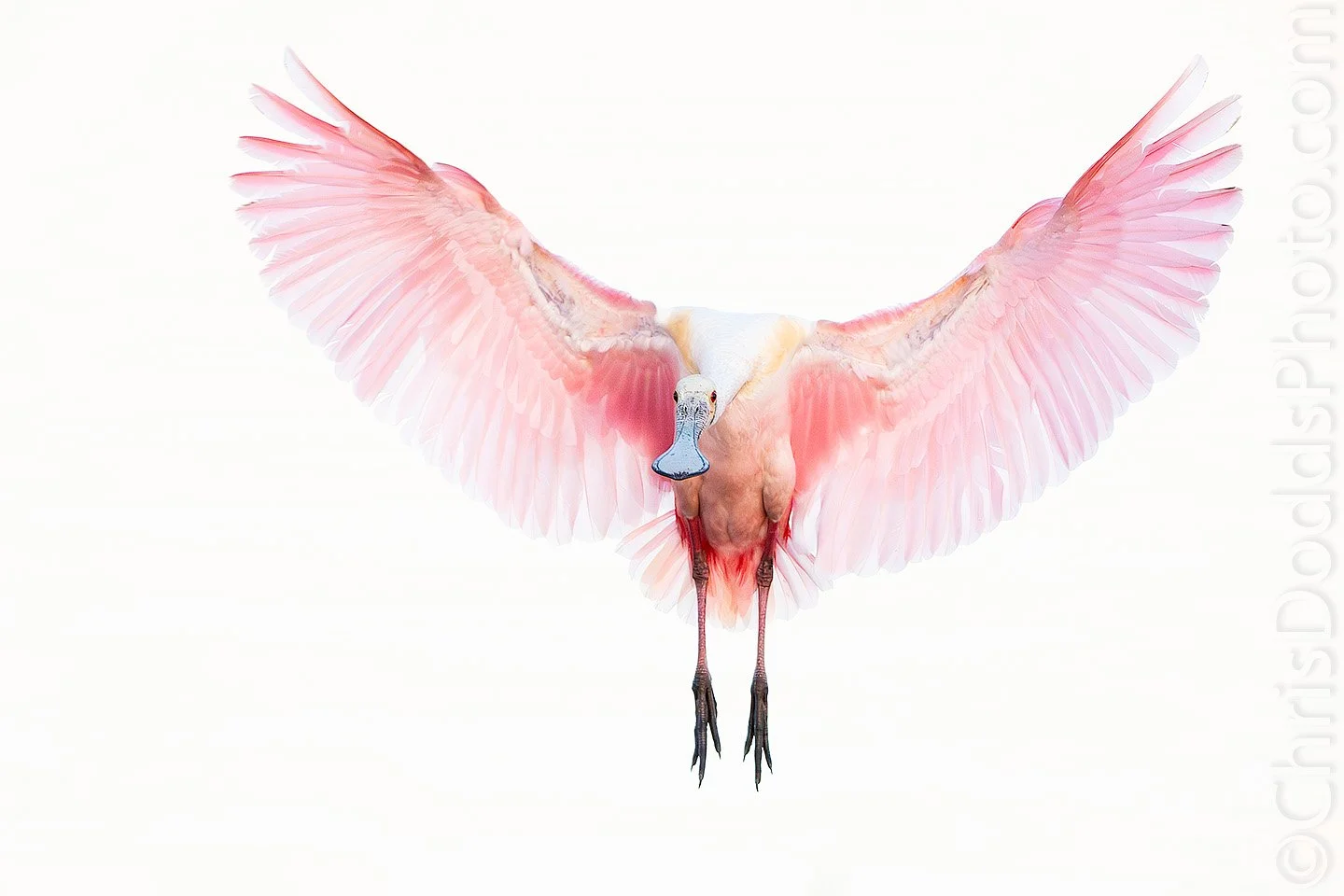
As this Roseate Spoonbill drifted in to land directly toward me, its wings caught the soft, diffused light filtering through the fog. The brilliant pink plumage became almost translucent, glowing from within. Against the white background, the bird seemed to float in mid-air. It wasn't the sunrise photograph I had envisioned—it was something even better.
The image was made with the Sony a9 III and the Sony FE 400–800mm G OSS zoom set to 550mm. With so little light and a bird flying directly toward me, I photographed it at ISO 20,000, f/8 and 1/3,200 second.
If you've photographed with me or followed my work for any length of time, you already know I'm not afraid of high ISO. Today's camera sensors are remarkably capable when an image is properly exposed, and I'd much rather embrace a little noise than miss a once-in-a-lifetime photograph. Wildlife doesn't wait for perfect light, and neither do I.
One of the reasons I spend time scouting before every workshop is so I can adapt when conditions change. Fog, rain, overcast skies or brilliant sunshine all offer different opportunities. The trick isn't waiting for perfect weather—it's recognizing the potential in whatever nature gives you.
If you read my previous post from this trip, you'll remember I talked about making lemonade and my philosophy of "Stay Liquid." This photograph is another example of exactly that. The fog wasn't something to work around—it became the photograph.
Although it's called my Florida Osprey Workshop, the trip has always been about much more than Ospreys. Every spring we photograph an incredible diversity of wildlife, including Roseate Spoonbills, Great Blue Herons, Great Egrets, Snowy Egrets, White Ibises, Wood Storks, Anhingas, Limpkins, Crested Caracaras, Bald Eagles, Sandhill Cranes and countless other species. The Ospreys may be what first catches people's attention, but they're only one part of an unforgettable week.
If there's one thing participants quickly discover, it's that we're not chasing a species—we're chasing opportunities. Learning to anticipate behaviour, read changing conditions and recognize photographs that others drive right past is what the workshop is really about. Florida's incredible diversity simply makes it one of the finest classrooms I know.
If spending several days photographing spectacular birds in beautiful light while learning the techniques I've developed over more than four decades behind the lens sounds appealing, I'd love to have you join us next spring.
I hope to see you in Florida.
Related Reading
Enjoyed this story? Be sure to read my previous post, "Roseate Spoonbill Landing in Golden Light: Florida Bird Photography Workshop Success," where I share how adapting to challenging weather and staying flexible in the field helped make this year's workshops such a success.
Workshop Invitation
Interested in joining me next spring? My Florida Osprey Workshop is about far more than Ospreys. With small groups, personalized instruction, and access to one of North America's richest bird photography destinations, you'll learn not only how to create stronger wildlife photographs, but also how to recognize and capitalize on opportunities that many photographers never see. After all, the best images often begin when you stop wishing for different weather and start working with the conditions nature provides.
Support Nature Photography Blog
If you enjoy the photographs, stories and free photography articles I share here, I'd appreciate your support. Purchasing through the affiliate links below costs you nothing extra, but it helps offset the considerable time and expense of travelling to wild places, creating new content and maintaining this site—all without subscriptions or paywalls.
Thank you for helping keep Nature Photography Blog free for everyone.
Gear featured in this post: