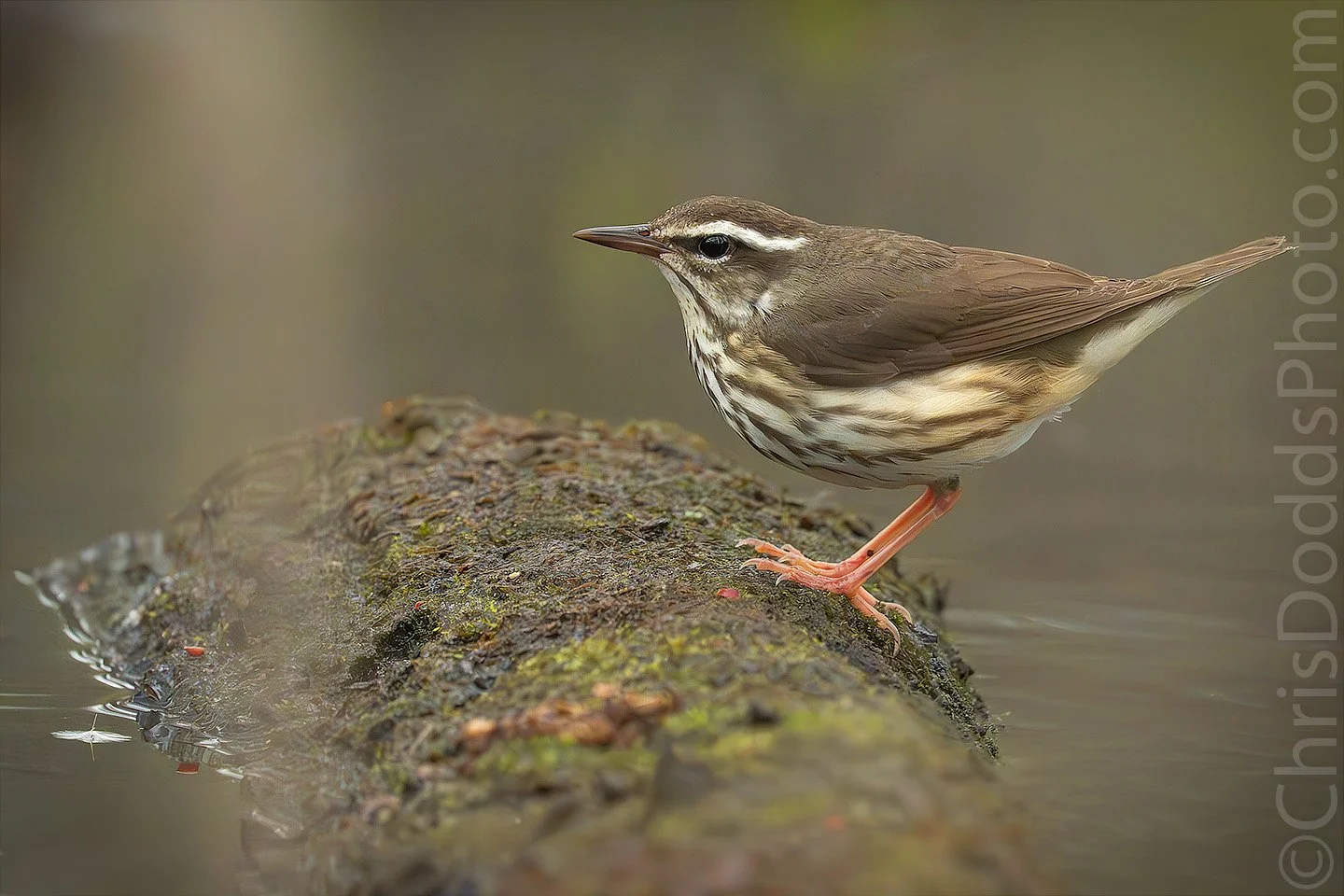
The Louisiana Waterthrush drew a steady stream of photographers into Tilden Woods during spring migration this year, and for good reason. It’s a striking bird with loads of personality, constantly working the flooded trails and tangled edges of the swamp looking for food. But while seeing it was easy enough, photographing it cleanly was another story entirely.
If you tried, you already know.
Tilden Woods can be brutally difficult photographically — branches everywhere, messy reflections, bright water highlights, cluttered backgrounds, and seldom a clear angle. Most frames looked exactly like the habitat felt: chaotic, distracting and far from the wall-hanger we are all after.
That’s what made this moment exciting.
No bait, no playback, no callback. Just a completely wild migratory bird briefly stepping into a spot where the light, posture, perch, and background all lined up naturally for a few seconds before disappearing back into the clutter.
Despite the name, Louisiana Waterthrushes are actually warblers, not thrushes.
The reach of the Sony 600mm f/4, paired with the 1.4x teleconverter, helped tremendously here, compressing the scene and throwing a couple of branches between the bird and me so far out of focus that they effectively disappeared. Without that compression and shallow depth of field, this frame probably never would have happened.
That’s the part I love about photographing migration at Point Pelee. Most attempts fail. Then suddenly, for one brief moment, everything comes together on its own in the wild.
Moments like this are exactly why I keep returning to Point Pelee every spring for my Songbirds of Pelee workshop. You never know what migration will deliver next, but when patience, fieldcraft, timing, and luck all collide at once, the results can be unforgettable.
If you’d like to experience spring migration at Point Pelee firsthand and improve your bird photography in the field, I’d love to have you join me next May for Songbirds of Pelee.
This reminded me of this older Northern Waterthrush image from Point Pelee.
At first glance, the two species look remarkably similar, and during spring migration, they are often mistaken for one another by photographers and birders alike. But the differences are subtle — heavier streaking, buffier tones, different facial patterns, behaviour, and structure once you really start studying them side by side.
This older post also addresses the same challenge: creating a clean image amid migration chaos, where branches, clutter, and impossible shooting angles seem determined to ruin every frame.
If you enjoyed the Louisiana Waterthrush story, click through and compare the two species.