• Christopher Dodds LIVE in Public
  • Workshops
  • About Me
  • Portfolio
  • Blog
  • Testimonials
Menu

Nature Photography Blog

  • Christopher Dodds LIVE in Public
  • Workshops
  • About Me
  • Portfolio
  • Blog
  • Testimonials
×
Male Wilson’s Warbler perched on a rain-soaked branch holding an insect in its bill during spring migration at Point Pelee, Ontario.

Wilson’s Warbler with Insect Prey During Spring Migration (Cardellina pusilla, Paruline à calotte noire, Reinita de Wilson, WIWA) Image created during my Songbirds of Pelee Workshop at Point Pelee National Park of Canada. Image Copyright ©Christopher Dodds. Sony a1 mark II Mirrorless camera & Sony FE 600mm f/4 G Master OSS Lens with Sony FE 1.4 X Teleconverter @840mm. ISO 5,000, f/8 @ 1/10,000s. Manual exposure. Full frame image.

Rain, Reflexes, and a Wilson’s Warbler at Point Pelee

Christopher Dodds May 22, 2026

A gloomy forecast, steady rain, and fast reflexes came together perfectly during my Sony-sponsored Point Pelee photo walk when this Wilson’s Warbler briefly landed with a beak full of insects while refuelling during spring migration.

Read More
In Bird Photography, Workshop Report Tags Wilson’s Warbler, Point Pelee, Spring Migration, Bird Photography, Wildlife Photography, Sony Alpha, Nature Photography, Ontario Birding, Warbler Photography, Rain Photography, Migration Birding, Christopher Dodds
Comment
Male Blackburnian Warbler perched low on a clean branch at Point Pelee during spring migration after a rainstorm, photographed during Christopher Dodds’ Songbirds of Pelee photo workshop.

Blackburnian Warbler Down Low at Point Pelee (Setophaga fusca, Paruline à gorge orangée, Reinita gorjinaranja, RTHU) Image created during my Songbirds of Pelee Workshop at Point Pelee National Park of Canada. Image Copyright ©Christopher Dodds. Sony a9 III Mirrorless camera & Sony FE 600mm f/4 G Master OSS Lens with Sony FE 2 X Teleconverter @1,200mm. ISO 5,000, f/8 @ 1/5,000s. Manual exposure. Full frame image.

Spring Migration Magic with a Blackburnian Warbler

Christopher Dodds May 21, 2026

Spring migration at Point Pelee can be magical. After a downpour during Christopher Dodds’ Songbirds of Pelee workshop, this male Blackburnian Warbler dropped down low onto a clean perch in beautiful soft light. Rarely does one of these stunning warblers give photographers such a clean, eye-level opportunity during the chaos of spring migration.

Read More
In Workshop Report, Bird Photography Tags Blackburnian Warbler, Point Pelee, Spring Migration, Bird Photography, Warbler Photography, Songbirds of Pelee, Ontario Birding, Wildlife Photography, Sony Alpha, Migration Photography, Nature Photography, Christopher Dodds
Comment

Ruby-throated Hummingbird During Spring Migration at Point Pelee (Archilochus colubris, Colibri à gorge rubis, Colibrí gorjirrubí, RTHU) Image created during my Songbirds of Pelee Workshop at Point Pelee National Park of Canada. Image Copyright ©Christopher Dodds. Sony a1 II Mirrorless camera & Sony FE 600mm f/4 G Master OSS Lens with Sony FE 1.4 X Teleconverter @840mm. ISO 2,500, f/8 @ 1/5,000s. Manual exposure. Full frame image.

When Loose Framing Works — Ruby-throated Hummingbird at Pelee

Christopher Dodds May 20, 2026

Every spring at Point Pelee, photographers battle branches, fresh leaves, and chaotic backgrounds as they try to isolate tiny migrating birds. Sometimes, though, all that clutter comes together perfectly. This Ruby-throated Hummingbird, photographed during my Songbirds of Pelee workshop, perched for only a few seconds before disappearing back into the foliage, creating a loose, elegant composition that beautifully captures the feeling of spring migration.

Read More
In Workshop Report, Bird Photography Tags Ruby-throated Hummingbird, Point Pelee, Point Pelee National Park, Spring Migration, Bird Photography, Wildlife Photography, Ontario Birding, Songbirds of Pelee, Warbler Migration, Hummingbird Photography, Nature Photography, Christopher Dodds
Comment
Louisiana Waterthrush standing on a moss-covered log in shallow water along the flooded trails of Tilden Woods during spring migration at Point Pelee National Park. Captured naturally during Christopher Dodds’ Songbirds of Pelee workshop.

Louisiana Waterthrush (Parkesia motacilla, Paruline hochequeue, Reinita charquera de Luisiana, LOWA) Image created during my Songbirds of Pelee Workshop at Point Pelee National Park of Canada. Image Copyright ©Christopher Dodds. Sony a9 III Mirrorless camera & Sony FE 600mm f/4 G Master OSS Lens with Sony FE 1.4 X Teleconverter @840mm. ISO 25,600, f/8 @ 1/5,000s. Manual exposure. Full frame image.

Louisiana Waterthrush in Tilden Woods During Spring Migration at Point Pelee

Christopher Dodds May 19, 2026

The Louisiana Waterthrush drew a steady stream of photographers into Tilden Woods during spring migration this year, and for good reason. It’s a striking little warbler constantly working the flooded trails and tangled swamp edges looking for food. Seeing it was easy enough. Photographing it cleanly was another story entirely.

If you tried, you already know.

Tilden Woods can be brutally difficult photographically — branches everywhere, messy reflections, bright water highlights, cluttered … READ MORE

Read More
In Workshop Report Tags Louisiana Waterthrush, Point Pelee, Tilden Woods, Spring Migration, Warbler Photography, Bird Photography, Wildlife Photography, Songbirds of Pelee, Point Pelee Workshop, Nature Photography, Birding Ontario, Migration Photography
Comment

Black-throated Blue Warbler (Setophaga caerulescens, Paruline bleue, Reinita azulada, BTBW).April 30, 2026, while scouting for my Songbirds of Pelee Workshop at Point Pelee National Park of Canada. Image Copyright ©Christopher Dodds. Sony a9 III Mirrorless camera & Sony FE 600mm f/4 G Master OSS Lens with Sony FE 1.4 X Teleconverter @840mm. ISO 16,000, f/8 @ 1/5,000s. Manual exposure. Full frame image.

Black-throated Blue Warbler — A Great Start to Spring Migration at Point Pelee National Park

Christopher Dodds May 1, 2026

After Julie and I made the long, uneventful drive from Montreal to Point Pelee to scout for my upcoming private client days, the free Sony photo walks, and my Songbirds of Pelee workshop, we were rewarded pretty quickly.

We had this Black-throated Blue Warbler all to ourselves for a good stretch. Spectacular breeding plumage, exactly where it should be during migration—low and slow, out in the open, working the branches for insects.

The park was quiet. We only saw a handful of other photographers.

This is what makes Pelee special this time of year. These birds have just crossed Lake Erie, they’re tired, they need to refuel, and for a brief window, they let you in.

No chaos, no crowd—just time to watch, anticipate, and be ready.

It doesn’t get much better than that.

Join me at Point Pelee next May for the Songbirds of Pelee workshop and experience world-class spring migration birding at its best.

Read More
In Bird Photography Workshop, Bird Photography, Workshop Report Tags Black-throated Blue Warbler, Warbler, Songbirds, Bird Photography, Wildlife Photography, Point Pelee, Spring Migration, Ontario Birds, Bird Behaviour, Nature Photography, Canadian Wildlife, Christopher Dodds
Comment
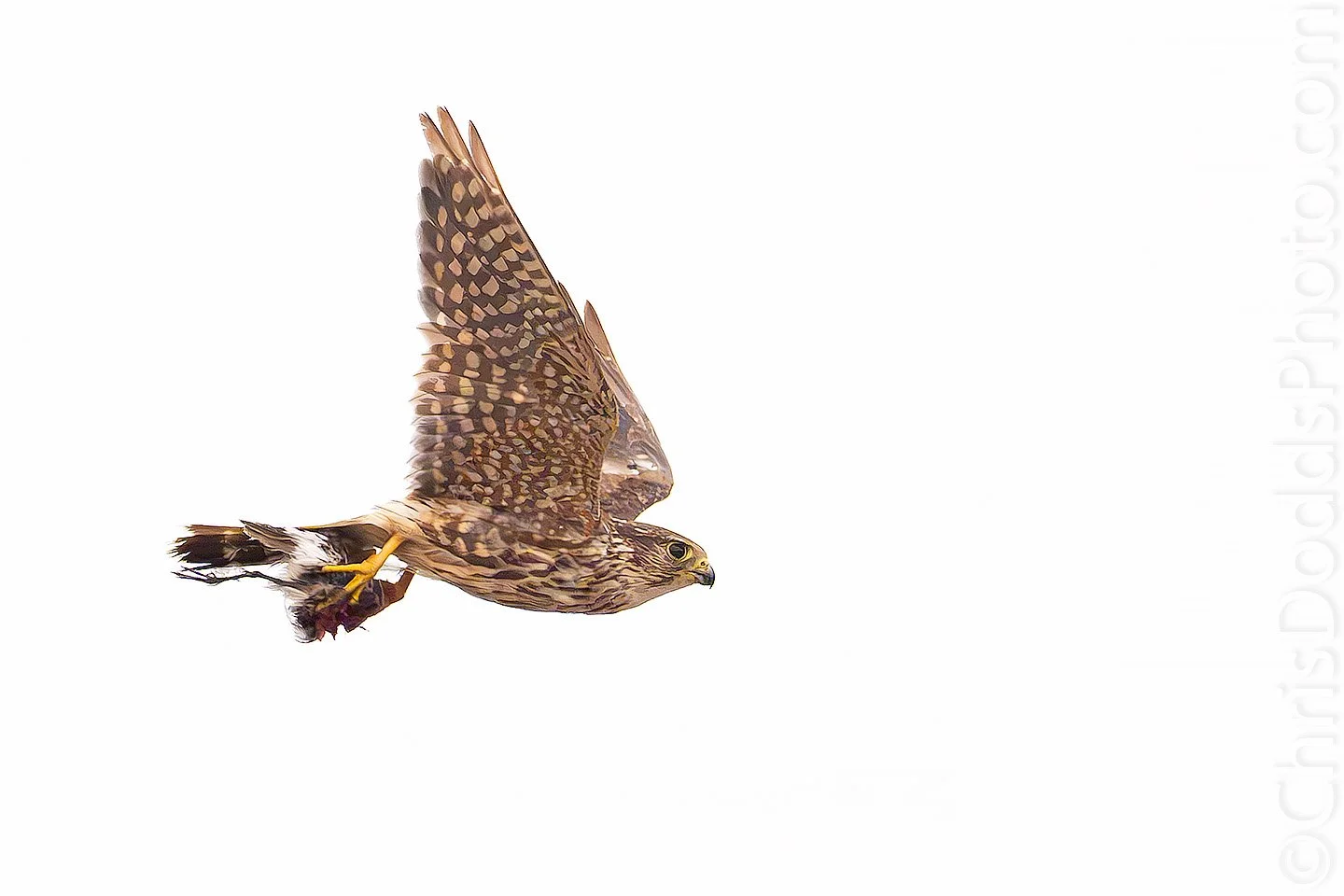
Immature Merlin falcon landing with wings spread and talons extended against a high-key white background in Quebec by Christopher Dodds

Merlin Emerging from the Fog (Falco columbarius, Faucon émerillon, Esmerejón, MERL) from my Deluxe Puffins Galore Workshop, Mingan Archipelago National Park Reserve, Quebec, Canada. Image Copyright ©Christopher Dodds. Sony a9 III Mirrorless camera & Sony FE 400-800mm f/6.3-8 G OSS Lens @800mm ISO 6,400, f/8 @ 1/5,000s. Manual exposure.

Immature Merlin in Flight — Backlit Birds in Flight at a Puffin Workshop

Christopher Dodds April 29, 2026

The first of five back-to-back Deluxe Puffin trips last summer started exactly how you’d hope.

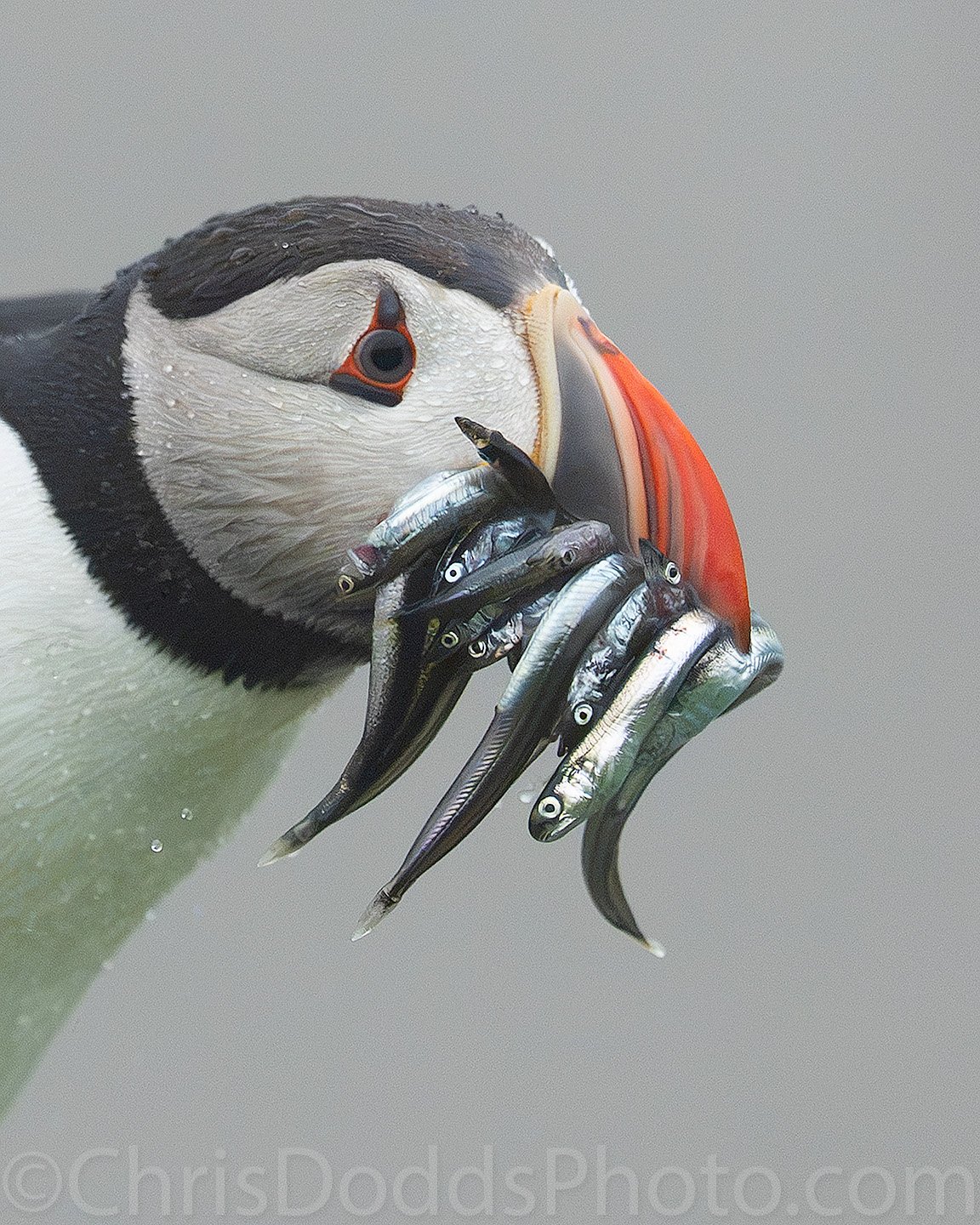
Birds moving well, puffins coming in with capelin, and it didn’t take long before everyone settled into it. You could feel the group starting to lock in—picking up flight lines, timing things a bit better with each pass.

We were right in the middle of that when Hugh Smith called it out.

“Merlin!”

I remember pulling off a puffin mid-track and just trying to find it. By the time I did, it was already on us. Fast, low, and coming straight in.

Bright sky behind it, backlit, no time to think. If you start messing with exposure at that point, it’s over.

I didn’t touch anything.

Exposure was already set for the light falling on the subject. I had checked the histogram earlier and knew where I was. So when it came through, it was just track and shoot.

One quick moment—wings up, feet down—and then it was gone.

That was it.

We all kind of reset, picked the puffins back up, and carried on as if nothing happened. Another bird came in with a bill full of capelin a few seconds later, and the rhythm was right back.

But that one sticks with you a bit.

Not because it was a Merlin—but because there was no time to fix anything if it wasn’t right already.

There’s one room left for this year’s Deluxe Atlantic Puffin Workshop. We’ll be based on a remote lighthouse island, with hundreds of puffins flying right over us and landing just 200 metres from where we’re staying.

If that kind of experience has been on your list, this is your chance.

One Room Left →

“To say the puffin experience was enjoyable would be an understatement!  It was amazing!  Being on a small island, living in a lighthouse keeper’s house, with a puffin colony close in our midst gave us a great opportunity to get up close and personal with the plentiful puffins combined with many other sea and song birds!    Seeing the puffins bringing capelin to feed their “pufflings” was a highlight!   Being on site offered us different lighting conditions, including the warm morning and evening hues, with Chris offering us great guidance on camera settings for optimum results!   I knew puffins flew fast, often flying over our heads where you could feel the wind of their wings!  How cool is that!?   Photographing them to freeze the action with crisp, in focus images was truly fun, especially when puffins arrived with “fish on”!   Chris’ extensive photographic expertise was greatly appreciated, and it paid off as we all came back with wonderful images!    I highly recommend this excursion!”

 - France Boutilier Nova Scotia | Canada Aug. 2025 Deluxe Atlantic Puffins Galore Workshop

In Bird Photography Workshop, Workshop Report, Workshop Tags Merlin, Immature Merlin, Birds in Flight, Bird Photography, Wildlife Photography, Backlighting, Flight Photography, Puffins, Atlantic Puffin, Puffin Workshop, Île aux Perroquets, Christopher Dodds
2 Comments
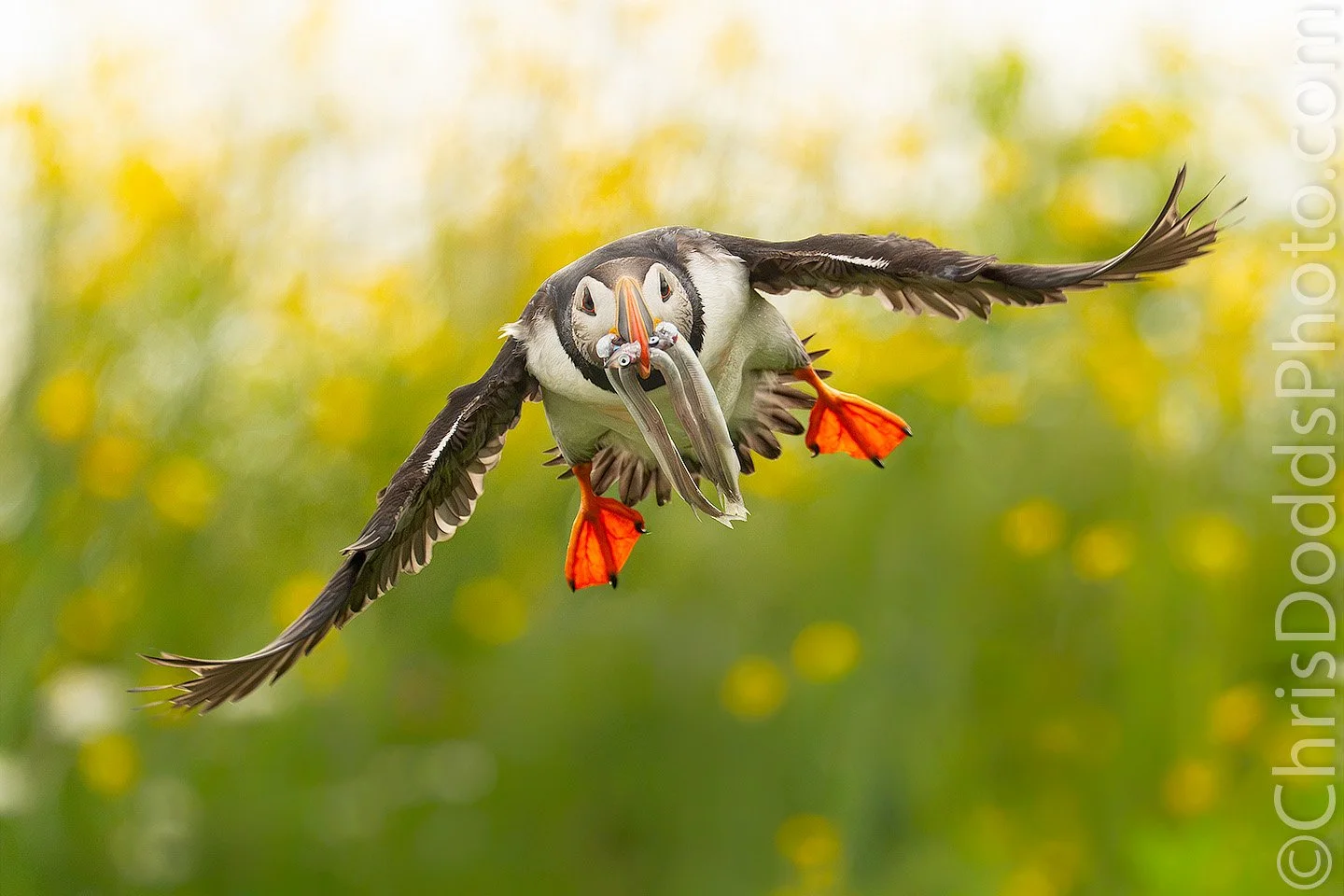
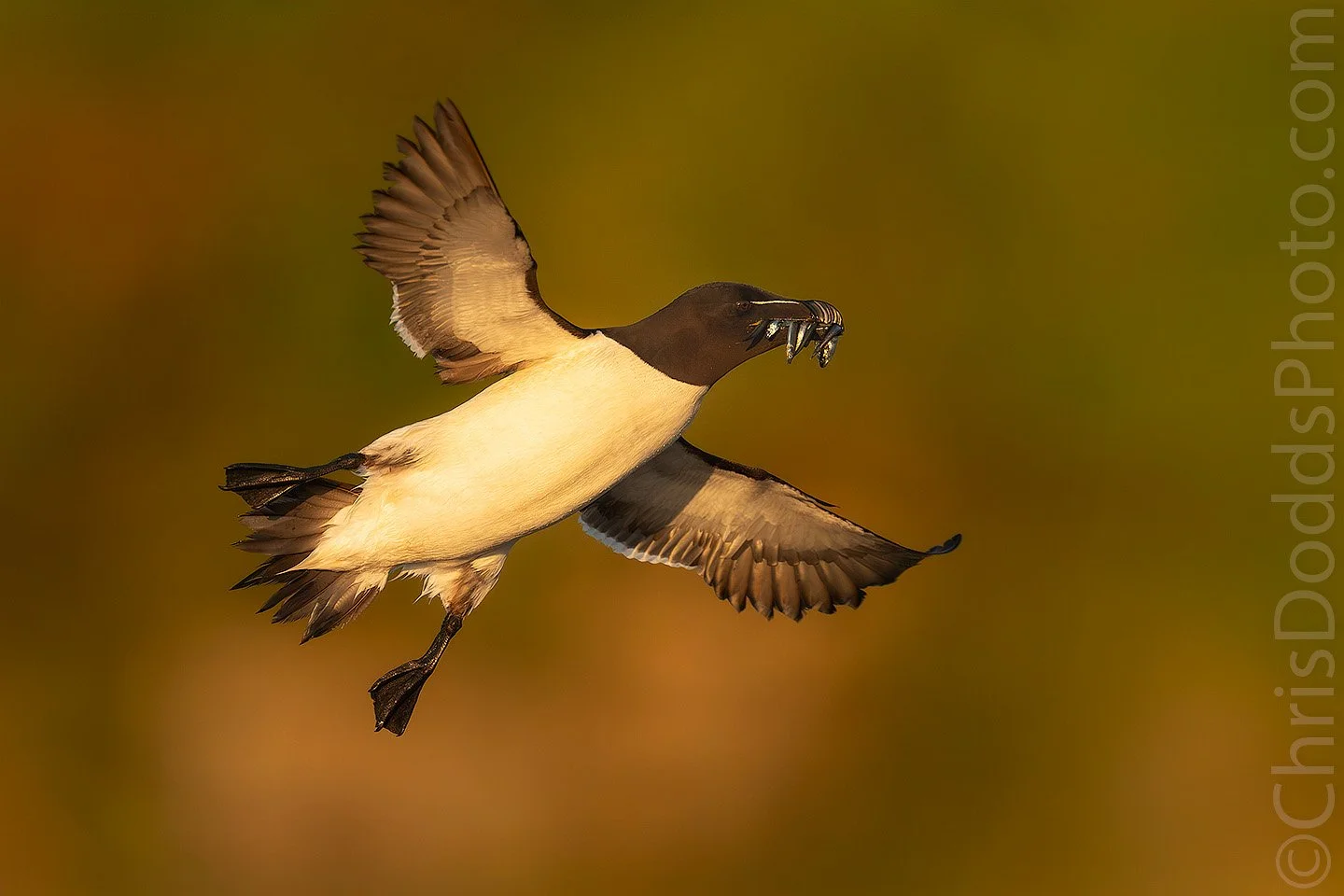
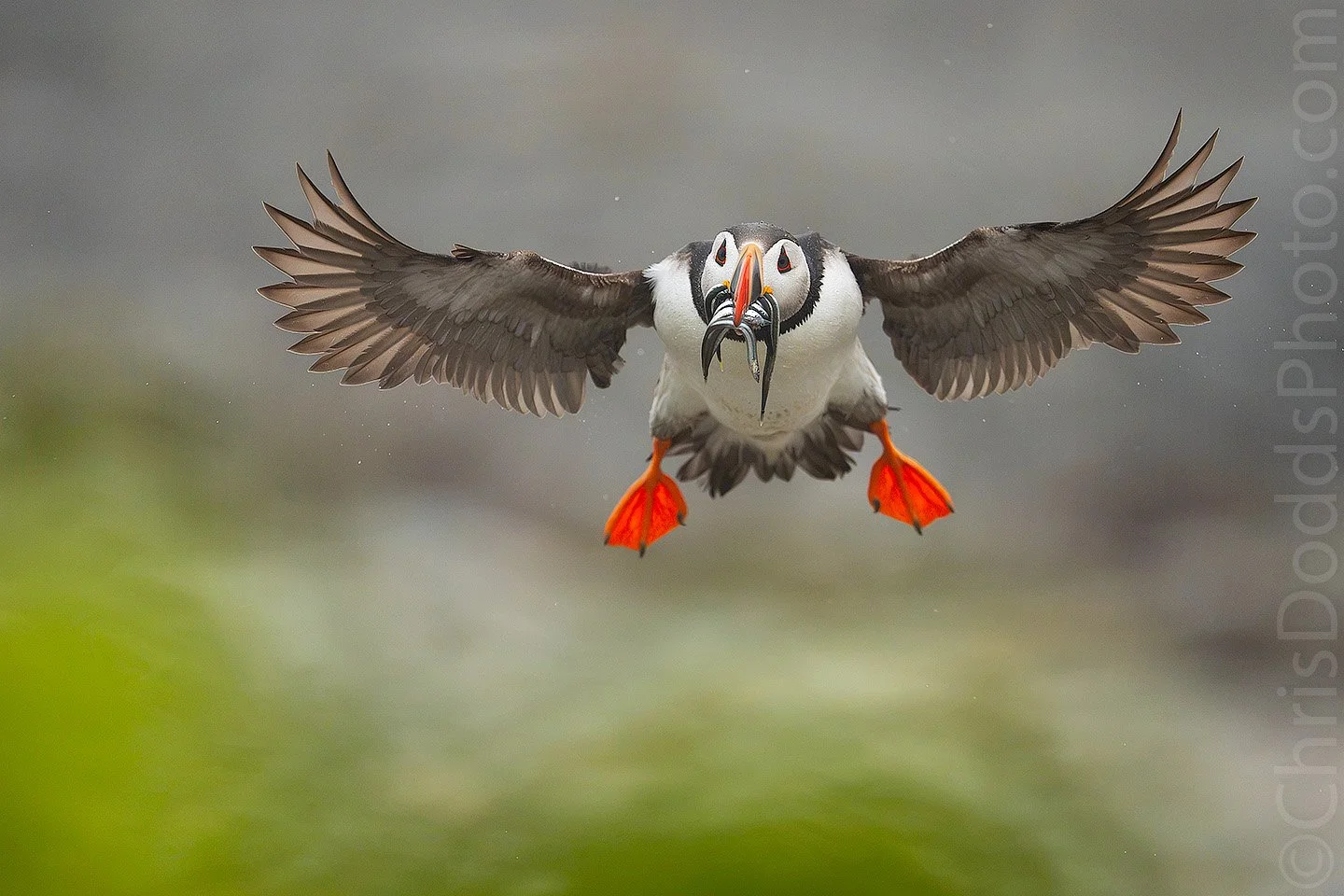
Atlantic Puffin flying with a beak full of capelin in warm golden light, photographed in the Mingan Archipelago, Quebec by Canadian wildlife photographer Christopher Dodds.

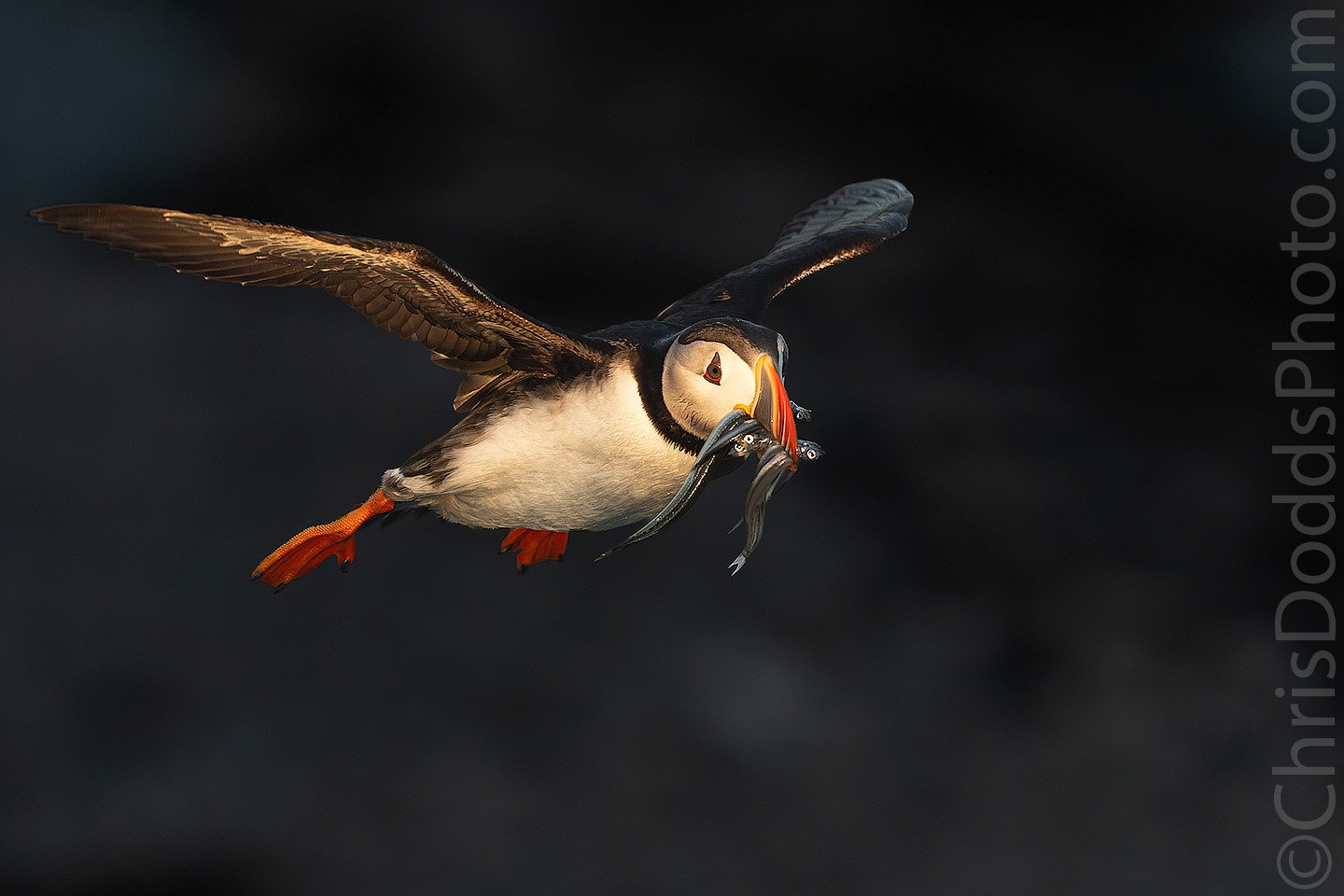
Atlantic Puffin in Flight with Capelin — Golden Light (Fratercula arctica, Macareux moine, Frailecillo atlántico, ATPU) Mingan Archipelago National Park Reserve, Quebec, Canada. Image Copyright ©Christopher Dodds. Sony Alpha 1 Mirrorless camera & Sony FE 600mm f/4 G Master OSS Lens with Sony FE 2X Teleconverter @1,200mm ISO 2,500, f/8 @ 1/5,000s Manual exposure. Full frame image.

Loaded for the Burrow — Atlantic Puffin with Capelin in Golden Light

Christopher Dodds April 27, 2026

A puffin loaded with capelin cuts through golden light — a split-second moment that captures the intensity of feeding season in the Mingan Archipelago.

Read More
In Bird Photography Workshop, Bird Photography, Workshops Tags Atlantic Puffin, Puffin Photography, Mingan Archipelago, Quebec Wildlife, Seabirds, Bird Photography, Wildlife Photography, Capelin, Birds in Flight, Golden Light, Nature Photography, Christopher Dodds
Comment
Common Raven portrait against golden autumn foliage in Northern Ontario photographed with Sony A1 II and Sony 400-800mm lens by wildlife photographer Christopher Dodds.

Common Raven Portrait in Autumn Colours (Corvus corax, Grand corbeau, Cuervo grande, CORA)Northern Ontario, Canada. Image copyright ©Christopher Dodds Sony Alpha 1 Mark II Mirrorless camera & Sony FE 400-800mm f/6.3-8 G OSS Lens @503mm ISO 10,000, f/8 @ 1/5,000s Manual exposure. Full frame image.

Raven Intelligence in Autumn Gold: How to Photograph Black Birds Properly

Christopher Dodds March 6, 2026

Raven Intelligence in Autumn Gold

Photographing One of the Most Remarkable Birds in the North

There are birds you photograph… and then there are birds that seem to photograph you back.

The Common Raven falls firmly into the second category.

While exploring the forests of Northern Ontario last autumn, the landscape was alive with deep golds and warm amber tones. The birches and poplars had turned the forest into a glowing canvas, and against that background a raven landed nearby — calm, watchful, and intensely aware of everything around it.

Ravens have a presence that is hard to describe until you experience it. They are among the most intelligent birds on the planet, capable of complex problem-solving, playful behaviour, and even recognizing individual human faces. When one looks directly at you, there is a moment where it genuinely feels like you are being studied.

This individual gave me exactly that feeling.

Rather than chasing flight shots or action, I decided to slow down and focus on a portrait — something that really revealed the bird’s character. With the rich autumn colours behind it, the raven’s glossy black feathers provide a striking contrast, but they also present a technical challenge for many photographers who don’t fully understand exposure theory.

Black birds are notoriously difficult to expose properly.

Getting the Exposure Right

When photographing dark plumage, the biggest mistake is relying too heavily on lifting shadows later in post-processing. If the exposure is even slightly under in camera, recovering those deep blacks can introduce noise and destroy the subtle feather detail that gives the bird its texture and depth.

This image was captured with the Sony A1 II and the Sony 400–800mm lens, a combination that provides incredible reach and resolution while maintaining exceptional feather detail.

With ravens in particular, the key is to protect detail in the blacks while still maintaining a natural look. Their feathers are not truly “black” — they contain subtle tonal variation, layered textures, and sometimes even hints of iridescence. If the exposure is too dark, all of that disappears into a flat silhouette.

How to Photograph Black Birds

Photographing black birds such as ravens, crows, grackles, or blackbirds can be surprisingly challenging. The deep tones in their feathers can easily fool a camera’s meter into underexposing the image, causing the plumage to lose detail and appear flat or muddy.

One technique I often use when photographing black birds is spot metering directly from the darkest part of the bird’s plumage. When doing this, the correct exposure typically occurs when the meter reads approximately –1⅔ stops, since black subjects reflect roughly 1⅔ stops less light than a midtone.

The easiest way to dial this in with your camera set to manual exposure mode is to adjust your exposure in a logical sequence.

First, choose your aperture based on the depth of field you want.

Next, set your shutter speed fast enough to stop any unexpected movement.

Finally, adjust the ISO.

In many cases, raising the ISO slightly to intentionally brighten the blacks during capture helps ensure the feathers are recorded with enough light to preserve their structure and texture. This allows the camera to capture far more detail while reducing the need to push shadows later in post-processing, where noise most often appears.

At the same time, it’s important to monitor your histogram and highlight alerts to ensure that brighter areas — such as the bill or reflective feather edges — are not clipping.

Getting the exposure right in the camera is always the goal.

When done correctly, black feathers reveal beautiful texture, subtle tonal variation, and even a slight sheen that gives the bird depth and life in the photograph.

The Quiet Magic of Ravens

What I love most about this image is the calm intensity of the bird. Ravens have a presence that feels almost mythical — something many northern cultures have recognized for centuries. They are playful, mischievous, brilliant problem solvers, and endlessly curious.

Standing there with this raven only a short distance away, it felt less like photographing wildlife and more like sharing a moment with another intelligence.

The bird watched me carefully for several seconds, tilting its head slightly as if trying to understand what I was doing.

Then, just as quietly as it arrived, it lifted off and disappeared back into the forest.

Moments like that are part of what makes wildlife photography so addictive.

You’re not just documenting nature.

You’re interacting with it.

And sometimes, if you’re lucky, the bird lets you see a little bit of its personality.

Moments like this are exactly why I love leading photography workshops. Spending time in the field, watching wildlife behaviour unfold, and learning how to capture those moments with the right exposure and technique is something that can’t really be taught in a classroom.

Join Me In The Field

If you’d like to experience moments like this yourself, consider joining one of my upcoming wildlife photography workshops. Whether it’s photographing owls in winter, songbirds at Point Pelee, Ospreys in Florida, or puffins along the Atlantic coast, the goal is always the same — helping photographers learn to see light, understand exposure, and capture meaningful images in the natural world.

You can see the full list of upcoming workshops here:
www.naturephotographyblog.com

In Bird Photography Tags bird photography tips, Common Raven, Raven Photography, Photographing Black Birds, Bird Photography, Wildlife Photography, Northern Ontario Wildlife, Autumn Wildlife Photography, Sony A1 II, Sony 400-800mm, Bird Photography Exposure, Wildlife Photography Tips, Christopher Dodds
2 Comments
Barred Owl flying through steady rain against a dark forest background, wings fully extended, captured at high shutter speed with visible rain droplets suspended in air.

Barred Owl (Strix varia, Chouette rayée, BADO) Ontario, Canada, during my recent Winter Owl Workshops. Image Copyright ©Christopher Dodds. Sony a1 Mark II Mirrorless camera & Sony FE 400-800mm f/6.3-8 G OSS Lens @641mm ISO 20,000, f/8 @ 1/5,000s Manual exposure. Full frame image.

Last Frame Before Goodbye — A Barred Owl in the Rain

Christopher Dodds February 22, 2026

Some moments in the field stick with you — not because they were easy, but because everything aligned at just the right time.

This was the last image I made on week seven of eight winter owl workshops last week — rain falling, forest turning dark, everyone heading toward the airport in about an hour.

Sony A1 II
Sony 400–800mm at 641mm
ISO 20,000 | f/8 | 1/5,000s

High ISO still makes some photographers nervous, but the reality with modern sensors is this: ISO isn’t the enemy — poor exposure is. In situations like this — low light, rain, an owl moving fast — I make decisions based on freezing motion and preserving detail in-camera, not pulling shadows later at the expense of quality.

I needed 1/5,000s to hold the wings crisp and to render the rain as droplets instead of streaks. f/8 gave me the depth I wanted across the wings. The forest was dark. There was no soft golden light coming from anywhere. Exposure discipline was the tool that kept this frame from being just another passing shot.

Owls in the rain are magical. The air gains texture. The background simplifies. The bird feels like it’s floating in its own world. Nothing about it feels staged. Everything feels real — and earned.

That’s part of what draws me back to winter owl photography year after year. It’s not just about seeing the birds — it’s about being there with them in whatever light and weather they choose to show themselves. You learn to read the conditions. You learn to trust your gear. You learn to trust yourself.

This owl made one solid pass through the forest at just the moment we needed it — and then it was done. A quiet full-stop on a long week in the field.

On Exposure, ISO, and Getting It Right

Some photographers still worry about high ISO numbers.

Here’s the truth I share with every group:

  • You can shoot at ISO 20,000 today and get clean, rich images — but only if you expose with intent.

  • Underexposure plus heavy shadow recovery is when noise becomes a problem — not because of the ISO number itself.

  • Modern mirrorless sensors like the Sony A1 II deliver latitude and detail that reward careful exposure choices in challenging light.

Your histogram should be pushed confidently to the right without clipping critical highlights in feathers. Don’t guess — check. That’s how you capture usable detail in every zone that matters — especially in a dark background and rainy scene like this one.

Why These Moments Matter

Owls don’t perform on cue. They don’t wait for sunrise, perfect wind, or magical light. They are what they are, where they are — and our job is to see them, not force them.

Rain adds depth. Dark woods add mood. High shutter speeds bring out detail. But none of that works if your exposure falls apart.

This frame was not luck. It was knowledge and preparation meeting opportunity.

That’s why I love teaching these workshops — not just showing birds, but showing you what they look like when you get your settings right, when you trust your instincts, and when you stay present in the moment.

Join Me Next Winter

If images like this — real, wild, unpredictable, demanding — are the kind that make you want to keep learning and keep shooting, I’d love to have you out in the field next season.

We’ll be doing it again — rain, snow, dark woods, early light — and every workshop is a chance to grow as a photographer and deepen your confidence with your camera.

The owls will be here next winter.
I hope you will be too.

Learn more about ethical winter owl workshops
In Workshop Report Tags Barred Owl, Owl Photography, Winter Owl Workshop, Sony A1 II, Sony 400-800mm, High ISO Photography, Bird in Flight, Wildlife Photography, Exposure Technique, Rain Photography, Ethical owl workshop
2 Comments
No results found

Subscribe

Sign up with your email address to receive news and updates.

We respect your privacy.

Thank you!

All content (including text, design, photos, layout, and graphics) are copyright ©Christopher Dodds www.ChrisDoddsPhoto.com