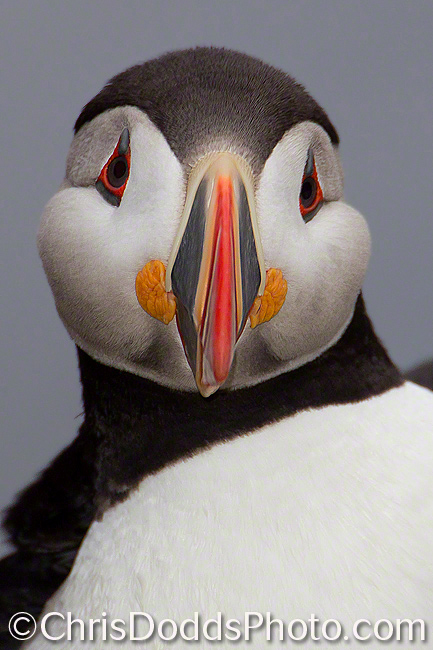
Shooting birds in flight in snow and FirstPass New Version Released

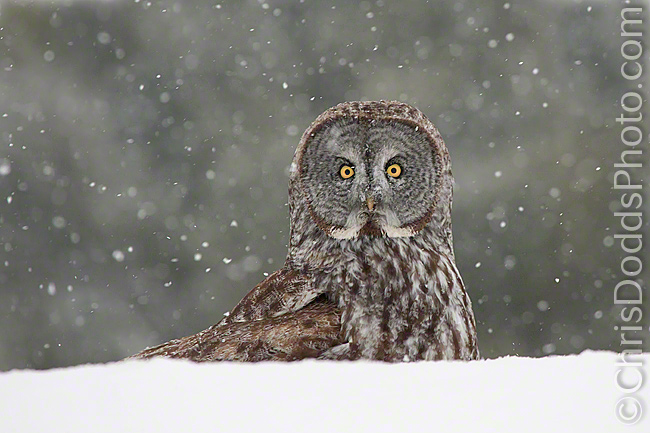
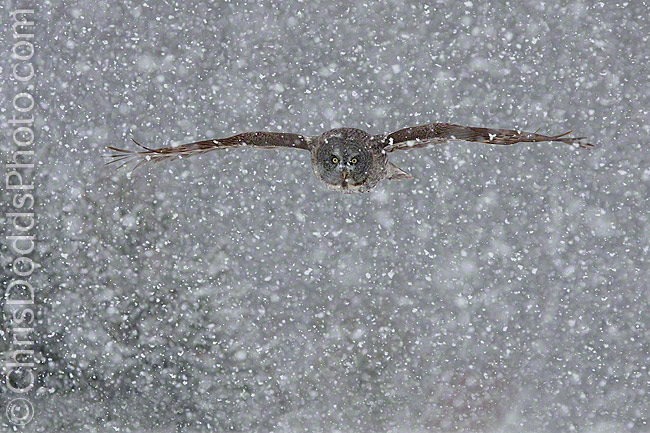
 Great Grey Owl SNOWFLIGHT (Strix nebulosa, Chouette Lapone) Bracebridge, Ontario, Canada. Image Copyright ©Christopher Dodds All Rights Reserved. Canon EOS 1D Mark II, 100-400mm @ 250mm. ISO 640, f/9 @ 1/640s Manual Exposure and manual focus. Full Frame. CLICK HERE TO PURCHASE A PRINT or LICENSE AN IMAGE FOR PUBLICATION.

Tips for birds in-flight in the snow

  • Stop down, or close the aperture when shooting in snow to maximize the effect of the big snowflakes; use a larger depth-of-field to keep as many snowflakes as possible sharp. I find F/9 works well during heavy snowfalls with large snowflakes.
  • Place your subject against the dark background of coniferous trees  to help define the snowflakes.
  • Use manual focus for more precise results; Most Auto-focus systems focus on the nearest, large snowflakes.
  • Leave some breathing room for your subject - you have probably invested a lot of time to get out in that perfect storm; make sure you include it in the image and avoid shooting too tight.

FirstPass Image Editing Software Evolves

I first told you about FirstPass image editing software for the Mac back in November and wanted to pass on the news that a new version is available with tons of new features:

✔ New image information panel 
✔ Image information panel now shows image histograms 
✔ Image information panel can be activated from image browser using right click menu 
✔ Ratings can be applied to multiple files at the same time using right click context menu 
✔ Improved memory management and performance 
✔ Fix for an issue related to caching optimization

This software has evolved into a fast, feature rich, must-have image editing dream for Mac using photographers! Be sure to purchase your copy before the scheduled price increase on February 1, 2012; it's going up to only $18.99, but you can get your copy for only $9.99 now:

Check out FirstPass in the CANADIAN APPLE STORE HERE

Check out FirstPass in the US APPLE STORE HERE

Cold Weather Clothing Tips for Photographers

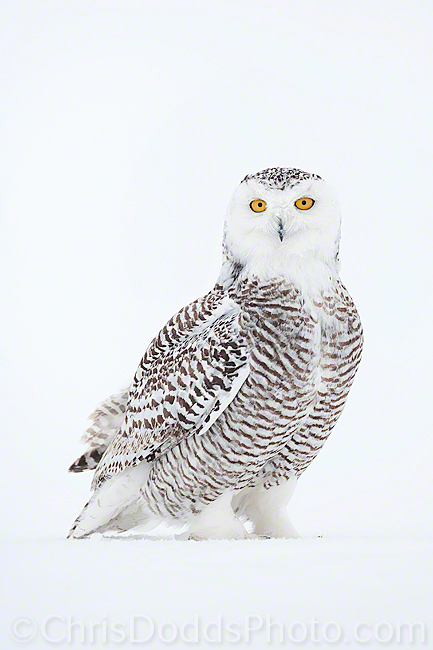
 Snowy Owl Stance (Bubo scandiacus, Harfang des neiges, SNOW) Ontario. Image Copyright ©Christopher Dodds All Rights Reserved. Canon EOS 1DsMKIII, 500mm F4 IS, Tripod with Tripod & Jobu Jr. 3 with Think-Tank Photo Hydrophobia 300-600. ISO 400, F6.3 1/1,600s Manual mode. CLICK HERE TO ORDER A PRINT OR LICENSE IMAGE FOR PUBLICATION.

Winter Owl Report

Just wanted to pass on my thoughts about the coming winter owl season. There's been good movements of our favorite winter owls so far and they have already started to establish their winter feeding grounds. All of the indications are pointing to a great winter owl season. I still have some limited space available on my Snowy Winter Owl Prowl Photo Safari / Workshops.

Cold Weather Clothing Tips for Photographers

Photography in the winter often entails staying warm while staying still in the freezing cold for long periods of time and foregoing any warmth from physical exertion. In the deep cold, when you are not exerting yourself, what you want is loft and insulation; remember that loose fitting clothing offers much more insulation and warmth than tight fitting layers that are so compressed that they actually loose the ability to keep you warm. Synthetics wick chilling moisture away from your skin, are light for travel and dry much quicker than any natural fabrics (Just remember: Cotton Kills!).

Tops: I start with a base layer Double Wicked Lite T Long Sleeve Shirt (remember that cotton traps moisture next to your skin, but synthetics wick moisture away from your skin), followed by a good mid weight fleece Zip Neck Sweater .

Bottoms: Full Length Base Layer with either Nylon zip-off pants or Microchill Fleece Pant if it’s really cold.

Outer wear: Expedition weight bib Gore-tex pants and Canada Goose Parka for the woods (extremely durable and branch resistant), or Expedition weight Down Parka (Really warm and light – perfect for travel).

Feet: As I’ve already mentioned, nature photographers spend a huge amount of time waiting for the image, so it’s extremely important to understand that boot manufacturers rate their boots with the assumption of moderate activity; there is a huge difference in just how warm a boot is when walking or standing for any length of time. I start with a good pair of Warm Socks and add a loose fitting Sorel Boot (I’ve tried so many winter boots, and there’s nothing like the durability and warmth of my Sorels). MICROspikes Pocket Traction System prevent accidental (and sometimes expensive and damaging) wipeouts.

Hands: Keeping your hands warm is quite a challenge; here’s my secret: I start with a loose fitting pair of Thin Liner Gloves which never come off my hands. I place Hand Warmers into the palm of the liner gloves, and when it’s really, really cold, I slip another into the wristband which warms the blood as it travels to my fingers. My choice for outer layer is the Black Diamond Mercury Mitts; be sure to buy a size, or two, larger than normal; this allows you to move your fingers around inside the gloves. The extra room, and fine leather palm of the Mercury Mitts allows me to use most of my camera’s buttons and dials – it takes a little practice, and seems clumsy, but better a little awkward than frozen.

Head: Remember that most heat loss occurs through your head and get a warm Beanie hat (or Touque as we say in Canada) . I often use a Balaclava when it’s really cold to protect my face from the the cold and windchill.

Camera: As for your camera gear, you should pack rain protection in case you are blessed with wet snow, or rain. I am thrilled with my Think-Tank Photo Hydrophobia 70-200 Flash and my Think-Tank Photo Hydrophobia 300-600 V2.0. Unlike the old days, little precaution is required before for your newer generation digital camera bodies are exposed to arctic conditions. Today’s pro camera bodies easily handle the cold weather and recent advances in battery technology easily allow a full day of photography on one charged battery. Consumer and prosumer cameras will also work well, but you should have an extra battery, or two, tucked away in an inside pocket keeping warm. Moving between extreme cold and warm temperatures when going indoors, or out, does cause some condensation; just leave your camera in it’s bag for a couple of hours while it comes to room temperature. Although I won’t remove a lens until my camera warms to room temperature, I don’t fuss much with my professional, sealed cameras; they’ve been from warm to cold and back again thousands of times. It’s good practice to remove the memory card when you are finished shooting and put it in a safe and zippered pocket; this prevents any warm moist air from entering your camera when you get home (or to your hotel), and keeps your images safe if your camera is stolen from you vehicle if you stop for coffee, hot chocolate or to warm-up at a restaurant.

Second Annual Photo Geek Christmas Party

I have just visited to Hudson Village Theater to do a pre show audio & video test and am thrilled to be presenting at such an awesome venue! There is still limited space available, be sure not to miss this show and support such a worthy cause!

Our sponsors have dug deep and collectivly offered thousands of dollars of prizes for this great event! Jobu Designs (makers of my favorite Gimbal Head - the Jobu Jr. 3), FirstPass Image downloader & Editor, Think-Tank Photo, Cotton Carrier, DigiMarc for Images and Tiffen have all jumped on-board and offered tons of prizes to show their suppoort for my Second Annual Photo Geek Christmas Party.

It's not too late to join me, Canadian nature photographer Christopher Dodds, on November 30, 2011 at 7:30 PM at the Hudson Village Theatre (28 Wharf Road, Hudson, QC   J0P 1H0) for an hour and a half long slideshow presentation to benefit this great cause which is so close to my heart. The show is designed to be entertaining and informative to all; nature lovers and photographers alike. Stories of adventure, natural history facts and information are all on the menu and this show is designed to offer helpful tips & techniques sure to improve your photography efforts with everything from a camera phone, point & shoot camera or professional SLR camera system. Over one hundred of my images will be projected, many unseen.  Everyone is welcome!
Hurry! Only 148 seats. Tickets are only $15.00 each and are available for advance purchase only - every penny is collected by, and goes to Le Nichoir. Please call or email Le Nichoir (communication@lenichoir.org 450-458-2809) to secure your tickets, or make a donation if you can't make it (be sure to tell them it's on behalf of Chris' Photo Geek Christmas Party) Major credit cards and cheques accepted. Finger food and hors d'oeuvres are included and there will be a cash bar (please drink responsibly).
There will be ample time to mingle, meet my friends and contacts and share some of your images with others, so feel free to bring prints, iPads or laptops with your favourite images to share. I hope to see you there and PLEASE SPREAD THE WORD!

Read more about it HERE
Better Bird Photography Portraits

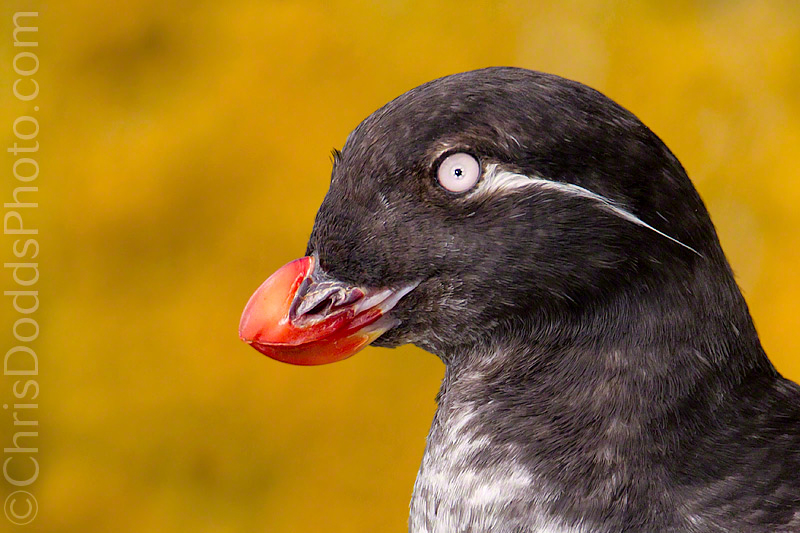
Parakeet Auklet Portrait (Fratercula cirrhata, Macareux huppé, TUPU) Saint Paul Island, The Pribilof Islands in the Bering Sea, Alaska. Image Copyright ©Christopher Dodds. Canon 1D MK IV, 500mm F4 L IS , 2X Teleconverter III & Canon Extension Tube EF 25 II, Tripod & Jobu Jr. 3. Full Frame. ISO 400 f/14 @ 1/200s Manual Mode. Fill flash Canon Speedlite 580EX II with Better Beamer @ -1&2/3. PURCHASE A PRINT or LICENSE IMAGE FOR PUBLICATION HERE.

Better Bird Photography Portraits

Bird photographers are often guilty of spending all of their time photographing the action and drama of birds in flight, and often skip the investment of the time required to create great portraits. I sell far more static portraits than action, or "birds-in-flight" images. Don't get me wrong; Birds-in-flight are my favorite challenge, just remember to diversify your images by going for portraits as well. It can be quite rewarding to see and study the intricate details revealed in a good portrait - check-out the unique (and cool) bill of this Parakeet Auklet. Here's a few tips to help you out next time you are out and about with your camera.

  • Try to get closer your subject without disturbing it. This one sounds easy, but wild birds are wild, take your time and avoid walking or crawling directly at your subject. Take your time and make regular stops to let your subject accept you.
  • Use a long lens and extender to help you get close without disturbance, and to take advantage of the long focal length to help blur the background and isolate the subject. I often add an extension tube to get even closer.
  • Try to choose an interesting background. Finding an interesting background will help you stand-out among the many. In this Parakeet Auklet portrait, I carefully chose the out of focus lichens as my background to set it apart from the typical blue sky of a clear day, or the white, or high-key, background of a cloudy day.
  • Invest in the composition. Carefully compose your portrait so that it is visually pleasing. Try to avoid a boring compositions with centred subjects. Compose a full frame image in the camera - to get the most pixels on your subject and as a challenge to get better and make better image in the camera.
  • Wait for the pose and head angle. All to often, I see portraits that resemble snap shots. This is often the result of poor head angle or a bad pose. I try to get the subject and it's head parallel to my sensor for most head shot type portraits, but do sometimes strive for the head-on look; the latter often in overcast conditions to avoid harsh shadows.
  • Choose your light. On clear days, choose the golden hours of sunrise or sunset to get the soft warm tones without harsh shadows. Be sure to point your shadow directly at the bird when the sun rises and gets harsher, and be sure the near side of the face is illuminated and there is a catch-light in the eye. Bright, cloudy and overcast conditions are great for digital portraits; there's no shadows to worry about, and we can photograph all day long. Avoid flash when the light is golden, but do try to add a kiss of fill flash when its overcast.
  • Be sure the image is sharp and properly exposed. Sounds easy enough, but try to remind yourself to use good long lens technique, a good tripod head and a sturdy tripod.


Second Annual Photo Geek Christmas Party

More prizes have arrived from these great sponsors! Jobu Designs (makers of my favorite Gimbal Head - the Jobu Jr. 3), FirstPass Image downloader & Editor, Think-Tank Photo, Cotton Carrier and DigiMarc for Images have all jumped on-board and offered tons of prizes to show their suppoort for my Second Annual Photo Geek Christmas Party. I expect other sponsors to make offerings and encourage contributions - email me if you would like to donate and promote your product chris(at)chrisdoddsphoto(dot)com

Join me, Canadian nature photographer Christopher Dodds, on November 30, 2011 at 7:30 PM at the Hudson Village Theatre (28 Wharf Road, Hudson, QC   J0P 1H0) for an hour and a half long slideshow presentation to benefit this great cause which is so close to my heart. The show is designed to be entertaining and informative to all; nature lovers and photographers alike. Stories of adventure, natural history facts and information are all on the menu and this show is designed to offer helpful tips & techniques sure to improve your photography efforts with everything from a camera phone, point & shoot camera or professional SLR camera system. Over one hundred of my images will be projected, many unseen.  Everyone is welcome!
Hurry! Only 148 seats. Tickets are only $15.00 each and are available for advance purchase only - every penny is collected by, and goes to Le Nichoir. Please call or email Le Nichoir (communication@lenichoir.org 450-458-2809) to secure your tickets, or make a donation if you can't make it (be sure to tell them it's on behalf of Chris' Photo Geek Christmas Party) Major credit cards and cheques accepted. Finger food and hors d'oeuvres are included and there will be a cash bar (please drink responsibly).
There will be ample time to mingle, meet my friends and contacts and share some of your images with others, so feel free to bring prints, iPads or laptops with your favourite images to share. I hope to see you there and PLEASE SPREAD THE WORD!

Read more about it HERE

How to photograph birds in flight in low light

Tufted Puffin In Flight #1 (Fratercula cirrhata, Macareux huppé, TUPU) Saint Paul Island, The Pribilof Islands in the Bering Sea, Alaska. Image Copyright ©Christopher Dodds. Canon EOS 1DMKIV, 70-300mm f/4-5.6 L IS USM @300mm. ISO 1,600, f/5.6 @ 1/3,200s Manual Mode Full Frame. PURCHASE A PRINT or LICENSE IMAGE FOR PUBLICATION HERE.

Photographing birds in flight in low light is quite challenging; it's not easy. I love photographing seabirds, and that often means shooting small, and often erratically moving targets; fast and unpredictable little fliers from the top of coastal cliffs in bad weather. The biggest problem to overcome is our need to always grab our longest lens and our reluctance to shoot wide open at high ISO (for Canon users, anyway). I recently had a discussion with a photographer who told me he didn't need a camera capable of shooting 10 fps (frames per second); he timed the wingbeats and only took one frame at a time. Well, let's just say that was one photographer who had a couple of good birds in flight images in his portfolio, but Florida Great Blue Herons are tame, huge, fly slowly and do have predictable wingbeats. What I want to share today is how I succeed (more, or less) at shooting bullets that move at 55 MPH with 100-400 wing beats per minute; I'm talking, of course, about photographing Puffins in flight. I was fortunate to photograph all three North American species of Puffins this summer, on both the East, and west coast. In June I hosted my annual Puffins Galore (and so much more) workshop for the Atlantic Puffin, and then I photographed the Horned and Tufted Puffins of Saint Paul Island (more images to come soon).
Tufted Puffin In Flight #2 (Fratercula cirrhata, Macareux huppé, TUPU) Saint Paul Island, The Pribilof Islands in the Bering Sea, Alaska. Image Copyright ©Christopher Dodds. Canon EOS 1DMKIV, 70-300mm f/4-5.6 L IS USM @300mm. ISO 1,600, f/5.6 @ 1/3,200s Manual Mode Full Frame. PURCHASE A PRINT or LICENSE IMAGE FOR PUBLICATION HERE.

First of all, get over your phobia of shooting wide open and using a high ISO. You are going to need a shutter speed of at least 1/2,500 of a second, but I prefer 1/3,200 of a second to freeze the fast action; this usually means using an ISO of at least 1,600 and an aperture of at least f/5.6 (always in manual mode). I try to get as close as possible in low light and low contrast conditions; I try to use the shortest lens possible, while trying to fill the frame. Using only the centre auto-focus point only usually helps the autofocus system lock onto your subject, but it's going to take more than relying on your camera to acquire focus. I generally try to pick-up repetitive flight patterns; I try to predict where the bird I am trying to shoot will fly and pre-focus on something near there so the auto-focus system doesn't have to spin the lens much to acquire sharp focus. Once locked-on to my subject, it's all up to me to keep the focus point on the subject and hit the stutter button at 10 fps; the best way to be able to do that is practice; over, and over again.
Tufted Puffin In Flight #3 (Fratercula cirrhata, Macareux huppé, TUPU) Saint Paul Island, The Pribilof Islands in the Bering Sea, Alaska. Image Copyright ©Christopher Dodds. Canon EOS 1DMKIV, 70-300mm f/4-5.6 L IS USM @300mm. ISO 1,600, f/5.6 @ 1/3,200s Manual Mode Full Frame. PURCHASE A PRINT or LICENSE IMAGE FOR PUBLICATION HERE.

I decided to post three sequential, full frame images of Tufted Puffins from a recent trip to Saint Paul Island (The Pribilof Islands), Alaska to demonstrate that it is possible to pull off what seems like the impossible. I left my tried, tested and true Canon EF 300mm f/2.8L IS II USM Telephoto Lens at home, instead opting for my favorite new 70-300mm f/4-5.6 L IS USM and threw it on my Canon EOS 1DMKIV. I set-up my exposure in manual mode and checked the histogram to make sure the blacks from the wet rocks below the cliffs I was standing on weren't blocked-up against the left edge to minimize noise, and carefully made sure I had no over-exposed whites on the right edge to ensure the most detail in the whites. Once sure of my exposure, I watched for the Puffins flight path and pre-focused on a rock where I thought the bird would fill the frame. Now pre-focused on the rock, I saw the bird fly in and followed it until it started to fill the frame, partially depressed the shutter button to activate the auto-focus system and hit the trigger at its maximum capture rate of 10 fps. Truth be told; I waited a fraction of a second too long for this sequence, and ran the risk of clipping the Puffin's wing-tips, but it worked-out fine with three action shots that I liked enough to keep (No, I won't teach you how to reconstruct the wingtips if you clip them, but I will teach you how to capture the image right, in the camera - smile).

Which of the three images here is your favorite & why? Leave a comment and you could win a free copy of the new Mac editing software FirstPass.

Second Annual Photo Geek Christmas Party

Great news! Jobu Designs (makers of my favorite Gimbal Head - the Jobu Jr. 3), Think-Tank Photo, Cotton Carrier, have all jumped on-board and offered tons of prizes to show their suppoort for my Second Annual Photo Geek Christmas Party. I expect other sponsors to make offerings and encourage contributions - email me if you would like to donate and promote your product chris(at)chrisdoddsphoto(dot)com

Join me, Canadian nature photographer Christopher Dodds, on November 30, 2011 at 7:30 PM at the Hudson Village Theatre (28 Wharf Road, Hudson, QC   J0P 1H0) for an hour and a half long slideshow presentation to benefit this great cause which is so close to my heart. The show is designed to be entertaining and informative to all; nature lovers and photographers alike. Stories of adventure, natural history facts and information are all on the menu and this show is designed to offer helpful tips & techniques sure to improve your photography efforts with everything from a camera phone, point & shoot camera or professional SLR camera system. Over one hundred of my images will be projected, many unseen.  Everyone is welcome!
Hurry! Only 148 seats. Tickets are only $15.00 each and are available for advance purchase only - every penny is collected by, and goes to Le Nichoir. Please call or email Le Nichoir (communication@lenichoir.org 450-458-2809) to secure your tickets, or make a donation if you can't make it (be sure to tell them it's on behalf of Chris' Photo Geek Christmas Party) Major credit cards and cheques accepted. Finger food and hors d'oeuvres are included and there will be a cash bar (please drink responsibly).
There will be ample time to mingle, meet my friends and contacts and share some of your images with others, so feel free to bring prints, iPads or laptops with your favourite images to share. I hope to see you there and PLEASE SPREAD THE WORD!

Read more about it HERE

Second Annual Photo Geek Christmas Party

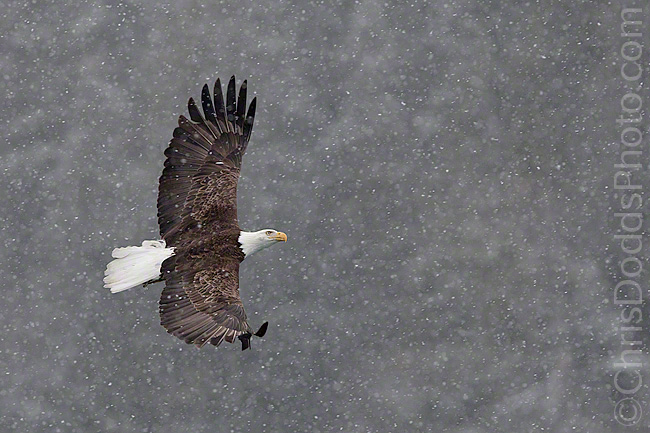
 American Bald Eagle SNOWFLIGHT (Haliaeetus leucocephalus, Pygargue à tête blanche, BAEA) Kachemak Bay, Alaska ©Christopher Dodds All Rights Reserved. Canon EOS Canon EOS 1DsMKIII, 500mm F4 L IS  ISO 800, f/6.3 @ 1/1,600s Manual mode. Full Frame. Click HERE to order a print or license image for publication.

Here's a favorite Bald Eagle image from my last Eagles Galore Photo Safari Workshop in Kackemak Bay, Alaska. I love being out in bad weather; this one hand-held from a boat in a blizzard. Fun times! Modern digital cameras have multiple, user selectable, auto-focus zones; here, I selected a point on the left of center, as I knew the Eagle was flying from my left and I wanted some space in the frame for it to fly into as a compositional element. Give it a try next time you are out with your camera.


I'm hosting my second annual PHOTO GEEK CHRISTMAS PARTY!

It's a PARTY with a CAUSE!


Le Nichoir Wild Bird Rehabilitation Centre was founded in 1994 as a non-profit organization (#894112358RR001) and is located in Hudson, Quebec. Le Nichoir is a licensed centre, part of a community of North American rehabilitators, supported by the International Wildlife Rehabilitation Council (IWRC) and the National Wildlife Rehabilitators Association (NWRA). Their mission is to conserve wild birds as part of our natural heritage.
Le Nichoir provides proper care and treatment for injured or orphaned wild birds and releases them back into their natural habitat. Le Nichoir also provides advice and information about wild birds and their environment through educational programs and annual public events. In 1995 Le Nichoir received 478 birds. Today, it is the largest rehabilitation centre for songbirds in Canada. They admit more than 1400 wild birds and receive 5000 telephone calls each year. There is no charge asked for any of their services, but they need our help! It costs about $6,000.00 each for the six wildlife biology students who work tirelessly for the summer at minimum wage. Officially, I hope to raise $1,500.00, but secretly, I'd love raise $3,000.00, so please help this worthy cause!

Join me, Canadian nature photographer Christopher Dodds, on November 30, 2011 at 7:30 PM at the Hudson Village Theatre (28 Wharf Road, Hudson, QC   J0P 1H0) for an hour and a half long slideshow presentation to benefit this great cause which is so close to my heart. The show is designed to be entertaining and informative to all; nature lovers and photographers alike. Stories of adventure, natural history facts and information are all on the menu and this show is designed to offer helpful tips & techniques sure to improve your photography efforts with everything from a camera phone, point & shoot camera or professional SLR camera system. Over one hundred of my images will be projected, many unseen.  Everyone is welcome!
Hurry! Only 148 seats. Tickets are only $15.00 each and are available for advance purchase only - every penny is collected by, and goes to Le Nichoir. Please call or email Le Nichoir (communication@lenichoir.org 450-458-2809) to secure your tickets, or make a donation if you can't make it (be sure to tell them it's on behalf of Chris' Photo Geek Christmas Party) Major credit cards and cheques accepted. Finger food and hors d'oeuvres are included and there will be a cash bar (please drink responsibly).
There will be ample time to mingle, meet my friends and contacts and share some of your images with others, so feel free to bring prints, iPads or laptops with your favourite images to share. I hope to see you there and PLEASE SPREAD THE WORD!

Color management & i1 Photo Pro mini-review

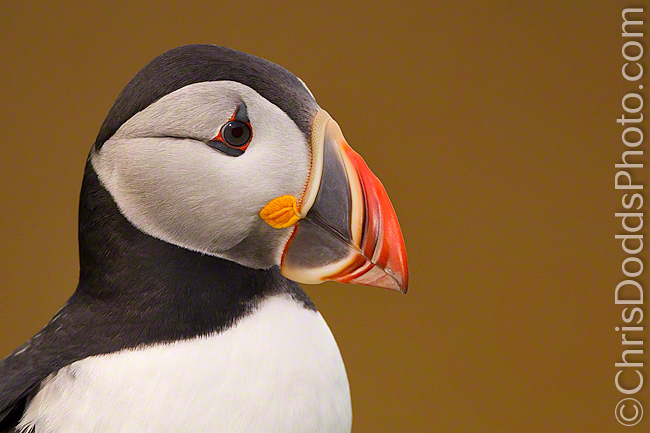
Atlantic Puffin Portrait (Fratercula arctica, Macareux moine, ATPU) île aux Perroquets, Réserve de parc national du Canada de l'Archipel-de-Mingan, Quebec, Canada. Image Copyright ©Christopher Dodds All Rights Reserved. Canon EOS 1DMKIV, 800mm f/5.6 L IS, Canon Extension Tube EF 12 II & Canon Extension Tube EF 25 II Tripod & Jobu Jr. 3. Think-Tank Photo Hydrophobia 300-600. ISO 800, f/5.6 @1/500s Manual mode. Full Frame. CLICK HERE TO PURCHASE A PRINT or LICENSE IMAGE FOR PUBLICATION.

Color Management & i1 Photo Pro Mini-review

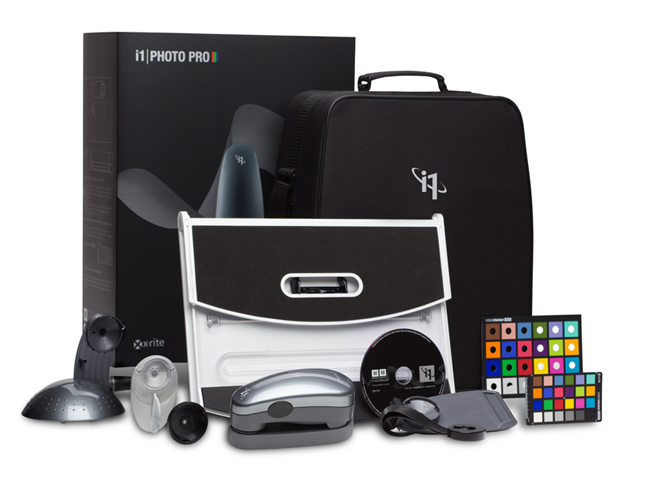
Achieving consistent color from camera to monitor to print and projector is easier than ever with X-Rite's new and improved X-Rite i1Photo Pro . I have owned a GretagMacbeth Eye One Photo since I switched to digital with the purchase of my Nikon D1X (2001). It seems like a lifetime ago now. I realized that I wanted my prints to mach my screen, and my projected images to match my prints. So much has changed since then; I switched to Canon when they released the EOS 1D Mark II and GretagMacbeth was bought by X-Rite.

I was thrilled to learn recently that X-Rite had released the all-new X-Rite i1Photo Pro and was offering upgrade kits to existing users. I quickly got an upgrade for review and am delighted. The heart of the system; the spectrophotometer remains best in class, so it's easy to see why you need only upgrade the software, a few accessories and the bonus is finally having a proper case to keep everything together and safe.

With X-Rite i1Photo Pro you can quickly and easily create custom profiles for cameras, monitors, digital projectors and RGB printers, ensuring color accuracy from capture to output. With the new i1Profiler software, which combines the best features of its predecessors i1Match, ProfileMaker and MonacoPROFILER software, users can choose between a 'basic', wizard-driven interface, or an 'advanced' user-driven interface to create high quality, precise, custom color profiles.

With an all-new user interface, i1Profiler offers an unprecedented level of flexibility to address the needs of a photographer's workflow. i1Profiler seamlessly combines the ease of use of the wizard driven interface found in the basic mode, and the flexibility of the menu driven user interface found in the advanced mode. Whether a novice, expert or somewhere in between, i1Profiler easily adapts to any skill level and workflow needs, while maintaining the ability to produce outstanding profile quality results.

All-in-all, I don't think there is a better color management solution on the market for a photographer wanting to deliver consistent color results over various output mediums and devices.

Be sure to support this site and order yours here: X-Rite i1Photo Pro Professional Color Management for Photographers

Puffins Galore and so much more

Atlantic Puffin SOLITUDE (Fratercula arctica, Macareux moine, ATPU) île aux Perroquets, Réserve de parc national du Canada de l'Archipel-de-Mingan, Quebec, Canada. Image Copyright ©Christopher Dodds All Rights Reserved. Canon EOS 1DMKIV, 800mm f/5.6 L IS Tripod & Jobu Jr. 3. Think-Tank Photo Hydrophobia 300-600. ISO 800, f/6.3 @1/3200s Manual mode. Full Frame. CLICK HERE TO PURCHASE A PRINT or LICENSE IMAGE FOR PUBLICATION.

Atlantic Puffin FLIGHT ON WHITE  (Fratercula arctica, Macareux moine, ATPU) île aux Perroquets, Réserve de parc national du Canada de l'Archipel-de-Mingan, Quebec, Canada. Image Copyright ©Christopher Dodds All Rights Reserved. Canon EOS 1DMKIV, 800mm f/5.6 L IS Tripod & Jobu Jr. 3. Think-Tank Photo Hydrophobia 300-600. ISO 800, f/5.6 @1/2000s Manual mode. Full Frame. CLICK HERE TO PURCHASE A PRINT or LICENSE IMAGE FOR PUBLICATION.

I'm just back from two fun and exciting, back-to-back PUFFINS GALORE AND SO MUCH MORE workshops. What a trip! We had tons of fun photographing tiny Atlantic Puffins that fly at 55 mph. Here's just two of the more than 1,200 keepers from the trip that I still have to edit and cut down by a great deal. I've just announced two trips back there next July. Be sure to book early!: PUFFINS GALORE AND SO MUCH MORE

Jobu Jr. 3 Does it again!

My tried and trusted Jobu Jr. 3 Gimbal head proved itself yet again! This time we noticed that it also is the right choice for getting down low. It's smaller size means that you are closer to the ground when your tripod is at it's lowest; not only offering a lower perspective, but also putting less strain on your back and neck as you look through the viewfinder. The lock-down of both the vertical and horizontal adjustment knobs are still holding strong, and second to none! Be sure to check out my mini-review of the Jobu JR. 3 and find a discount code HERE.

When it's Bright; Work Tight - American Oystercatcher

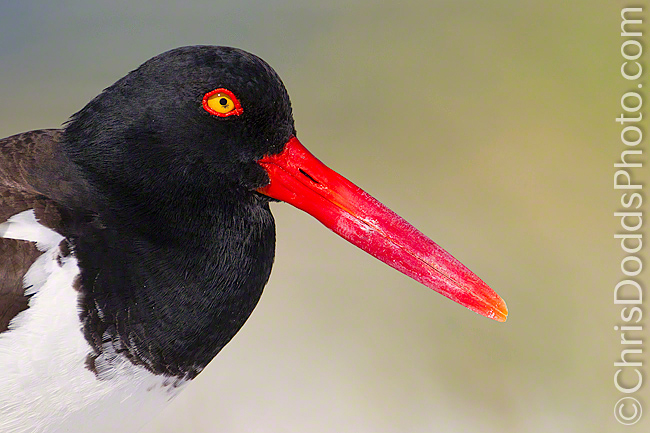
American Oystercatcher PORTRAIT  (Haematopus palliatus, Huîtrier d'Amérique, AMOY)  Fort DeSoto Beach, Tierra Verde, Florida. Image Copyright ©Christopher Dodds All Rights Reserved. Canon 1D MK IV, 500mm F4 L IS, 2X Teleconverter III & Canon 25mm Extension Tube. ISO 400, F10 @1/800s Manual mode. CLICK HERE TO PURCHASE A PRINT or LICENSE IMAGE FOR PUBLICATION

When it's bright; work tight!

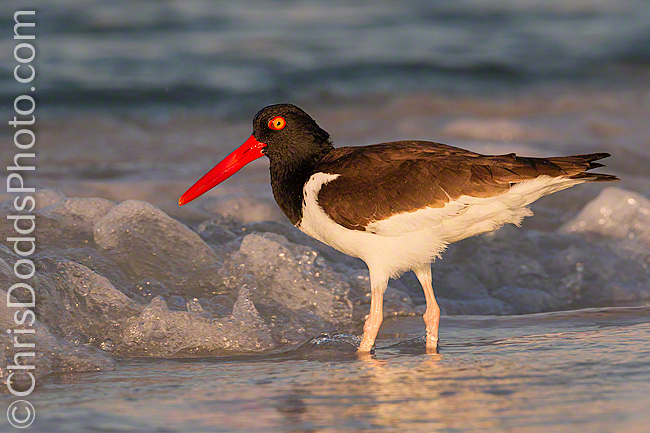
Let's face it; as much as we might like it, the light isn't always soft and golden. Those times I find myself out with my camera in bright, harsh light, I always work close with big glass to make the best of what light there is. The American Oystercatcher is a spectacular bird, one that's hard to stay away from when on a beach with my camera. I arrived on the beach early to scout out what was worth my time, and discovered the most co-operative pair of Oystercatchers standing against strong, sand laden winds. I immediately noticed their beaks were covered with sand, but also saw that I could manage to get a nice background by getting down low, and including the out of focus grass covered dune in the background. Sand, like snow, reflects a lot of light back into the shadowed areas of the image, reducing contrast and opening-up details that otherwise would be lost. Rather than passing up the shot, I worked what was there.

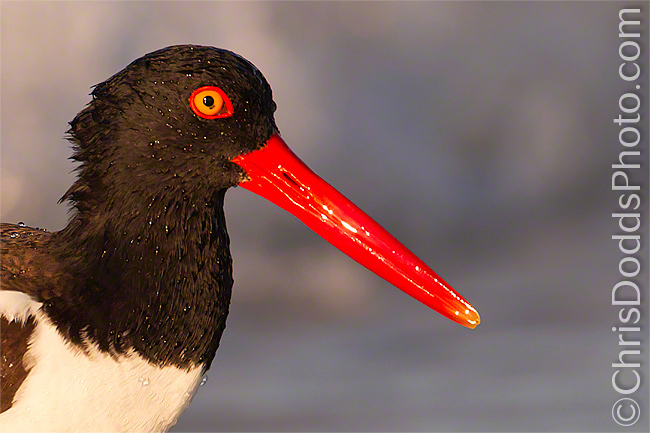
Later that same day, I rediscovered the same birds I had worked earlier, this time presenting with the sand rinsed off their beaks, and in spectacular light.


American Oystercatcher SUNSET PORTRAIT  (Haematopus palliatus, Huîtrier d'Amérique, AMOY)  Fort DeSoto Beach, Tierra Verde, Florida. Image Copyright ©Christopher Dodds All Rights Reserved. Canon 1D MK IV, 500mm F4 L IS, 1.4X Extender III & Canon 25mm Extension Tube. ISO 400, F10 @1/500s Manual mode. CLICK HERE TO PURCHASE A PRINT or LICENSE IMAGE FOR PUBLICATION

American Oystercatcher SUNSET SURF  (Haematopus palliatus, Huîtrier d'Amérique, AMOY)  Fort DeSoto Beach, Tierra Verde, Florida. Image Copyright ©Christopher Dodds All Rights Reserved. Canon 1D MK IV, 500mm F4 L IS, 1.4X Extender III . ISO 400, F10 @1/500s Manual mode. CLICK HERE TO PURCHASE A PRINT or LICENSE IMAGE FOR PUBLICATION

MEEP! MEEP! The Greater Roadrunner

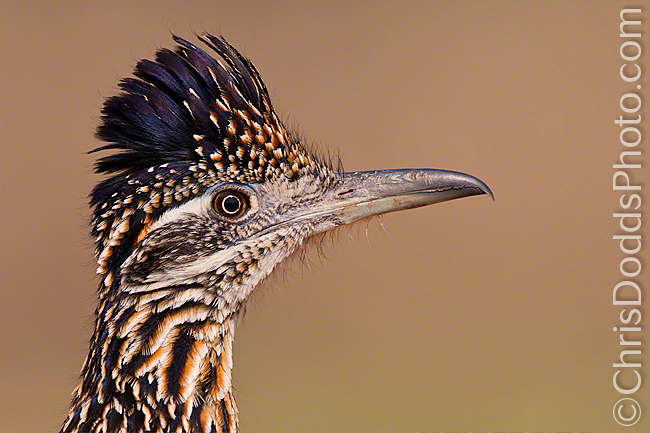
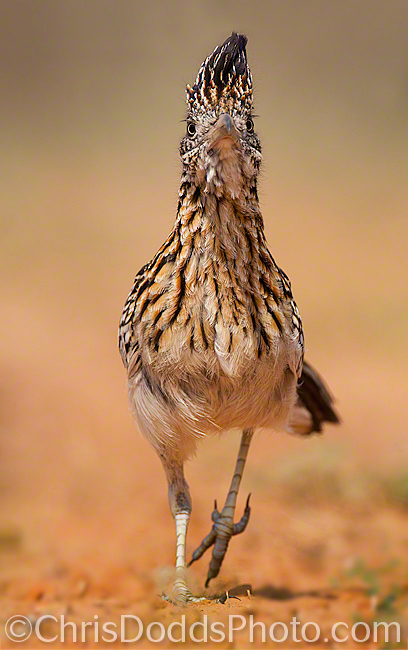
Greater Roadrunner PORTRAIT Geococcyx californianus, Grand Géocoucou GRRO (Also known as: chaparral cock, ground cuckoo, snake killer) Laguna Seca Ranch, Linn, Texas. Image Copyright ©Christopher Dodds All Rights Reserved. Canon 1D MK IV, 500mm F4 L IS, 2X Teleconverter III . ISO 250, F9 @1/500s Manual mode. CLICK HERE TO PURCHASE A PRINT or LICENSE IMAGE FOR PUBLICATION

Greater Roadrunner MEEP! MEEP! Geococcyx californianus, Grand Géocoucou GRRO (Also known as: chaparral cock, ground cuckoo, snake killer) Laguna Seca Ranch, Linn, Texas. Image Copyright ©Christopher Dodds All Rights Reserved. Canon 1D MK IV, 500mm F4 L IS, 2X Teleconverter III . ISO 250, F9 @1/500s Manual mode. CLICK HERE TO PURCHASE A PRINT or LICENSE IMAGE FOR PUBLICATION

I'm just in the door from yet another fantastic trip; this time to Florida. The Ospreys Galore workshop / safari was a huge success, with 60% repeat clients. I've got tons of new images and new workshops to share over the next few weeks, so stay tuned for some regular updates. In the meantime, here's a couple of Greater Roadrunner images from Laguna Seca Ranch near Lynn, Texas . After many attempts to capture a Roadrunner running straight at me, I was thrilled to finally figure it out at an amazing ranch - stay tuned for more details for Texas workshops next April. The key to these images are a dugout blind and the distant background.

The Greater Roadrunner (Geococcyx californianus, Grand Géocoucou, GRRO)gets its English name from its great running ability. The Greater Roadrunner, taxonomically classified as Geococcyx californianus, meaning "Californian Earth-cuckoo," is a long-legged bird in the cuckoo family, Cuculidae. It is one of the two roadrunner species in the genus Geococcyx; the other is the Lesser Roadrunner. This roadrunner is also known as the chaparral cock, ground cuckoo, and snake killer. When it is startled it will run rather than fly. It is a poor flyer but can run at speeds of up to 15 miles per hour (24 KM/H). It uses its long tail as a type of rudder to help it keep its balance while running.
The greater roadrunner is a member of the cuckoo family. It is a ground bird that is about two feet in length. It has speckled brown and black feathers on its back and wings and a lighter throat and chest with dark stripes. It has long legs, a very long tail and yellow eyes. It has a crest on its head  and the male has a red and blue patch of skin on the side of its head. The greater roadrunner can be found in   California, Nevada, New Mexico, Utah, Colorado, Kansas, Oklahoma, Arkansas, and Louisiana. It is also found in Mexico. The greater roadrunner is most common in desert areas, but it can also be found in chaparral, grasslands, open woodlands and agricultural areas. It's diet consists mainly of small snakes, lizards, mice, scorpions, spiders, ground nesting birds and insects. It also eats fruits and seeds. The female lays three to six eggs in a stick nest lined with grass. The nest is usually placed in a low tree, bush, thicket or cactus 3-15 feet above the ground. Males do most of the incubating because they keep a normal body temperature at night. The female's body temperature drops at night. If a predator comes too close to the nest, the male will run in a crouch until he is a short distance away from the nest. He then will stand up, raise and lower the crest on his head, flash the blue and red patches on the sides of his head and call out in an attempt to lure the predator away from the nest. The chicks hatch in about 20 days. Both parents care for the young. The chicks leave the nest when they are 18 days old and can feed themselves when they are 21 days old.

Manual Mode for More Creative Control

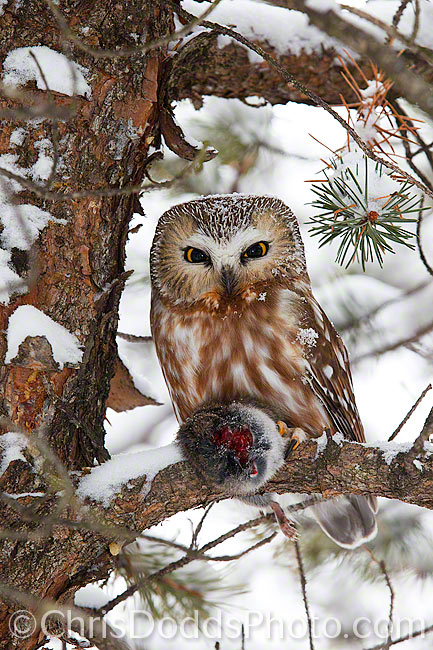
Northern Saw-Whet Owl (Aegolius acadicus, Petite Nyctale) with sprinkle of snow and Meadow Vole (Field Mouse) Lunch. Ontario. Image Copyright ©Christopher Dodds All Rights Reserved. Canon EOS-1D MKIV, 70-200 F2.8 IS II @180mm. ISO 800, 1/100s F8 Manual. Hand held.580EXII Flash manual mode. Full Frame. CLICK HERE TO PURCHASE A PRINT or LICENSE IMAGE FOR PUBLICATION.

Northern Saw-Whet Owl (Aegolius acadicus, Petite Nyctale) Portrait. Ontario. Image Copyright ©Christopher Dodds All Rights Reserved. Canon EOS-1D MKIV, 70-200 F2.8 IS II @200mm with 1.4X Teleconverter. ISO 800, 1/80s F7.1 Manual. Hand held. Full Frame. CLICK HERE TO PURCHASE A PRINT or LICENSE IMAGE FOR PUBLICATION.

Choose Manual Mode for MORE Creative Control

If you frequent this blog or my website, then you most probably know that I use MANUAL MODE most often; I expose for the ambient light and focus on making pleasing images. There is another compelling reason to choose manual mode; it makes the photographer (you) think about the three variables that lead to the correct exposure (ISO, Shutter Speed and Aperture). What is their relation to the image you are trying to make: Are you photographing a landscape and do you need a large depth of field? A bird in flight and do you need to freeze the action? would you rather create a blur? A bird on a perch and do you want a shallow depth of field? Will changing the ISO help me to achieve the desired result? I find that most photographers in my workshops who use anything other than manual mode are completely unaware of all that is available to them. If you find yourself always choosing aperture priority, shutter priority or program mode, then give manual mode a try next time you get out with your camera.

Nik Radio and Snowy Owl Workshop

Great Gray Owl (Strix nebulosa, Chouette Lapone) Bracebridge, Ontario, Canada. Image Copyright ©Christopher Dodds http://www.chrisdoddsphoto.com All Rights Reserved. Canon EOS 1D Mark II, 100-400mm @ 320mm. ISO 400, F5.6 1/1600s Manual Exposure. CLICK HERE TO PURCHASE A PRINT or LICENSE AN IMAGE FOR PUBLICATION. Image presented with both a visible, and invisible digital watermark by Digimarc.
Winter Owl Workshop January 17-21, 2011

My Winter Owl Prowls proved so successful that they are sold out. I had been keeping the week of January 17-21, 2011 open for something different, and here it is. A five day winter owl workshop with just two participants for five full days of Winter Owl Photography. Learn more HERE.

My Nik Radio Interview with Scott Sheppard


I recently had the pleasure of being interviewed by Scott Sheppard for Nik Radio. It was a blast visiting with Scott and he is a gifted interviewer with quite a personality. We discussed my recent discovery of Nik Software and how I am introducing it into my post capture work-flow. There's a few good tips and a description of my Gannets Galore photo tour / workshop / safari. Be sure to grab a cup of coffee and give it a listen to hear some stories, tips and techniques. Thank you Scott and Nik Software (Use the coupon code "cdodds" to save 15% at the Nik store).

LISTEN TO A LIVE STREAM NOW

DOWNLOAD IN iTunes


Great FREE Gear Giveaway Continues

Sign-up for my newsletter before Dec. 15th, 2010 and you will automatically be entered to win some amazing prizes. Simply fill-in your name and email address in the form in the column to the right of this post and you are entered automatically (only sign-up once please). Tweet, Like or Share this blog entry on Facebook or Twitter, or leave a meaningful comment here for additional chances to win. Don't forget to tell your friends or fellow camera club members about the prizes.

  • WH-200 Wimberley Head version II (retail value of US$595.00)
  • Think-Tank Photo Urban Disguise 50 (retail value US$169.00)
  • Nik Software Viveza 2 (retail value US$199.95)
  • Digimarc for Images Professional Edition 1 year subscription (US$99.00)
  • One of eight Canon Long Lens Rain Covers (US$125.00 each)

Dec. 15th PHOTO GEEK CHRISTMAS PARTY

I'm hosting my first annual PHOTO GEEK CHRISTMAS PARTY at the ROCKBURN PUB 2461 Mtee Rockburn, Hinchinbrook, Quebec J0S 1E0 (450) 264-2239. All amateurs and hobbyists welcome! It's an à la carte menu and there is no fee (other than paying for your own food & drinks) - John Zimmerman (President, Montreal Camera Club) has graciously agreed to pass the hat for Missing Children's Network / Enfant-Retour Québec; donations are optional but encouraged (Tax receipts will be issued for contributions greater than $15.00). Come on out and meet me, my friends and make new contacts while networking and showing off a few of your favorite images from 2010. Feel free to bring prints, iPads or laptops with your favorite images. RSVP required - email me at chris@chrisdoddsphoto.com (please type PHOTO GEEK CHRISTMAS PARTY in the subject line) to reserve your spot. Space is limited, so be sure to reserve soon. I will be drawing some great prizes for the Great Gear Giveaway Contest and you get another name in the hat @ the party. Special thanks to Joann for opening the pub just for us!

If you go out in the woods today - Think-Tank Photo Digital Holster V2.0

Great Grey Owl Winter (Strix nebulosa, Chouette Lapone) Bracebridge, Ontario, Canada. Image Copyright ©Christopher Dodds http://www.chrisdoddsphoto.com All Rights Reserved. Canon EOS 1D Mark II, 100-400mm @ 400mm. ISO 800, F8 1/400s Manual Exposure. Full Frame. CLICK HERE TO PURCHASE A PRINT or LICENSE AN IMAGE FOR PUBLICATION. Image presented with both a visible, and invisible digital watermark by Digimarc.

Let’s face it: digital cameras are responsible for more people being more successful at making great images than ever before. The instant feedback from the image and histogram displayed on digital camera's LCD screens has revolutionized how we take picture and is responsible for the astronomical volume of pictures captured every day – many of them great images.
The gap between the professional and amateur has narrowed. The biggest difference between a professional and amateur today, is their ability to edit down the number of similar images, and a professional's ability to leave some gear behind. If you head out into the woods to look for owls, consider packing less for speed, ease of movement, comfort and your back. You really don't need to lug around every lens you own in the biggest of camera backpacks. I’ve seen it countless times out in the field: great images missed while the photographer was selecting which lens and camera to use from the arsenal they had just hauled through waist deep snow into the woods. Imageless, out of breath, dripping sweat, shaking from the physical exertion, they are left to pack-up their photographic assets, while I quickly chimp through the images, stow my single camera and lens and carry-on looking through the woods for owls.

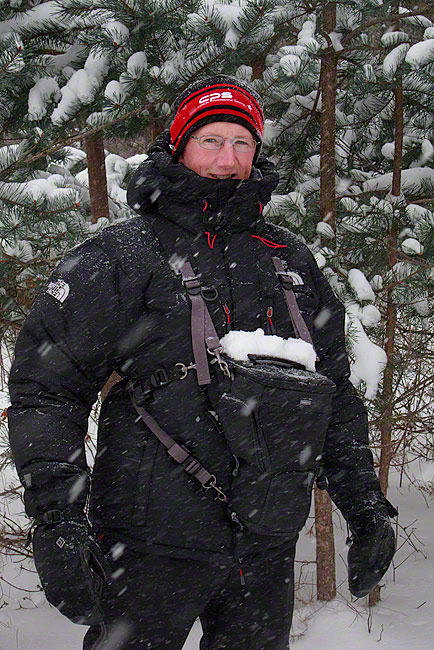
Nature Photographer Christopher Dodds with Think-Tank Photo's new Digital Holster 50 V2.0 and Digital Holster Harness V2.0 looking for owls December, 2010, Rockburn, Quebec, Canada. Image Copyright and courtesy ©Julie Morrison All Rights Reserved. Image from my Canon S-95.

Think-Tank Photo Digital Holster 50 V2.0

My friends over at Think-Tank Photo are at it again. This time, they have redesigned their Digital Holster line. I was thrilled to receive the new Digital Holster 50 V2.0 with a Digital Holster Harness V2.0 and put them to the test recently while out in the recent Canadian winter looking for owls.
I threw my 70-200mm F2.8 IS II onto my Canon 1D Mark IV, extended the hood and slid it into my new Digital Holster 50 V2.0 after un-zipping the “pop down” lens compartment extension on the case – a terrific design that reduces the holster’s size when you travel with the lens hood reversed. Next, I quickly installed and adjusted the Holster Harness (they have even found a simple way to stash the left-over ends of straps so they don’t get in the way or blow around in the wind) and quickly loaded the rig over my huge coat and onto my chest. I threw an extra battery and some extra memory cards into the built-in side pocket and was off to try my luck at finding any owls that may have been out in the fresh snow. The new version even has a built-in side attachment system compatible with modular Think-Tank Photo pouches if you need a little more room. Built materials and quality are first rate, as expected from Think-Tank Photo and there is even a built-in padded flap to cover and protect the camera’s LCD screen.
The Digital Holster 50 V2.0 and the new Digital Holster Harness V2.0 worked flawlessly and proved to be the key to mobility and agility while safely protecting my camera as I navigated around the forest in the fresh snow. As mentioned, the material is durable and it’s built well, I only wish the fine folks over at Think-Tank Photo would stop including waterproof covers that take away storage space when stowed in the bag, get in the way and then become lost, and instead produced a weatherproof line of gear for the outdoor crowd – don’t get me wrong, they are almost weatherproof now and I have yet to find a better alternative. I am just hopeful we will see an “adventurer” line from them in the future; a line designed by and for the outdoor photographer.
Order yours now and get a free bag HERE while helping to support this site.

Great FREE Gear Giveaway Continues

Sign-up for my newsletter before Dec. 15th, 2010 and you will automatically be entered to win some amazing prizes. Simply fill-in your name and email address in the form in the column to the right of this post and you are entered automatically (only sign-up once please). Tweet, Like or Share this blog entry on Facebook or Twitter, or leave a meaningful comment here for additional chances to win. Don't forget to tell your friends or fellow camera club members about the prizes.

  • WH-200 Wimberley Head version II (retail value of US$595.00)
  • Think-Tank Photo Urban Disguise 50 (retail value US$169.00)
  • Nik Software Viveza 2 (retail value US$199.95)
  • Digimarc for Images Professional Edition 1 year subscription (US$99.00)
  • One of eight Canon Long Lens Rain Covers (US$125.00 each)

Dec. 15th PHOTO GEEK CHRISTMAS PARTY

I'm hosting my first annual PHOTO GEEK CHRISTMAS PARTY at the ROCKBURN PUB 2461 Mtee Rockburn, Hinchinbrook, Quebec J0S 1E0 (450) 264-2239. All amateurs and hobbyists welcome! It's an à la carte menu and there is no fee (other than paying for your own food & drinks) - John Zimmerman (President, Montreal Camera Club) has graciously agreed to pass the hat for Missing Children's Network / Enfant-Retour Québec; donations are optional but encouraged (Tax receipts will be issued for contributions greater than $15.00). Come on out and meet me, my friends and make new contacts while networking and showing off a few of your favorite images from 2010. Feel free to bring prints, iPads or laptops with your favorite images. RSVP required - email me at chris@chrisdoddsphoto.com (please type PHOTO GEEK CHRISTMAS PARTY in the subject line) to reserve your spot. Space is limited, so be sure to reserve soon. I will be drawing some great prizes for the Great Gear Giveaway Contest and you get another name in the hat @ the party. Special thanks to Joann for opening the pub just for us!

Free Gear Giveaway - Lensmate Quick-Change Adapter - Richard Franiec S-95 Grip

Bobolink (Dolichonyx oryzivorus, Goglu des prés, BOBO) Franklin Centre, Quebec, Canada. Image Copyright ©Christopher Dodds www.chrisdoddsphoto.com All Rights Reserved. Canon EOS 1DsMKII, 500mm F4 L IS, Tripod & Wimberley Head II. ISO 400, F8 @1/250s Manual mode. CLICK HERE TO PURCHASE A PRINT or LICENSE IMAGE FOR PUBLICATION. Image presented with both a visible, and invisible digital watermark by Digimarc.
Notice how perceived sharpness is increased by moving the sun far over my right shoulder. The shadows and highlights increase depth and give each feather detail. One of the hardest things to do here was maintain detail in the yellow hood, while exposing for maximum detail in the blacks. This image is anther example of how well Nik Software's Viveza helps make targeted adjustments a breeze. I took the old master Tiff and places a U Point control point on the yellow hood - selectively lowered the brightness and ...voila! Remember to use coupon code "CDODDS" at the check-out and save 15%

Reader Q & A

Hi Chris,
Enjoy reading your blog and often spend hours gazing into your incredible images – I get lost in great adventures and see some amazing sights through your eyes and lens. I was wondering if you had or used a point & shoot camera. If you have one, then which model do you have and would you recommend it to others?
 - Savannah Capote Baton Rouge, Louisiana

Thank you Savannah. Yes, I own a Canon PowerShot S-95 point & shoot camera and feel comfortable recommending it to anyone. There are times when I don’t want to haul around my pro SLR equipment, but do want control over the creative process and the ability to shoot in manual mode. I chose the S-95 because it can shoot in RAW,  JPEG (or both at the same time) has reasonable low light capability, and still fits in my coat pocket. I like how easy it is to navigate the menu and control the manual settings (I can even program the camera to let me decide what setting is adjusted with which switch or dial). There are smaller point & shoot cameras out there, but they produce noisy images in low light situations and they are harder to control in manual mode. I also own a Canon PowerShot G10, which is a great camera, but I find it just too big to want to pick it up and bring it along everywhere I go – though it was probably the best choice when I bought it. Be sure to read David Pogue’s “A Love Letter to a Camera” from The New York Times.

There are some very useful accessories for point & shoot cameras that I use and highly recommend; I simply can’t live without them. Lensmate makes a Quick-Change Adapter Kit that consists of a tiny receiver that sticks to the front edge of the lens and allows a filter holder to be installed in a split second. This little accessory is pure genius and makes it easy to use a polarizing filter. The instructions are as well designed as the product itself, and even tell you how to remove the adhesive without leaving any residue on the camera.
One of the disadvantages of a small camera, is it’s missing grip; I often felt like I didn’t have a great grip and that I was going to drop the S-95. Richard Franiec  makes a small aluminum S-95 grip that sticks to the body of the S-95 that now gives me something to hold onto. Richard’s instructions are also well designed and easy to follow, and even show you how to remove the grip without leaving any residue.


Canon PowerShot S-95 with Richard Franiec’s  S-95 Grip and Lensmate S95 Quick-Change Adapter Kit 37mm

Great FREE Gear Giveaway Continues

Sign-up for my newsletter before Dec. 15th, 2010 and you will automatically be entered to win some amazing prizes. Simply fill-in your name and email address in the form in the column to the right of this post and you are entered automatically (only sign-up once please). Tweet, Like or Share this blog entry on Facebook or Twitter, or leave a meaningful comment here for additional chances to win. Don't forget to tell your friends or fellow camera club members about the prizes.

  • WH-200 Wimberley Head version II (retail value of US$595.00)
  • Think-Tank Photo Urban Disguise 50 (retail value US$169.00)
  • Nik Software Viveza 2 (retail value US$199.95)
  • Digimarc for Images Professional Edition 1 year subscription (US$99.00)
  • One of eight Canon Long Lens Rain Covers (US$125.00 each)

Dec. 15th PHOTO GEEK CHRISTMAS PARTY

I'm hosting my first annual PHOTO GEEK CHRISTMAS PARTY at the ROCKBURN PUB 2461 Mtee Rockburn, Hinchinbrook, Quebec J0S 1E0 (450) 264-2239. All amateurs and hobbyists welcome! It's an à la carte menu and there is no fee (other than paying for your own food & drinks) - I will pass the hat for a soon to be announced charity; donations are optional but encouraged. Come on out and meet me, my friends and make new contacts while networking and showing off a few of your favorite images from 2010. Feel free to bring prints, iPads or laptops with your favorite images. RSVP required - email me at chris@chrisdoddsphoto.com (please type PHOTO GEEK CHRISTMAS PARTY in the subject line) to reserve your spot. Space is limited, so be sure to reserve soon. I will be drawing some great prizes for the Great Gear Giveaway Contest and you get another name in the hat @ the party. Special thanks to Joann for opening the pub just for us!

Getting the most from your flash batteries & Think-Tank Photo Urban Disguise 50 Give Away

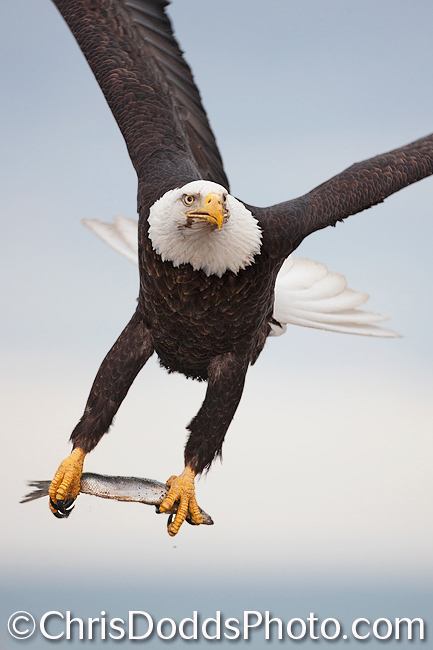
American Bald Eagle HOLD TIGHT (Haliaeetus leucocephalus, Pygargue à tête blanche) Homer, AK Image Copyright ©Christopher Dodds www.chrisdoddsphoto.com All Rights Reserved. Canon EOS 1Ds Mark III, 500mm F4 IS, flash, tripod and Wimberley Head II. ISO 800, F4 1/1000s Manual Exposure. Full Frame. Click HERE to order a print or license image for publication.

Getting the most from your flash batteries

Weather your choice is flash as fill light, or flash as main light, you most likely don't pay a lot of attention to your flash batteries and charger. With today's cameras capable of a 10 frame per second capture rate; you should.

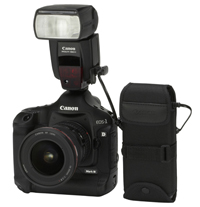
I boost the battery capacity and recycle rate with Canon CP-E4 Compact Battery pack. The CP-E4 is powered by 8 AA batteries and attaches to the flash with an integrated cable. You still need a separate set of batteries in the flash unit itself, and I use Custom Function 12-1(for the Speedlite, not the camera) to set the 580EX II to draw recycle power from the battery pack only, as opposed to the default setting of drawing power from both the flash batteries and those in the CP-E4. That way I still have a fully-charged set of internal batteries available if the pack runs low on power after a big day of shooting action.

What kind of batteries? I use rechargeable Ultra high capacity PowerEx 2700mAh NiMH (Nickel Metal Hydrate). They cost more than alkaline batteries, but save money in the long run because they can be used hundreds of times (often more than 1,000 times). NiMH batteries preform well in cold weather, but they gradually loose power when they are not in use. I always carry a full set of spares and because they have no memory, I can charge them any time without affecting their capacity.

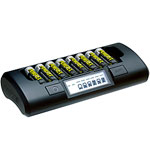
What kind of charger? Maximizing battery life is not only about buying the highest-capacity batteries, it's got a lot to do with the charger you choose. Buying the wrong charger can result in under, or overcharging your precious batteries; resulting in lower capacity and a shorter life. I use the PowerEx MH-C801D battery charger which holds eight AA or AAA batteries and provides a dedicated circuit to charge each cell. It can also independently condition each cell through a charge - discharge - recharge cycle (which is recommended every 10th charge). Known as a smart charger, the MH-C801D initially charges with a hight rate once the batteries are inserted, then slowly reduces the current to a trickle charge once peak current is reached. Be sure to install the batteries in sequence from left, to right, without leaving an empty bay.

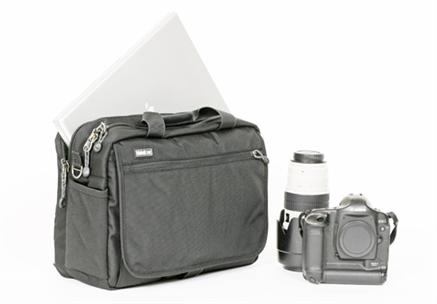
Think-Tank Photo Urban Disguise 50 Give Away!

We've teamed-up with Think-Tank Photo to give away an awesome camera bag. Sign-up for my free newsletter before December 15th and be automatically entered for a chance to win! It's easy; simply fill-in the sign-up form in the column to the right of this post. Tweet, Like or Share this blog entry on Facebook or Twitter, or leave a meaningful comment here for additional chances to win. Don't forget to tell your friends or fellow camera club members about the prizes.

Red-Tailed Hawk (Buteo jamaicensis) & POGOPLUG Review

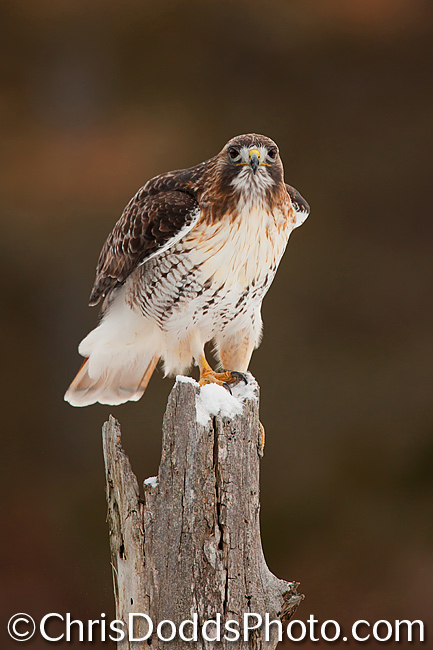
Red-tailed Hawk (Buteo jamaicensis, Buse a queue rousse, RTHA)  Ontario, Canada. Image Copyright ©Christopher Dodds www.chrisdoddsphoto.com All Rights Reserved. Canon EOS 1DsMKIII, 500mm F4 IS, 1.4 X II Tele-converter, Tripod & Wimberley Head II.  ISO 1000, F5.6 1/500s Manual mode. CLICK HERE TO ORDER A PRINT OR LICENSE IMAGE FOR PUBLICATION.
 A red-Tailed Hawk (Buteo jamaicensis, Buse a queue rousse) was a surprise visitor during a winter owl prowl last year. If you want to make compelling winter owl images in Southern Ontario and Quebec, then these private, or semi-private owl excursions are the best way to escape the large and crowded workshops offered by others. Still some space available in January, 2011 - read more HERE.

Pogoplug Review


The Pogoplug Multimedia Sharing Device connects external hard drives to the internet so you can easily share and access your files from anywhere. It gives even novice computer users the chance to set up their own cloud server in less than five minutes.

Compatible with NTFS, FAT32, Mac OS Extended Journaled and non-Journaled (HFS+), and EXT-2/EXT-3 formats, the Pogoplug Multimedia Sharing Device covers most bases for nearly any hard drives. Connecting a drive is as simple as plugging it into the Pogoplug Multimedia Sharing Device after plugging the Pogoplug Multimedia Sharing Device to a router via Ethernet and a power socket. The whole system recognizes itself and is ready to go, as advertised, after logging in to Pogoplug Multimedia Sharing Device 's Web site and registering.

There are three ways of interfacing the drives connected to Pogoplug Multimedia Sharing Device : directly through a Web browser via the my.pogoplug.com Web site; via a downloadable software client for Mac, PC, and Linux that shows the Pogoplug Multimedia Sharing Device -connected drives directly on the desktop; and via mobile phone apps. The downloadable client offers the greatest flexibility, allowing drag-and-drop uploading and downloading of files.

After getting over the initial shock of it’s brilliant pink case, I set-up my review unit; I connected three old, unused 1TB external drives and instantly had a 3TB personal server (with a spare USB port on the front). I installed the Mac client, and the three drives were instantly recognized and appear as three folders inside a Pogoplug folder on my desktop. The unit works perfectly for throwing a huge collection of images into a internet accessible drive, in the event I need an image, or document while on the road. Don’t confuse it with a premium on-line storage or back-up service with the security of multiple redundant off-site back-ups in multiple geographical areas that incurs, sometimes hefty, monthly charges. This is, however, a perfect device for a self-employed photographer who needs access to files while out of the office or to share with clients and/or friends. It is also another level of back-up if my laptop gets lost or stolen while on route to a presentation, lecture or workshop. Pogoplug is also a cheap and easy way to boost the limited storage of your MacBook Air or iPad.

Snowy Owl Silhouette & The Amazing Monarch: The Secret Wintering Grounds of an Endangered Butterfly

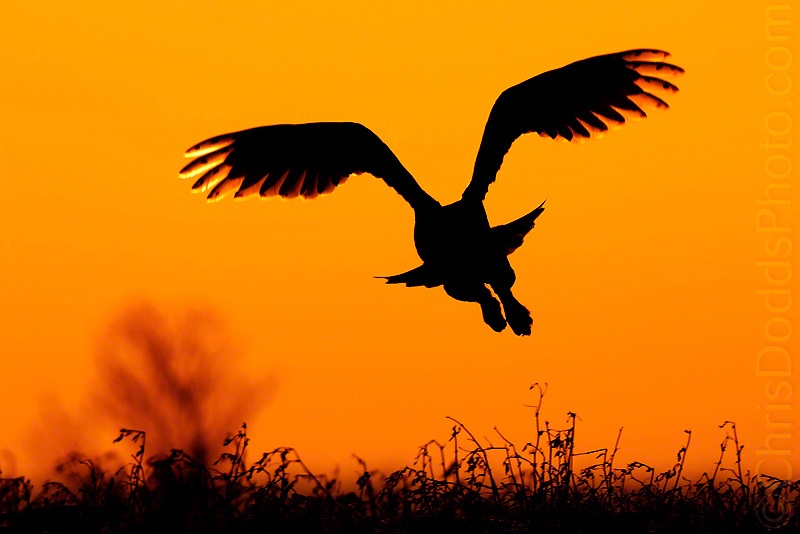
 Snowy Owl DAWN SILHOUETTE Bubo scandiacus (Harfang des neiges) Quebec. Image Copyright ©Christopher Dodds All Rights Reserved. Canon EOS 1DsMKII, 500mm F4 IS ISO 250, F7.1 1/1600s Manual mode. CLICK HERE TO ORDER A PRINT OR LICENSE IMAGE FOR PUBLICATION.

Private Winter Owl Prowls

The private winter owl safari/workshop series has proven to be a huge success with people from around the world booking days, or weeks. There are still some dates available, so do consider joining me for a private winter owl prowl. Find out more HERE.

Testimonial

"Hi Chris. The September 2010 Moose and Fall Colors Photo Workshop has been a fantastic experience for me in many aspects. I want to thank you warmly for everything you have done for me, not only with respect to photography but in every respect, such as wildlife and nature, the English language, travel tips, etc. You never hesitated to share your knowledge with the group in general and with me in particular. You amazed me more than one time with your wide array of knowledge. Furthermore, you have been a very pleasant companion all along. I would not hesitate to book another workshop with you, which I intend to do later, depending on my budget and schedule possibilities. I already told you that you are a real gentleman, and I just want to tell you again." Serge Gagné L’Île-Bizard (QC) Canada

Q & A

How do I activate auto focus (AF), when using 1.4x or 2.0x teleconverters with f/5.6 or slower lenses with Canon cameras other than the EOS 1D series? Serge Gagné L’Île-Bizard (QC) Canada.

It is simple. Just place a small transparent piece of tape on the last 3 pins of the converter. The tape should be placed on the left hand side of the converter when looking at it from the lens connection side with the electrical contacts on top. With these three left pins covered, the auto-focus continues to operate on the Rebel and D series Canon cameras with the AF activated. It also works great with the Canon 100-400mm f/4.5-5.6L IS.

The Amazing Monarch: The Secret Wintering Grounds of an Endangered Butterfly

The Amazing Monarch: The Secret Wintering Grounds of an Endangered Butterfly is a new book written and photographed by wildlife photographer and trial attorney Windle Turley. In the book, Turley captures amazing images in the rarely photographed wintering grounds of the monarch butterfly, in the Transverse Neovolcanic Mountains in Mexico. Granted almost-unprecedented access, Turley documents the final destination of this migration that only takes place every four to five generations with vivid, full-colour photographs.

It's easier than ever to publish your own book full of your amazing images, but it's no secret that a book full of only images will end-up on the discount table at your local book store. If you have ever thought of publishing your own book, and wondered how to tell your story, then this is a must have; no only for the story of the Monarch, but because the story is well presented and well told. Turley supplements the images with scientific-based text detailing the migration with complimentary quotations and poems that make a multifaceted book about one of the most engaging and mysterious species know to man.

LEAVE A COMMENT - WIN A BOOK: Leave a meaningful comment and I will randomly choose three lucky folks to receive one of three copies of The Amazing Monarch: The Secret Wintering Grounds of an Endangered Butterfly that I have to give away. The enterprising photographer will also include a link to a photo of a Monarch, or a blog entry about the Monarch. I'll randomly choose the winners and I'll even pay for surface mail anywhere in the world. I won't pay customs, brokerage, taxes or duties, though there shouldn't be any payable.

Snow Goose Dark Morph (Blue Goose, Chen Caerulescens, Oie des neiges) & EOS-1D Mark IV: On-Camera Tutorials

Snow Goose Dark Morph (or Blue Goose) Landing (Chen Caerulescens, Oie des neiges, SNGO) Bosque del Apache National Wildlife Refuge, Socorro, New Mexico, USA. Image Copyright ©Christopher Dodds www.chrisdoddsphoto.com All Rights Reserved. Canon EOS 1DsMKIII, 500mm F4 Lens with 1.4X II Teleconverter, tripod and Wimberley Head II. ISO 400, F5.6, 1/1600s in Manual Mode. CLICK HERE TO ORDER A PRINT OR LICENSE IMAGE FOR PUBLICATION. 

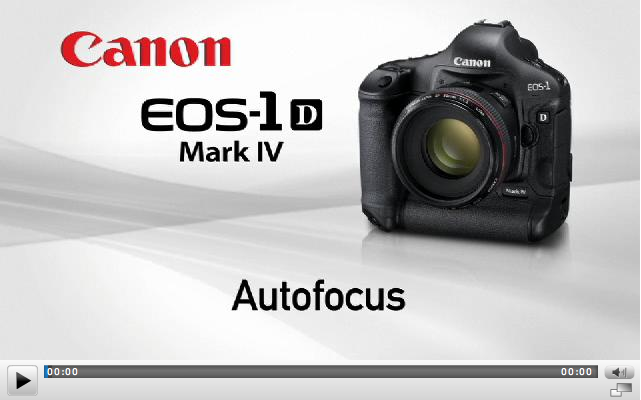
Canon EOS-1D Mark IV: On-Camera Tutorials

Canon USA has some pretty useful tutorial videos HERE that explore 13 specific features of the EOS-1D Mark IV. These instructional videos are designed to be viewed at your convenience: Watch them online, on the go, or even on your camera's rear LCD screen -- so you can follow along, every step of the way! If you only get out to shoot once in a while, and often forget how to properly use your Mark IV, then I highly recommend loading these videos onto a spare memory card for easy reference while out in the field.

September 11 Tribute

American Bald Eagle MOURNING SONG , Haliaeetus leucocephalus (Pygargue à tête blanche) Homer, AK ©Christopher Dodds www.chrisdoddsphoto.com Canon EOS 1D MKII, 500mm F4IS ISO 400, F4 1/250s Manual mode. Gitzo 1325 tripod and Wimberley Head. Click HERE to order a print or license image for publication.

The world changed nine years ago on September 11, 2001. This image is my tribute to that tragic day.


Adobe PHOTOSHOP CS5; A New Life for Old Images & Bald Eagle Reflection

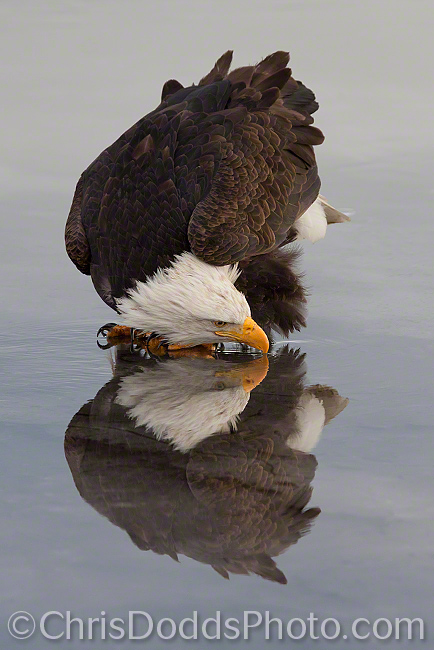
Bald Eagle REFLECTION (Haliaeetus leucocephalus, Pygarge à tête blanche) Kachemak Bay, Homer, Alaska, USA. ©Christopher Dodds http://www.chrisdoddsphoto.com All Rights Reserved. Canon EOS 1D Mark II, 100-400mm F4-F5.6 @ 260mm . ISO 400, F7.1 1/260s Manual Exposure. Full Frame. Click HERE to order a print or license image for publication.

Bald Eagle REFLECTION was captured when I saw this Eagle in the fog drinking from a thin layer of water covering an ice-covered parking lot just after a somewhat mild and rainy morning in February, 2005. Rather than take the chance and spook the Eagle, I used my rental SUV to, ever so slowly, approach. Rather than drive directly toward it, I instead circled around, slowly reducing the circumference until I was close enough to get the image I had in mind. I positioned the SUV close enough to fill the frame, but more importantly, close enough to get a steep enough angle to include the reflection and eliminate some distracting buildings, stones and dark asphalt patches in the background.

I've just completed a submission which included some old favourites from 2005. Not all that long ago, really, but seems like a lifetime ago in terms of my post capture workflow and software. Photoshop CS5, with it's newly tweaked noise reduction algorithms, has certainly brought a new life to some old favourites. If you think the noise reduction works wonders on the files from recent cameras; go back through your archives and re-work some of your favourites from the past. It's not only the noise reduction that's new; there's a plethora of new tools and algorithms in Adobe's latest offering, not to mention what you have learned, and how you have grown as an artist, along the way. I always say that every image in my collection has a story; so it's been fun looking through the memories - give it a try.

Testimonial

I have known Chris for a few years and in July 2010 I attended Chris’s workshop for Coastal Brown Bears. The trip will always hold very special memories for me as I can honestly say it was the most enjoyable and productive trip I have ever made, and the most exhausting :o))   As a professional photographer I tend to try and put together my own trips but when I heard Chris was organizing this trip I had no hesitating in contacting Chris and booking. I would advise anyone else to do the same.

From the moment I landed at Kodiak airport we were out shooting literally within a few hours. Everyday we made the most of early morning and late evening light. Photographing some days till 11pm.  The amount of subjects we captured was unbelievable: Fox Cubs, Song Birds, Eagles, Seals, Sea Otters, Wolves and…  BEARS! 

After spending three days on Kodiak Island we headed for the Katmai coast by float plane and stayed on the Coastal Explorer, which was our home for a week.  Almost everyday we had a different location to go to and made the most of the weather. At times it rained non-stop and at others I was walking around in just a t-shirt.  Getting up close and personal with the bears was the ultimate thrill and having an enormous boar run, at what seemed directly at me whilst chasing salmon, was a heart thumping moment I will never forget; Though our safety was Chris' primary concern.

Life on the Coastal explorer was fun and we were all well looked after with meals ready for us at all times.  Downtime was relaxed and we watched movies and even spent one afternoon fishing where I caught Halibut and a silver salmon. Plus I landed the biggest Halibut, don’t let Chris tell you otherwise :o))   As you can tell even when we were not photographing we were having fun.

If you are considering such a trip or one of Chris’s other workshops my advice is not to hesitate and to book straight away.  You will be guaranteed a good time and have plenty of photos and memories to take home with you after the trip.

Thanks for a great time Chris and I look forward to the next one!!

Best Wishes- Darren Holloway (FMPA FBIPP QEP) Smallfield | Surrey | UK

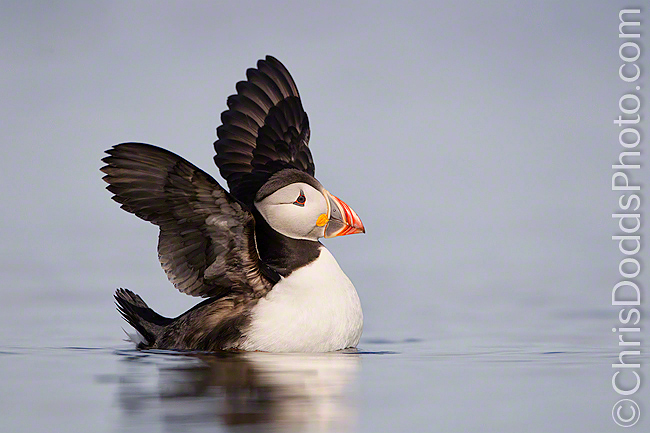
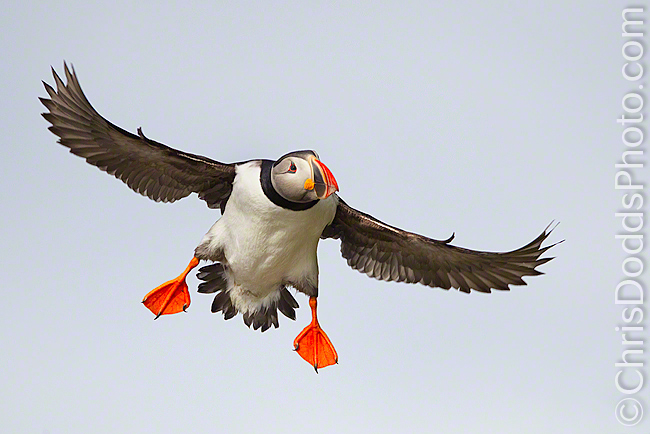
Atlantic Puffin Paradise found (Fratercula arctica, Macareux moine, ATPU)

Atlantic Puffin (Fratercula arctica, Macareux moine, ATPU) Vertical Portrait île aux Perroquets, Réserve de parc national du Canada de l'Archipel-de-Mingan, Quebec, Canada. Image Copyright ©Christopher Dodds www.chrisdoddsphoto.com All Rights Reserved. Canon EOS 1DMKIV, 500mm F4 L IS with 2X Teleconverter II, Canon 25mm Extension Tube, Tripod & Wimberley Head II. 580EXII Flash manual mode. Think-Tank Photo Hydrophobia 300-600. ISO 800, F16 @1/60s Manual mode. CLICK HERE TO PURCHASE A PRINT or LICENSE IMAGE FOR PUBLICATION.

Puffin Photography Workshop/Safari announced July 5-7, 2011

I'm just back from another trip; this time, I went out in search of the ultimate destination for Atlantic Puffins. The mandate was simple; find a location that is within reach, safe and easy to get to without a dangerous boat landing on slippery rocks and a place where we can get close to these comical little seabirds without hauling our gear up, and over, huge distances or having to hang over towering cliffs. I have photographed Atlantic Puffins in Iceland, Maine, Newfoundland, New Brunswick and Quebec; All of these "known" places have their drawbacks. Mission accomplished; I have found Puffin Paradise. Special thanks to the Loiselle Familly of Longue-Pointe-de-Mingan for their gracious hospitality during my time there.

If you are interested in joining me for a Puffin photography workshop July 5-7, 2011, then be sure to send an email to chris@chrisdoddsphoto.com. This trip will be limited to six participants (two spots booked already) and will surely be the trip of a lifetime for anyone seeking to get close and personal (safely) to Atlantic Puffins and Razorbills. We will spend a few hours photographing fishing Puffins each morning from a boat, before landing on an island where we spend the rest of the day until sunset for three full days. I have secured special access, so we will be the only people on the island during the first, and last, few hours each day. Price is CAD$2,495.00 including four nights single occupancy accommodation, three days private boat tour with highly experienced captain, three days park access fees and three days expert instruction. Other subjects might include Razorbill, Black Guillemot, Great Cormorants, Savannah Sparrow (there are many) Common Eider and Grey Seal. More details after my return from teaching the August Gannets Galore workshop in about 10 days. Meals, beverages, transportation to Longue-Pointe-de-Mingan, Quebec and souvenirs are not included.

Testimonial

Many thanks to Chris for a wonderful and exciting photography experience. Your professionalism, talent, patience and knowledge helped to make the Gannets Galore photo trip an experience of a life time. The hundreds of thousands of Northern Gannets on Bonaventure Island were unbelievable. I took thousands of photographs of Northern Gannets in their everyday activities. They were elegant, comical, clumsy, arguing, fishing, sleeping, working, copulating, preening and fencing. It was nonstop and exhilarating. Now, I get to my favourite part - the Zodiac tour around Bonaventure Island. It’s 5:00am and we start the 4 hour trip to see dozens of species of birds and seals as well as couple of Minke whales. The 4 hours seemed to pass like minutes. The Harlequin ducks and Black Guillemots were among my favourites and a real treat to observe and photograph. - Gordie Kadonoff Hampstead | Quebec | Canada

Atlantic Puffin (Fratercula arctica, Macareux moine, ATPU)

The Atlantic Puffin (Fratercula arctica, Macareux moine, ATPU) is a seabird species in the auk family. Also know as “common puffin”, “clown of the ocean”, “clown of the sea” and “sea parrot”, these squat little pelagic birds look comically awkward on land and rather heavy in the air, but once in their element, the water, they become able predators. “Flying” through the sea on stubby wings, they dive-bomb shoals of herring, sand eels, sardines, and other small fish and sometimes squid. These pursuit divers collect their victims one at a time, but can hold as many as 20 small fish crosswise in their brightly coloured beaks at the same time. The Atlantic Puffin is 26–29 centimetres (10–11 in) in length (bill 3-4 cm), with a 47–63 centimetres (19–25 in) wingspan. The male is generally slightly larger than the female, but they are coloured alike. A puffin can fly 48 to 55 mph (77 to 88 km/hr). The puffin beats its wings rapidly to achieve this speed reaching up to 400 beats a minute.

This species breeds on the coasts of northern Europe, the Faroe Islands, Iceland and eastern North America (Canada and New England), from well within the Arctic Circle to northern France and Maine. It is the only Puffin species found in the Atlantic Ocean. The winter months are spent at sea far from land - in Europe as far south as the Mediterranean, and in North America to North Carolina.  Puffins often nest in well populated colonies usually on remote, rugged islands free from egg and chick eating land predators. They deposit a single egg deep within a burrow excavated in soft earth, or in a feather, or grass, lined lair in a rocky cleft. After fattening-up their hatchlings on fish, the parents return to the sea. The young Puffins, still unable to fly, eventually scramble to the shore by night and plunge into the water.