Algonquin Moose Photography & Conservation: Why Moose Are Harder to Find — and How to Capture Them Responsibly

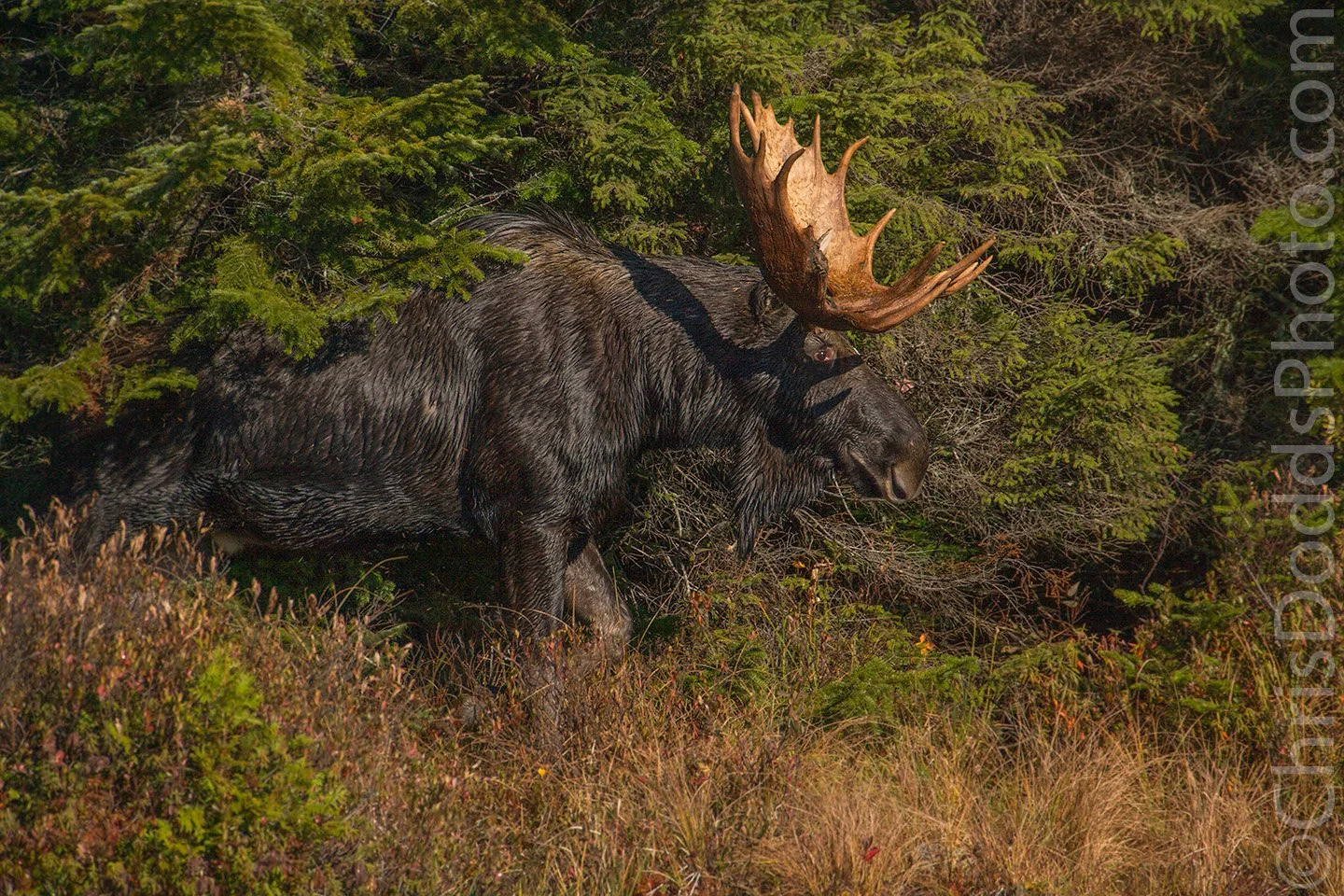
This is another Bull Moose captured during one of my recent visits to Algonquin Park. I find myself both drawn to and uncertain about this image in equal measure. I love the way the moose emerges from the thick foliage, with its eye subtly illuminated between the shadow cast by its antlers in harsh light—a quiet moment of contrast and texture. I’d love to hear what you think.

Moose (Alces alces, orignal, élan) Ontario, Canada. Image Copyright ©Christopher Dodds. Sony A1 Mark II Mirrorless camera & Sony FE 400-800mm f/6.3-8 G OSS Lens @800mm ISO 1,000, f/8 @ 1/5,000s. Manual exposure. Full frame image.

“Hi Chris - Love your photos and a question- why are there such fewer moose in Algonquin now as compared with years ago do you think?” - Ashley Hockenberry

Where Have All the Moose Gone?

Understanding Algonquin’s Changing Moose Population

In my last post, I shared a favourite moose encounter from Algonquin’s misty wetlands. Many readers asked the same question:

“Why are there so many fewer moose in Algonquin now than there used to be?”

It’s something I’ve noticed too on those quiet dawn drives when the roadsides seem empty. The truth is, there’s no single reason. The decline of Algonquin’s moose population — and across much of Ontario — is the result of several overlapping pressures: climate, parasites, habitat change, and human activity.

1. Climate Change and Parasites

Warmer winters and shorter snow seasons have allowed winter ticks (Dermacentor albipictus) to thrive. A single moose can carry tens of thousands of ticks, leading to blood loss, hair loss, and sometimes death — especially for calves.

Hotter summers add stress too: moose overheat easily, rest more, and feed less, entering winter with lower fat reserves and reduced survival odds.

2. Brainworm from Expanding Deer Populations

As white-tailed deer move north, they bring brainworm (Parelaphostrongylus tenuis), a parasite harmless to deer but fatal to moose. The growing overlap between deer and moose ranges in Algonquin has increased the risk of infection, further straining the herd.

3. Habitat Changes

Moose depend on young, regenerating forests full of birch, aspen, and willow shoots. Early logging and natural fires once created this type of habitat.

Today, Algonquin’s forests are maturing under selective management — beneficial for many species, but offering less prime browse for moose. Beyond the park, large-scale clearcutting and fragmented landscapes have also reduced food availability and safe travel corridors.

4. Past Overharvesting

Earlier wildlife policies once allowed calf hunting and issued higher tag numbers. These practices contributed to declines across several regions. Ontario has since tightened hunting regulations, but recovery is slow, and occasional poaching near the park boundaries continues to raise concern.

5. Predation and Population Health

Wolves and bears remain vital parts of Algonquin’s ecosystem. While predation is natural, moose weakened by ticks, heat stress, or poor nutrition become easier prey, especially calves. These interactions can magnify the effects of other stressors.

6. Human Disturbance: The Problem with Calling-In Moose

A newer issue is the use of moose calls by photographers hoping for a closer shot. While often well-intentioned, this can harm the animals. Responding to calls forces moose — especially bulls during the rut — to waste precious energy and move away from feeding or resting areas. It can also lead them toward roads or confuse them during the breeding season.

“A bull chasing a phantom call isn’t resting or tending to actual cows,” notes one park warden.

Frequent exposure to artificial calls can habituate moose to people, increasing the risk of vehicle collisions. Algonquin staff strongly encourage passive, respectful viewing instead.

📸 Ethical Moose Photography: 3 Quick Tips

  1. Keep Your Distance – Use a long lens; let the moose control the space.

  2. No Calls or Bait – Avoid techniques that alter natural behaviour.

  3. Be Patient – Early mornings and quiet observation often lead to the best shots.

“Patience always pays off — the wild moments come to those who wait.”

Working Toward Balance

The picture isn’t all bleak. Researchers, Indigenous knowledge holders, and park staff are studying these challenges together. A more holistic management approach — one that considers climate, disease, habitat, and cultural perspectives — offers hope for a sustainable moose population in Algonquin and beyond.

A Personal Reflection

Even with fewer sightings, every moose encounter in Algonquin still feels like a gift. They’re out there — deep in the spruce, wading through dawn mist, quietly living the rhythms of a changing forest.

“The forest is never static — it’s a living system, always in motion. Moose reminds us of that.”

If you’ve noticed changes in moose activity or have stories from your own Algonquin visits, I’d love to hear them in the comments below.

Merry Christmas Happy Holidays Thank You

Great Grey Owl SOLITUDE (Strix nebulosa, Chouette Lapone, GGOW) Gatineau, Quebec ©Christopher Dodds All Rights Reserved. Canon EOS Canon EOS 1DX, 70-300mm F4-5.6 L IS USM @244mm with Jobu L-Bracket  Hand Held ISO 3,200s, f/5.6 @ 1/2,500s Manual mode. Click HERE to order a print or license image for publication.

Merry Christmas, Happy Holidays, Peace, Joy & Love

To everyone who visited this blog or my Facebook page, attended a workshop, safari, seminar or lecture, purchased a print or licensed an image: Thank you for making 2013 my best year yet. I am so very lucky and grateful!

Zambian Dawn

Straw-coloured Fruit Bat ZAMBIAN DAWN (Eidolon helvum) Kasanka National Park, Zambia. Image Copyright ©Christopher Dodds. Canon 1DX, 500mm F4 L IS, Tripod & Jobu Jr. 3 (with Deluxe Swing-arm upgrade) ISO 400 f/5 @ 1/2,000s Manual Mode. PURCHASE A PRINT or LICENSE IMAGE FOR PUBLICATION HERE.

Dreams

I suppose I should call this post Zambian Dreams....

Seeing 7 million Straw Colored Fruit Bats return to their roost in Zambia was something I have wanted to do since I was about 8 or 9 years old after reading about it in one of the first National Geographic Magazines that I ever saw in the elementary school library. It was when I first imagined what it would be like to see the world as a nature photographer! Said to be the largest mamal migration on earth, this was the single most impressive natural history sight I have ever seen.

This is pretty much the image I have had in my head all those years; I always try to pre-visualize the images that I would most like to capture; sometimes they work, other times mother nature throws a curve-ball and they don't. I knew the money shot would be a wide shot with the treeline and the sunrise, but I didn't know I would use my 500mm lens to get it. It's always a good idea to bring a selection of equipment, even when you don't expect to use it.

Now back to the dreams; they can come true - wink.


About the Straw-coloured Fruit Bat

During November and December each year five to seven million straw-coloured fruit bats take up residence in one hectare of Kasanka National Park’s mushitu swamp forest.  Enticed by the abundance of such delicacies as musuku, mufinsa and the other wild fruits in the area, colonies of bats start arriving in late October. Straw-coloured fruit bats are identifiable by their pale, tawny fur and bright orange neck.  As with all fruit bats (alias flying foxes) they have dog-like facial features with small ears, large eyes and a long snout.  The wingspan of a straw-coloured fruit bat reaches 85-95cm making them the largest bat in Southern Africa. By day the bat colony roosts in the trees of the mushitu forest, packing themselves around branches and trunks which often break under the sheer weight of bats!  Daily life is not easy for the bats as many predators including raptors turn to a diet of bats for the two months that the colony is in residence. Fish eagles, martial eagles, vultures and numerous other raptors have been seen to take the bats in flight and from the roost.

Blue Fox and Stealth Gear Photography Clothing

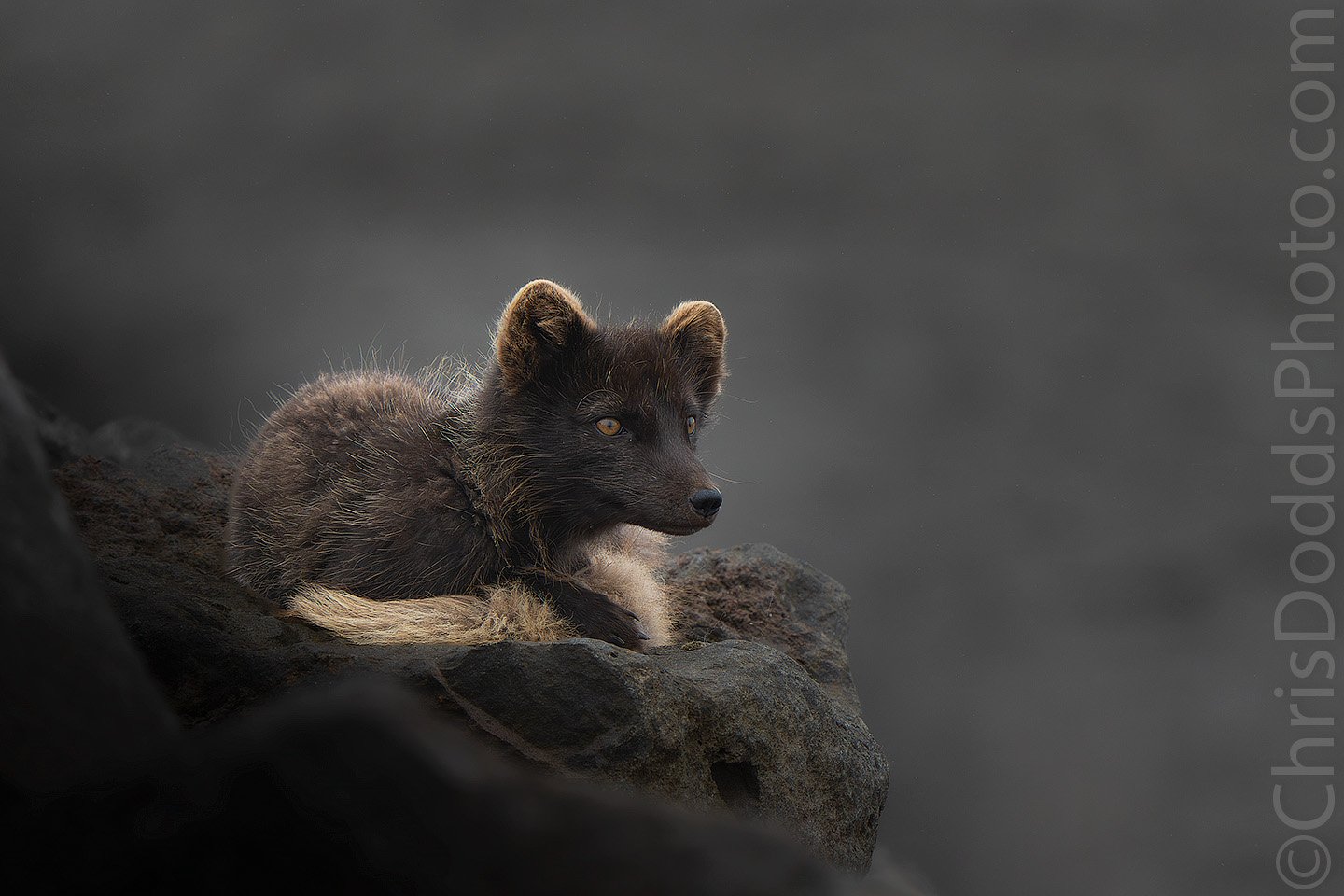
Blue Fox Kit Wildflower Slumber (Vulpes lagopus pribilofensis, Arctic Fox, Renard polaire) Saint Paul Island, The Pribilof Islands in the Bering Sea, Alaska. Image Copyright ©Christopher Dodds All Rights Reserved. Canon 1D MK IV, 500mm F4 L IS. Tripod & Jobu Jr. 3 Full Frame. ISO 800 f/11 @ 1/400s Manual Mode. PURCHASE A PRINT or LICENSE IMAGE FOR PUBLICATION HERE.

Here's a Blue Fox from my recent trip out in the Bering Sea to Saint Paul Island in Alaska. It was a thrill to find this Kit sleeping in a field of wildflowers. I am currently setting-up a trip there next June 16-23, 2012, so be sure to email me to get on the short list for the trip. Many more images to follow..

Stealth Gear

Canadian Nature Photographer Christopher Dodds wearing Stealth Gear Extreme Urban Photographers Jacket/Vest. Saint Paul Island, The Pribilof Islands in the Bering Sea, Alaska. Image Copyright and courtesy of Alfred Forns - thanks, Al.

I have been testing the Stealth Gear Extreme Urban Photographers Jacket/Vest since June. So far, the jacket has been to Bonaventure Island for my Gannets Galore workshops in June and again in September, it was perfect for my Puffins Galore workshops in July and it's traveled to Alaska with me for my Brown Bears Galore workshop, and again to Saint Paul Island in the Bering Sea. Overall, it's seen about 75 days of intense, dawn to dusk, field work. There is a little room for improvement, but as I examine the newest version of their Extreme Urban Photographers Trousers 2N, I can see how hard they are working to make them perfect. I'll write a full review when I get back from Maine where I hope to put the trousers to the test. I can say that I know of no better photographers jacket out there; it's particularly suited to the coastal climate in Alaska and that of the East coast in Canada. SAVE 15% OFF your purchase at the STEALTH GEAR store and support this site just by using the coupon code "NATURE" at the STEALTH GEAR website store checkout HERE.


A few of my favorite things from 2010

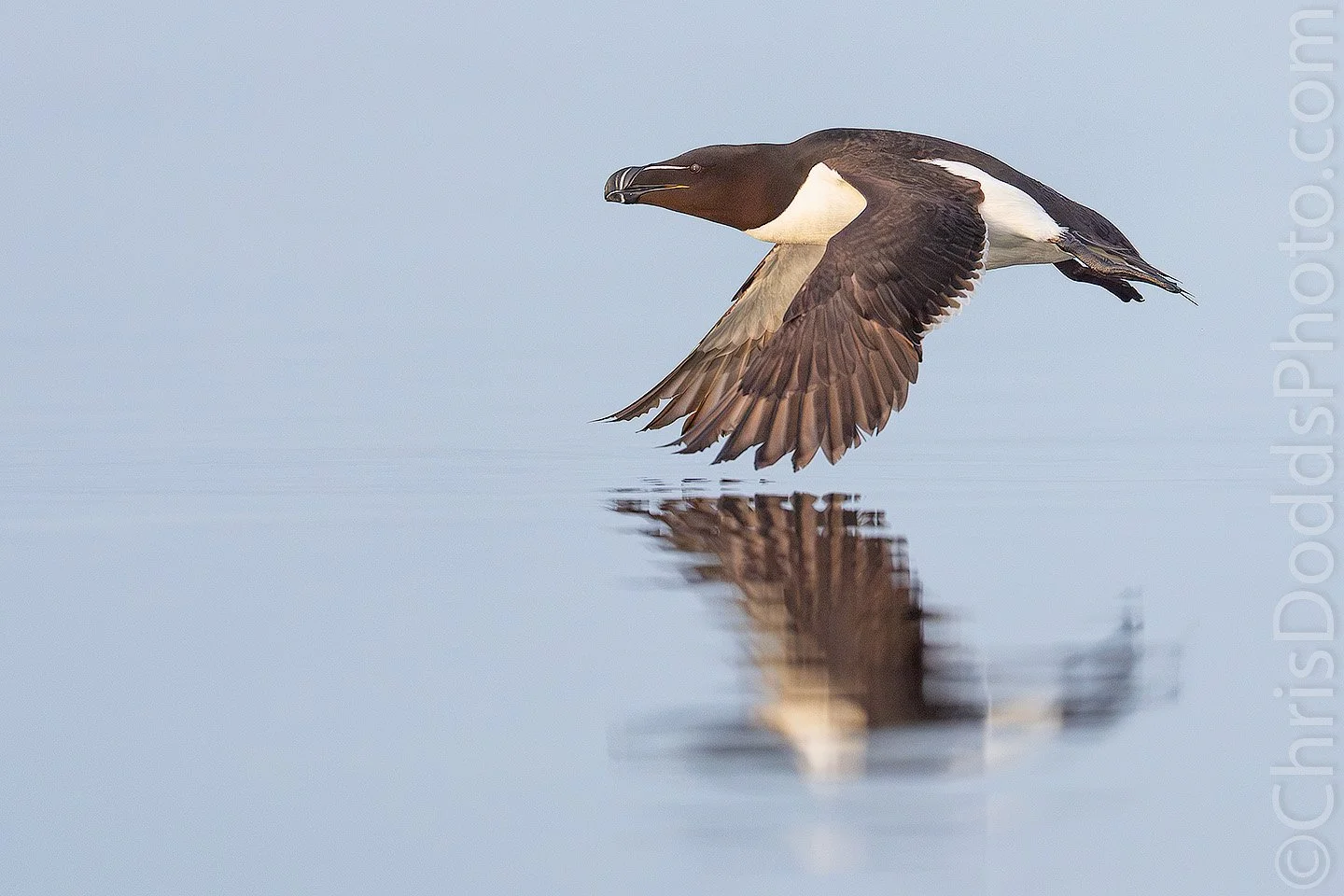
Common Murre or Common Guillemot Flying (Uria aalge, guillemot marmette, COMU) Parc national de l'Île-Bonaventure-et-du-Rocher-Percé (Bonaventure Island and Percé Rock National Park) Bonaventure Island, Quebec. Image Copyright ©Christopher Dodds All Rights Reserved. Canon EOS-1D MKIV, 800mm F5.6 L IS. ISO 800, 1/2500s F5.6 Manual. Hand held from Zodiac Hurricane 733. Full Frame. CLICK HERE TO PURCHASE A PRINT or LICENSE IMAGE FOR PUBLICATION.

My Favorite Image

Alright, I couldn't choose just one favourite, so you get two for one. The Common Murre image above was captured during my June Gannets Galore Bird Photography Workshop / Safari and the Atlantic Puffin portrait below was from my July Puffins Galore Bird Photography Workshop / Safari.

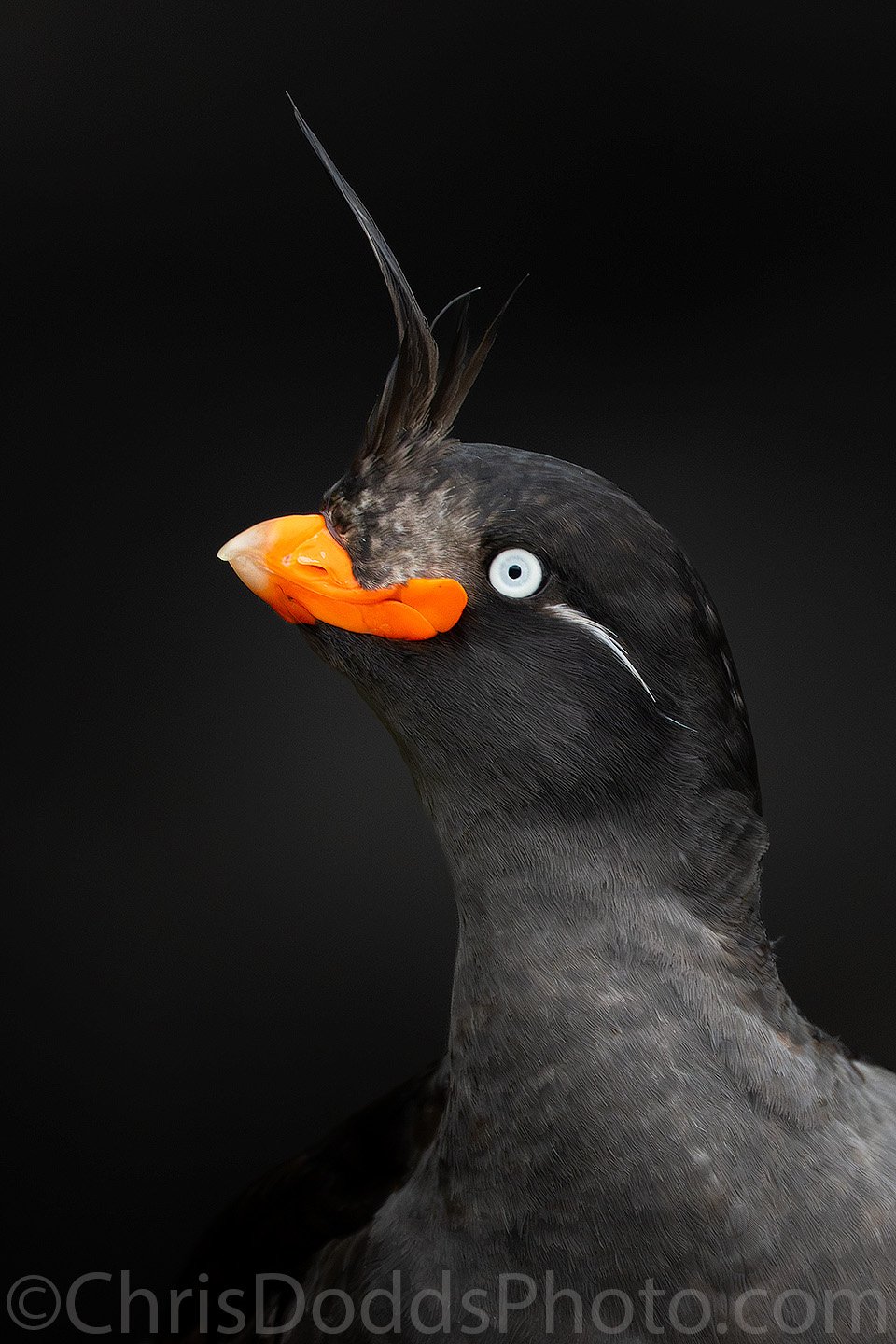
Atlantic Puffin (Fratercula arctica, Macareux moine, ATPU) Vertical Portrait île aux Perroquets, Réserve de parc national du Canada de l'Archipel-de-Mingan, Quebec, Canada. Image Copyright ©Christopher Dodds All Rights Reserved. Canon EOS 1DMKIV, 500mm F4 L IS with 2X Teleconverter II, Canon 25mm Extension Tube, Tripod & Wimberley Head II. 580EXII Flash manual mode. Think-Tank Photo Hydrophobia 300-600. ISO 800, F16 @1/60s Manual mode. CLICK HERE TO PURCHASE A PRINT or LICENSE IMAGE FOR PUBLICATION.

Your Favorite image

Coastal Brown Bear and Gray Wolf Unlikely FISHIN' BUDDIES (Ursus arctos or Grizzly Bear and Canis lupus) Hallo Bay, Katmai National Park, AK. Image Copyright ©Christopher Dodds All Rights Reserved. Canon EOS 1DMKIV, 500mm F4 L IS, 2X II Tele-converter, Tripod & Wimberley Head II. ISO 800, F8 @1/125s Manual mode. CLICK HERE TO PURCHASE A PRINT or LICENSE IMAGE FOR PUBLICATION.

You couldn't choose just one favourite, so you also get two for one as well. The Coastal Brown Bear and Gray Wolf image above was captured during my July Coastal Brown Bears Galore Photography Workshop / Safari and the Herring Gull image below was from my June Gannets Galore Bird Photography Workshop / Safari. I based these coices on the number of views, comments, likes, etc. from Facebook or on-line forums where they were posted.

American Herring Gull Emerging with fish (Larus smithsonianus, Goeland argente, HERG) Parc national de l'Île-Bonaventure-et-du-Rocher-Percé, Bonaventure Island, Quebec. Image Copyright ©Christopher Dodds  All Rights Reserved. Canon EOS-1D MKIV, 800mm F5.6 L IS. ISO 400, 1/2000s F5.6 Manual. 580EXII Flash manual full power . Tripod & Wimberley Head II. Full Frame. CLICK HERE TO PURCHASE A PRINT or LICENSE IMAGE FOR PUBLICATION.

My favorite New Camera Bag

Think-Tank Photo Shape Shifter Camera Backpack. I took this photo with my Canon S-95 with built-in flash and natural light.

It's the one eternal quest for any photographer; finding the perfect camera bag. I have a serious problem; I'm a closet camera bag junkie. I have a room full of camera bags and never quite found the ultimate "urban" camera bag for this nature photographer when I'm not out in the field with my 500 or 800mm lens. I'm talking about those times that I want to grab a bag and have it fit what I need while out on a walk in Old Montreal, visiting family, or just out for a drive for landscapes. I've been meaning to write a serious review of the new Shape Shifter by Think-Tank Photo since I received my review copy a few weeks ago. Suffice it to say that this truly is the ultimate urban camera bag. Built to the usual quality standards that the folks at Think-Tank Photo are known for, the Shape Shifter is a camera backpack like no other. There are five neoprene pouches fixed to the inside back panel capable of holding my Canon EOS 1Ds Mark III, Canon EOS 1D Mark IV, 70-200 F2.8 IS II, 16-35 F2.8 II, 24-70 F2.8. The inside of the front cover can also hold a couple of speed-lights and various light modifiers. There are tons of pockets and a top-load sleeve that can accommodate up to a 17" laptop computer. The beauty of the bag is it's ability to compress to a much lower profile when you decide to venture out with only a couple of items in it. Purchase the Shape Shifter from Think-Tank Photo HERE and receive a free camera bag or accessory while engouraging this site.

My Favorite Conversation

It was a blast visiting with Scott and he is a gifted interviewer with quite a personality. We discussed my recent discovery of Nik Software and how I am introducing it into my post capture work-flow. There's a few good tips and a description of my Gannets Galore photo tour / workshop / safari. Be sure to grab a cup of coffee and give it a listen to hear some stories, tips and techniques. Thank you Scott.

LISTEN TO A LIVE STREAM NOW or DOWNLOAD IN iTunes

My Favorite New Software


I can't talk about my radio interview with Scott Sheppard without mentioning my favorite new software suite and Nik Software. Of the suite, Viveza 2.0 stands out as an absolute favorite for it's ease of use and compatibility. This choice isn't only about the software, it's about the company. Nik Software has changed the way the product supports the user; they offer free daily webinars to help you learn to use their products. How many times have you installed a new piece of software, only to discover that you were on your own to learn how to use it? Now all you have to do is tune into a webinar and watch how it's done; and it's FREE! Certainly worth checking-out at NiK Software (Use the coupon code "cdodds" to save 15% at the Nik store).

My Favorite new Point & Shoot Camera with Accessories

Canon PowerShot S-95 with Richard Franiec’s  S-95 Grip and Lensmate S95 Quick-Change Adapter Kit 37mm

My Favorite New Lens

Without a doubt, the Canon 800mm F5.6 IS has to be my favourite new work lens, but my Lensbaby Composer with their 0.42X Super Wide Angle conversion lens, Macro Lens Kit, and 0.6X Wide Angle & 1.6X Telephoto accessory kit has to be my favourite new fun lens. Watch for a full review soon.

My Favorite New Book

The Sibley Guide to Trees is a refreshing new field guide to the trees of North American Trees written and illustrated by David Allen Sibley. I had given-up hope of finding a well illustrated field guide to the trees of North America, so I was thrilled when I accidentally stumbled upon this gem of a book.

My Favorite New Gadget

That's an easy one; The Cotton Carrier has got to be it! READ MY REVIEW HERE.

Canadian Nature Photographer Christopher Dodds(that's me - smile) stylin' with a  a Cotton Carrier over his Canada Goose Parka. Image copyright and courtesy Julie Morrison - thanks, Julie.

White-Tailed Deer Buck in Velvet & Spider Holster Review

Eastern White-tailed Deer Buck in velvet (Odocoileus virginianus, Cerf de Virginie) Amherst Island, Ontario, Canada. Image Copyright ©Christopher Dodds www.chrisdoddsphoto.com All Rights Reserved. Canon EOS 1D Mark IV, 500mm F4, 1.4X II Tele-converter Tripod and Wimberley Head II. ISO 400, F5.6 1/40s Manual mode. BUY A PRINT OR LICENSE IMAGE FOR PUBLICATION HERE.

Eastern White-tailed Deer Buck in velvet (Odocoileus virginianus, Cerf de Virginie) Amherst Island, Ontario, Canada. Image Copyright ©Christopher Dodds www.chrisdoddsphoto.com All Rights Reserved. Canon EOS 1D Mark IV, 500mm F4, 1.4X II Tele-converter Tripod and Wimberley Head II. ISO 400, F5.6 1/60s Manual mode. BUY A PRINT OR LICENSE IMAGE FOR PUBLICATION HERE.

Eastern White-tailed Deer Buck in velvet (Odocoileus virginianus, Cerf de Virginie) Amherst Island, Ontario, Canada. Image Copyright ©Christopher Dodds www.chrisdoddsphoto.com All Rights Reserved. Canon EOS 1D Mark IV, 500mm F4, 1.4X II Tele-converter Tripod and Wimberley Head II. ISO 400, F5.6 1/640s Manual mode. BUY A PRINT OR LICENSE IMAGE FOR PUBLICATION HERE.

SpiderPro Holster Review

I've been hanging my heavy 1D Mark IV with 70-200F2.8 IS II lens over my shoulder, or around my neck for years, and with a bad neck and back; I've had enough. I set out on a quest; find a simple, but efficient way to hold my second camera while working with a tripod mounted primary long lens. Let’s face it; we all spend a lot of time waiting for the right “moment”, and don’t want anything in our way when it presents itself.

Shai Eynav just sent me a review sample of the SpiderPro System, and I love it; in fact, this may be my favorite new photography accessory. The SpiderPro System is a remarkable new way to carry your camera. I got the whole kit and caboodle; a nylon belt (Spider Holster Belt) with a holster shaped flap  (Spider pad) to protect your camera from any metal studs in your jeans, and provide a little comfort cushion between your hip and your camera. The belt buckle even requires two hands to release, making it impossible to accidentally come undone. When secured around your waist, with the holster shaped flap (Spider pad) on your side, there's an ingenious cast aluminum/stainless steel slotted holder (SpiderPro) which receives the metal pin (Spider pin) that attaches to the Spider plate, which, in turn, is securely fastened to your camera. There’s even a safety latch, which you decide weather to engage, or not. The unique design ensures the camera and lens stay in the horizontal position; this keeps the lens from touching the ground when crouching or kneeling, as it would if the lens was pointing down. Shai has thought of everything; he's even placed four threaded holes in the Spider plate for easy quick-release plate attachment.

With the Spider Holster, my camera now hangs comfortably by my side ready for action. There’s no better way to get the weight of my neck, shoulders and back than this! When the “moment” presents, I’m ready; thanks to Shai Eynav and his marvelous invention, the Spider Holster. In the wilds of Alaska or Tanzania, at a press event in the city, or in the home studio, the Spider Holster will prove invaluable to any photographer. Find out more, or order yours at www.spiderholster.com

Red-Tailed Hawk (Buteo jamaicensis) & POGOPLUG Review

Red-tailed Hawk (Buteo jamaicensis, Buse a queue rousse, RTHA)  Ontario, Canada. Image Copyright ©Christopher Dodds www.chrisdoddsphoto.com All Rights Reserved. Canon EOS 1DsMKIII, 500mm F4 IS, 1.4 X II Tele-converter, Tripod & Wimberley Head II.  ISO 1000, F5.6 1/500s Manual mode. CLICK HERE TO ORDER A PRINT OR LICENSE IMAGE FOR PUBLICATION.

 A red-Tailed Hawk (Buteo jamaicensis, Buse a queue rousse) was a surprise visitor during a winter owl prowl last year. If you want to make compelling winter owl images in Southern Ontario and Quebec, then these private, or semi-private owl excursions are the best way to escape the large and crowded workshops offered by others. Still some space available in January, 2011 - read more HERE.

Pogoplug Review


The Pogoplug Multimedia Sharing Device connects external hard drives to the internet so you can easily share and access your files from anywhere. It gives even novice computer users the chance to set up their own cloud server in less than five minutes.

Compatible with NTFS, FAT32, Mac OS Extended Journaled and non-Journaled (HFS+), and EXT-2/EXT-3 formats, the Pogoplug Multimedia Sharing Device covers most bases for nearly any hard drives. Connecting a drive is as simple as plugging it into the Pogoplug Multimedia Sharing Device after plugging the Pogoplug Multimedia Sharing Device to a router via Ethernet and a power socket. The whole system recognizes itself and is ready to go, as advertised, after logging in to Pogoplug Multimedia Sharing Device 's Web site and registering.

There are three ways of interfacing the drives connected to Pogoplug Multimedia Sharing Device : directly through a Web browser via the my.pogoplug.com Web site; via a downloadable software client for Mac, PC, and Linux that shows the Pogoplug Multimedia Sharing Device -connected drives directly on the desktop; and via mobile phone apps. The downloadable client offers the greatest flexibility, allowing drag-and-drop uploading and downloading of files.

After getting over the initial shock of it’s brilliant pink case, I set-up my review unit; I connected three old, unused 1TB external drives and instantly had a 3TB personal server (with a spare USB port on the front). I installed the Mac client, and the three drives were instantly recognized and appear as three folders inside a Pogoplug folder on my desktop. The unit works perfectly for throwing a huge collection of images into a internet accessible drive, in the event I need an image, or document while on the road. Don’t confuse it with a premium on-line storage or back-up service with the security of multiple redundant off-site back-ups in multiple geographical areas that incurs, sometimes hefty, monthly charges. This is, however, a perfect device for a self-employed photographer who needs access to files while out of the office or to share with clients and/or friends. It is also another level of back-up if my laptop gets lost or stolen while on route to a presentation, lecture or workshop. Pogoplug is also a cheap and easy way to boost the limited storage of your MacBook Air or iPad.