• Christopher Dodds LIVE in Public
  • Workshops
  • About Me
  • Portfolio
  • Blog
  • Testimonials
Menu

Nature Photography Blog

  • Christopher Dodds LIVE in Public
  • Workshops
  • About Me
  • Portfolio
  • Blog
  • Testimonials
×
No results found
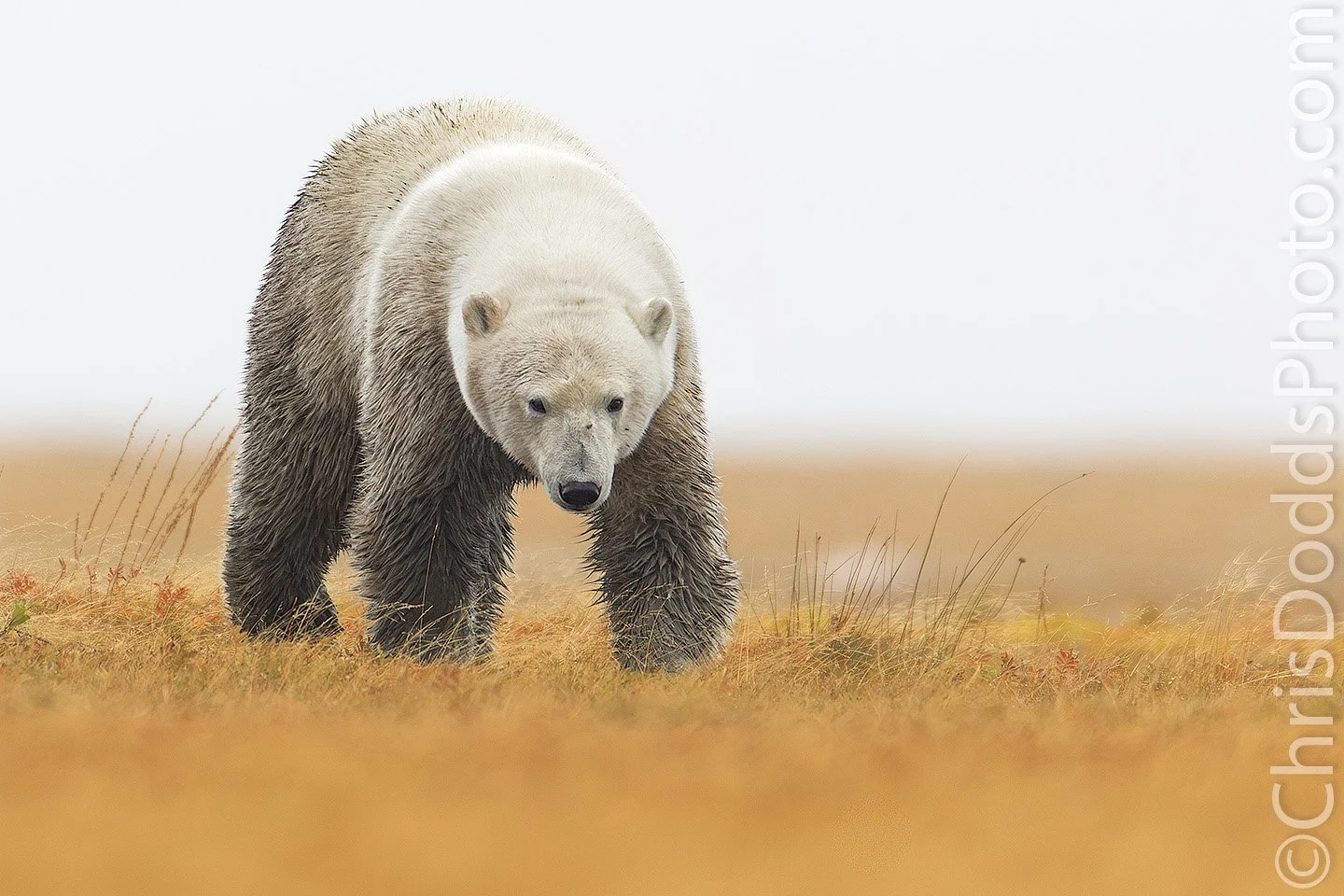
Wet Polar Bear with dark, mud-covered legs walking across golden autumn tundra in Wapusk National Park, Manitoba, Canada.

Polar Bear Walking Across the Autumn Tundra in Wapusk National Park (Ursus maritimus, Ours Blanc). Wapusk National Park along western Hudson Bay in northern Manitoba, Canada. Image Copyright ©Christopher Dodds. 600mm with 2X teleconverter @1,200mm. ISO 10,000, f/8 @ 1/5,000s, manual exposure. Full-frame image.

Why Are Polar Bears White? The Truth About Their Fur and Colour

Christopher Dodds September 8, 2026

Most people picture a Polar Bear as pure white against snow and ice.

During a solo September trip into Wapusk National Park, I photographed this wet, mud-stained bear walking across the autumn tundra along the western shore of Hudson Bay in northern Manitoba.

It rained for the entire trip. I was soaked, slipping, sliding and slopping my way through six inches (15 centimetres) of cold, muddy muck. Every step threatened to pull off my boots.

The Polar Bear seemed entirely unbothered.

Its head and shoulders were still creamy white, but its wet, mud-covered legs had become so dark that they almost looked as though they belonged to another animal.

Why Are Polar Bears White?

Polar Bear fur is not actually white.

The individual hairs have no white pigment. They are transparent and largely hollow. Light is scattered and reflected by the hairs, which makes the coat appear white.

How white a Polar Bear looks depends on the light, its surroundings and the condition of its fur. The same bear can appear bright white, creamy yellow, golden, grey or brown.

Mud, soil, vegetation and seal oil can stain the otherwise transparent hairs. Wet fur also reflects light differently and usually appears darker. The skin beneath the fur is dark.

After days of rain and travel through the saturated tundra, this bear’s legs and underside were coated in dark mud. Its relatively clean head and shoulders still reflected the pale overcast light, creating the striking contrast that immediately caught my attention.

A Polar Bear on the Autumn Tundra

We usually see Polar Bears photographed on snow and sea ice, but the bears of western Hudson Bay spend months on land waiting for the ice to return.

Photographing one on the autumn tundra tells another part of their story.

The rain deepened the golds and browns in the landscape, while the wet fur revealed texture that would have been hidden in a dry, fluffy coat. The mud on the bear’s legs gave them weight and helped separate its pale head and shoulders from the nearly white sky.

I remember struggling to keep my footing while the bear moved across the same wet ground without hesitation. I was soaked and covered in mud. The bear simply kept coming, calm and purposeful.

Years earlier, during another very wet and muddy trip into Wapusk National Park, I photographed a much tighter portrait of a mud-covered Polar Bear.

I called that photograph Polar Intensity.

Looking at today’s image reminded me of that portrait—and the two cashews.

That will be tomorrow’s story.

Did you know that Polar Bear fur has no white pigment?

In Wildlife Photography, polar bears Tags Polar Bear, Polar Bear fur, why are Polar Bears white, Wapusk National Park, Hudson Bay, Manitoba wildlife, autumn tundra, Arctic wildlife, wildlife photography, nature photography
Comment
No results found

Subscribe

Sign up with your email address to receive news and updates.

We respect your privacy.

Thank you!

All content (including text, design, photos, layout, and graphics) are copyright ©Christopher Dodds www.ChrisDoddsPhoto.com