
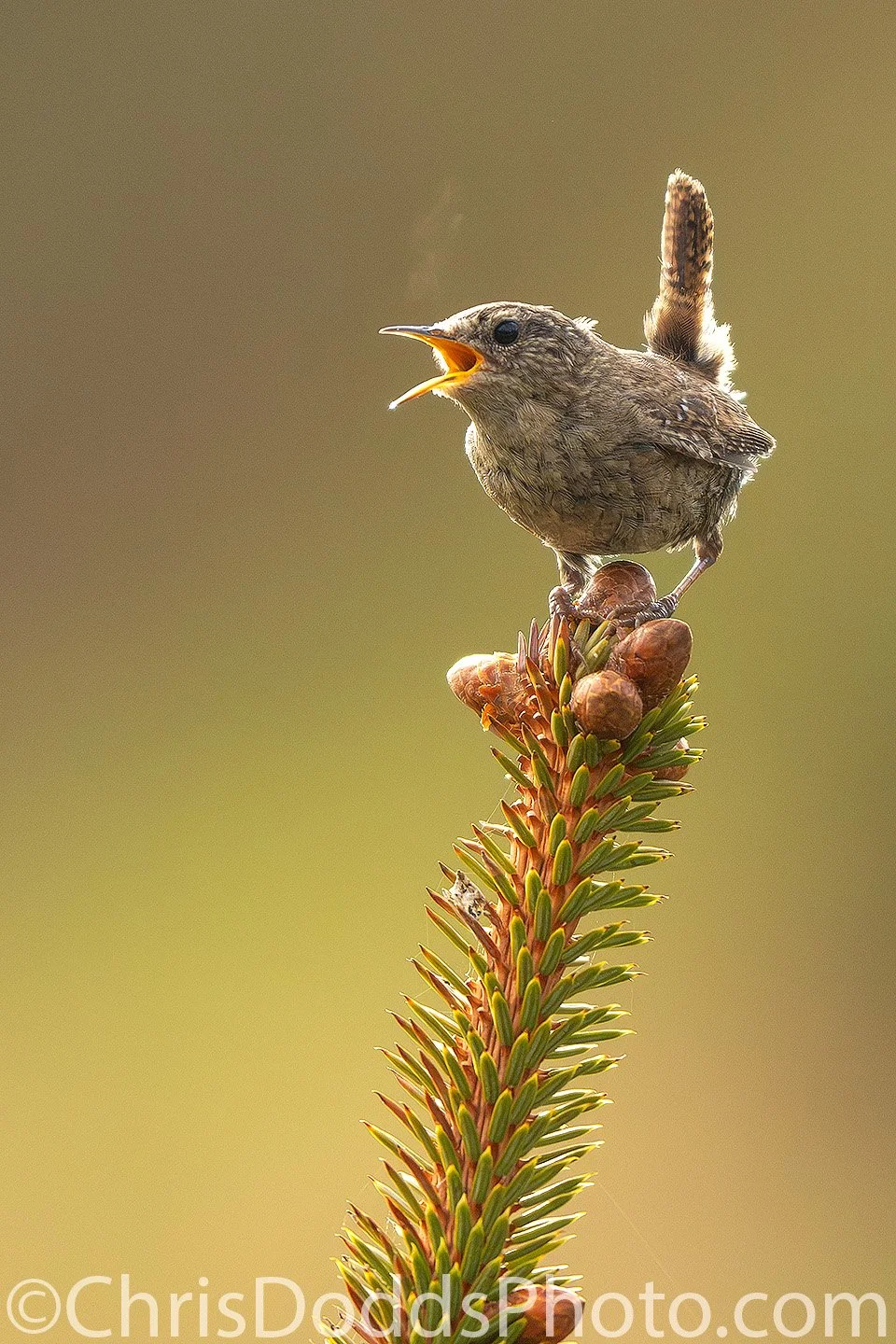
Some birds seem much larger than they actually are.
The Pacific Wren is one of them.
Julie and I spent a few days exploring Kodiak Island, Alaska, before my bear workshop, enjoying the freedom to wander, photograph, and simply see what we could find. Kodiak is famous for its bears, rugged coastline, and dramatic landscapes, but some of my favourite moments there have involved creatures that weigh less than an ounce.
We first heard this Pacific Wren long before we saw it.
Its rich, melodic song carried through the still morning air, sounding impossibly powerful for such a tiny bird. If you've never heard a Pacific Wren sing, it's difficult to appreciate just how much volume and complexity can come from something so small. The song seems to pour out endlessly, filling the surrounding forest with a series of musical trills, whistles, and bubbling notes.
Eventually, we tracked the singer down to the top of a small spruce tree.
The conditions could not have been better.
The low morning sun was directly behind the bird, creating a beautiful rim of light around its feathers. As it continued to belt out its song, something unexpected caught my eye. With every note, tiny wisps of breath became visible in the cool Alaskan air, briefly illuminated by the backlight before disappearing.
It was one of those fleeting details that you don't notice until everything comes together perfectly — the subject, the light, the background, and a little bit of luck.
Pacific Wrens are often easier to hear than to photograph. They spend much of their time hidden in dense vegetation, darting through tangles of branches and fallen logs. Despite their small size, they are energetic, constantly moving, and rarely seem interested in sitting still for photographers.
This individual was an exception.
For a few minutes, it remained on its singing perch, completely focused on proclaiming its territory while Julie and I enjoyed one of those simple but memorable wildlife encounters that make travelling with a camera so rewarding.
Not every photograph requires a rare species, dramatic action, or perfect weather. Sometimes a tiny bird, a cool morning, and a shaft of beautiful light are more than enough.
Have you ever photographed a bird with its breath visible in cold air? I'd love to hear about it in the comments.
Enjoying Nature Photography Blog?
If you enjoy the photographs, stories and free photography articles I share here, I'd appreciate your support. Purchasing through the affiliate links below costs you nothing extra, but it helps offset the considerable time and expense of travelling to wild places, creating new content and maintaining this site—all without subscriptions or paywalls.
Thank you for helping keep Nature Photography Blog free for everyone.
Gear featured in this post: