Great Grey Owl and more Kudos

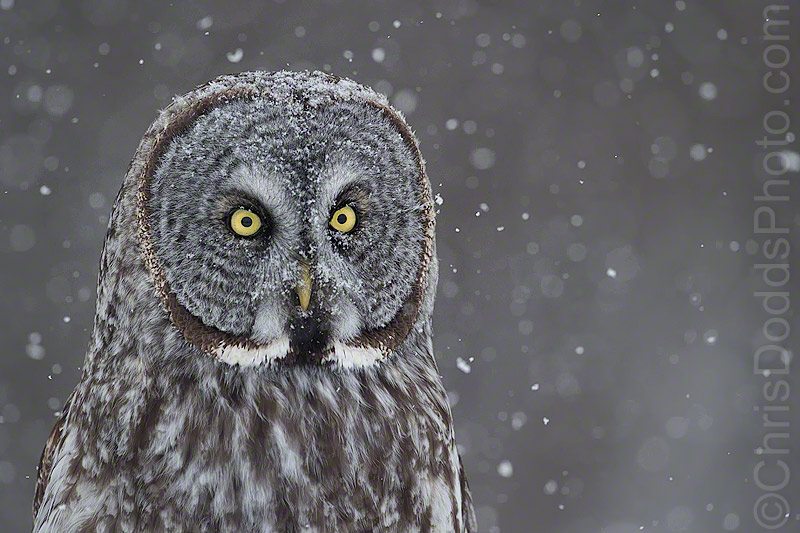
Great Grey Owl OFF BALANCE (Strix nebulosa, Chouette Lapone, GGOW) Gatineau, Quebec ©Christopher Dodds All Rights Reserved. Canon EOS Canon EOS 1DX, 70-300mm F4-5.6 L IS USM @300mm with Jobu L-Bracket  Hand Held ISO 3,200s, f/5.6 @ 1/2,000s Manual mode. Click HERE to order a print or license image for publication.

It's safe to say that this owl season has reached EPIC! Here's another testimonial that I have received from my recent Snowy Winter Owl Workshops:

"Five days in temperatures between –5°C and –15°C plus a snow blizzard just to learn how to photograph Great Grey Owls in their own habitat in the snow! Was it worth crossing the Atlantic for? Yes, definitely – Chris Dodds is an excellent photographer and patient tutor.  From him I learnt lots about manual exposure, histograms, and composition with these owls as the subject.  I used a Canon 7D handheld with a Canon 100mm-400mm lens, and although this was not a pro-camera – like Chris’ and others in the group – I did not feel underpowered or even overwhelmed! Many thanks again Chris."

- Jo Latham Norfolk | UK

Le Nichoir Fundraiser ONLY LIMITED SPACE AVAILABLE!


BUY TICKETS ONLINE HERE

Join me, Canadian nature photographer Christopher Dodds, on March 9, 2013 at 6:30 PM at the Casgrain Theatre (CEGEP John Abbot College 21275 Lakeshore Road, Sainte-Anne-de-Bellevue, Québec H9X 3L9, Canada) for an hour and a half long slideshow presentation to benefit Le Nichoir. The show is designed to be entertaining and informative to all; nature lovers and photographers alike. Stories of adventure, natural history facts and information are all on the menu and this show is designed to offer helpful tips & techniques sure to improve your photography efforts with everything from a camera phone, point & shoot camera or professional SLR camera system. Over one hundred of his images will be projected, many unseen.  Everyone is welcome!
Hurry! Only 280 seats. Tickets are only $18.00 each and are available for advance purchase only - every penny is collected by, and goes to Le Nichoir. Please call or email Le Nichoir (communication@lenichoir.org 450-458-2809) to secure your tickets, or make a donation if you can't make it (be sure to tell them it's on behalf of Chris' Photo Geek Christmas Party) Major credit cards and cheques accepted. There will be ample time to mingle, meet my friends and contacts and share some of your images with others, so feel free to bring prints, iPads or laptops with your favourite images to share. I hope to see you there and PLEASE SPREAD THE WORD!

The door prizes were over the top last year, and thanks to my good friends and sponsors, we have secured an even better stash for this year.


Winter Snowy Owl Workshop Safari Testimonials

Great Grey Owl FROSTED FLAKES (Strix nebulosa, Chouette Lapone, GGOW) Ottawa, Ontario ©Christopher Dodds All Rights Reserved. Canon EOS Canon EOS 1DX, 500mm F4 L IS, Tripod & Jobu Jr. 3 ISO 1,600s, f/5.6 @ 1/1,600s Manual mode. Click HERE to order a print or license image for publication.

Here's a couple of the testimonials that I have received from my recent Snowy Winter Owl Workshops:

"Being a female on my first photo safari, I had some apprehensions.  I worried about safety, that I wasn't a good enough photographer for someone with Chris's acclaim, and that I wouldn't be able to keep up with the group on treks. My fears subsided on Day One, and I knew this would be a week I would never forget.  With the small group size, Chris was able to give each member the level of instruction they needed.  Beyond having great opportunities for owl pictures, I learned helpful things about owl behaviour, owl spotting techniques, operating the camera, processing images,  best clothing and gear for winter, and things like the "Dodds duffel toss" that help prevent injuries while putting my camera backpack on.
Chris has an extensive knowledge of exposure theory. He is a patient teacher, skilled in helping his participants gain a deep understanding of this critical element of photography. He demonstrated why it is important to capture as much detail as possible for the best possible print, then showed us how to accomplish it. During the week of ever changing light, he kept checking our work to make sure we were getting the best possible results.
I usually learn from books and enjoy photography as a solitary pursuit, but I enjoyed the camaraderie of this group experience and received many tips on world travel. The photo safari gave me time to immerse myself in photography and nature.  I'm already planning my next safari with Chris.
"

- Karen Miller (Author of Chippy Chipmunck) Pennsylvania | USA

_____________________________________________________________________________________________________________

"My criteria for signing up for a photo workshop are:  the opportunity to get some very strong images, to learn new things related to capture, post processing, & animal behavior and to have an enjoyable experience. 
Your recent owl workshop met these criteria in spades thanks to your expertise, knowledge, & leadership. You did everything humanly possible to make the workshop as successful as possible for your clients.
I have been on many photo workshops.  Yours are now on my short "A" list which means i shall be a repeat client beyond the puffin photo workshop this July. Thank you again for the outstanding owl workshop."

- Carl Zanoni Connecticut | USA

Le Nichoir Fundraiser

If you are around the Montreal area on March 9, 2013, please do join me for a two hour mini-workshop at an extremely low price for an extremely good cause:

BUY TICKETS ONLINE HERE

Join me, Canadian nature photographer Christopher Dodds, on March 9, 2013 at 6:30 PM at the Casgrain Theatre (CEGEP John Abbot College 21275 Lakeshore Road, Sainte-Anne-de-Bellevue, Québec H9X 3L9, Canada) for an hour and a half long slideshow presentation to benefit Le Nichoir. The show is designed to be entertaining and informative to all; nature lovers and photographers alike. Stories of adventure, natural history facts and information are all on the menu and this show is designed to offer helpful tips & techniques sure to improve your photography efforts with everything from a camera phone, point & shoot camera or professional SLR camera system. Over one hundred of his images will be projected, many unseen.  Everyone is welcome!
Hurry! Only 280 seats. Tickets are only $18.00 each and are available for advance purchase only - every penny is collected by, and goes to Le Nichoir. Please call or email Le Nichoir (communication@lenichoir.org 450-458-2809) to secure your tickets, or make a donation if you can't make it (be sure to tell them it's on behalf of Chris' Photo Geek Christmas Party) Major credit cards and cheques accepted. There will be ample time to mingle, meet my friends and contacts and share some of your images with others, so feel free to bring prints, iPads or laptops with your favourite images to share. I hope to see you there and PLEASE SPREAD THE WORD!

The door prizes were over the top last year, and thanks to my good friends and sponsors, we have secured an even better stash for this year.

If you would like to contribute door prizes for, or sponsor, this worthy cause, please email me (chris@chrisdoddsphoto.com) to discuss. It's a great way to have your product or brand mentioned in every blog post until the main event while helping an awesome cause!

Last year we raised over $2,500.00 and I am asking for your help to at least double that!

Polar Bear Portrait - Bear Safety


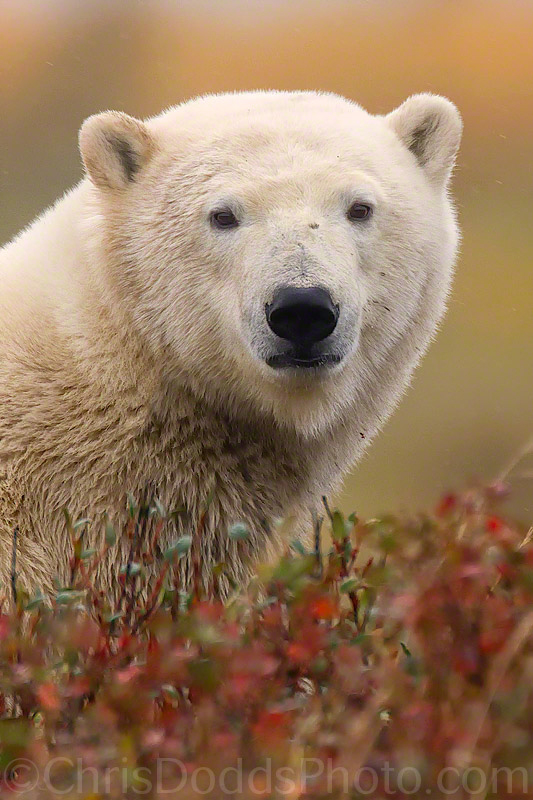
Polar bear PORTRAIT (Ursus maritimus, Ours Blanc) at Cape Tatnam Wildlife Management Area (south of Wapusk National Park) along the shores of the Hudson Bay in northern Manitoba. Image Copyright ©Christopher Dodds. Canon 1D mark IV, 500mm F4 L IS , 2X Teleconverter III, Tripod & Jobu Jr. 3 (with Deluxe Swing-arm upgrade) ISO 1,600 f/8 @ 1/1,000s Manual Mode. PURCHASE A PRINT or LICENSE IMAGE FOR PUBLICATION HERE.

Here's a portrait of a Polar Bear from my recent wet and muddy adventure to the remote shores of the Hudson Bay. We spent considerable time finding a spot that offered some autumn colors in the background, and were thrilled with the results of our efforts.

There's been a lot of talk about recent photo encounters gone wrong that have resulted in deaths. Please use caution when approaching wild animals; I wouldn't dream of going close to Polar Bears without an expert guide to look out for me and the bear I am photographing. Even though I have spent countless hours studying bears, am totally comfortable with them and understand their body language, I still hire an expert. It's just a matter of common sense.

Design Images with Visual Impact

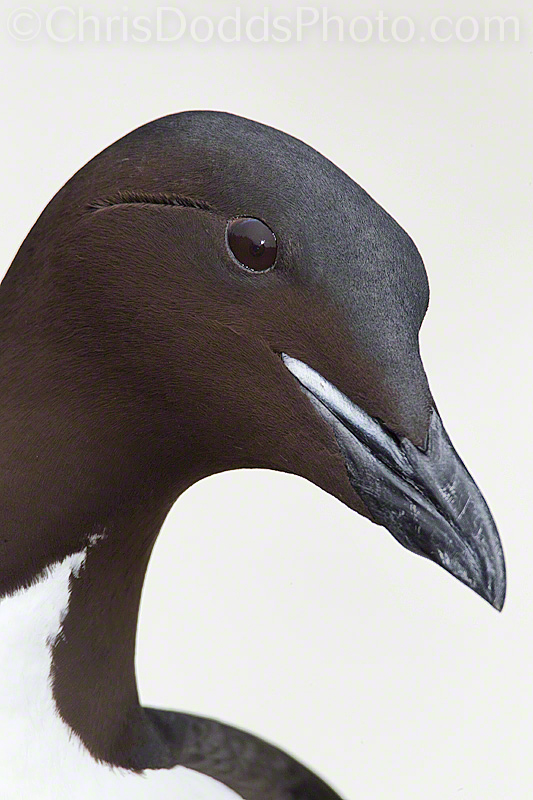
Thick-billed Murre or  Brünnich's Guillemot VERTICAL PORTRAIT (Uria lomvia, Guillemot de Brünnich, TBMU) Saint Paul Island, The Pribilof Islands in the Bering Sea, Alaska. Image Copyright ©Christopher Dodds. Canon 1D MK IV, 500mm F4 L IS , 2X Teleconverter III & , Tripod & Jobu Jr. 3 ISO 800 f/16 @ 1/320s Manual Mode. Fill flash Canon Speedlite 580EX II with Better Beamer @ -1/3. PURCHASE A PRINT or LICENSE IMAGE FOR PUBLICATION HERE.

Here's a couple of images from my recent Saint Paul Island Photo Safari / Workshop. We arrived there as spring was late emerging from the worst winter anyone can remember and there were shaded areas at the bottom of cliffs where the snow had not melted yet. Although I generally don't like bright white backgrounds in images, I decided to make an exercise of designing some images with white backgrounds; there is a certain quality to the white out-of-focus snow that's much more appealing to me than that of a bright & backlit white sky.

I really like getting close and designing intimate portraits with big glass, so I installed my 500mm f/4 and a 2X extender and moved so close that I had to back away to the lens' minimum focusing distance. Once set-up on my tripod and Jobu Jr. 3 gimbal tripod head, I installed my Jobu off-camera flash bracket and my Canon 580 EXII flash.

Designing these tight, almost high-key portraits can be challenging, but careful attention to balancing all of the images' elements can be quite rewarding. Be sure to spend time studying the colours, tones and textures, (or, perhaps, the lack of colours tones and textures), the positive and negative space and the lines, shapes and where they lead the eye. Look for angles and perspective, and try to visualize how changing them by moving your angle of view will impact, help or hinder your image's design.

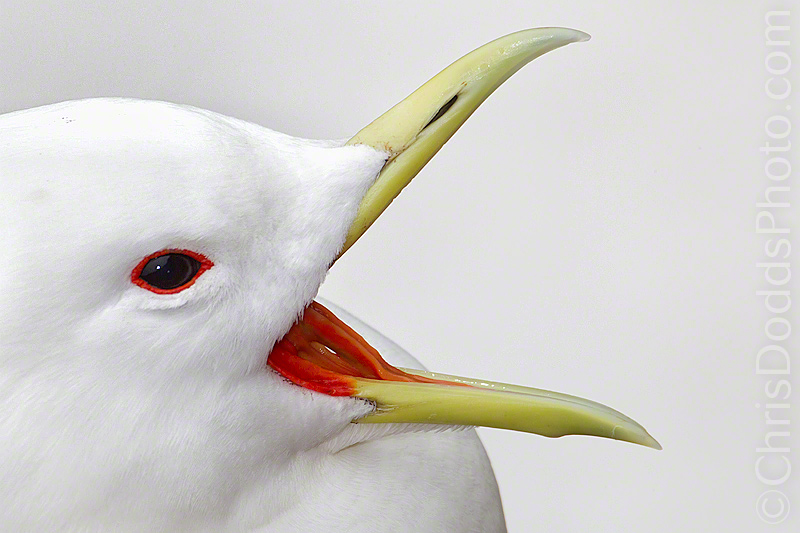
Black-legged Kittiwake PORTRAIT CALLING (Rissa tridactyla, Mouette tridactyle, BLKI) Saint Paul Island, The Pribilof Islands in the Bering Sea, Alaska. Image Copyright ©Christopher Dodds. Canon 1D MK IV, 500mm F4 L IS , 2X Teleconverter III & , Tripod & Jobu Jr. 3 ISO 800 f/16 @ 1/500s Manual Mode. Fill flash Canon Speedlite 580EX II with Better Beamer @ 0. PURCHASE A PRINT or LICENSE IMAGE FOR PUBLICATION HERE.

Be sure not to overlook the creative element of your exposure values; should you use an equivalent exposure with slower shutter speed and larger depth-of-field?, or will a shallow depth-of-field with higher shutter speed blurr the background (or foreground) and draw the viewer in for a closer look at the subject?

No matter where you are, what your subject; stop and think a little about designing the image and not taking the picture.

THE X FACTOR Canon EOS 1DX

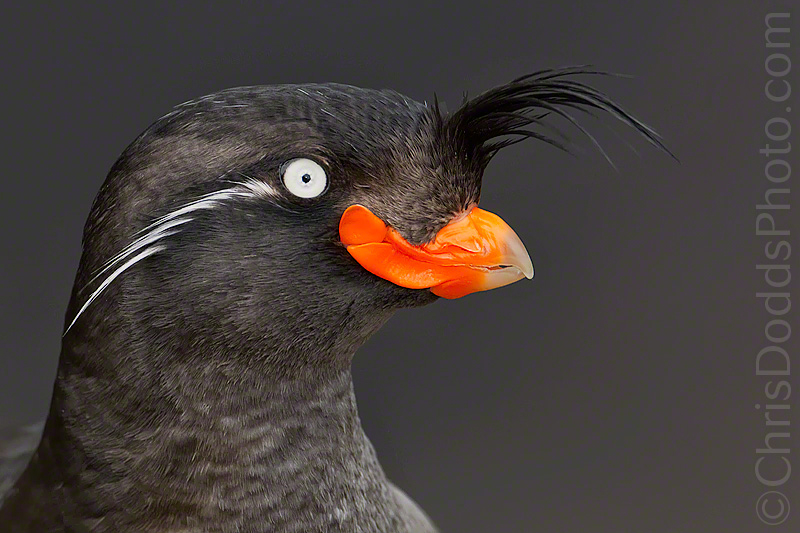
Crested Auklet Profile (Aethia cristatella, CRAU) Saint Paul Island, The Pribilof Islands in the Bering Sea, Alaska. Image Copyright ©Christopher DoddsCanon 1D MK IV, 500mm F4 L IS , 2X Teleconverter III & Canon Extension Tube EF 25 II, Tripod & Jobu Jr. 3 ISO 1,600 f/14 @ 1/160s Manual Mode. Fill flash Canon Speedlite 580EX II with Better Beamer @ -3. PURCHASE A PRINT or LICENSE IMAGE FOR PUBLICATION HERE.

Here's another Crested Auklet from my recent Saint Paul Island Photo Safari. I really do love these dark, out-of-focus wet rocks as backgrounds that we got by pointing straight down from the top of the cliff edge. 

The X Factor

Canon Canada has loaned me a Canon EOS 1DX from their VIP loaner pool. I've just taken it ouf the box and set it up for birds in flight photography and will be "putting the boots to it" during my Puffins Galore Workshop; Stay tuned for my mini review after my return home. I am quite excited to try out the latest and greatest offering from Canon - Thank you CPS services Canada!

Canon EOS 7D Firmware V2.0 Announced

Crested Auklet Portrait (Aethia cristatella, CRAU) Saint Paul Island, The Pribilof Islands in the Bering Sea, Alaska. Image Copyright ©Christopher DoddsCanon 1D MK IV, 500mm F4 L IS , 2X Teleconverter III & Canon Extension Tube EF 25 II, Tripod & Jobu Jr. 3 ISO 1,600 f/8 @ 1/160s Manual Mode. Fill flash Canon Speedlite 580EX II with Better Beamer @ -2&2/3. PURCHASE A PRINT or LICENSE IMAGE FOR PUBLICATION HERE.

Here's a portrait of a one of my favorite birds of Saint Paul Island. This portrait was made by slowly working my way to the cliff edge and pointing my camera straight down at the bird. It took a little patience to get the bird looking directly at me as I wanted it, and I just love the dark out-of-focus rocks that makes the background. We had amazing weather for June, with barely a sprikle of light rain during our entire eight day trip. Our return to Anchorage was delayed 24 hours due to fog, but that was a small price to pay for such a rewarding trip.

Do be sure to book early for my 2013 Safari to Saint Paul Island next June to avoid planned price increase.

Canon EOS 7D Firmware V2.0

Canon has announced an upcoming firmware update, 7D Firmware Version 2, for the 18 Megapixel EOS 7D that includes a raft of new features to further enhance the capabilities of Canon’s flagship APS-C format DSLR.

The new EOS 7D Firmware Version 2 update will enhance the camera with the following additional features:

Improved RAW maximum burst

In the EOS 7D the maximum burst of RAW file frames was 15 – with the firmware update this will be significantly increased so that the camera’s buffer will handle up to 25 RAW frames in a continuous burst.

In-camera RAW conversion

The EOS 7D will allow for in-camera post-processing of images. RAW images can be edited in-camera and options can be changed before saving the finished file as a ready-to-print JPEG or for sending wirelessly. This function can be used with full resolution RAW files, but not with M-RAW or S-RAW files.

The settings for in-camera RAW processing include White balance, Picture Style, High ISO speed noise reduction, Colour Space, and lens data corrections (Peripheral Illumination Correction, distortion correction and Chromatic Aberration Correction).

Image rating capabilities

Like other Canon EOS DSLRs, such as the EOS 60D, EOS-1D X and EOS 5D Mark III, the EOS 7D will be able to rate images from 1 to 5 stars in-camera for quicker and easier sorting of images within your workflow. The ratings can be used to sort images in applications such as Adobe Elements, Adobe Bridge and Apple Aperture. The ratings are XMP compliant and Canon’s Digital Photo Professional software has been updated to reflect this.

Auto ISO maximum setting

Within the EOS 7D’s shooting menu photographers will have the ability to set a maximum ISO speed for ISO Auto, within the ISO range of 400-6400, so that you can minimise the amount of noise in your images.

Manual adjustment for audio recording levels

During EOS Movie shooting you will be able to manually adjust the audio recording levels to one of 64 levels, whilst the sound volume during playback can be set to one of 11 levels. During movie recording noise from the aperture is reduced and the camera also has an automatic wind cut filter.

JPEG resizing

Within the camera’s image-recording menu with all JPEG images you will be able to resize the image (for image downsizing) and save it as a new image. JPEG L and M images can be resized and saved as separate JPEG M or S images. Note that the aspect ratio cannot be changed.

Support for the GP-E2 GPS unit

The GP-E2 unit arrived with the EOS 5D Mark III and this firmware update will enable the GPS unit to be used with the EOS 7D, via a cable connection, so that photographers can geo-tag images with latitude and longitude data in the EXIF fields.

Quick Control during playback

With the Quick Control (Q) button pressed during image playback photographers will be able to select options for protect images, rotate images, rate images, resize images, highlight alert, AF point display and image jump.

File name setting

In the EOS 7D’s camera settings menu in user setting 1 the first four characters of the file name can be adjusted, whilst in user setting 2 the first three characters of the file name can be adjusted and the fourth will be set automatically according to the recording quality.

Time Zone setting

Within the EOS 7D’s camera settings menu you will be able to set the time zone, plus daylight saving time can also be set.

Faster scrolling of magnified images

The screen scrolling speed will be faster for scrolling through images when they are enlarged. The ease of use is improved when using the camera to zoom in and check focus.

The existing impressive specifications of the EOS 7D include up to 8fps shooting speed, high ISO sensitivity up to 12,800 for low light shooting, an iFCL metering system with a 63-zone Dual-layer Metering Sensor for superbly accurate exposures, plus outstanding in-camera Speedlite Transmitter flash technology.

Stay tuned here for the new firmware when it becomes available soon.

More best of Texas Leguna Seca Ranch Rocked

White-tailed Hawk (immature) Landing (Buteo albicaudatus; Buse à queue blanche; WTHA) Leguna Seca Ranch, Rio Grande Valley, Texas. Image Copyright ©Christopher Dodds All Rights Reserved. Canon EOS-1D MKIV70-300mm f/4-5.6 L IS USM @300mm. Jobu Jr. 3 (save 15% OFF use the coupon code "NATURE" at the Jobu website store checkout HERE) & tripod. ISO 640, f/5.6 @1/2,500s Manual mode. CLICK HERE TO PURCHASE A PRINT or LICENSE IMAGE FOR PUBLICATION

Here's more from my recent and hugely successful Best of Texas workshop/safari (be sure to visit my last post about the Harris's Hawk if you missed it). This is an immature White-tailed Hawk from the new and improved raptor blind at Leguna Seca Ranch. The variety of raptors circling was awesome! This immature White-tailed Hawk was the first to arrive for the chicken parts we scattered around the base of our perch; it caught us all by surprise while we were photographing a pair of Scissor-tailed Flycatchers. The ranch continues to evolve into photographic bliss - largely thanks to it's pro-active owner, Gene.

Be sure to sign-up early for next year's BEST OF TEXAS Workshop/Safari April 22-26, 2013

White-tailed Hawk (immature) Portrait (Buteo albicaudatus; Buse à queue blanche; WTHA) Leguna Seca Ranch, Rio Grande Valley, Texas. Image Copyright ©Christopher Dodds All Rights Reserved. Canon EOS-1D MKIV, Canon EOS-1D MKIV, 500mm F4 L IS  & 1.4X Extender III. Jobu Jr. 3 (save 15% OFF use the coupon code "NATURE" at the Jobu website store checkout HERE) & tripod. ISO 640, f/6.3 @1/2,500s Manual mode. CLICK HERE TO PURCHASE A PRINT or LICENSE IMAGE FOR PUBLICATION

White-tailed Hawk (immature) Streching (Buteo albicaudatus; Buse à queue blanche; WTHA) Leguna Seca Ranch, Rio Grande Valley, Texas. Image Copyright ©Christopher Dodds All Rights Reserved. Canon EOS-1D MKIV70-300mm f/4-5.6 L IS USM @300mm. Jobu Jr. 3 (save 15% OFF use the coupon code "NATURE" at the Jobu website store checkout HERE) & tripod. ISO 640, f/5.6 @1/2,500s Manual mode. CLICK HERE TO PURCHASE A PRINT or LICENSE IMAGE FOR PUBLICATION

Upcoming workshops/Safaris

Northern Gannet landing with sea weed (Morus Bassanus, Fou de Bassan, NOGA) Parc national de l'Île-Bonaventure-et-du-Rocher-Percé, Bonaventure Island, Quebec Image Copyright ©Christopher Dodds www.chrisdoddsphoto.com All Rights Reserved. Canon EOS 1DsMKIII, 500mm F4 L IS. ISO 250, f/16 @ 1/250s Manual. Full Frame. PURCHASE A PRINT or LICENSE IMAGE FOR PUBLICATION HERE.

Amazingly, there's still room for you to join my June 4-6, 2012 Gannets Galore (and so much more) Workshop; it's what I consider to be the very best bird photography workshop if you want to learn everything there is to know about photographing birds in flight. The four hour Zodiac ride (weather permitting) each morning is without parallel and you can photograph birds from dawn to dusk for all three days! Everyone who has attended this workshop has come home with improved skills, and awesome portfolio and memories of an awesome adventure! Be sure to have a look at the Gannets Galore workshop page and read all of the testimonials. MANY PRIZE WINNING IMAGES HAVE BEEN MADE ON THIS WORKSHOP AND IT HAS ATTRACTED MANY OF THE TOP BIRD PHOTOGRAPHERS FROM AROUND THE GLOBE AS ATTENDEES. Nobody knows the island (photographically) like I, as I have spent more than a year's worth of time photographing there.

REGISTER HERE

Northern Gannet landing with sea weed (Morus Bassanus, Fou de Bassan, NOGA) Parc national de l'Île-Bonaventure-et-du-Rocher-Percé, Bonaventure Island, Quebec Image Copyright ©Christopher Dodds www.chrisdoddsphoto.com All Rights Reserved. Canon EOS 1D MKIII, 70-200mm F2.8 IS, (@200mm). ISO 400, F5.6 1/2500s Manual. Canon 580 EXII Flash in Manual - full power. Full Frame. PURCHASE A PRINT or LICENSE IMAGE FOR PUBLICATION HERE.

Best of Texas Workshop Safari a Huge Success

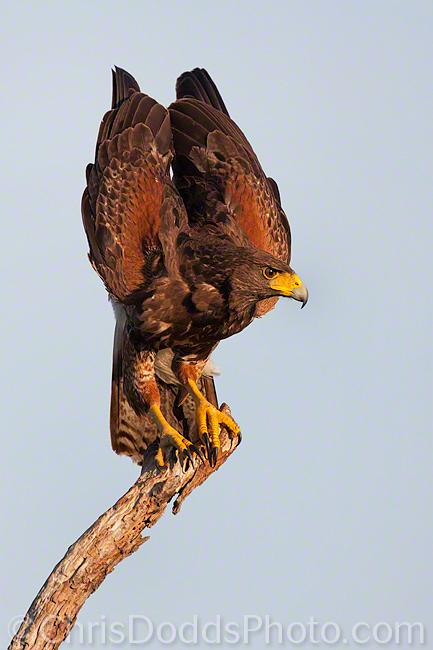
Harris's Hawk  (Parabuteo unicinctus, Buse de Harris, HAHA) Martin Refuge, Rio Grande Valley, Texas. Image Copyright ©Christopher Dodds All Rights Reserved. Canon EOS 1DsMKIII, 500mm F4 L IS,  & 1.4X Extender III. Jobu Jr. 3 (save 15% OFF use the coupon code "NATURE" at the Jobu website store checkout HERE) & tripod. ISO 800, f/6.3 @1/2,500s Manual mode. CLICK HERE TO PURCHASE A PRINT or LICENSE IMAGE FOR PUBLICATION

I'm just in the door from the amazingly successful BEST OF TEXAS workshop/safari. The birds were spectacular and the participants were 100% repeat clients and great friends. What a trip! What fun! Here's just a few of the plethora of the images from the last two days we spent at the Martin Refuge in the Rio Grande Valley. The number of hawks and Crested Caracaras that came for our secret recipe offerings (a mix of chicken and various repulsive wild red meat leftovers from a taxidermist) was astounding!

I will be sharing more images of some of the other species photographed during the next few days, so stay tuned for more and be sure to sign-up early for next year's BEST OF TEXAS workshop/safari.

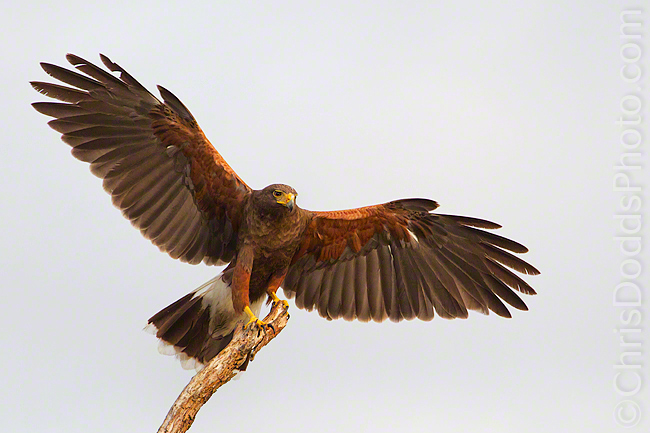
Harris's Hawk  LANDING (Parabuteo unicinctus, Buse de Harris, HAHA) Martin Refuge, Rio Grande Valley, Texas. Image Copyright ©Christopher Dodds All Rights Reserved. Canon EOS-1D MKIV, 500mm F4 L IS. Jobu Jr. 3 (save 15% OFF use the coupon code "NATURE" at the Jobu website store checkout HERE) & tripod. ISO 1,600, f/5.6 @1/1,600s Manual mode. CLICK HERE TO PURCHASE A PRINT or LICENSE IMAGE FOR PUBLICATION

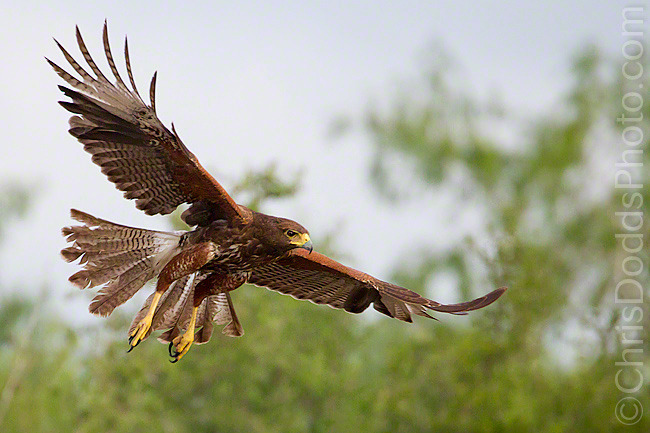
Harris's Hawk  Banking (Parabuteo unicinctus, Buse de Harris, HAHA) Martin Refuge, Rio Grande Valley, Texas. Image Copyright ©Christopher Dodds All Rights Reserved. Canon EOS-1D MKIV70-300mm f/4-5.6 L IS USM @300mm. Jobu Jr. 3 (save 15% OFF use the coupon code "NATURE" at the Jobu website store checkout HERE) & tripod. ISO 2,500, f/5.6 @1/1,600s Manual mode. CLICK HERE TO PURCHASE A PRINT or LICENSE IMAGE FOR PUBLICATION

Ospreys Galore Kudos

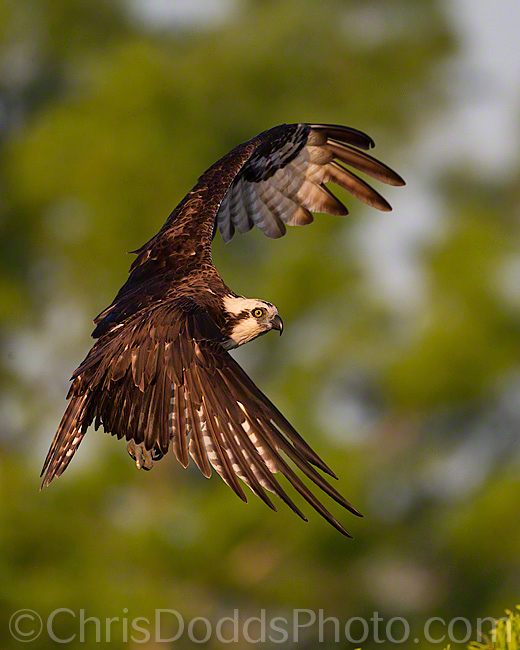
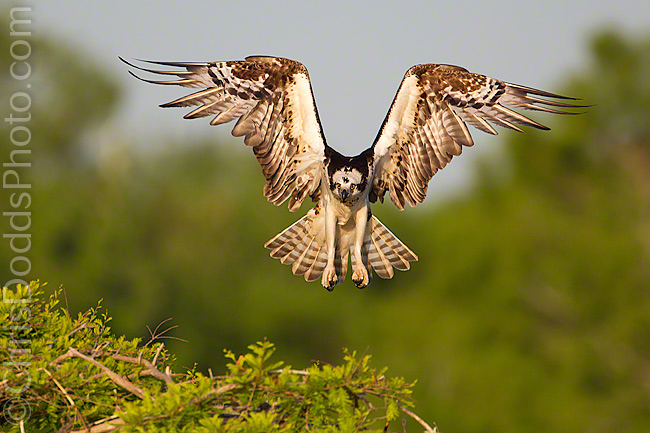
 OSPREY CATCH A GLIMPSE (Pandion haliaetus, Balbuzard pêcheur, OSPR) Lake Blue Cypress, Florida. Image Copyright ©Christopher Dodds. Canon EOS-1D MKIV500mm F4 IS & 1.4X Extender III. ISO 800  f/5.6 @ 1/2,500s Manual. PURCHASE A PRINT or LICENSE IMAGE FOR PUBLICATION HERE.

Amongst the many great things about leading photo safaris and teaching workshops are the people I get to meet and spend time with. Geoff sent along this great note after the Ospreys Galore workshop/safari and I thought I would share it today with another couple of images from that trip - million thanks Geoff!

"Osprey safari: An incredible opportunity.

I recently attended the Osprey safari offered by Chris Dodds, and I was positively thrilled with the excursion. The people in our small group were fantastic.  The environment was magical. The photographic opportunities were amazing and abundant. Every part of the physical expedition was most impressive, but what I was really taken with was the panoply of knowledge Chris demonstrated throughout the trip. Whether identifying various birds dozens of yards away simply by call, or exuding masterful control over the camera, Chris was able to display his expertise and offer assistance when needed. Chris is very amiable and approachable. No matter what skill level a photographer has, Chris always made one feel important with his one on one attention and did so without any air of condescension. It was very much like shooting with great friends with your own personal tutor to turn to if needed. I can honestly say that both my skill level and knowledge base increased from my trip with Chris. Thanks again Chris."

- Geoff Powell Vero Beach | FL | USA http://www.artisticpx.com
OSPREY CATCH A GLIMPSE (Pandion haliaetus, Balbuzard pêcheur, OSPR) Lake Blue Cypress, Florida. Image Copyright ©Christopher Dodds. Canon EOS-1D MKIV500mm F4 IS & 1.4X Extender III. ISO 800  f/5.6 @ 1/2,500s Manual. PURCHASE A PRINT or LICENSE IMAGE FOR PUBLICATION HERE.

Kudos, Jobu Jr. 3 and Workshop Updates

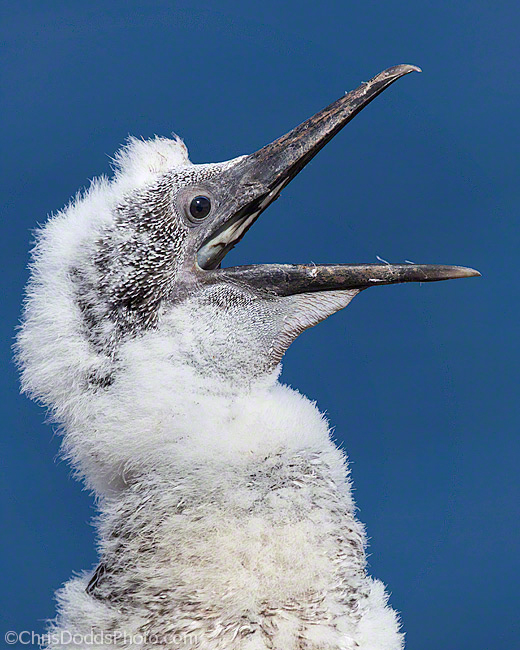
Northern Gannet FEED ME MAMA seven weeks old (Morus Bassanus, Fou de Bassan, NOGA) Parc national de l'Île-Bonaventure-et-du-Rocher-Percé, Bonaventure Island, Quebec Image Copyright ©Christopher Dodds All Rights Reserved. Canon 1D MK IV, 500mm F4 L IS, 2X Teleconverter III. Tripod & Jobu Jr. 3 Full Frame. ISO 400 f/13 @ 1/500s Manual. PURCHASE A PRINT or LICENSE IMAGE FOR PUBLICATION HERE.

Despite a rather wet and cold summer, which halved the nesting success of the Gannets on Bonaventure Island, we had a fantastic workshop (even at such a successful Gannet colony, bad years happen; there's nothing to be alarmed about). The surviving baby gannets were located at the top of hills, making them easier to isolate against the deep blue of The Gulf of the Saint Lawrence. We enjoyed calm water,fine weather and diving Gannets - loads of fun & I can't wait to get back there in the spring!

Jobu Jr. 3

My trusted Jobu Jr. 3 gimbal head continues to be my “go to” tripod head for any lens I choose from 70-300 through 800mm. It's simply rock solid and offers a much better lock-down when the knobs are tightened; no creeping like the 4th Generation Designs Mongoose Head. The knobs are easy to grip and rubberized which helps in cold and wet conditions and the brilliant design of lens plate clamp knob keeps it from getting in the way! Easy to use, light and small - it's still half the size, half the weight and half the price of the full Wimberley Head II. This is the ONLY gimbal head I have used since January, and I don't see any reason to use anything else out there - ever! SAVE 15% OFF your purchase at the JOBU store and support this site just by using the coupon code "NATURE" at the Jobu website store checkout HERE.

Kudos

"I want to thank you for a great "Gannets Galore" workshop. The Gannets and Bonaventure Island were an incredible experience for me. The workshop was enhanced by your knowledge of the birds behavior and great relationship with the officials on the Island gained over more than 25 years. It's incredible that you are able to recognize individual birds, remember their nesting sites, and predict their behavior so well. I felt that I had made a wise decision when I decided to experience Bonaventure with you.
The highlight of the shoot was the early morning Zodiac trips. I've always been fascinated by Gannets diving for food and experiencing it from the boat, so close to them, was something I'll never forget. In addition the photography from the Zodiac was great.
I'm in the process of editing the thousands of images I photographed. I appreciate your expert advice on how I should improve my photography. Your technical grasp of digital photography and the toys used to create it was another benefit of doing this workshop with you.... Best regards, Shelly"

- Seldon "Shelly" Goldstein Boynton Beach | FL | USA

Workshop updates

Moose & Fall Colors of Maine. September 26-30, 2011 - a fabulous five day workshop/safari with Christopher Dodds and co-leader, E.J. Peiker.

Snow Geese Galore October 22 & 23, 2011 weekend and October 24-28, 2011 five day.

Winter Snowy Owl Prowls January and February, 2012


Coastal Brown Bears of Katmai Alaska

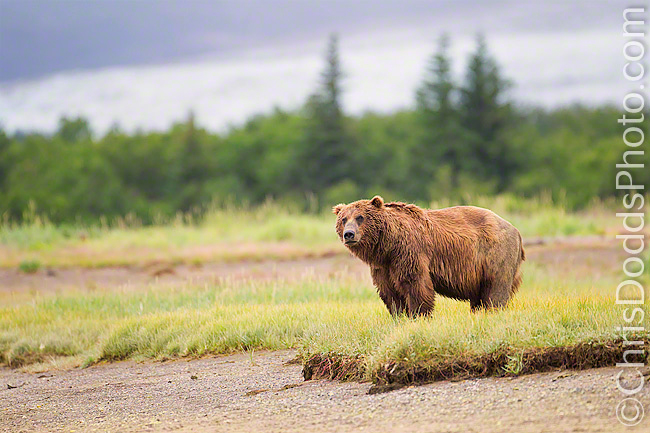
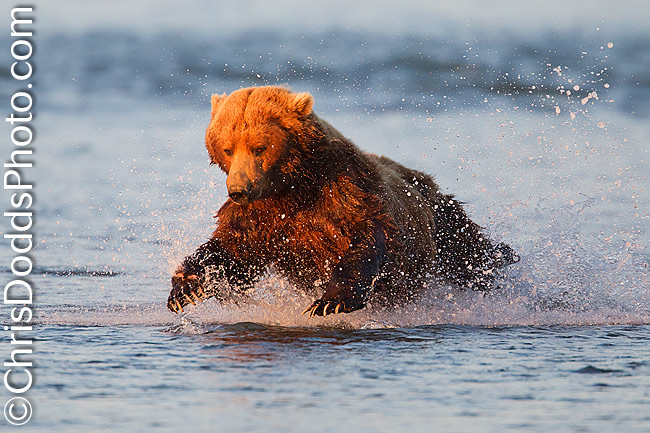
Coastal Brown Bear OVERLOOK  (Ursus arctos, Grizzly Bear) Hallo Bay, Katmai National Park, AK. Image Copyright ©Christopher Dodds All Rights Reserved. Canon 1D MK IV, 500mm F4 L IS, Jobu Jr. 3 gimbal head & tripod. ISO 800, f/4 @1/800s Manual mode. CLICK HERE TO PURCHASE A PRINT or LICENSE IMAGE FOR PUBLICATION

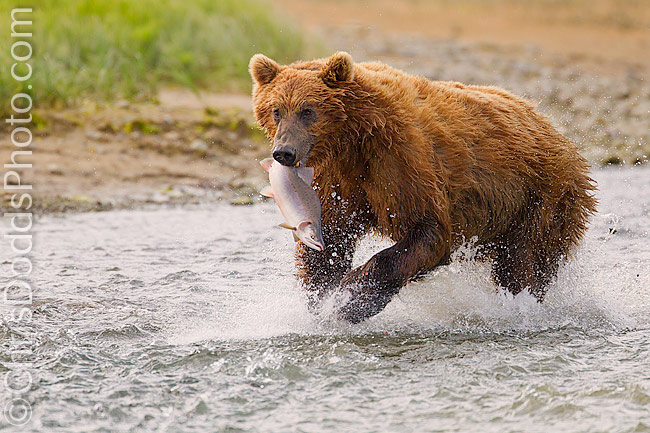
Coastal Brown Bear FISH ON!  (Ursus arctos, Grizzly Bear) Hallo Bay, Katmai National Park, AK. Image Copyright ©Christopher Dodds All Rights Reserved. Canon 1D MK IV, 500mm F4 L IS, 1.4X Extender III, Jobu Jr. 3 gimbal head & tripod. ISO 800, f/5.6 @1/1,000s Manual mode. CLICK HERE TO PURCHASE A PRINT or LICENSE IMAGE FOR PUBLICATION

Here's a couple of images from my recent Coastal Brown Bears of Katmai, Alaska photo safari. It is always quite remarkable to watch and see just how much patience a hungry bear has; they know that the salmon will eventually swim up the creek, all they have to do is wait for it. Seeing a 1,000 pounds, or more, of sleeping muscles pounce into action and catch a salmon at a close distance is an exhilarating experience!

There's quite a good lesson to be learned from the bears; wait along a salmon creek, and as sure as the Salmon will show, so will the bears ;) I have heard myself (more than once) explaining to workshop participants that being patient is far more productive than chasing around after every bear seen. We watched (more than once) as other groups chased off the very bears they wanted to photograph; against park rules and a somewhat foolish approach to photographing wild bears.

Be sure to check-out my new and improved Coastal Brown Bears of Katmai, Alaska photo safari July/August 2012. New and improved 100 foot boat for stability and a calmer ride, better, and more consistent cuisine (90% seafood with a gourmet chef interested in satisfying your special diet), all the snacks and drinks (non-alchoholic) you could want and lots of hot water for daily showers and lots of good, clean fun, clean quarters and a willing, happy crew there to help make this a trip of a lifetime!

Be sure to check out: Coastal Brown Bears of Katmai, Alaska Photo Safari Workshop July 27th to August 3rd, 2012

KUDOS

"I recently went on the Gannets Galore workshop with Chris.... It has been 3 weeks now and I still can not come up the the words to describe this experience. The world Chris takes you to defies description. The colony is beyond words. Everything about your day on this workshop is special. This is a trip of a lifetime for anyone who loves birds. Chris runs his workshop so all you have to do is show up at the appointed time and shoot for 10 hours, every detail beyond that is taken care of. The Day is spent with no other care than to photograph beautiful gannets, whales, murres, razorbills, kittiwakes, seals, and he threw in 2 bald eagles for good measure. I had so many great shots when I returned home that I still can not believe it. My birds in flight technique improved 100 percent. Chris gives you as much or as little instruction as you want. He even let me shoot a couple of cards in his camera with his lens. All I can say is, if you love birds, and want to see gannets, I don't believe you can do any better than a Chris Dodds workshop." - Carole Wiley Torrington | CT | USA

There's still room for my Sept. 7-9, 2011 Gannets Galore photo safari workshop be sure to check it out HERE. This is, by far, the very best place in the world to learn bird photography flight technique. My years of experience there is the critical key to offering you the very best Bonaventure Island has to offer. This is such a magical place, it has drawn me back for more than 365 days (I stopped counting after reaching a year of days there).

MEEP! MEEP! The Greater Roadrunner

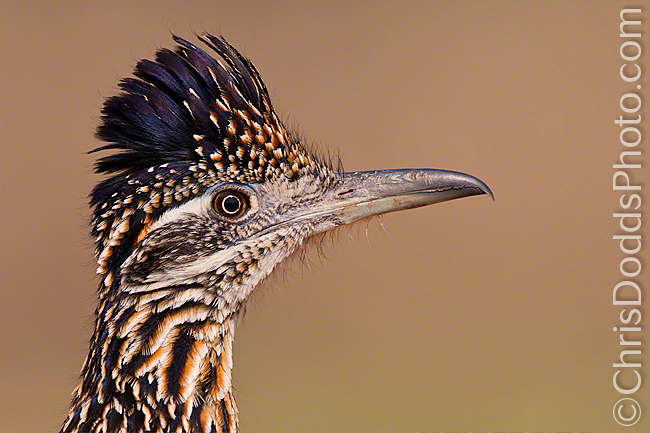
Greater Roadrunner PORTRAIT Geococcyx californianus, Grand Géocoucou GRRO (Also known as: chaparral cock, ground cuckoo, snake killer) Laguna Seca Ranch, Linn, Texas. Image Copyright ©Christopher Dodds All Rights Reserved. Canon 1D MK IV, 500mm F4 L IS, 2X Teleconverter III . ISO 250, F9 @1/500s Manual mode. CLICK HERE TO PURCHASE A PRINT or LICENSE IMAGE FOR PUBLICATION

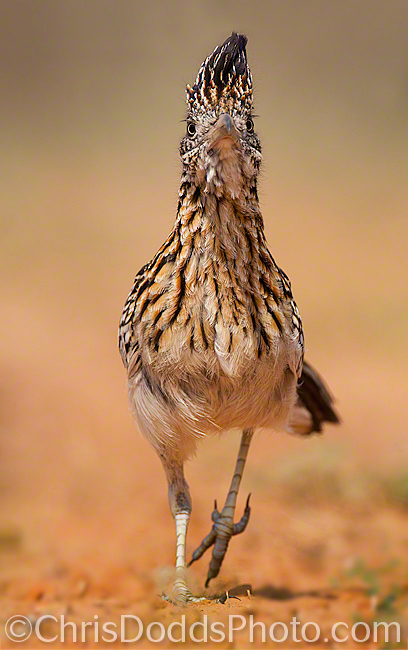
Greater Roadrunner MEEP! MEEP! Geococcyx californianus, Grand Géocoucou GRRO (Also known as: chaparral cock, ground cuckoo, snake killer) Laguna Seca Ranch, Linn, Texas. Image Copyright ©Christopher Dodds All Rights Reserved. Canon 1D MK IV, 500mm F4 L IS, 2X Teleconverter III . ISO 250, F9 @1/500s Manual mode. CLICK HERE TO PURCHASE A PRINT or LICENSE IMAGE FOR PUBLICATION

I'm just in the door from yet another fantastic trip; this time to Florida. The Ospreys Galore workshop / safari was a huge success, with 60% repeat clients. I've got tons of new images and new workshops to share over the next few weeks, so stay tuned for some regular updates. In the meantime, here's a couple of Greater Roadrunner images from Laguna Seca Ranch near Lynn, Texas . After many attempts to capture a Roadrunner running straight at me, I was thrilled to finally figure it out at an amazing ranch - stay tuned for more details for Texas workshops next April. The key to these images are a dugout blind and the distant background.

The Greater Roadrunner (Geococcyx californianus, Grand Géocoucou, GRRO)gets its English name from its great running ability. The Greater Roadrunner, taxonomically classified as Geococcyx californianus, meaning "Californian Earth-cuckoo," is a long-legged bird in the cuckoo family, Cuculidae. It is one of the two roadrunner species in the genus Geococcyx; the other is the Lesser Roadrunner. This roadrunner is also known as the chaparral cock, ground cuckoo, and snake killer. When it is startled it will run rather than fly. It is a poor flyer but can run at speeds of up to 15 miles per hour (24 KM/H). It uses its long tail as a type of rudder to help it keep its balance while running.
The greater roadrunner is a member of the cuckoo family. It is a ground bird that is about two feet in length. It has speckled brown and black feathers on its back and wings and a lighter throat and chest with dark stripes. It has long legs, a very long tail and yellow eyes. It has a crest on its head  and the male has a red and blue patch of skin on the side of its head. The greater roadrunner can be found in   California, Nevada, New Mexico, Utah, Colorado, Kansas, Oklahoma, Arkansas, and Louisiana. It is also found in Mexico. The greater roadrunner is most common in desert areas, but it can also be found in chaparral, grasslands, open woodlands and agricultural areas. It's diet consists mainly of small snakes, lizards, mice, scorpions, spiders, ground nesting birds and insects. It also eats fruits and seeds. The female lays three to six eggs in a stick nest lined with grass. The nest is usually placed in a low tree, bush, thicket or cactus 3-15 feet above the ground. Males do most of the incubating because they keep a normal body temperature at night. The female's body temperature drops at night. If a predator comes too close to the nest, the male will run in a crouch until he is a short distance away from the nest. He then will stand up, raise and lower the crest on his head, flash the blue and red patches on the sides of his head and call out in an attempt to lure the predator away from the nest. The chicks hatch in about 20 days. Both parents care for the young. The chicks leave the nest when they are 18 days old and can feed themselves when they are 21 days old.

ADRENALINE Coastal Brown Bear (Ursus arctos or grizzly bear) & The Hazards of Nature Photography.

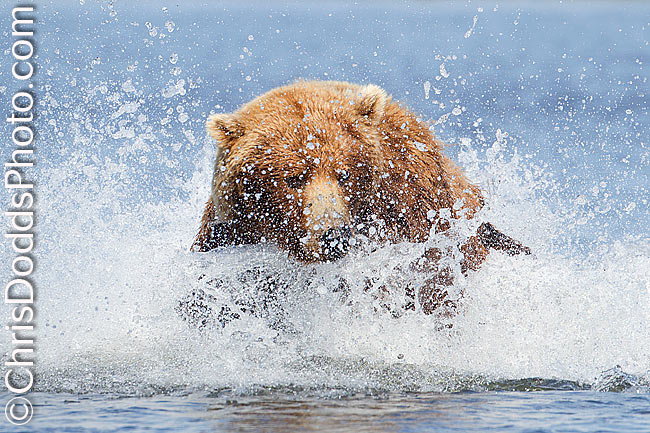
Coastal Brown Bear Fishing ADRENALINE (Ursus arctos or Grizzly Bear) Hallo Bay, Katmai National Park, AK Image Copyright ©Christopher Dodds www.chrisdoddsphoto.com All Rights Reserved. Canon EOS 1DMKIV, 500mm F4 L IS, Tripod & Wimberley Head II. ISO 400, F5.6 @1/1600s Manual mode. CLICK HERE TO PURCHASE A PRINT or LICENSE IMAGE FOR PUBLICATION.

The Hazards of Nature Photography: DEHYDRATION

I have been meaning to write a bit about the importance of hydration all summer and autumn is quickly approaching. No matter, hydration is just as important in the cold winter as it is in the hot summer months. Water makes up 75% of the body weight - about 50 liters (11 gallons) for the average man. Survival is unlikely if more than one fifth of this is lost. The first signs of dehydration are thirst, vague discomfort, lack of appetite, flushed skin, impatience, sleepiness and nausea. Once fluid loss reaches 6-10%, symptoms include dizziness, headache, labored breathing, no salivation, indistinct speech and you may loose your ability to walk. By the time fluid loss reached 11-20% symptoms now include delirium, swollen tongue, unable to swallow, dim vision, numb and shriveled skin. In it's latter stages: There is gross muscular weakness and mental capacity is impaired. You must make your survival plans at the start when you can think clearly and then stick to them. Best to remember to bring along some water and avoid the headache ;)

Testimonial

The trip with Chris on the Coastal Explorer along the Katmai coast was fantastic.  Without a doubt it was one of the top photo trips I have taken over the last several years due to the amazing variety and density of wildlife in such completely unspoiled and uninhabited wilderness.  Unlike land based lodges, with the Coastal Explorer you have the opportunity to photograph in several of Katmai's secluded bays versus being limited to an area adjacent to a land-based lodge.  What helped make the trip so successful was Chris's work ethic where he is always ready to shoot in any weather conditions and will stay in the field as long as there is any possibility for high quality photography.  This is essential in a place like coastal Alaska where it can go from direct sunny conditions to heavy overcast to rain in the blink of an eye and where the sun doesn't set until the late evening.  If the best time to photograph Brown Bears chasing down salmon was after 10:00PM, you bet we'd be on the river bank waiting on the massive Brown Bear boars to make their spectacular runs--photography is top priority after safety of course.  The daily great fresh seafood didn't exactly hurt the trip either.

As I write this I've only a little over two weeks removed from returning from Katmai and I'm still having serious withdrawals--right now I really want to be on the Coastal Explorer's skiff heading to shore to photograph more bears, eagles, and wolves. - Steve Metildi Southern California | USA

BE SURE TO CHECK-OUT STEVE'S KATMAI 2010 ALBUM HERE to see images he made during the workshop.

2011 Coastal Brown Bears of Katmai Workshop/Safari Announced

Join me, Christopher Dodds, and some of the more than 2,000 Coastal Brown Bears at the best place in the world to photograph Coastal Brown Bears. Claiming the world’s highest concentration of Coastal Brown Bears, Katmai National Park in Alaska also has to be the most beautiful setting on the planet to photograph them. Truly the adventure of a lifetime, we’ll have plenty of opportunities to see, study and photograph Coastal Brown Bears in their undisturbed, natural environment without the influence or pressure that large groups and camps often cause. I have secured the much coveted dates of July 24-30, 2011; timed to coincide with the annual Salmon run. With a limit of only six participants, there will be plenty of time for instruction and personal attention from Chris. MORE INFORMATION & REGISTRATION FORM HERE.

Disclaimer

The author is not a physician. This article is for informational purposes only and it is not intended to identify, diagnose, or treat any medical condition.

Atlantic Puffin Paradise found (Fratercula arctica, Macareux moine, ATPU)

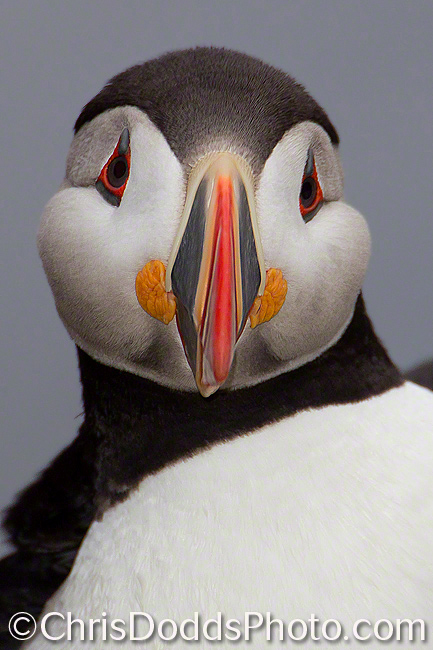
Atlantic Puffin (Fratercula arctica, Macareux moine, ATPU) Vertical Portrait île aux Perroquets, Réserve de parc national du Canada de l'Archipel-de-Mingan, Quebec, Canada. Image Copyright ©Christopher Dodds www.chrisdoddsphoto.com All Rights Reserved. Canon EOS 1DMKIV, 500mm F4 L IS with 2X Teleconverter II, Canon 25mm Extension Tube, Tripod & Wimberley Head II. 580EXII Flash manual mode. Think-Tank Photo Hydrophobia 300-600. ISO 800, F16 @1/60s Manual mode. CLICK HERE TO PURCHASE A PRINT or LICENSE IMAGE FOR PUBLICATION.

Puffin Photography Workshop/Safari announced July 5-7, 2011

I'm just back from another trip; this time, I went out in search of the ultimate destination for Atlantic Puffins. The mandate was simple; find a location that is within reach, safe and easy to get to without a dangerous boat landing on slippery rocks and a place where we can get close to these comical little seabirds without hauling our gear up, and over, huge distances or having to hang over towering cliffs. I have photographed Atlantic Puffins in Iceland, Maine, Newfoundland, New Brunswick and Quebec; All of these "known" places have their drawbacks. Mission accomplished; I have found Puffin Paradise. Special thanks to the Loiselle Familly of Longue-Pointe-de-Mingan for their gracious hospitality during my time there.

If you are interested in joining me for a Puffin photography workshop July 5-7, 2011, then be sure to send an email to chris@chrisdoddsphoto.com. This trip will be limited to six participants (two spots booked already) and will surely be the trip of a lifetime for anyone seeking to get close and personal (safely) to Atlantic Puffins and Razorbills. We will spend a few hours photographing fishing Puffins each morning from a boat, before landing on an island where we spend the rest of the day until sunset for three full days. I have secured special access, so we will be the only people on the island during the first, and last, few hours each day. Price is CAD$2,495.00 including four nights single occupancy accommodation, three days private boat tour with highly experienced captain, three days park access fees and three days expert instruction. Other subjects might include Razorbill, Black Guillemot, Great Cormorants, Savannah Sparrow (there are many) Common Eider and Grey Seal. More details after my return from teaching the August Gannets Galore workshop in about 10 days. Meals, beverages, transportation to Longue-Pointe-de-Mingan, Quebec and souvenirs are not included.

Testimonial

Many thanks to Chris for a wonderful and exciting photography experience. Your professionalism, talent, patience and knowledge helped to make the Gannets Galore photo trip an experience of a life time. The hundreds of thousands of Northern Gannets on Bonaventure Island were unbelievable. I took thousands of photographs of Northern Gannets in their everyday activities. They were elegant, comical, clumsy, arguing, fishing, sleeping, working, copulating, preening and fencing. It was nonstop and exhilarating. Now, I get to my favourite part - the Zodiac tour around Bonaventure Island. It’s 5:00am and we start the 4 hour trip to see dozens of species of birds and seals as well as couple of Minke whales. The 4 hours seemed to pass like minutes. The Harlequin ducks and Black Guillemots were among my favourites and a real treat to observe and photograph. - Gordie Kadonoff Hampstead | Quebec | Canada

Atlantic Puffin (Fratercula arctica, Macareux moine, ATPU)

The Atlantic Puffin (Fratercula arctica, Macareux moine, ATPU) is a seabird species in the auk family. Also know as “common puffin”, “clown of the ocean”, “clown of the sea” and “sea parrot”, these squat little pelagic birds look comically awkward on land and rather heavy in the air, but once in their element, the water, they become able predators. “Flying” through the sea on stubby wings, they dive-bomb shoals of herring, sand eels, sardines, and other small fish and sometimes squid. These pursuit divers collect their victims one at a time, but can hold as many as 20 small fish crosswise in their brightly coloured beaks at the same time. The Atlantic Puffin is 26–29 centimetres (10–11 in) in length (bill 3-4 cm), with a 47–63 centimetres (19–25 in) wingspan. The male is generally slightly larger than the female, but they are coloured alike. A puffin can fly 48 to 55 mph (77 to 88 km/hr). The puffin beats its wings rapidly to achieve this speed reaching up to 400 beats a minute.

This species breeds on the coasts of northern Europe, the Faroe Islands, Iceland and eastern North America (Canada and New England), from well within the Arctic Circle to northern France and Maine. It is the only Puffin species found in the Atlantic Ocean. The winter months are spent at sea far from land - in Europe as far south as the Mediterranean, and in North America to North Carolina.  Puffins often nest in well populated colonies usually on remote, rugged islands free from egg and chick eating land predators. They deposit a single egg deep within a burrow excavated in soft earth, or in a feather, or grass, lined lair in a rocky cleft. After fattening-up their hatchlings on fish, the parents return to the sea. The young Puffins, still unable to fly, eventually scramble to the shore by night and plunge into the water.

Coastal Brown Bear (Ursus arctos or grizzly) wrestling. HYDROPHOBIA; the Ultimate Rain Cover & Trip Report Part III

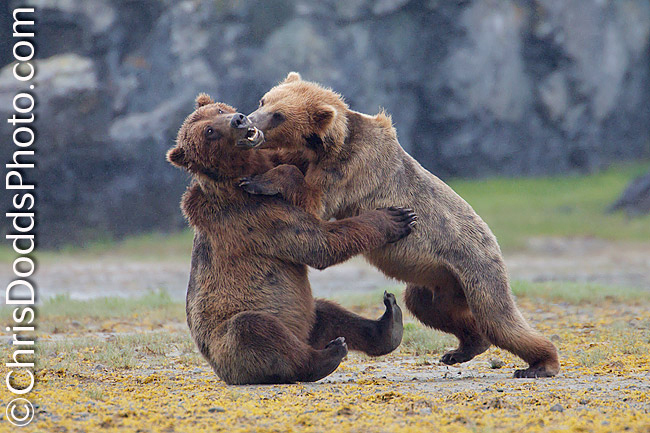
Coastal Brown Bear males (boars) Wrestling in rain (Ursus arctos) Kukak Bay, Katmai National Park, AK Image Copyright ©Christopher Dodds www.chrisdoddsphoto.com All Rights Reserved. Canon EOS 1DMKIV, 500mm F4 L IS with 2X Teleconverter II, Tripod & Wimberley Head II. Think-Tank Photo Hydrophobia 300-600. ISO 1250, F8 @1/800s Manual mode. CLICK HERE TO PURCHASE A PRINT or LICENSE IMAGE FOR PUBLICATION.

Bear Fight

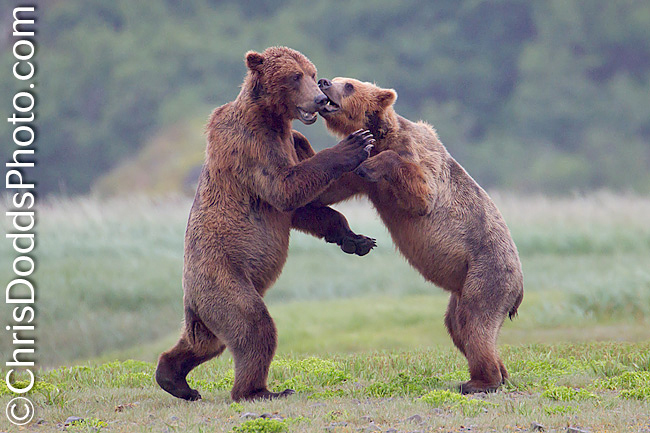
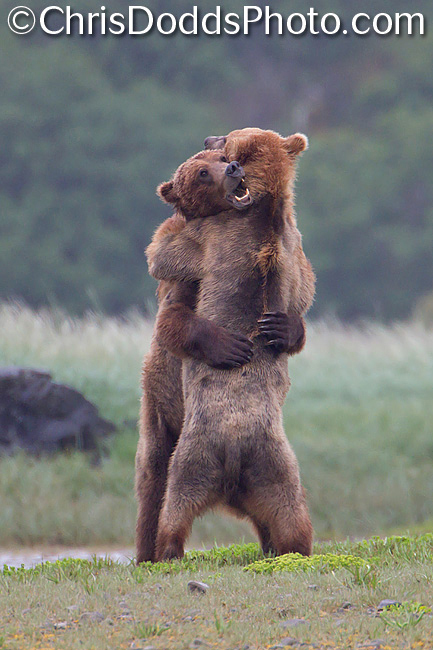
Though struggles between two juvenile bears might seem mortal, it is in fact just playful combat, designed to hone the animals skills. In later life, however, in teritorial disputes between two males, real fights can result in serious injury to the combatants, or even have a fatal outcome. Brown bears also fight to establish hierarchy and rights to prime fishing spots.

Trip Report

We had a blast watching, and photographing, four males (boar) fighting and wrestling with each other for what seemed like hours during the second afternoon of the Coastal Brown Bears of Katmai workshop/Safari. We carefully added out 2X tele-extenders to our 500mm Lenses for maximum reach, to fill the frame and to keep a safe distance between us and the battling giants. It rained much of the day, and we all put our Think-Tank Photo Hydrophobia rain covers to good use.

Do consider joining me next year, for the ultimate Coastal Brown Bears of Katmai Nature Photography Workshop / Photo Safari from July 24 to 30, 2011. MORE INFORMATION AND REGISTRATION FORM HERE.

Think-Tank Photo HYDROPHOBIA Ultimate Camera Rain Cover

I promised a review of the Think Tank Photo Hydrophobia when I got back from Bonaventure Island in June; Turns out, there's no better way to get hot, sunny and dry weather, than bringing along the very best rain gear to protect your valuable camera gear. We had day, after day, of glorious and hot, sunny weather; In fact, I only recall breaking out the rain covers once. There are now tons of reviews out there that include all of the technical specifications and videos of people spraying garden hoses onto expensive cameras sporting these covers. What I wanted to do here is give you a short, sweet, real world review of these covers when used in the very toughest conditions.

Coastal Brown Bear males (boars) Fighting in rain (Ursus arctos) Kukak Bay, Katmai National Park, AK Image Copyright ©Christopher Dodds www.chrisdoddsphoto.com All Rights Reserved. Canon EOS 1DMKIV, 500mm F4 L IS with 2X Teleconverter II, Tripod & Wimberley Head II. Think-Tank Photo Hydrophobia 300-600. ISO 1250, F8 @1/800s Manual mode. CLICK HERE TO PURCHASE A PRINT or LICENSE IMAGE FOR PUBLICATION.

Think-Tank Photo HYDROPHOBIA 300-600

Rain protection for everything between the 300 F2.8 and the 600 F4 (this even works perfectly with the Canon 800 F5.6, as I discovered). It's designed to be pre-mounted around the lens hood for easy deployment, has a pocket to store the eyepiece (Eyepieces sold separately) and includes an extension for use with the longer glass. Simply put; it's the very best option I've found out there - and I’ve tried dozens. I would love a lower profile pocket at the lens hood end, so my line of sight is not disrupted while photographing birds in flight with the rain cover in the "stored" position and having more material between ends (one piece) would mean I could actually remove the cover in it's stowed position with the lens hood for packing; something I found impossible with my 500mm F4 IS Canon lens, when installed with enough room for my 2X Tele-converter and the Canon off-camera shoe cord slid into the hot shoe. Other improvements that I quickly wished for were more clear window around the eyepiece and a flap over the eyepiece to protect it from filling with raindrops when I wasn't shooting - both of which have been incorporated into the design of the newer Hydrophobia 70-200 & Hydrophobia 70-200 Flash. I do hope there is a re-design of this model, with an option for a removable rain cover for a flash with the Better Beamer Flash Extender attached. I was able to use this cover with the Wimberley tripod head (Version I or II), and I figured out how to use my flash bracket, flash and Better Beamer, but I feel there is more than enough nature photographers out there to warrant a special "nature" edition. In the mean time, this is, without doubt, the very best option on the market now.

Think-Tank Photo Hydrophobia 70-200

Essentially the 70-200 Flash, without the clear flash pocket - do yourself a favor and spend the extra $6.00 to get the Flash version (below)

Think-Tank Photo Hydrophobia 70-200 Flash

Oh, la-la, this is the newest addition to the Hyrophobia line, and Think-Tank Photo's rapid product evolution really shines here. The clear window has been re-designed with more clear space, there's a cover over the eyepiece that flips up and out of the way when shooting, a removable front lens cover, an ingenious built-in camera strap that keeps your camera securely attached to the cover, and horizontal when slung under your shoulder - fantastic for the long days a nature photographer carries a second, shorter lens / camera. This one is evolutionary perfection and I can't think of a single thing to make it better. The clear flash pouch stows out of the way when not used, and there's even room for flash modifiers.

PRO TIPS:

Real world shooting in the rain required me to frequently remove my hands from the cover, and I found that  my hands got wet and I transferred water inside the cover; this caused the clear windows to fog up. I simply wrapped a small towel around the barrel, where the lens meets the camera body, to dry my hands and absorb any excess moisture, preventing the condensation from forming.
Don’t just use it in the rain. I found the covers to be really useful to prevent saltwater from splashing my gear while photographing from a boat, they kept my gear free of sand while getting low on a beach and I even used them as sun protection for my hands during lengthy shoots in strong sunlight.
Maintenance: For a long life, be sure to rinse after use and hang to dry; I found it practical to leave my Hydrophobia covers hanging in my car to ensure they dried thoroughly before packing into the nylon mesh pouch for storage.

BE SURE TO ORDER YOUR THINK-TANK PHOTO HYDROPHOBIA BY CLICKING THIS LINK AND RECEIVE A FREE BAG WITH EVERY ORDER OVER $50.00

Coastal Brown Bear males (boars) BEAR HUG in rain (Ursus arctos) Kukak Bay, Katmai National Park, AK Image Copyright ©Christopher Dodds www.chrisdoddsphoto.com All Rights Reserved. Canon EOS 1DMKIV, 500mm F4 L IS with 2X Teleconverter II, Tripod & Wimberley Head II. Think-Tank Photo Hydrophobia 300-600. ISO 1250, F8 @1/800s Manual mode. CLICK HERE TO PURCHASE A PRINT or LICENSE IMAGE FOR PUBLICATION.

Coastal Brown Bears of Katmai Workshop / Photo Safari July 24-30, 2011 Announced

Coastal Brown Bear Female (Sow) Fishing in Last Light Vertical (Ursus arctos) Hallo Bay, Katmai National Park, AK Image Copyright ©Christopher Dodds All Rights Reserved. Canon EOS 1DMKIV, 500mm F4 L IS with 1.4 Teleconverter II, Tripod & Wimberley Head II. ISO 1600, F5.6 @1/2000s Manual mode. CLICK HERE TO PURCHASE A PRINT or LICENSE IMAGE FOR PUBLICATION.

2011 Coastal Brown Bears of Katmai Workshop/Safari Announced

Join me, Christopher Dodds, and some of the more than 2,000 Coastal Brown Bears at the best place in the world to photograph Coastal Brown Bears. Claiming the world’s highest concentration of Coastal Brown Bears, Katmai National Park in Alaska also has to be the most beautiful setting on the planet to photograph them. Truly the adventure of a lifetime, we’ll have plenty of opportunities to see, study and photograph Coastal Brown Bears in their undisturbed, natural environment without the influence or pressure that large groups and camps often cause. I have secured the much coveted dates of July 24-30, 2011; timed to coincide with the annual Salmon run. With a limit of only six participants, there will be plenty of time for instruction and personal attention from Chris. MORE INFORMATION & REGISTRATION FORM HERE.

EARLY REGISTRATION DISCOUNT & CANON RAIN COVER BONUS

Register for the 2011 Coastal Brown Bears of Katmai Nature Photography Workshop/Safari early and you save $380.00 per person AND receive a limited edition (rare) Canon rain cover for your camera. Choose between the large (400/2.8, 500/f,600/4 or 800/5.6) or medium (200/2, 300/2.8 or 400/4) versions. Supplies are limited; offer valid only while supplies last. Special thanks to Canon Canada Professional Services for the rain covers. REGISTER HERE.

N-Rain Cover E2-M (medium) or E2-L (Large): Keeps your professional camera clean and dry when shooting in a wet environment. Compatible with current profesional Canon EOS Cameras. Transparent window enables clear visibility of the top and rear LCD panels and LC monitor. Front fastener enables easy attachment and removal of all lenses. Displays a large printed "Canon" logo and includes a soft case for compact packing.

CANON EOS 7D and CANON EOS-1D Mark IV firmware updates
Find out more about the latest firmware updates for the EOS 7D (Version 1.2.2) and EOS-1D Mark IV (Version 1.0.8) DSLRs that include a fix to ensure set apertures stay in place when shooting EOS Movies in manual.


Updates available for download HERE

Coastal Brown Bears Trip Report Part I

Coastal Brown Bear Female (Sow) Fishing in Last Light (Ursus arctos) Hallo Bay, Katmai National Park, AK ©Christopher Dodds All Rights Reserved. Canon EOS 1DMKIV, 500mm F4 L IS with 1.4 Teleconverter II, Tripod & Wimberley Head II. ISO 1600, F5.6 @1/1250s Manual mode. CLICK HERE TO PURCHASE A PRINT or LICENSE IMAGE FOR PUBLICATION.

I'm just in the door from one of the very best photographic trips of my lifetime. I left home on July 8th and arrived at Kodiak airport later that day without event. I had planned a few extra days before the workshop started to allow for the fog that delayed me last year, and forced me to sleep in ANC airport. Steve Metildi and Darren Charles Holloway arrived early for the workshop and we had an absolute blast photographing Red Fox, Golden-Crowned Sparrow, Orange-Crowned Warbler, Hermit Thrush, Bald Eagle, Wilson's Warbler and more around Kodiak Island. On July 12, Rolan Ruoss of Sea Hawk Air flew us out to Kukak Bay for our rendezvous with Chuck Keim on the Coastal Explorer for what became the trip of a lifetime for all.

We had been on the look-out for this female (sow) that had been reported to have two spring cubs, but were saddened to learn that she had lost them. Cubs remain with their mother from two to four years, during which time they learn survival techniques, such as which foods have the highest nutritional values and where to obtain them; how to hunt, fish, and defend themselves; and where to den. The cubs learn by following and imitating their mother's actions during the period they are with her. Brown bears practice infanticide. An adult male bear may kill the cubs of another bear either to make the female sexually receptive or simply for consumption. A close look at her right paw reveals an open wound, just above her claws, that most probably occured while she desperatly tried to defend her cubs.

I returned to a staggering amount of emails, and brought back a ton of images to edit, so stay tuned for more in the coming days.

Testimonials

My thanks Chris for introducing me to the tremendous experience (both visual and olfactory) offered by not only the Gannet colony on Bonaventure Island but also by the Gaspe peninsula.  Your low key approach and readily available technical knowledge really helped me to focus on what it was I wanted to do and maximize my chance of getting the pictures that I wanted.  Standing in a zodiac on the rolling ocean watching you photograph flying seabirds using a hand held 800mm lens pushed me to believe I could actually do the same using a 420mm lens......and the resulting photos show that it can be done!  My 6 and 3 year old children cannot thank you enough for the endless slide shows I now make them endure.- Ron Kellner | Toronto, Ontario

Pat and I had a great time on your recent Gannets Galore photo tour.  We have been on many photo tours and yours was one of the best.  We have never seen so many excellent photo opportunities.  Even the 5 AM Zodiac trip around the island offered great opportunities.  The small size of the group, 6 photographers, added to our enjoyment since you were able to spend considerable time with each of us.  Your tips on using manual camera settings were excellent.  I now use manual settings for virtually every photograph, flight or static. Thanks again for a truly outstanding photographic experience. Stokes Fishburne Chapel Hill | North Carolina

Bonaventure Island Trip Report: Common Murre or Common Guillemot (Uria aalge, guillemot marmette, COMU)

Common Murre or Common Guillemot Flying (Uria aalge, guillemot marmette, COMU) Parc national de l'Île-Bonaventure-et-du-Rocher-Percé (Bonaventure Island and Percé Rock National Park) Bonaventure Island, Quebec. Image Copyright ©Christopher Dodds www.chrisdoddsphoto.com All Rights Reserved. Canon EOS-1D MKIV, 800mm F5.6 L IS. ISO 800, 1/2500s F5.6 Manual. Hand held from Zodiac Hurricane 733. Full Frame. CLICK HERE TO PURCHASE A PRINT or LICENSE IMAGE FOR PUBLICATION.

Common Murre or Common Guillemot Banking (Uria aalge, guillemot marmette, COMU) Parc national de l'Île-Bonaventure-et-du-Rocher-Percé (Bonaventure Island and Percé Rock National Park) Bonaventure Island, Quebec. Image Copyright ©Christopher Dodds All Rights Reserved. Canon EOS-1D MKIV, 800mm F5.6 L IS. ISO 800, 1/2500s F5.6 Manual. Hand held from Zodiac Hurricane 733. Full Frame. CLICK HERE TO PURCHASE A PRINT or LICENSE IMAGE FOR PUBLICATION.

Bonaventure Island Gannets Galore Nature Photography Photo Safari Workshop

One of the highlights of the Gannets Galore Photo Safari is the daily (weather permitting) Zodiac trips to, and around, Bonaventure Island. This year, we had two back-to-back perfect mornings with mirror-like water and virtually no swell; a perfect recipe for photography from a Zodiac Hurricane 733. There were many Common Murres, Razorbills, Black Guillemots, Black-legged Kittiwakes, and even some Puffins floating on the water around the Zodiac, but the crown jewels for the nature photographers on board are always the birds in flight shots of these birds that fly at 80km per hour. I was just thrilled to have a CPS Loaner Canon Mark IV and 800mm F5.6 IS L on loan from Canon Canada for the workshops; most everyone, who wanted, got to try this impressive bird photography rig. I must confess to have fallen in love with the lens after creating these razor sharp images on the second morning of the first (of three) workshops.

If you find yourself trying to photograph seabirds from near their cliff-edge nesting sites, it's best to skip the outbound birds and focus on the inbound birds; Razorbills, Murres, etc., typically nest under other species like Northern Gannets on the cliff face and are typically covered in bird poop when leaving the nest - inbound birds are just back from fishing, so they are all nice and clean. Try to lock onto them before they slow to land  on the water or bank for best results.

More Kudos

I just wanted to take a moment to thank you for an amazing trip. I especially enjoyed shooting from the zodiac for all kinds of great shots. You lead an outstanding tour, and I would certainly consider future trips with you. I can tell that you could be of great help as I finish off my wish list of species for the new waterbirds book, as you know many of the key spots for specific species and behavior. I also have a lot to learn about the digital process, and you are gifted in this area. Many thanks my friend!
-Middleton Evans | Baltimore | MD

Herring Gull (Larus smithsonianus, Goeland argente, HERG)

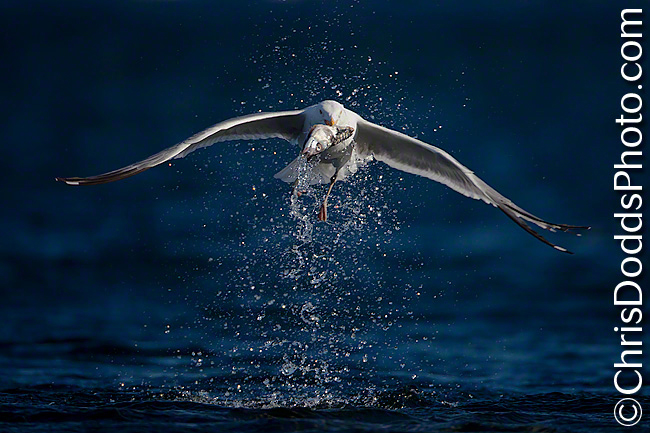
American Herring Gull Emerging with fish (Larus smithsonianus, Goeland argente, HERG) Parc national de l'Île-Bonaventure-et-du-Rocher-Percé, Bonaventure Island, Quebec. Image Copyright ©Christopher Dodds www.chrisdoddsphoto.com All Rights Reserved. Canon EOS-1D MKIV, 800mm F5.6 L IS. ISO 400, 1/2000s F5.6 Manual. 580EXII Flash manual full power . Tripod & Wimberley Head II. Full Frame. CLICK HERE TO PURCHASE A PRINT or LICENSE IMAGE FOR PUBLICATION.

A quick post today to further demonstrate the power of side light to make dramatic, action stopping images in harsh light. This is another image from a good collection produced while Bonaventure Island was closed to visitors during a recent Gannets Galore Bonaventure Island Bird Photography workshop. We made the most of the day by visiting a favorite spot for Common Eider Ducks (we had males, females and babies really close). The gulls (Herring and Great Black-backed) would harass and steal fish from the diving Eiders.

Gannets Galore August 13-15, 2010 - still space available - more information HERE

Canon 800mm F5.6 IS L First impressions....

Yowsa, what an amazing piece of glass! This lens was razor sharp, fast and snappy to acquire auto-focus when used with my EOS 1D Mark IV camera body. Special thanks to Canon Canada for the loan and for giving a chance for workshop participants a chance to "get behind the wheel" and give it a try. New coatings, IS system and design all add up to make this a must have lens - anyone wanna chip-in? (grin).

Gannets Galore Bonaventure Island Workshop Report & Side Light for Nature Photography

Great Black-backed Gull Emerging with fish (Larus marinus, Goeland marin, GBBG) Parc national de l'Île-Bonaventure-et-du-Rocher-Percé, Bonaventure Island, Quebec. Image Copyright ©Christopher Dodds www.chrisdoddsphoto.com All Rights Reserved. Canon EOS-1D MKIV, 800mm F5.6 L IS. ISO 400, 1/2000s F5.6 Manual. 580EXII Flash manual full power. Tripod & Wimberley Head II. Full Frame. CLICK HERE TO PURCHASE A PRINT or LICENSE IMAGE FOR PUBLICATION.

Gannets Galore Bonaventure Island Workshop Report I:

Julie and I made the 12 hour drive to Percé on June 8th, arriving in town early in the afternoon that day. We scrambled up to the Northern Gannet colony on Bonaventure Island the next day to see that all is well and the colony is continuing to grow as expected. Photographic conditions continue to be the very best that Bonaventure Island has to offer.
Middleton Evans (author of Rapsody in Blue: A Celebration of North American Waterbirds), Gordon Kadonoff, Pat, Stokes & Denise Fishburne, Nick Honig & Tuma Young, Provash Ganguli, Amanda Reed, Ron Kellner, Ellen Goff and Wojciech Bedkowski all were simply a pleasure to spend time with, each having great spirits and all adding to the many great memories of yet another great spring on Bonaventure Island. Photographic opportunities from the morning Zodiac outings continue to get better with every trip. Harlequin Ducks, Common Eider, Atlantic Puffins, Common Murre, Razorbill, Black-legged Kittiwake, Black Guillemots, Great Cormorants, Great Black-backed Gulls, Herring Gulls and Grey Seals all gave award winning appearances.

Side Light for Nature Photography

During the second workshop, on June 15th, Bonaventure Island was closed due to strong winds from the North that pushed big waves onto the wharf and prevented landings. This was good news as we went out and photographed Black Guillemots, Common Eiders, Herring Gulls and Black-backed Gulls from shore. With the birds doing what birds do, and flying into the wind, I seized the opportunity to make dramatic action shots of the gulls taking flight after snatching fish from the Common Eiders. Pretty amazing to see the female Eiders lunge out of the water and attack the Gulls. I knew the moment the first Gull emerged from the water that I had to use the side light, at 90 degrees off to the right, to add dimension, texture and life to the image and sparkle to the water. I caught myself, more than once, asking my groups to remember that Gulls are beautiful, and worthy photographic subjects, too.

Kudos

"Thanks for a great weekend.  I got some great shots, learned some new things and met some terrific people.  You and Julie were perfect hosts.  I really appreciated your patient, attentive instruction........ "

- Amanda Reed Cape Cod, Massachusetts