
Sometimes there are quiet mornings during spring migration at Point Pelee during my Songbirds of Pelee Workshop.
This was one of them.
As the sun crept over Lake Erie, the woods seemed strangely subdued. The birds weren't exactly pouring through the trees, but there were plenty of birders and photographers wandering the shoreline and trails, binoculars (bins) raised, hoping the next movement might be something special.
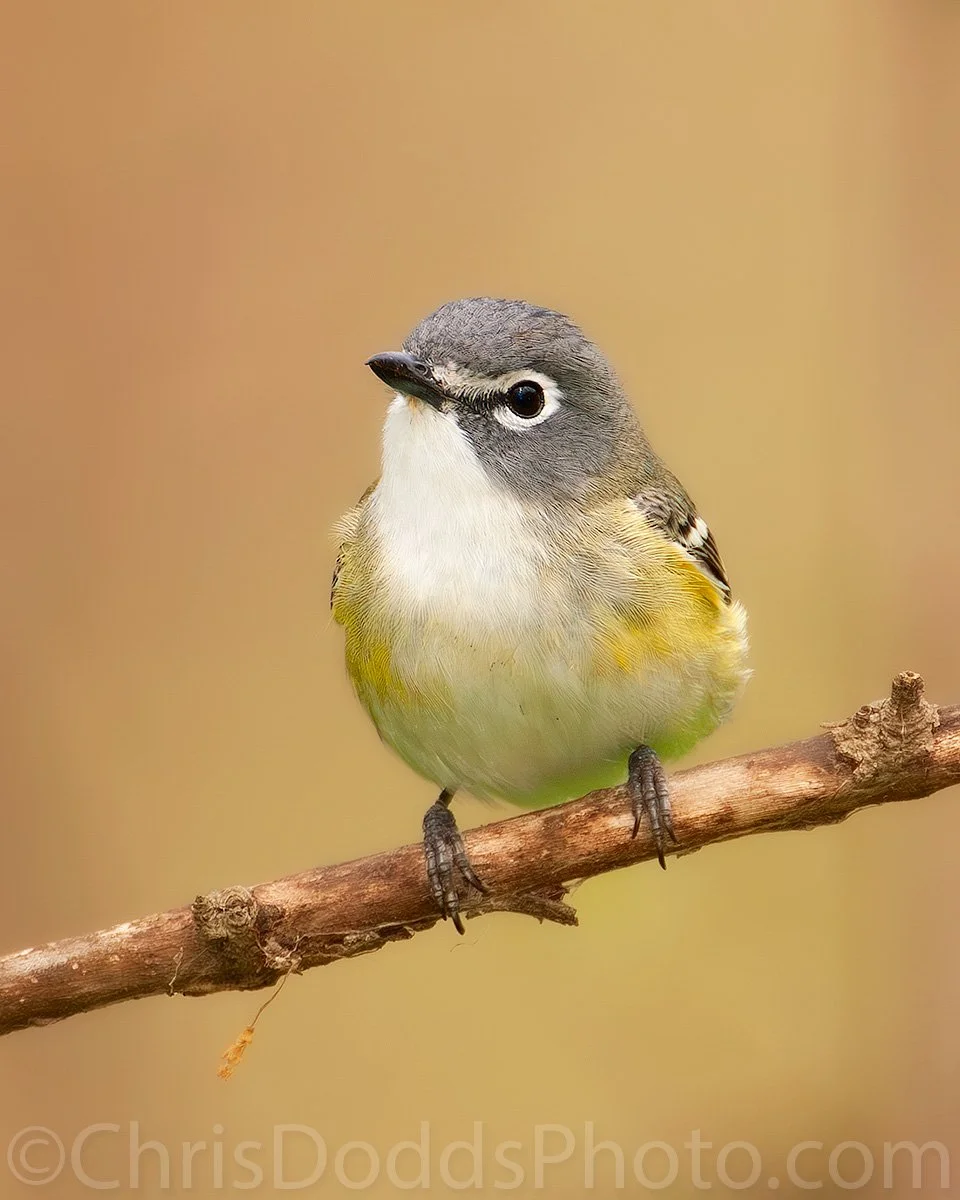
I don't usually spend much time looking high into the canopy where great images are nearly impossible, and I noticed this Blue-headed Vireo feeding low in the shrubs along the beach. Like the Yellow-throated Vireo from yesterday's post HERE, this bird was working surprisingly close to the ground, picking off insects and generally ignoring the growing crowd around it.
Blue-headed Vireos are beautiful birds, but they don't always make for easy photography. More often than not, they seem content to remain buried in foliage just well enough hidden to frustrate everyone holding a camera. This one eventually became a little more cooperative, hopping out into the open for a few brief moments and giving us some clean views.
One person became five. Five became twenty. Before long, there must have been fifty people watching this bird.
As another birder walked past, he stopped, looked at the collection of cameras and lenses aimed at the vireo, laughed, and said:
"Look at that. There must be more than a million dollars' worth of equipment pointed at a Blue-headed Vireo."
He might not have been far off.
The funny thing is, nobody cared about the gear's value. Everyone was simply enjoying a beautiful migratory bird doing what migratory birds do. For a few minutes, a relatively quiet morning suddenly became the centre of attention, all because one cooperative Blue-headed Vireo decided to feed a little lower than usual.
That's one of the things I love about Point Pelee in May.
You never really know when an ordinary morning is going to turn into a memorable one.
Join me next May for my Songbirds of Pelee workshop and experience the excitement of spring migration photography at one of the best birding destinations in the world. Sometimes all it takes is one cooperative bird to make the day. There are currently only two spots left.