
As I mentioned in my last post about the Louisiana Waterthrush, every spring at Point Pelee, photographers become obsessed with finding clean backgrounds.
We curse the fresh leaves. We complain about branches. We fight through clutter, trying to isolate tiny warblers moving nonstop through dense foliage during migration. Sometimes it feels like the entire forest is designed specifically to block autofocus and ruin compositions, with light reflecting off vertical, horizontal, and diagonal lines everywhere in the background.
And then once in a while, after enough persistence and patience, all that fresh foliage turns into something beautiful.
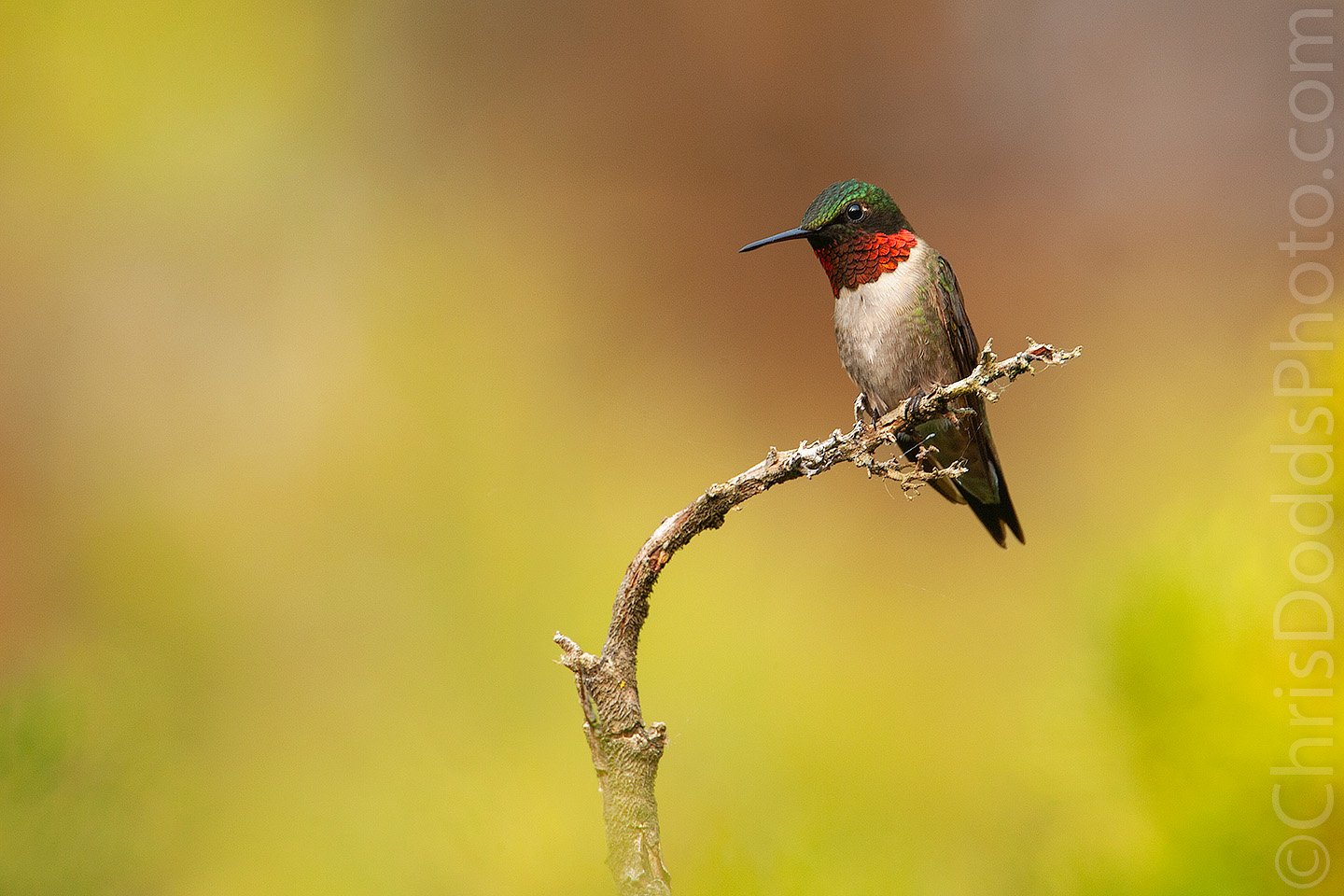
This Ruby-throated Hummingbird gave us exactly that kind of moment during my Songbirds of Pelee workshop.
The layers of fresh spring greens and warm earth tones blended together beautifully behind the bird in this one. I purposely left the bird small in the frame. Sometimes giving a tiny subject room to breathe creates something far more elegant — and far more interesting as a large print — than cropping in tight ever could.
Ruby-throated Hummingbirds are remarkable little birds when you stop and think about what they accomplish every year. Many cross the Gulf of Mexico during migration, flying hundreds of kilometres over open water despite weighing only a few grams. By the time they arrive at Point Pelee in May, they’re exhausted, hungry, and constantly feeding to refuel before continuing north.
This bird perched for only a few seconds before vanishing back into the maze of leaves and branches that make spring migration photography both frustrating and addictive at the same time.
Honestly, those same leaves we spend all morning cursing are also what made this image work.
If you’d like to experience spring migration at Point Pelee firsthand and learn how to turn chaotic conditions into strong images, join me next May for my Songbirds of Pelee workshop. The migration changes every single day, and no two mornings are ever the same.