Photographing Frogs: Endangered Species of Panama.

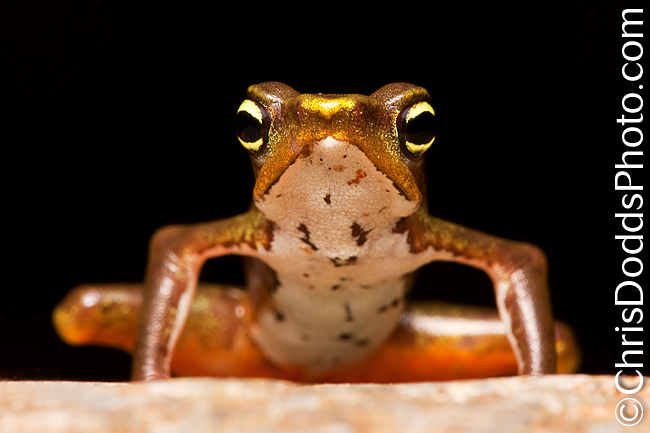
Harlequin Toad (Atelopus limosus). Provincia de Colón, Panama. Image Copyright ©Christopher Dodds  www.chrisdoddsphoto.com All Rights Reserved. Canon EOS 1DsMKIII, Sigma 150mm F2.8 Macro, Wimberley F2 Macro Flash Bracket, Canon 580 EX II Flash with LumiQuest Softbox III Hand-held. ISO 400, F16 @ 1/160s Manual mode. Full Frame. CLICK HERE TO ORDER A PRINT OR TO LICENSE IMAGE FOR PUBLICATION.

Panama: Home safe

Just home from an incredible nature photography trip to Panama. By far, the most fun, rewarding  and adventurous part was spending days deep in the jungle photographing highly endangered relatives of the, now extinct in the wild, Panamanian Golden Frog (Atelopus zeteki). Crawling around jungle streams after hiking through the jungle had me facing some of the very toughest tropical conditions. I was constantly soaking wet from sweat, and I could feel my own body heat reflect back onto my face each time I brought the camera to my eye to take a picture; only to have the viewfinder  and my glasses constantly fog-up. There was simply no escape from the heat and humidity. I chose to bring my Canon EOS 1Ds Mark III as my primary camera body and my Canon EOS 5D Mark II as my back-up; both performed flawlessly in the very toughest of conditions. I was, however, disappointed to have my Canon 580 EX II Flash fail yet again.
I have only had conjunctivitis once before, but quickly realized it's symptoms appearing on the third morning. Facing a medical situation involving my eyes in a third world country was a somewhat worrisome task; I was afraid that the medicine would do more harm than good. Turns out that my worries were unfounded and I was able to get American made medicine over the counter at a large pharmacy chain. The infection started to clear within 24 hours and all is fine now.
Enduring mosquitoes, tick and chigger bites and an ant attack were all well worth it (yes, I did use precaution), and a visit to Dr. Rashed at the Tropical Disease Centre of the Montreal General Hospital upon my return to have the various bites, blisters, welts, marks and rashes checked-out seems to have given me a clean bill of health (though I'm still waiting for the results of the three ticks that I removed from myself after my return home). Oh, the glorious & romantic life of a nature photographer (smile).
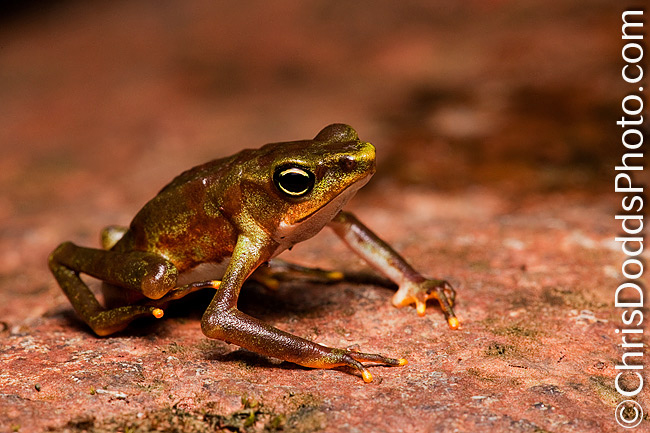
Harlequin Toad (Atelopus limosus). Provincia de Colón, Panama. Image Copyright ©Christopher Dodds  www.chrisdoddsphoto.com All Rights Reserved. Canon EOS 1DsMKIII, Sigma 150mm F2.8 Macro, Wimberley F2 Macro Flash Bracket, Canon 580 EX II Flash with LumiQuest Softbox III Hand-held. ISO 640, F16 @ 1/125s Manual mode. Full Frame. CLICK HERE TO PURCHASE A PRINT OR LICENSE AN IMAGE FOR PUBLICATION.

“Ground Beef”

After arriving in Panama City and collecting luggage, rental car and picking-up granola bars and bottles of water, I stopped for a bite at the international fast food chain symbolized by the golden arches. While waiting an unusually long time for my meal, I watched the woman at the grill drop a hamburger patty on the floor, pick it up with her spatula and replace it on the grill; I guess she thought it would sterilize it by putting it back on the heat (smile). I have always heard the rumors that there was no beef in their burgers; but now know it is, in fact, GROUND BEEF! She took a quick look around while laughing with her colleagues in the kitchen until she made eye contact with me and realized that she had been seen - then she quickly looked away and resumed making burgers. I simply walked away and decided I could wait until breakfast to eat.
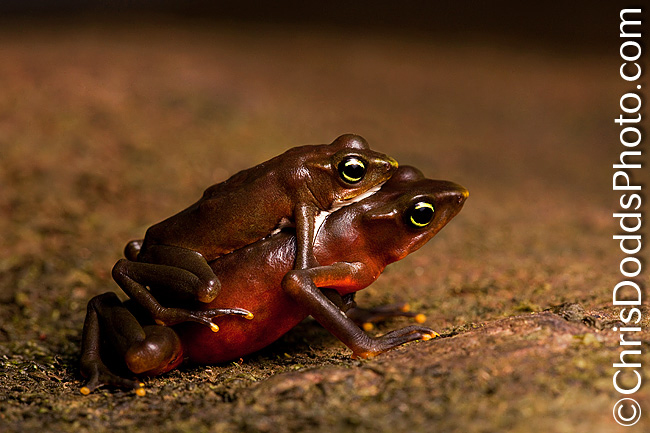
Harlequin Toads Amplectant Pair (Atelopus limosus). Provincia de Colón, Panama. Image Copyright ©Christopher Dodds  www.chrisdoddsphoto.com All Rights Reserved. Canon EOS 5D mark II, Sigma 150mm F2.8 Macro, Wimberley F2 Macro Flash Bracket, Canon 580 EX II Flash with LumiQuest Softbox III Hand-held. ISO 800, F14 @ 1/160s Manual mode. Full Frame. CLICK HERE TO ORDER A PRINT OR LICENSE IMAGE FOR PUBLICATION.

Harlequin Toads (Atelopus limosus) & amphibian chytrid fungus (Batrachochytrium dendrobatidis)

amphibian chytrid fungus (Batrachochytrium dendrobatidis) is a lethal fungus spreading across Central America and wiping out entire populations of frogs. The Batrachochytrium dendrobatidis is so deadly that it kills about half of all amphibian species and reduces overall populations by about 80% after it’s arrival in any given place. One third of the known 5,743 amphibian species in the world are at risk of being wiped out! On a world scale, 122 species of amphibian species have gone extinct, compared with five bird species and no mammals in the same period.

Listed by the IUCN (Red List) as endangered, the Harlequin Toad (Atelopus limosus) is also known as the Mossy Stub-footed Toad and Limosa Stubfoot Toad. An endemic species of Panama, it’s population is limited to 5,000 square kilometer range of severely  fragmented forest and is at risk from Amphibian Chytrid Fungus and habitat loss.

Apple Announces Aperture 3 - FINALLY

Funny how critics blasted Apple for not announcing a new version of Aperture when Adobe released it's free beta version of Lightroom 3. I'm happy to report that Apple just released it's newest full version of Aperture. Unlike Adobe, Apple waited to release a full, working version available as an upgrade for only CAD$109.00. This new version has more than 200 new features, including the incorporation of Faces and Places from iPhoto. Apple included brushes, pre-sets and advanced slideshows with full multimedia support. If you're a Mac user, be sure to try the 30 day free trial here. If you're a PC user, then is is just another reason to make the switch to Apple (smile). I've only had limited time with Aperture 3, but kudos to Apple for waiting to offer a full version and skipping the "use your customer base as guinea-pigs" stage. Though, perhaps, early to offer a full review, my experience has been flawless so far.

Thanks for your concern

My last post was on January 22, 2010, so this is the longest I've gone without blogging. Many thanks to the many dozens of folks who emailed me to check-in and see if all was A-OK. As you can see, I was having a blast in Central America!

The Business of Photography: The Business Plan

Red Fox Vulpes vulvas (renard roux). Algonquin Provincial Park, Ontario. Image Copyright ©Christopher Dodds  www.chrisdoddsphoto.com All Rights Reserved. Canon EOS 1DsMKII, 70-200mm F2.8 IS @ 70mm Hand-held. ISO 500, F3.2 @ 1/125s Manual mode. Ambient exposure using  Sekonic L-358 Flash Master Light Meter. Full Frame. CLICK HERE TO BUY A PRINT OR LICENSE IMAGE FOR PUBLICATION.

The Business Plan

One of the biggest mistakes many people starting a business make is not having a business plan. A business plan can be as simple as a Mission Statement and as complicated as you feel necessary. Think of a business plan as a roadmap; Where are you going?, How are you getting there? Are you headed in the right direction? and what to do if you make a wrong turn. A well written business plan is also a great tool to measure your successes and failures as a business person if reviewed periodically.

I don’t want to deceive you, so I’ll make it clear to you now that I don’t know any other photographers that actually have a business plan. I am asked, quite often, how to get into Nature or Wildlife Photography as a profession. I also have regular conversations with other successful photographer friends (Jewelry and studio photographers) about how they plan on getting to the next level; both as a photographer and as a business person. A well written business plan will help you see where you want to go, and how to get there.

I’m sure you all have a plan and have though about where you want to be in five or ten years. All I’m suggesting is putting it in writing and making it an annual event to review and modify things. How often have you had a great plan or idea, only to forget it within a short period of time?

Here’s some simple steps to a successful Business Plan:

Define who you are as a photographer and identify key strengths and weaknesses. Review your photography and identify a specialty and or passion. What makes your clients choose you and why are you different than a stock agency or other photographer? Create an executive summary, or mission statement, that will become the first part of your business plan. This need only be a few sentences long and it is essentially a summary of your findings.

Define your market as a photographer. In what area of photography do you see yourself fitting best? Who are your potential clients? Do you want to sell image rights for publication? or sell fine art prints to collectors? or both? What age group and gender are those clients. If you want to sell images to magazines for publication, who works for the magazines, and who buys those magazines? This section is a summary of your product, your service and your target clients.

Define your Competition. Now you know who you are, what product, or service you offer and who is your likely client. It’s time to think about who else is out there doing the same thing as you, and why you are a better, more logical choice for your client. What do you offer that your competitors don’t?

The last section deals with finances. Identify how much money you need to make to keep your head above water without falling into debt. Essentially a spreadsheet with a list of your expenses that should include: Living expenses like food, clothing, housing (mortgage, insurance, taxes and repairs), Utilities (heat, air conditioning, electricity, gas, water, etc) Transportation (Car payment, Insurance, fuel and repair) and health / disability insurance. Don't forget contributions to an emergency fund; you never know when you have to replace a roof or have a sudden financial crisis. Make a list of the monthly costs and multiply by 12 to figure out just how much money you need (after taxes) to survive a year without falling into debt.

Once you establish how much you need, it’s time to figure out how, or if, you can get there. How much do you sell your product, or service for?, and how much does it cost to produce? If you are a wildlife photographer, then you should make a list of your overhead expenses like photography equipment (cameras, lens, etc.), Office, or production, equipment (computers, printers, etc.), travel (transportation, lodging and food) expenses, professional services (like accounting), business liability & equipment insurance, equipment repair and rental, advertising and promotion costs, office supplies and communications (telephone, internet and mobile phone). You get the picture.

Now add your annual personal expenses (plus income tax) to your annual professional expenses. Do you think it is feasible to sell enough product or service to cover these expenses? Let’s say you sell fine art prints for $100.00 each. You determine your material cost to be $32.00 (ink and paper). You have a gross profit of $68.00. How many prints (think $68.00) do you need to keep yourself afloat? how many do you need to sell to put some savings aside for a bad year (or two) or a catastrophic medical or mental event? (laugh, but most business people suffer one, or the other, at some point in their career) oh, did you think about retirement savings? ... Perhaps a few more than you initially thought - but you knew that, right? (smile).

Now that you have a plan in writing, it's much easier to stay on track. If you make the small effort to review and ammend your plan from time to time, you have a much better understanding of where you have come from, where you are and where you are going.

The Fundamentals of Photography: Understanding the Light Meter

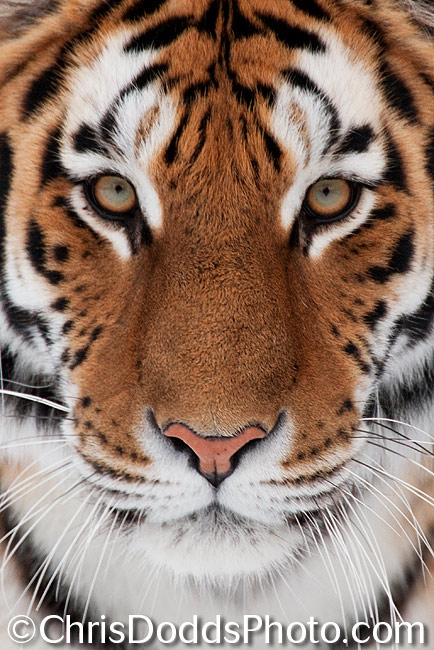
Siberian (Amur) Tiger Portrait Panthera tigris altaica (Tigre de L'Amour ou Tigre de Sibérie). CAPTIVE ANIMAL. Image Copyright ©Christopher Dodds  www.chrisdoddsphoto.com All Rights Reserved. Canon EOS 1DsMKIII, 500mm F4 IS, 2X II Tele-converter Gitzo 1325 Tripod with Wimberley Head II. ISO 800, F8 @ 1/160s Manual mode. Ambient exposure using hand-held Sekonic L-358 Light Meter. Full Frame. CLICK HERE TO PURCHASE A PRINT or LICENSE IMAGE FOR PUBLICATION.

The in-Camera Light Meter:

Pretty much all digital cameras sold today include a built-in REFLECTIVE light meter. The volume of light measured by a reflective light meter varies relative to the color (or reflectance) of the subject, the background (and the subjects distance from it) and the chosen metering mode (or pattern); A Snowy Owl in a bright, snowy field reflects more light than a black bear on a dark, wet rock. Think of it this way: pure white reflects nearly all of the light that strikes it, and pure black reflects virtually none of the light that strikes it.
Left to it’s own devises, a digital camera in one of it’s automatic modes (Program, Aperture Priority or Shutter Priority) will use it’s built-in computer  processor and programmed algorithms to determine the appropriate exposure settings such as shutter speed, f-stop (or aperture) and ISO to render the scene at what it thinks should be 18% grey, or a mid-tone (exactly mid way between the blackest black and the whitest white). The problem is a simple one; most cameras assume that everything they photograph reflects 18% of the light that falls onto them. Not everything we see or photograph is a mid-tone; with this method, we need to compensate to achieve the correct exposure for anything that is not a mid-tone; The Snowy Owl in a Snowy field we talked about earlier would be about two stops under-exposed, so we need to add about two stops of light to the metered reading to achieve the correct exposure. The black bear on the dark, wet rock will be about two stops overexposed, so we have to remove about two stops of light from the metered reading to achieve the correct exposure. A picture of the green grass on your front lawn is a middle tone and requires no compensation to achieve the correct exposure.
The problem gets much bigger when your subject starts to move from one colored background to another, or, moves closer or further away; can you imagine dialing in the correct exposure compensation, on the fly, as a white bird flies from a blue sky background to a dark cliff face background as it gets bigger in the frame while flying toward you? (smile) ... I didn’t think so.

Hand-held Light Meter:

The single best teaching aid that I know of is a hand-held light meter; students wanting to learn exposure theory tend to improve the exposure accuracy of their captures almost instantly when handed a hand-held light meter.
In it’s simplest form, a light meter measures light;  We’ve discussed how your camera uses it’s meter to measure the light that is reflected from your subject, now let’s talk about how to measure the ambient light that falls onto your subject by using a hand-held light meter. If we can measure the AMBIENT light that falls onto the subject, we can successfully expose for the light (not the subject), and capture colors and tones as our eyes see them; white looks white, black looks black and middle tones still look like middle tones; just the same as our eyes see them. As long as you are in the same light as your subject, and the volume of light does not change between measurement and capture, you can take a reading and lock and load the chosen ISO, F-stop and shutter speed. Just like the sunny F/16 rule in my last post, you should still use your camera’s histogram to tweak the exact exposure to taste, and you should expose to the right and maximize that right most fifth of the histogram, as it contains 50% of the data in a digital capture. I typically add light to extract maximum detail from very dark subjects and remove light from very bright subjects, all the while ensuring I’m not clipping unrecoverable highlight detail.
On a clear day, from two hours after sunrise, until two hours before sunset, the light remains constant (provided it doesn't get cloudy, of course). If your subject flies from the blue sky to a dark cliff face, there is no need to make adjustments to your chosen exposure settings; the subject will be correctly exposed in manual mode.

A major difference between the old film days and digital is that instead of exposing for shadow detail on film, we now expose for the highlight. To ensure a correct exposure for the highlights, simply turn the meter’s dome toward the light source. To take a reading for the underside of a bird flying over your head, turn the dome toward the ground and to establish the correct reading for  a subject in the shade, point the dome toward the light source and use your hand to shade the dome. It won’t take long to learn all about light, it’s volume and the correct exposure relative to it.

There are many light meters to choose from, but I find the best value to be the Sekonic L-358 Flash Master Light Meter

Basic Exposure Theory: The Sunny F/16 Rule Explained

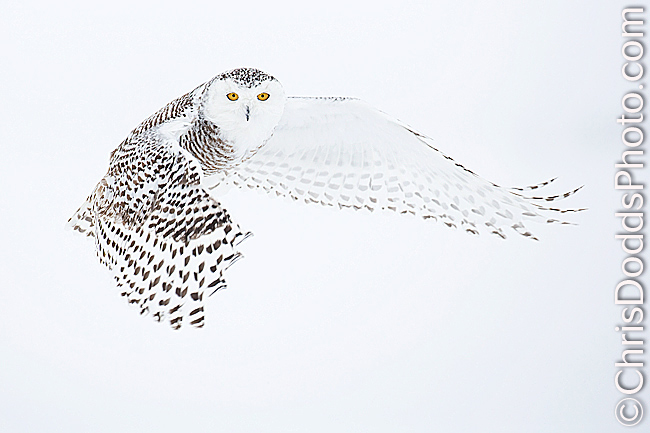
Snowy Owl Bubo scandiacus (Harfang des neiges) Casselman, Ontario. Image Copyright ©Christopher Dodds  www.chrisdoddsphoto.com All Rights Reserved. Canon EOS 1DsMKII, 500mm F4 IS ISO 400, F5.6 1/1600s Manual mode. Full Frame. The chart below (in the cloudy bright column) shows the correct exposure to be ISO 400 F/11 @ 1/400s. I chose to stop the action by using a higher shutter speed, so I used the equivalent exposure of ISO 400 F/5.6 @ 1/1600 second. I also knew to expect less detail in the snow and white feathers, because there are no shadows to help define them.

What you shooting at there, Dodds?” echoed across the landscape as I set-up to photograph Snow Geese and Sandhill Cranes in New Mexico about a year ago. “What exposure you at Dodds?” was the question asked by the same gifted photographer just recently. I don’t want to embarrass anyone, so I won’t mention any names here. I truly do think that he is a gifted and talented photographer. He’s widely published and is also the first person to admit that he doesn't really know all the “techie” stuff.....and he was much closer to my exposure this year, than last. 

The single most important skill a photographer should have is a basic understanding of the fundamentals of photography. The most important tool, and the least understood aspect of photography is exposure theory. I learned photography with a totally manual camera and used slide film (seems like so long ago), so a basic understanding was necessary to make successful images.

 Q: Why bother when I can just keep things simple and take a picture, check the histogram and make any adjustments necessary? 

 A: Because having an intimate knowledge of exposure theory and your cameras functions and controls helps you grow and improve as a photographer, make better decisions and better images as a result.

In it’s simplest form, the Sunny 16 rule (or Sunny F/16 rule) states: On a bright, sunny day, the correct exposure for any middle tone subject is F/16 at the shutter speed nearest to the reciprocal of the film speed. For example:

ISO 100 = 1/100 second @ F/16

ISO 200 = 1/200 second @ F/16

ISO 400 = 1/400 second @ F/16

ISO 800 = 1/800 second @ F/16

Now we have established the correct exposure, it’s time to decide if we need more depth of field or shutter speed. Each step up, or down, of one variable represents a doubling, or halving, of any other variable. If you need more shutter speed than 1/100 second @ F/16 (ISO 100), then an equivalent exposure would be ISO 100 1/1600 second @ F/4.


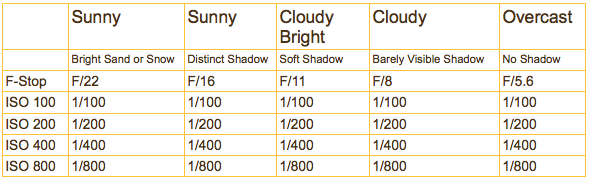
This chart illustrates the equivalent exposures for ISO 100 and 200. Each setting above will allow the same amount of light to fall on your digital cameras sensor, or film cameras film. The exposure is the same, with the only difference being either your shutter speed (to freeze or blur action) or the depth of field (very narrow to blur the background, or very large to capture an entire grand landscape sharp).

But wait! It got cloudy. Now what? The Sunny F/16 rule is actually the correct ambient exposure for an average subject under bright sunny conditions. If the sun goes behind a cloud, then the light falling onto your subject is decreased and you must make an adjustment to your basic exposure settings. Here are some aperture settings for some different daylight situations:


This is intended as a starting point, so there are exceptions. Backlight or sidelight both require adjustments to reach the correct exposure. It’s a good idea to expose to the right with your digital camera; 50% of the recorded data is recorded on the right fifth (or 20%) of your digital cameras histogram. With very light subjects in very bright conditions, I routinely subtract light so as not to clip the highlights. With very dark or black subjects, I tend to add light to maximize the recorded detail. Notice the technicals for the Snowy Owl in my previous post; ISO 200 F9 1/1600 second = ISO 200 F22 1/1250 second (or Sunny F/16 rule for light sand or snow) minus 1/3 stop to preserve all of the details in the whites without clipping (or loosing) any data.

Sounds complicated, but if you spend some time digesting and thinking about everything here; you'll be able to get that once in a lifetime shot accurately and consistently with confidence. Not to mention how much you will impress the boys (or girls) when you are all standing around waiting for the shot or talking shop.

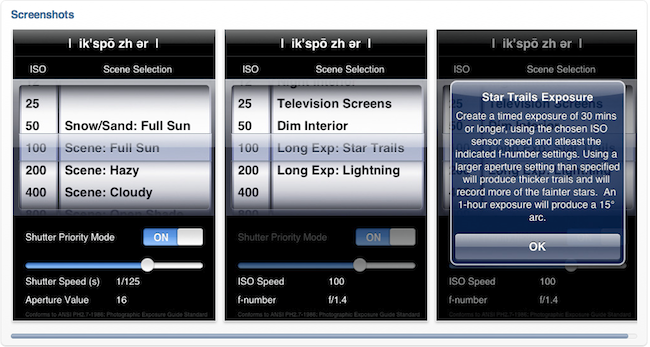
If you own an iPhone or iPod touch, there's a great application available for $1.99 called Exposure Calc. I just found it while writing this blog entry and think it is a great learning aid and pocket reference.

If you don't get it, and need to take a test shot, check the histogram, make adjustments, take another test shot; that's okay too, as long as you're having fun and making the odd good image to keep you interested.

Comments welcome & appreciated.

The Business of Photography: Negotiation


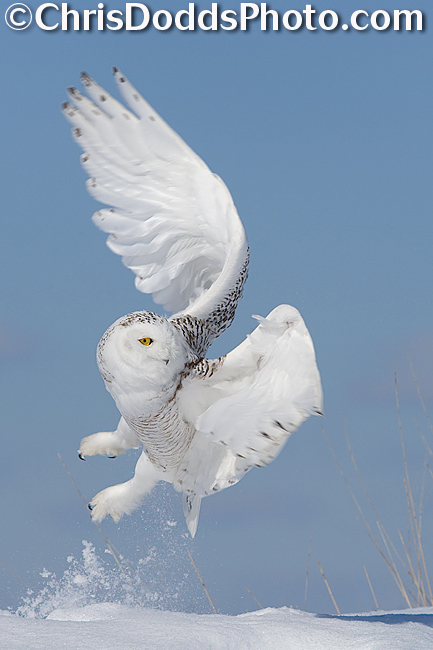
Snowy Owl Blast-off Bubo scandiacus (Harfang des neiges) Quebec. Image Copyright ©Christopher Dodds www.chrisdoddsphoto.com All Rights Reserved. Canon EOS 1DsMKII, 300mm F2.8 ISO 200, F9 1/1600s Manual mode. Full Frame. CLICK HERE TO PURCHASE A PRINT or LICENSE AN IMAGE FOR PUBLICATION.

Top 10 Negotiation Tips:

To succeed in any business, particularly as a photographer, we have to compromise from time to time. The trick is to compromise without loosing what you really need to accomplish your goals.
  1. Learn to ask for what you want: We often fail to ask for a better price or better terms because we are afraid of failure. A good negotiator starts with a clear understanding of what they want, and what they don’t want. People new to negotiation feel it’s awkward to ask for a lower price or better terms. Anyone trying to buy or sell anything will be happy to consider any reasonable offer to help close the deal.
  2. Eliminate disadvantages by acting quickly and decisively. Having a plan and knowing what your goals are is the best way to react quickly to offers or counteroffers. In todays connected world, waiting to reply during negotiations allows the other party time to seek other options.
  3. Deal with the decision maker, but don’t be afraid to have someone who isn’t the decision maker negotiate for you. Use the power of your friendships with other people in the organization you are dealing with to help move the negotiations along in your favour.
  4. Learn to listen. If you are talking; then you are not listening. Good negotiators are good listeners and good communicators. Those that do all of the talking during the negotiation process are usually the ones who loose; they don’t take the time to hear the other sides needs and concerns. By learning to listen, the other side will quite often tell you everything you need to know to win.
  5. Leave your emotions out of the negotiation process and keep your cool. The moment you get angry is the moment you loose. You should not avoid discussing important issues, just avoid discussing them in a heated argument. Negotiations should not be arguments, but avoiding tough issues is not productive.
  6. Don’t make a threat unless you are ready to follow through. 
  7. Remember the power of conversation. It’s easy to misinterpret the tone of an email. Don’t be shy to pick-up the phone and make a phone call. Embrace the spoken word.
  8. Don’t negotiate away from what’s important to you. Remember rule number one.
  9. Don’t be afraid to walk away from a bad deal. Better to have no deal than one you will regret with time.
  10. Get it in writing. I find the best usage licenses are the ones I’ve written myself. Using a standard form contract is a good indication that no negotiations took place.


                         Learn it all. Learn it fast. Learn it now.


Free Site Guide: Photographing the Snow Geese of Victoriaville, Quebec

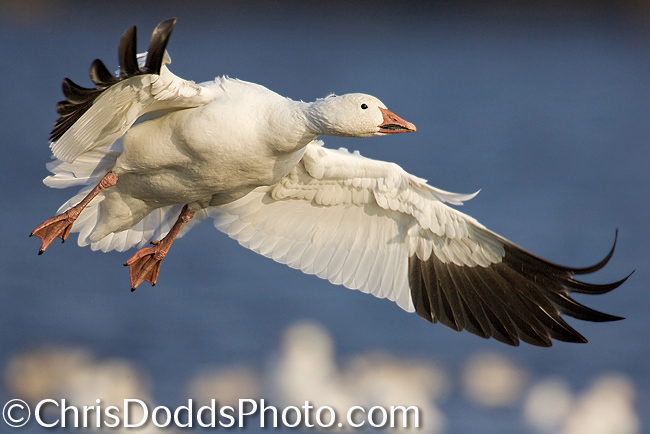
Snow Goose (Chen caerulescens, Oie des neiges) Réservoir Beaudet, Victoriaville, Quebec, Canada. Image Copyright ©Christopher Dodds http://www.chrisdoddsphoto.com All Rights Reserved. Canon EOS 1D Mark III, 500mm F4 IS, 2X II Tele-converter, Gitzo tripod and Wimberley Head II. ISO 320, 1/1250s F8 Manual Exposure. Full Frame. CLICK HERE TO BUY A PRINT or LICENSE AN IMAGE FOR PUBLICATION.

Réservoir Beaudet is immediately adjacent to the city of Victoriaville, in the Eastern Townships of southern Québec. During migration, this site harbours significant numbers of gulls and geese. Since 1996, high numbers of Greater Snow Geese have been recorded here. So far, 224 species of birds have been recorded at this site. The high concentration of waterbirds using the reservoir is probably linked to the absence of hunters. At peak times in October, ducks, geese, and gulls numbers exceed 1000,000 individuals. Several species of land birds also use the reservoir in high numbers for roosting in the fall. The following are some of the peak counts for certain species: 4,000 American Crows (1989), 17,251 European Starlings (1989), 2,500 Red-winged Blackbirds (1988), 1,000 Common Grackles (1988) and 700 Brown-headed Cowbirds (1988).

Photography is relatively easy here; only a short walk from the parking lot is a boat ramp (GPS co-ordinates: 46° 4'6.37"N , 71°58'35.94"W) that is about the best place to be when the wind is from the west in the afternoon. April-May and October-November are the best times of year for photography.


View Larger Map The green arrow indicates the exact location that I like to be in the afternoon when the wind is from the west. GPS co-ordinates are: 46° 4'6.37"N , 71°58'35.94"W

Vested Interest Photo Vests

John Storrie of The Vested Interest (a division of Storrie Parachute Works Inc.) sent me a Khumbu Photography vest and I am thrilled. True to his solid background in building safe, strong and rugged parachutes, John's The Vested Interest produces top quality photo vests. I wanted a vest, but had very specific needs that only John could address. I wanted a way to transport my camera equipment like a backpack, but allow access to camera bodies and lenses while I hiked without removing a backpack, having to lay it down and unzip it, etc.. I chose the Kumbu model because of the large padded pocket on the back that holds either my 500mm F4 IS or my 300 F2.8 IS Canon lenses. I spend a lot of time photographing from a Zodiac, and that large rear "drop-in" lens pouch on the back is perfect even if I were to take the whole kit off; I simply wrap the whole vest around the mast of the flying bridge and secure with the zipper. Unlike a photo-backpack, where the whole contents are at risk of a spill when open, this vest protects all of my gear and still allows access to each component while protecting the rest. I recently took the vest to photograph Snow Geese in Quebec where there are simply too many people to lay equipment down and not worry about it. The vest held everything I needed and still had plenty of room to spare. It's simply a study in astounding build quality, and design genius; there are even brilliantly designed padded shoulders which not only cushion the weight of your shouldered camera, lens and tripod, but they also disperse it. Built of military grade (just about bomb-proof) parachute nylon, this vest will easily outlast me; it's easy to see why the military buy these for their photographers. Be sure to visit The Vested Interest and check out the various vest designs - most of which can be customized to your specific needs.

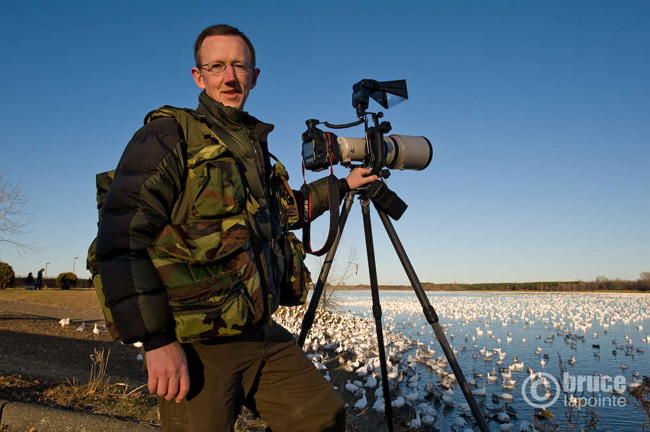
That's me, Christopher Dodds, with my Vested Interest Khumbu Photo Vest. Notice just how many pockets there are and that it fits over my down winter jacket. Image copyright & courtesy of Bruce Lapointe.
Pro Tip: GET A GRIP!

I often have many thousands of dollars of equipment set-up on my tripod and carry it around on my shoulder while following my subjects around the wilds. From the moment I leave my car, I risk slipping on packed snow or ice. I keep a pair of MICROspikes with me at all times in the winter. It's like having the very best winter tires with studs and chains and is a relatively small investment to protect both myself and my gear. Wether I'm looking for owls in Owl Woods where it is often icy, or just walking my dog, T-Bone; MICROspikes is the product I use. A less expensive product is offered by Yak-Trax, which I used to use until I discovered MICROspikes - both are good, but MICROspikes are more aggressive, robust, long lasting and less likely to get stuck on something and lost.


Comments welcome & appreciated.


Emperor Goose

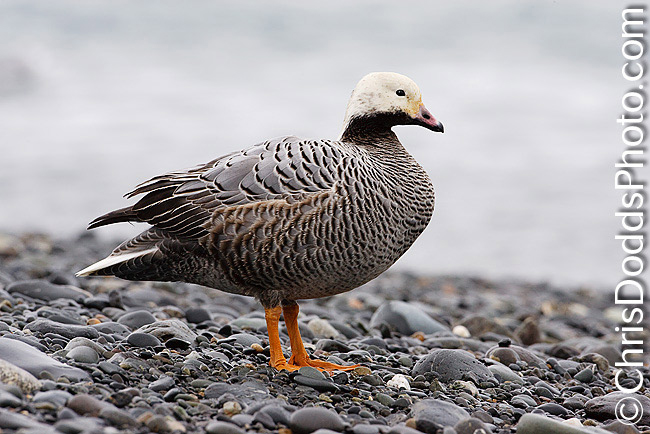
Emperor Goose (Chen canagica, Oie empereur) Homer Spit, Homer, Alaska, USA. Image Copyright ©Christopher Dodds http://www.chrisdoddsphoto.com All Rights Reserved. Canon EOS 1D Mark II, 500mm F4 IS, Gitzo tripod and Wimberley Head. ISO 400, 1/100s F11 Manual Exposure. Full Frame.
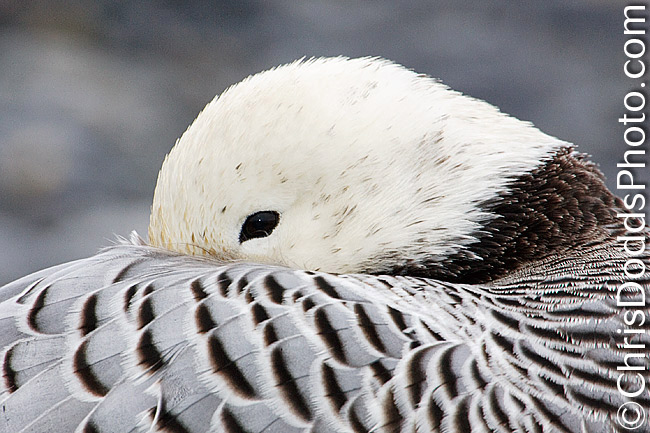
Emperor Goose Close-up detail (Chen canagica, Oie empereur) Homer Spit, Homer, Alaska, USA. Image Copyright ©Christopher Dodds http://www.chrisdoddsphoto.com All Rights Reserved. Canon EOS 1D Mark II, 500mm F4 IS, 2X II Tele-converter, Gitzo tripod and Wimberley Head. ISO 400, 1/30s F20 Manual Exposure. Canon 550EX II flash in manual mode. Full Frame.

Perhaps the most striking goose in North America, this small goose is seldom seen because of it's high-arctic haunts, where it is never far from coastal tundra. The Emperor Goose, Chen canagica, breeds on the coast of northwestern Siberia, St. Lawrence Island, and around the Bering sea, mostly in coastal northwestern Alaska. Winters mainly in the Aleutian Islands but wanders also down the North American western coast as far as California. Due to its low population size, and restricted range, the Emperor Goose is especially vulnerable to local catastrophic events, such as oil spills. In winter, the majority of the global population of this species can be found in the Aleutian Islands. Eskimos once rounded up thousands in "goose drives" during post-breeding, the flightless molt period, then drove them into traps to be killed for food. The Emperor Goose population is thought to be on the rise in Alaska after an unexplained decline from an estimated 139,000 in 1964 to only 42,000 in 1986.

Inner Game of Outdoor Photography

(Galen Rowell ISBN13: 978-0-691-14069-8) After posting the book reviews in my last entry, I received numerous requests for more; mostly from people looking for the perfect Holiday or Christmas present for photographers. If I could make a single suggestion for anyone interested in outdoor photography, It would be Galen Rowell's Inner Game of Outdoor Photography. Rowell, his wife Barbara Cushman Rowell, pilot Tom Reid, and Reid's friend Carol McAffee, were killed in a plane crash near the Inyo County Airport in Bishop, California on the 11th of August, 2002. They were returning from a photography workshop in Alaska.

“Galen Rowell was a man who went into the mountains, into the desert, to the edge of the sea, to the last great wild places in the world to be absorbed by their grace and grandeur. That is what he did for himself. For the rest of us, he shared his vision with—click—the release of a shutter, creating photographs as timeless, as stunning, and as powerful as nature itself.” –Tom Brokaw, from the foreword of Galen Rowell: A Retrospective

In sixty-six essays based on his popular Outdoor Photographer monthly column and with more than 160 color photographs, Galen illustrates how he transforms what he sees into vivid, memorable works of art. He clearly explains why “pre-visualizing” a photograph before exposing any film is one key to making an arresting image rather than a mere replica of what we see through the viewfinder. Includes advice on practical, technical matters, packing for travel, pushing film to extremes, and when to use fill flash and smart flash. Galen was instrumental in my early development as a nature photographer. I remember reading, and re-reading, every word he wrote for Outdoor Photographer; and that was long before I had access to the internet. This book should be a "must have" for any outdoor photographer.

Comments welcome & appreciated.

Knowledge: The Single Best Way to Improve Your Wildlife Photography

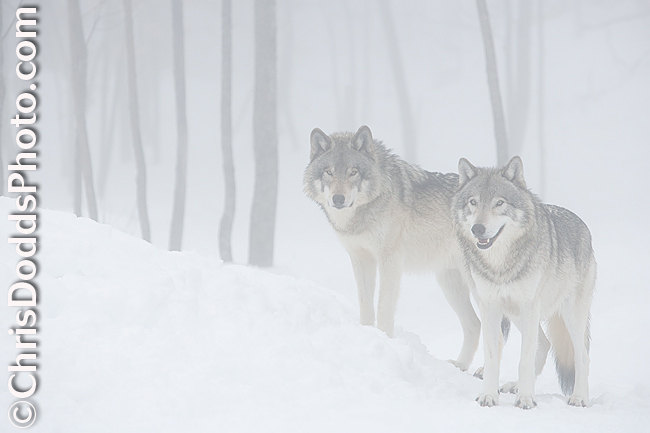
Timber Wolves Alpha Pair in Fog (Grey Wolves, Canis lupus, Loup Gris) Quebec (C) ©Christopher Dodds www.chrisdoddsphoto.com All Rights Reserved. Canon EOS 1DsMKII, 70-200mm F2.8 IS @ 200mm ISO 500, F5.6 1/200s Manual Mode. Hand Held. Full Frame. CLICK HERE TO BUY A PRINT OR LICENSE IMAGE FOR PUBLICATION.

Hearing Timber Wolves (Grey Wolves, Canis lupus, Loup Gris) howl while photographing them on a foggy January mourning was a hair raising experience; their reputation as ferocious enemies of man owes more to fiction and folklore than reality, in fact, they go out of their way to avoid contact with humans. Grey Wolves vary in colour from white on the arctic tundra (Arctic Wolves) to grey (Timber Wolves) or black in the forested regions of Northern wilderness regions. They  travel in packs, working co-operatively to bring down their prey; big game like deer, caribou and moose. Most regard wolves as unbeatable hunters, but they often fail to catch their intended prey. 

If I had to name a single way for anyone to improve their skill at wildlife photography, it would be to know your subject inside and out. I love to read, and I love books, so I was recently thrilled to get my hands on two simply outstanding books. I've caught myself getting lost in the pages of these marvels of the wild world far too often. Essential for the library of any nature photographer (or nature lover), The Princeton Encyclopedia of Birds and The Princeton Encyclopedia of Mammals have become the go to resource when I'm researching a specific species; or simply sitting here daydreaming of my next big adventure to some far corner of the world. Of all the natural history books in my collection, these two stand out amongst the best! ... and they are a bargain!


The Princeton Encyclopedia of Mammals

 (David W. Macdonald ISBN13: 978-0-691-14069-8) is the most comprehensive and accessible reference book on mammals available. Unsurpassed in scope and stunningly illustrated, this book covers every known living species, from aardvarks to zorros. The informative and lively text is written by acclaimed researchers from around the world and features a concise general introduction to mammals followed by detailed accounts of species and groups that systematically describe form, distribution, behavior, status, conservation, and more. There are superb full-color photos and illustrations on virtually every page that show the animals in their natural settings and highlight their typical behaviors. And throughout the book, numerous "Factfile" panels with color distribution maps and scale drawings provide at-a-glance overviews of key data. The Princeton Encyclopedia of Mammals is the definitive one-volume resource--a must-have reference book for naturalists and a delight for general readers.

  • Covers every living mammal
  • Describes form, distribution, behavior, status, conservation, and more
  • Features spectacular full-color photos and illustrations on virtually every page
  • Includes "Factfile" panels with color distribution maps and scale drawings for at-a-glance reference
  • Written by an international team of experts

David W. Macdonald is director of the Wildlife Conservation Research Unit and a fellow of Lady Margaret Hall at the University of Oxford. He is an award-winning documentary filmmaker and the author of several books, including Mammals of Europe (Princeton).

The Princeton Encyclopedia of Birds

 (Christopher Perrins ISBN13: 978-0-691-14070-4) is a comprehensive and lavishly illustrated reference to the world's birds. Accessibly written by renowned biologists and conservationists, and illustrated in color throughout, the book provides authoritative and systematic accounts of every bird family, covering form and function, distribution, diet, social behavior, breeding biology, and conservation and status. More than 1,000 superb color photos reveal the enormous diversity of birds in their natural habitats, from arctic tundra to tropical rain forest, and a wealth of beautifully detailed color and line illustrations depict representative species from each family and highlight characteristic behaviors. The main articles are complemented by detailed coverage of special topics, such as how ibises and spoonbills feed by touch, how pigeons find their way home, and how crows store food. And throughout the book, numerous "Factfile" panels with color distribution maps and scale drawings provide at-a-glance overviews of key data. The Princeton Encyclopedia of Birds is the definitive one-volume reference--an essential guide for amateur bird enthusiasts and professional ornithologists alike.

  • Covers all the bird families of the world
  • Describes form and function, distribution, diet, social behavior, breeding biology, and conservation and status
  • Features more than 1,000 spectacular color photos and illustrations
  • Includes "Factfile" panels with color distribution maps and scale drawings for at-a-glance reference
  • Explores special topics in depth
  • Written by leading biologists and conservationists

Christopher Perrins is a distinguished ornithologist, the author of many popular and scholarly books on birds, and a fellow of the Royal Society. A former professor of ornithology at the University of Oxford and former director of the Edward Grey Institute of Field Ornithology, he is currently a fellow of Wolfson College, Oxford.

Comments welcome & appreciated.

Social Media Sites Strip Embedded metadata; Another Reason for Bold Watermarks!

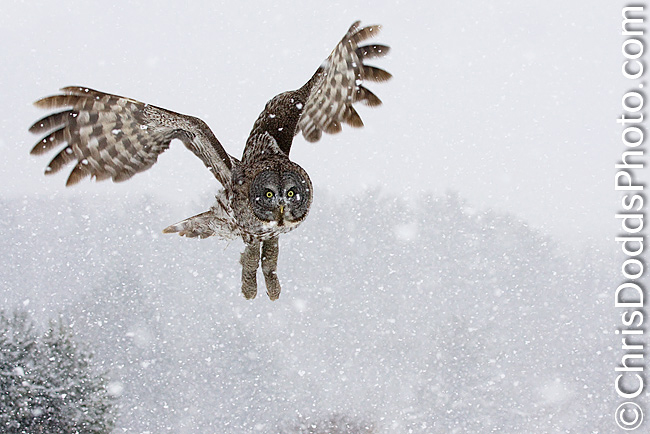
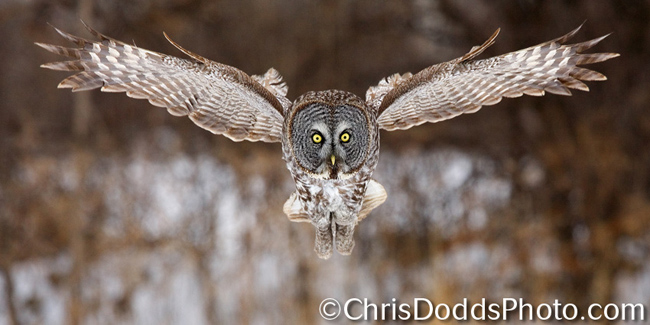
 Great Grey Owl Blizzard in White (Strix nebulosa Chouette Lapone) January 2005 Bracebridge, Ontario, Canada ©Christopher Dodds http://www.chrisdoddsphoto.com All Rights Reserved. Canon EOS 1D Mark II, 100-400mm @ 100mm. ISO 400, F6.3 1/800s Manual Exposure. Full Frame. CLICK HERE TO PURCHASE A PRINT or LICENSE AN IMAGE FOR PUBLICATION.

Technology & Art; get it out of the middle

Modern digital cameras are tools jam packed with not-so-often used features; remember to use focus selection points other than the centre - it makes for much more pleasing photographs. As amazing as it was for photography, the Great Grey Owl invasion during the winter of 2004-2005 was an amazing time for friendships. I had a great time in Bracebridge, Ontario with a great friend who continues to inspire me today.

The American Society of Media Photographers has released a report called "Best Practice Recommendations for Social Networking Sites" by Christopher J. Reese, Esq. Well written, this is must read for anyone posting images to the internet (amateur or professional): READ HERE

Great Grey Owl WIngs Wide Open (Strix nebulosa Chouette Lapone) December 2004 L'Île-Bizard, Quebec, Canada ©Christopher Dodds http://www.chrisdoddsphoto.com All Rights Reserved. Canon EOS 1D Mark II, 100-400mm @ 300mm. ISO 400, F6.3 1/640s Manual Exposure. Full Frame.

Recent infringements:

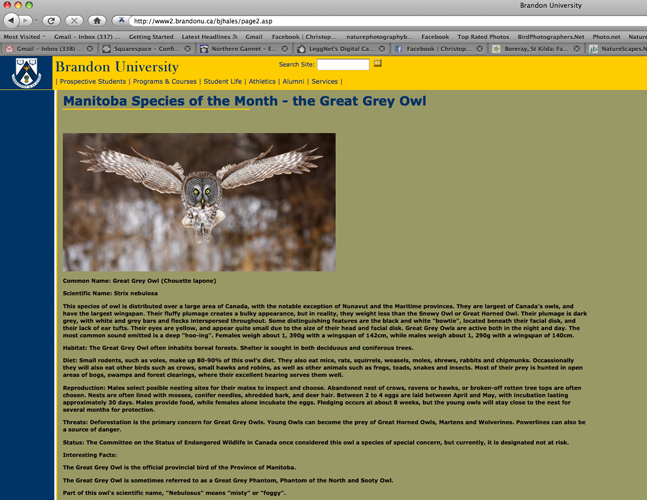
I am actively monitoring my image use, abuse and copyright infringements in an effort to keep you up-to date with infringements and resolutions. Here's an image of mine, stripped of it's metadata, and the copyright watermark was removed. While I'm flattered that they used my image, they should have asked & given credit! While the communications officer had agreed to replace the image with one that I provided with metadata and copyright watermark, they decided to remove the content instead.  From his last email to me: "I did some further digging to determine who looked after the site, and to put them in contact with you for other photos. That particular page and  site were run by a museum housed on campus but that museum is no longer at the university. We've removed the content, so your photo will no longer be on the BU website. I was unable to find a contact for the current curator of the museum, so I'm unable to pass along your information. Once again, sorry for the obtrusion."

I'm not against my images being used in high profile educational environments, but come on: It's about time that Universities and the Minister of Education audits image use on University websites! For crying out loud, these are the very institutions that educate our next generation of lawyers & scholars and they should set the example! I'm curious about Brandon University's view on plagiarism.

If anyone does know how to get in touch with the museum, please send me an email.

Comments welcome & appreciated.


Cerulean Dreams

Cerulean Warbler Vertical, Dendroica Cerulea, Paruline Azurée Kingston, Ontario Image Copyright ©Christopher Dodds www.chrisdoddsphoto.com All Rights Reserved. Canon EOS 1DsMKIII, 500mm F4 Lens with 2X II Tele-converter, Tripod & Wimberley Head II. ISO 800, F8, 1/125s Aperture priority (evaluative +2/3), Canon 580EXII Flash ETTL II -3. PURCHASE A PRINT OR LICENSE AN IMAGE FOR PUBLICATION HERE

Cerulean Warbler horizontal, Dendroica Cerulea, Paruline Azurée Kingston, Ontario. Image Copyright ©Christopher Dodds www.chrisdoddsphoto.com All Rights Reserved. Canon EOS 1DsMKIII, 500mm F4 Lens with 2X II Tele-converter, tripod & Wimberley Head II. ISO 800, F8, 1/320s Aperture priority (evaluative +2/3), Canon 580EXII Flash ETTL II -3 PURCHASE A PRINT OR LICENSE AN IMAGE FOR PUBLICATION HERE.

Environment Canada forecast heavy rain all day yesterday, with little chance of bright overcast conditions that would have been conducive to great warbler photography all day long. I decided to venture to the Kingston area of Ontario to give it a try anyway. Worst that could happen is a good birding day without images; sure beats being in the office.
My parents are visiting from Calgary, so I got them up early, loaded into the car and delivered to their friends home in Kingston before most are out of bed (did I mention it was a three hour drive?). From Kingston, I made my way to the Chaffey’s Lock area and spent a few hours in just about perfect photographic conditions. While there weren’t many birds, there certainly were great quality birds. The rain that did fall was light and misty, while it was mostly just dark and overcast. Considered a photographic nemesis bird by many, I had a blast photographing this gorgeous male Cerulean Warbler. I've photographed Cerulean Warblers many times there before, but Queen's University conducts research and most are banded - it was a dream come true to get a nearly perfect male without bands in Ontario. While using the Canon 1DsIII, I strive to keep the ISO under 400; however, there are times when I simply have to use a higher ISO. Properly exposing the image in the camera is the single best way to minimize noise.

The Cerulean Warbler (Dendroica cerulea, Paruline Azurée) gets its name from the vivid blue coloration of the male warbler's back and cheeks that makes this a difficult bird to find in the tree tops, where it lives and nests. Cerulean Warblers are forest-interior birds that require large, relatively undisturbed tracts of mature, semi-open deciduous forest. In Ontario, they are restricted to such habitats in the Carolinian Forest zone and the southern part of the Great Lakes St. Lawrence Forest zone. These birds begin their long migration to wintering grounds in northeastern South America in late summer. A species of special concern both Provincially and Nationally here in Canada, and in the United States, it is considered a species at risk by many. Recent studies suggest its population is only 30% of what it was only 20 short years ago; dropping faster than any other North American Warbler. On the North American breeding grounds, the chief threat to this warbler is habitat loss resulting from forest fragmentation and degradation. On the South American wintering grounds, forested tracts in mountainous regions are preferred, and these areas are considered to be under a high degree of threat from logging. Nest parasitism by the Brown-headed Cowbird (Molothrus ater) may become an increasing problem as cowbird populations increase in degraded forest habitats. The Cerulean Warbler is protected in a Schedule under the federal Migratory Birds Convention Act.

MORE KUDOS:

Point Pelee photography workshop participant, Michael Lyncheski (from Gladstone, NJ) emailed me this testimonial (thanks, Michael):

“I was impressed on how much Chris cared about making sure everyone was learning, engaged, and getting the most out of the trip. I look forward to my next workshop with Chris!”

Los Madrones Ranch - Texas Hill Country

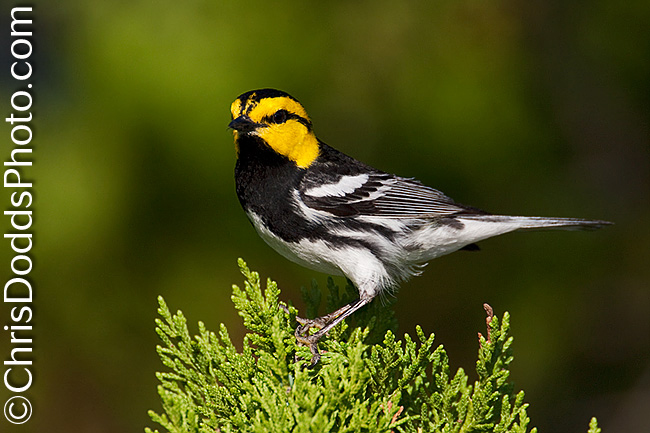
Golden-cheeked Warbler (male) Dendroica chrysoparia (Paruline à dos noir) Los Madrones Ranch (Texas Hill Country), Dripping Springs, Texas. Image Copyright ©Christopher Dodds  www.chrisdoddsphoto.com All Rights Reserved. Canon EOS 1DMKIII, 500mm F4 IS, 2X II Tele-converter, Gitzo 1325 Tripod and Wimberley Head II. ISO 640, F8 1/800s Aperture Priority mode (-1/3 stop).

On Tuesday, April 21 at 03:30 we got an early start and drove the 675 miles to Los Madrones Ranch in Dripping Springs, Texas. After avoiding a collision with a rogue wheel early on, the drive was relatively uneventful. Micheal Murphy greeted us around four o'clock, and showed us around the gorgeous Casita that we will call home until Friday, April 24. We spent the last hours of light photographing Black-Crested Titmouse, Carolina Chickadee and House Finch in prime breeding plumage. We also had some great looks at five great Sparrows (more to follow in another post).

The highlight of the trip so far was when Greg W. Lasley www.greglasley.com (Texas' premier birder) arrived and took us to photograph the endangered Golden-Cheeked Warbler. It was an amazingly productive and satisfying morning.

Special thanks to Greg W. Lasley and to Michael & Julie Murphy @ Los Madrones Ranch. If you are planning a trip to Texas, be sure to look them up www.losmadrones.com (512) 264-1741 

The Golden-cheeked Warbler Dendroica chrysoparia Paruline à dos noir is an endangered species of bird that breeds in Central Texas, from Palo Pinto County southwestward along the eastern and southern edge of the Edwards Plateau to Kinney County. The Golden-cheeked Warbler is the only bird species with a breeding range confined to Texas. Golden-cheeked warblers nest in ashe juniper and live oak trees in ravines and canyons. They use bark and spider webs to build their nests. Females lay three to four eggs. Warblers eat insects and spiders and the adult warbler can reach a length of 4.5 inches. They winter in southern Mexico (Chiapas), Guatemala, Honduras, and Nicaragua. The warbler is endangered as many juniper and oak woodlands have been cleared to build houses, roads, and stores or to grow crops or grass for livestock. Other woodlands were flooded when large lakes were constructed.