
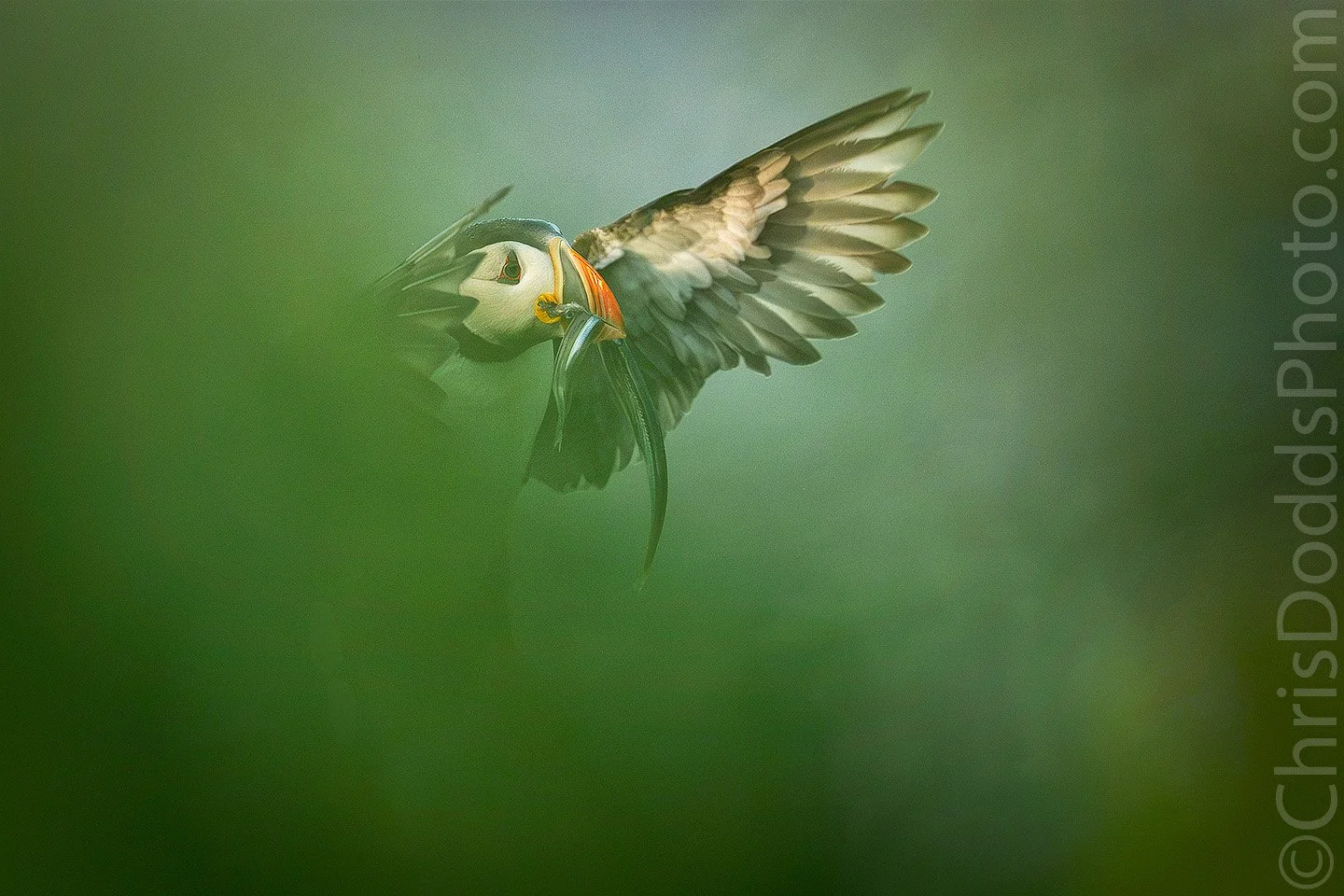
Sometimes an image begins long before you raise the camera.
This one started during the long drive to Île aux Perroquets for my 2026 Atlantic Puffins Galore Photography Workshops. I had already made the photograph in my mind: an Atlantic Puffin flying directly toward me, carrying fish for its chick, emerging through a soft veil of out-of-focus green vegetation.
Simple enough in theory.
In reality, every element had to come together.
I first had to find exactly the right location. I wanted nothing but grass between the puffins and me. Wildflowers might sound wonderful, but bright flowers, seed heads and weeds would create distracting highlights and compete with the bird. I wanted a completely soft, almost painterly wash of green surrounding the puffin.
Then the light had to be right. The bird had to fly through exactly the right corridor. It needed to be carrying fish. The head angle had to work. The wings needed to reach a position that framed the face rather than obscuring it.
And, of course, I had no control over any of those things.
120 Frames Per Second Doesn't Make the Photograph
The Sony a9 III's 120 fps certainly gave me more opportunities during those incredibly brief moments when a puffin rocketed through the opening, but high frame rates don't automatically produce great photographs.
The composition, background, light and camera position still had to be anticipated before the bird ever appeared. Then I needed the right puffin to fly through the tiny window I had chosen, on the right flight path, at the right height, with the right head angle and wing position — while carrying fish.
That's the part of high-speed wildlife photography that specifications can't solve.
Sony a9 III + Sony FE 600mm F4 GM OSS
600mm | 1/5,000s | f/4 | ISO 5,000
ISO 5,000 certainly wasn't something I worried about. As I recently demonstrated with an Atlantic Puffin photographed at ISO 20,000, today's advanced camera sensors are remarkably capable at high ISO when the image is properly exposed. For this photograph, getting the 1/5,000s shutter speed I needed and keeping the lens wide open at f/4 were far more important than worrying about ISO 5,000.
Shooting wide open at f/4, combined with carefully positioning myself relative to the grass and the puffins’ flight path, transformed the foreground into the soft green veil I had imagined on the drive to the island.
And then, on the very last day of my 2026 Atlantic Puffin season, it happened.
The puffin came straight through the opening, fish in its bill, wings beautifully raised and its face clearly visible through that wonderful curtain of green.
It was the very last image I made of a puffin this season.
After weeks of photographing these extraordinary little seabirds with five wonderful groups, I couldn't have imagined a better way to finish.
Sometimes the most satisfying wildlife photographs aren't simply the moments we happen to witness. They're the photographs we conceive in advance, work toward patiently and then wait for nature to finally provide all of the pieces.
This time, nature delivered with the final frame.
From One of This Year's Photographers
One of the greatest rewards of these workshops is seeing the photographs participants create for themselves. Barbara Fleming joined me this summer with a very specific goal: she wanted strong flight images of Atlantic Puffins returning with fish for their chicks.
Judging by the images below, I'd say Barbara accomplished exactly what she came for.
“Everything Christopher Dodds described about his Puffin Galore Workshop proved true when I participated this summer. He has found the perfect spot for photographing the Atlantic Puffin.
Each day, we walked a short distance to the beach to photograph puffins, with fish in their beaks — flying at speeds of up to 55 mph! It was quite challenging to capture these speedy little birds on camera, but Christopher patiently gave us personalized tips to help us get the best shots. I was genuinely impressed.
My goal for the trip was to get flying images of puffins with their catch, and Christopher truly made it happen. Not only did he find an ideal location for these charming ocean birds, but his wide knowledge also helped him choose the best times to guarantee puffin shots with fish in their beaks.
When he says ‘Mission Accomplished, I have found Puffin Paradise,’ he genuinely means it.”
— Barbara Fleming
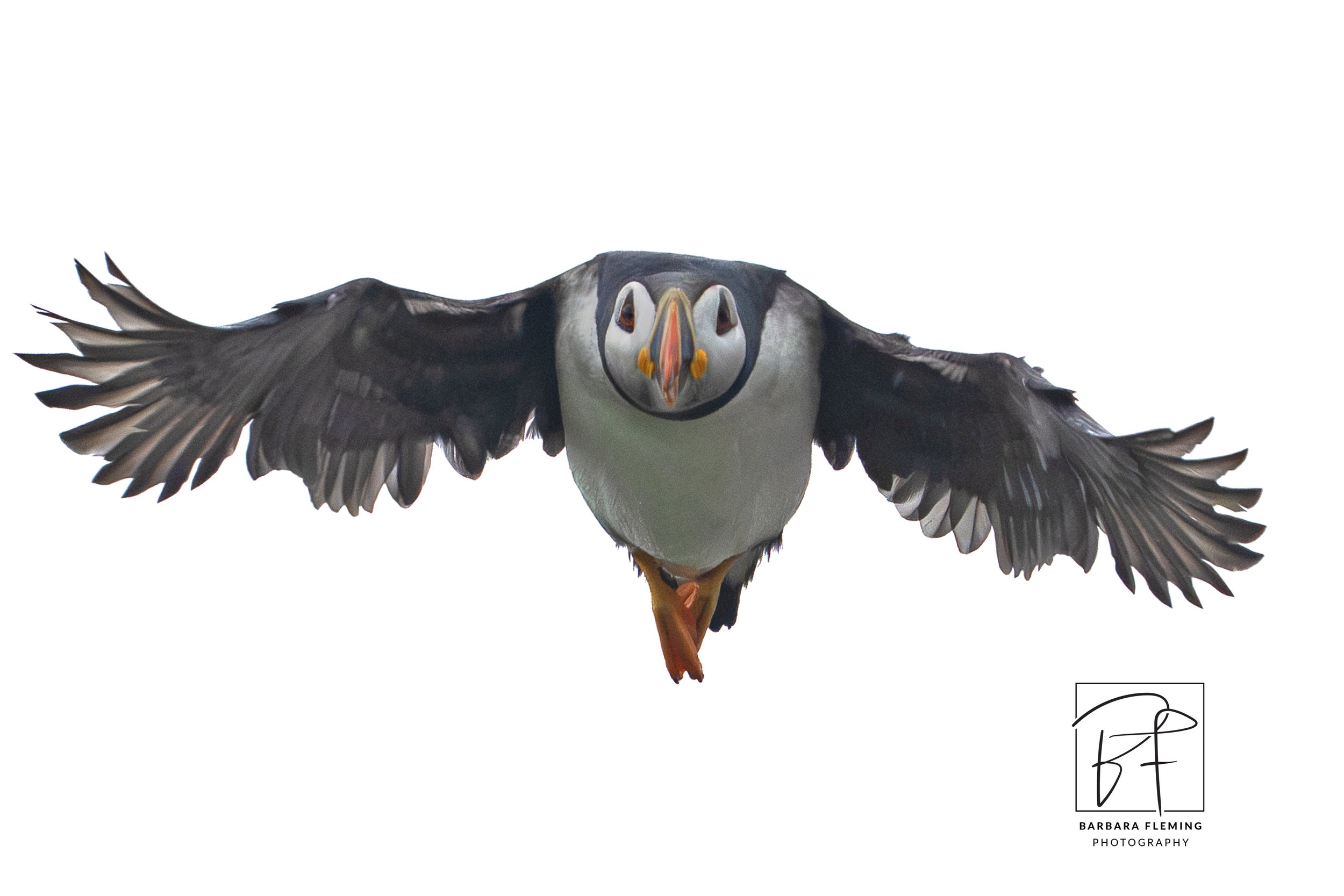
Atlantic Puffin in flight photographed by workshop participant Barbara Fleming during the 2026 Atlantic Puffins Galore Photography Workshop. © Barbara Fleming.
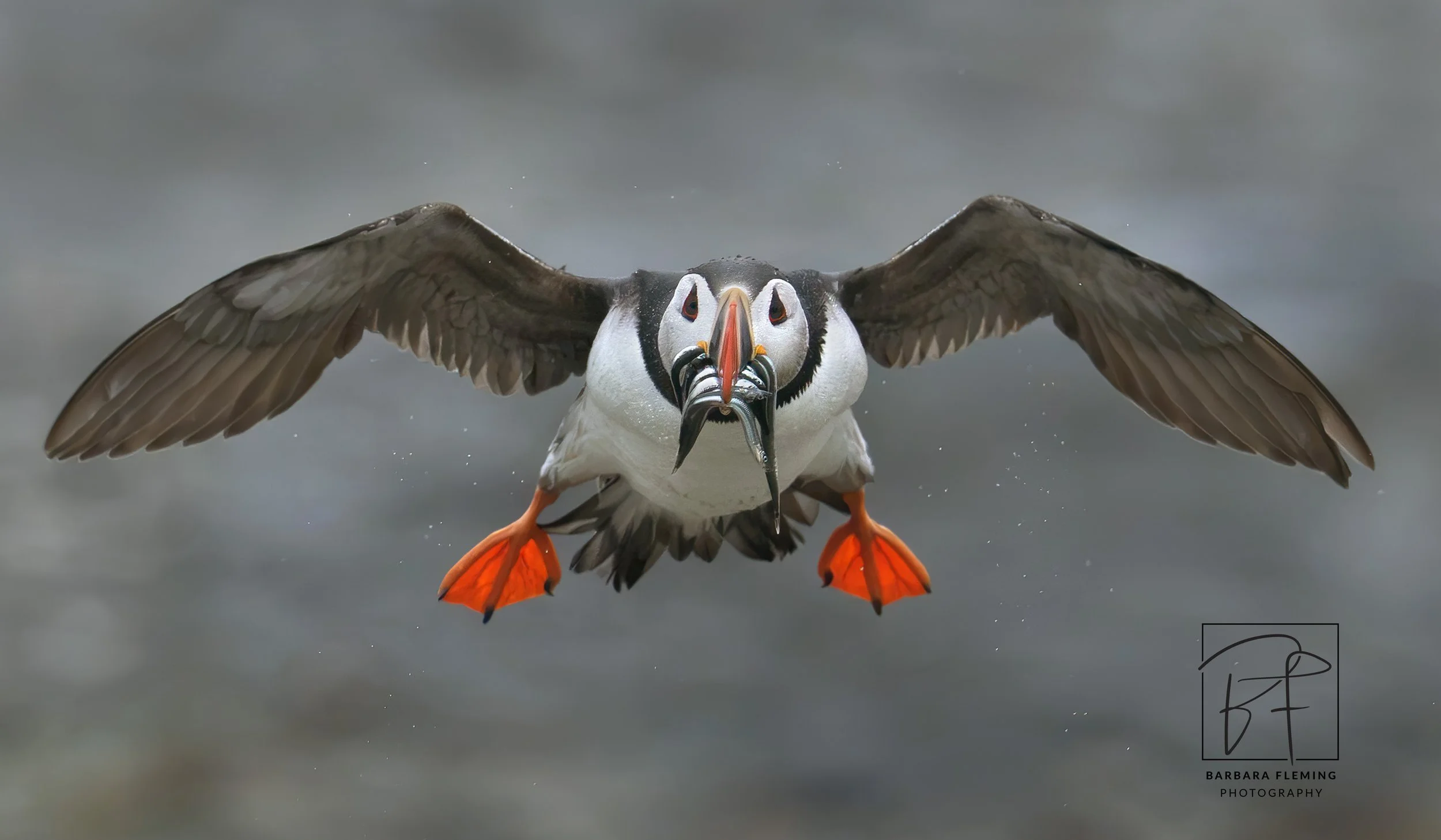
Mission accomplished: an Atlantic Puffin returning with a bill full of fish, photographed by workshop participant Barbara Fleming. © Barbara Fleming.
Barbara, thank you for the kind words, and congratulations on a wonderful collection of Atlantic Puffin images. Watching participants arrive with a photograph in mind and then helping them put themselves in the best possible position to make it is one of my favourite parts of leading these workshops.
Photograph Atlantic Puffins With Me in 2027
My Deluxe Atlantic Puffins Galore Photography Workshops return to Île aux Perroquets in 2027.
This remarkable little island in Quebec's Mingan Archipelago gives us an extraordinary opportunity to photograph Atlantic Puffins at close range, including one of my favourite challenges in bird photography: puffins returning from the Gulf of St. Lawrence carrying bills full of fish for their chicks.
Small groups. Personalized in-the-field instruction. Incredible access. And a lot of very fast puffins.
If photographing Atlantic Puffins in flight is on your wish list, I'd love to have you join me in Puffin Paradise.
Mission Accomplished. I found Puffin Paradise.