
The forecast looked terrible.
Heavy rain, dark skies, and enough gloomy weather warnings that many people were probably tempted to stay in bed rather than show up for my Sony-sponsored Point Pelee photo walk. Some did. But migration photography has taught me something over the years: forecasts don’t always tell the full story, and birds certainly don’t care what the weather app says.
As it turned out, the morning was actually beautiful photographically. Overcast, calm, soft light, and surprisingly dry for most of the early hours. The photographers who ignored the forecast and came anyway were rewarded with some excellent opportunities as migrants moved through the park feeding hard after crossing Lake Erie.
By afternoon, though, the rain finally arrived.
Rather than call it quits, we took the tram down to the tip and slowly walked north back toward the Visitor Centre in steady rain. Conditions like that can actually produce wonderful photography if you stay ready. The forest gets quieter, the light gets richer, backgrounds soften beautifully, and birds often feed lower and more openly while refuelling.
There were opportunities everywhere for photographers who stayed alert and had their settings already locked in manually.
When migrating birds appear, they rarely wait for you to think about exposure settings. You need fast reflexes, confidence in your exposure, and the ability to react instantly when a bird lands for only a second or two before disappearing into dense foliage.
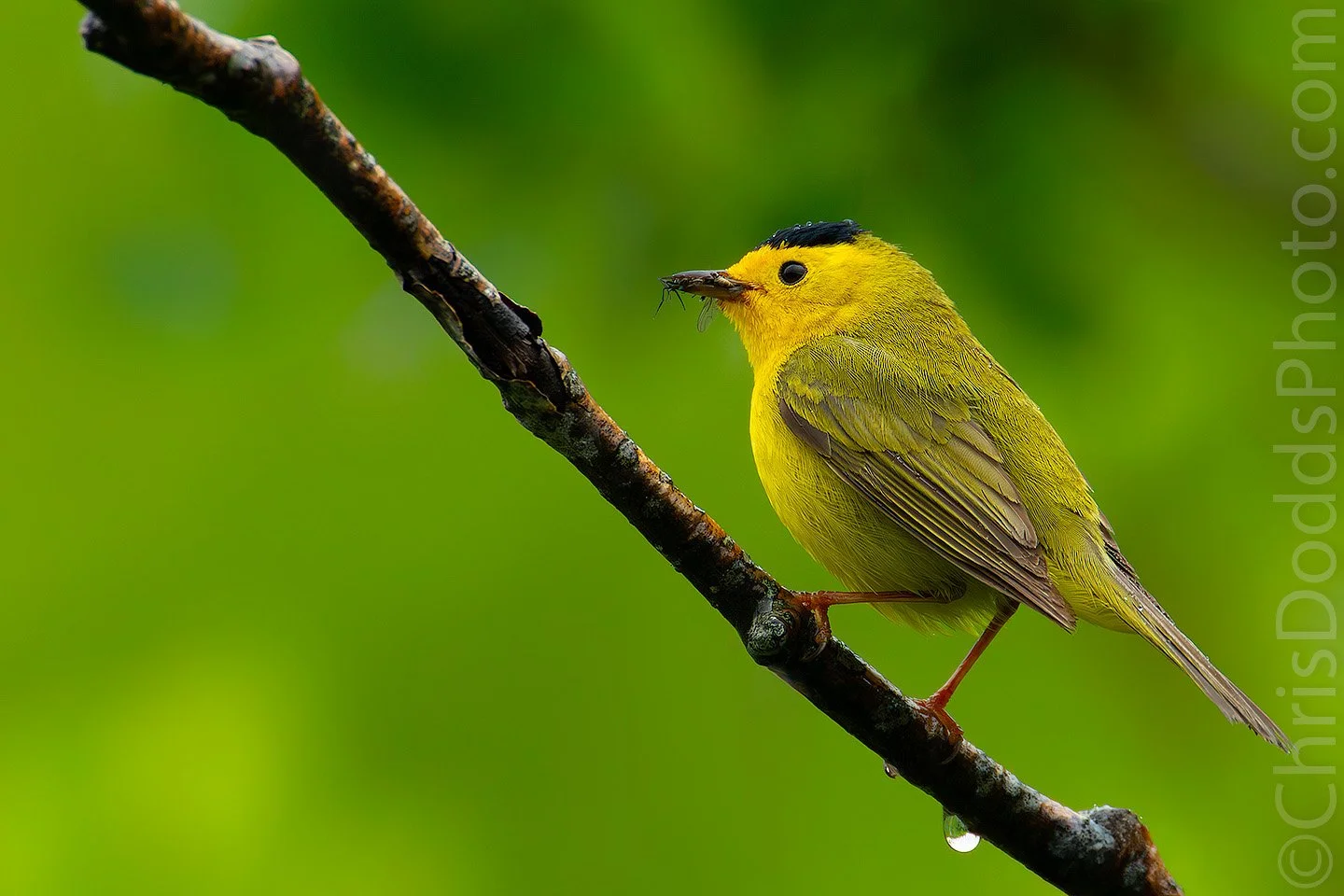
This Wilson’s Warbler perched briefly on a rain-soaked branch carrying a mouthful of insects (which I could swear were all grabbed mid-air during one short flight), likely gathering every bit of fuel it could before continuing its long migration toward its nesting grounds in Northern Canada. I fired a quick burst and honestly assumed I may not have the ideal head angle because the bird’s face looked just slightly angled away from the sensor plane — although after all these years, I still instinctively want to call it the “film plane.” From experience, I knew there was always a chance the bird might glance toward me for a split second, and hitting the shutter early — or relying on pre-capture — helped ensure I got the frame when that moment happened.
Back in the hotel room later, I was thrilled to see the image come up sharp with a beautiful head angle, clean pose, and that perfect little mouthful of food telling the entire migration story in one frame.
Wet conditions add a richness and saturation to the forest that always reminds me of the decadent colours of Fuji Velvia slide film back in the day. Greens deepen, backgrounds melt away, and everything takes on that lush, almost glowing look that digital still rarely reproduces naturally unless the conditions are just right — although these days, almost any look can be created later during processing.
When preparation, reflexes, light, weather, and a little luck all come together at once, you come home with something special.
Join me next May 7–11 for my Songbirds of Pelee Workshop at Point Pelee and experience the excitement of spring migration photography at one of the best birding destinations in the world. Moments like this happen fast — and I’ll help you be ready for them.