
Most photographers think of Saint Paul Island for Tufted and Horned Puffins. I certainly spend plenty of time photographing them, but one of the things I love about Saint Paul is never knowing what might suddenly become the best opportunity of the day.
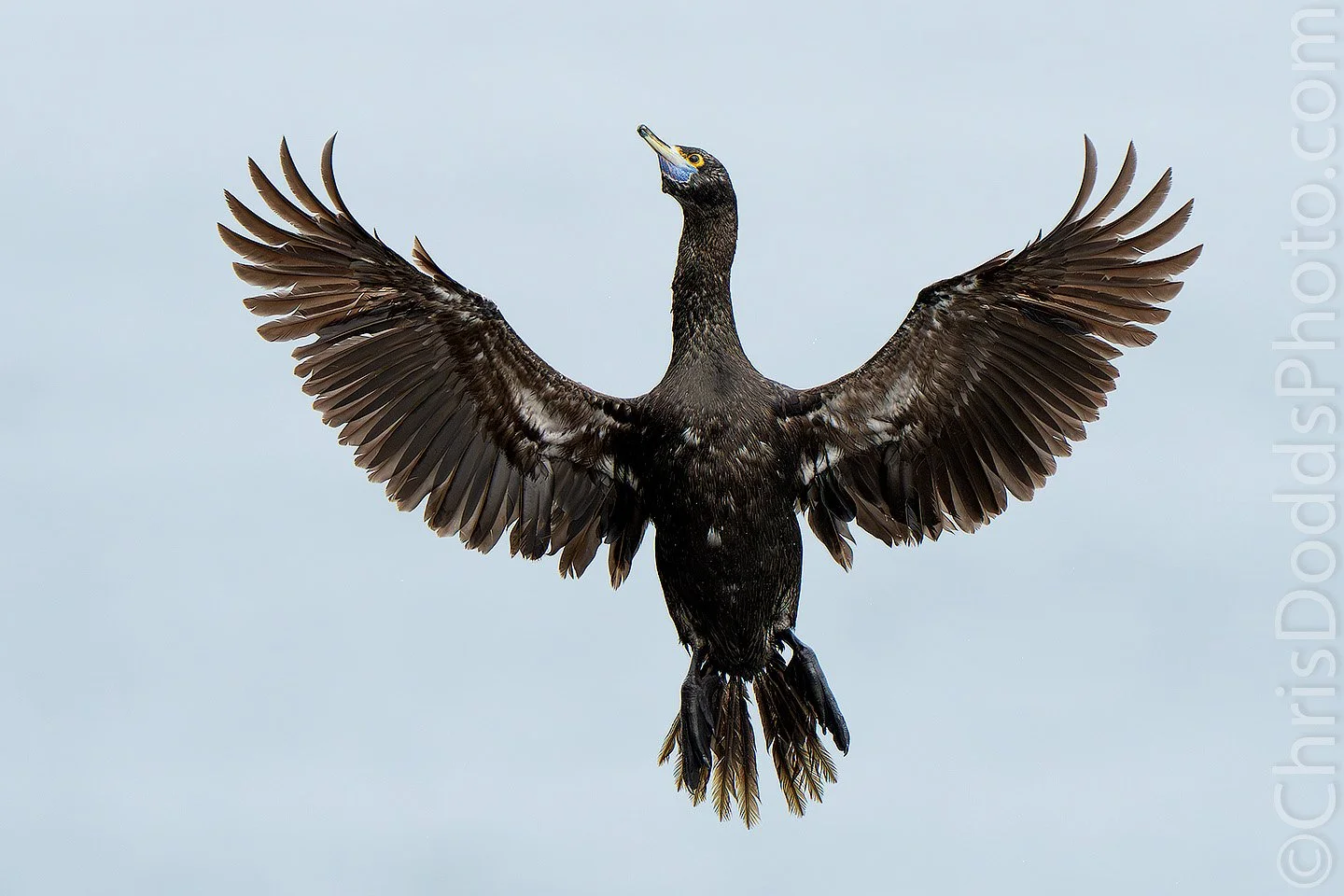
This Red-faced Cormorant was one of those opportunities.
Just like the Arctic Fox I photographed on Saint Paul Island, it's another reminder not to become so focused on what you came to photograph that you stop seeing everything else around you.
Red-faced Cormorant Photography on Saint Paul Island
The Red-faced Cormorant (Urile urile) isn't a bird most North American photographers get many opportunities to photograph.
Its North American range is largely restricted to Alaska, with breeding colonies scattered along remote islands and coastlines of the Bering Sea, Aleutian Islands and Gulf of Alaska. Much of that habitat isn't particularly easy to get to.
Saint Paul Island in Alaska's Pribilof Islands is different.
The Alaska Department of Fish and Game describes Saint Paul as the most accessible location in Alaska for seeing nesting Red-faced Cormorants, while Cornell identifies the Pribilof Islands as one of the best places to find the species and notes that one of the biggest challenges is simply reaching its remote habitat.
That's a pretty compelling reason for a bird photographer to travel to the middle of the Bering Sea.
A Red-faced Cormorant in Flight
I love everything about the pose in this image.
The bird was coming toward us when it spread those enormous wings, fanned its tail, dropped its feet and raised its head. The symmetry immediately caught my attention, but it's the head position and splash of colour around the face that really make the image for me.
In breeding plumage, Red-faced Cormorants are spectacular birds. The red facial skin that gives the species its name becomes particularly striking, along with their small crests and contrasting white flank patches.
They're also easy to overlook when you're surrounded by some of North America's most famous seabirds.
Saint Paul Island Is Much More Than Puffins
Tufted and Horned Puffins are no question among the stars of Saint Paul Island, but they're only part of what makes photographing there so special.
Red-faced Cormorants share this incredible Bering Sea environment with Red-legged and Black-legged Kittiwakes, Northern Fulmars, Common and Thick-billed Murres, Crested, Least and Parakeet Auklets and many other birds.
I recently wrote about spending an hour photographing a Crested Auklet, another example of what having enough time in one place can produce.
You might be concentrating on puffins returning with fish when something completely different suddenly appears. Sometimes it's an Arctic Fox. Sometimes it's an unexpected bird passing through. And sometimes it's a Red-faced Cormorant coming toward you with its wings spread.
I've spent more than 40 years photographing wildlife, and one thing I've learned is that you have to get yourself into the right place, give yourself enough time—and keep looking.
Be ready for the extraordinary while photographing the ordinary.
Saint Paul Island is a pretty extraordinary place to do exactly that.
Photograph Saint Paul Island With Me
My Saint Paul Island Bird Photography Workshop, July 1–8, 2027, has just ONE spot remaining.
And for photographers planning farther ahead, I've just announced:
NEW — JULY 2–9, 2028
We'll spend seven nights and eight days on Saint Paul Island, with seven full days devoted to photography and instruction among the extraordinary birds of the Pribilof Islands.
Saint Paul is about much more than puffins—and sometimes the best opportunity of the day is the one you weren't expecting.