Nectar, Pollen, and Warblers: A Tennessee Warbler in Prickly Gooseberry at Point Pelee

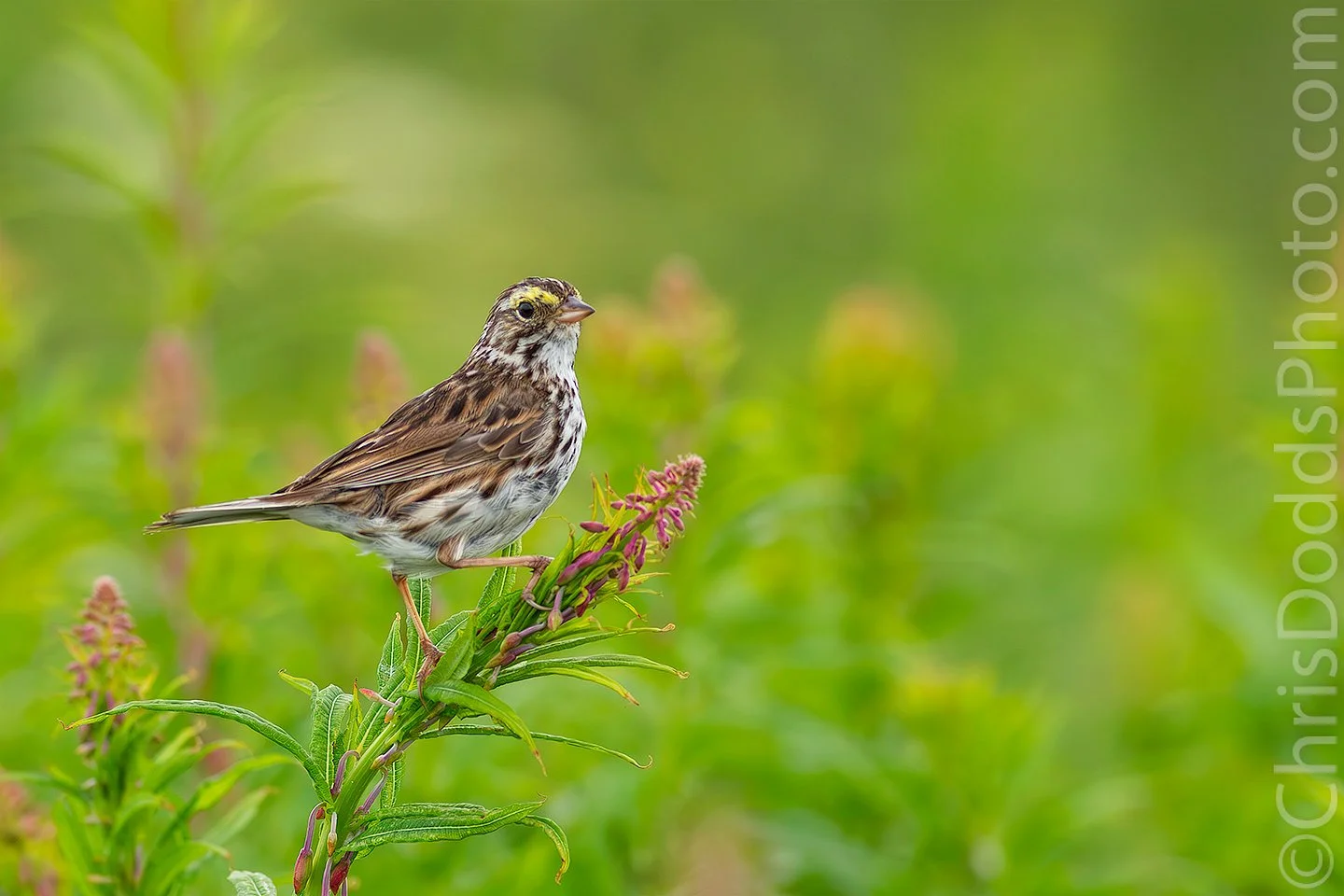
We witnessed a truly captivating moment during my recent Songbirds of Pelee workshop at Point Pelee National Park of Canada. A Tennessee Warbler, its bill dusted with yellow pollen, was busily foraging for nectar on an Eastern Prickly Gooseberry. It put on quite a show!

A prickly gooseberry patch is an excellent spot to pause and observe birds if the park is quiet. While warblers primarily eat insects, they often supplement their diet with nectar, especially when insects are scarce or during migration. Nectar offers a readily available source of energy, which is incredibly beneficial for birds with high metabolisms, like warblers that have just expended a tremendous amount of energy migrating across Lake Erie.

Interestingly, some warblers, such as the Cape May Warbler, have specialized tongues designed for sipping nectar, highlighting a natural adaptation to this food source. It's a reminder that the natural world is full of amazing adaptations and unexpected sights!

Tennessee Warbler in Prickly Gooseberry (Leiothlypis peregrina, Paruline obscure, Reinita de Tennessee, TEWA) During my Songbirds of Pelee Workshop at Point Pelee National Park of Canada. Image Copyright ©Christopher Dodds. Sony a9 III Mirrorless camera & Sony FE 400-800mm f/6.3-8 G OSS Lens @800mm ISO 10,000, f/8 @ 1/5,000s. Manual exposure.

Beyond the Basics: Mastering Puffin Portraits in the Golden Hour

A recent image from my "Deluxe Puffins Galore and So Much More" workshop: a genuinely unforgettable photographic experience. Picture this: the last rays of the setting sun bathing everything in a glorious golden light, the air filled with the gentle calls of seabirds, and a charismatic Atlantic puffin posing just for us amidst a tapestry of golden lichen-covered rocks. It was pure magic!

There is a general rule of thumb for photographers: point your shadow at your subject (stand with your back to the sun) for even front lighting on your subject. While this is a solid foundation and a good approach in harsh light, real artistry often lies in understanding when and how to deviate from it. Embracing the low angle of the golden hour sun was key to capturing a truly striking portrait.

By allowing the light source to move slightly off that direct "shadow-pointing" angle, subtle shadows began to dance across the puffin's charming face and plumage. These weren't harsh, distracting shadows but rather gentle gradations that sculpted its features, adding a beautiful sense of depth and dimension to the image. The contrast between the warmly lit areas and the soft shadows brought the puffin to life in a way that flat, front lighting does not achieve; light illuminating each feather and a subtle offset shadow defining its form.

To further enhance the intimacy of the portrait, I encouraged everyone to photograph at, or even slightly below, the puffin's eye level. This perspective connects with the subject, making the viewer feel like they are sharing a moment with this incredible little bird. It eliminates the feeling of looking down upon the animal and creates a more intimate portrait.

And then there was the background – a photographer's dream! The rocks on Lighthouse Island are adorned with vibrant, golden lichen, creating a naturally beautiful and textured backdrop. To truly make our puffin pop, we employed a shallow depth of field by shooting wide open on our lenses. This technique beautifully blurs the lichen-covered rocks into a wash of warm, out-of-focus golden orange, allowing the puffin's sharp details and vibrant colours to take center stage. The contrast between the crisp subject and the dreamy background truly made the puffin pop.

Witnessing the joy on the workshop participants' faces as they reviewed their images – the golden light catching the puffin's eye, the rich bokeh of the lichen, and the intimate connection created by the low angle – was incredibly rewarding. It was a perfect reminder that while fundamental rules are helpful, understanding how to play with light and perspective can elevate a good photograph to an extraordinary one. The puffins of Lighthouse Island, bathed in golden hour glory, certainly delivered a masterclass in the art of portraiture.

Atlantic Puffin Portrait in golden light (Fratercula arctica, Macareux moine, Frailecillo atlántico, ATPU) Mingan Archipelago National Park Reserve, Quebec, Canada. Image Copyright ©Christopher Dodds. Sony Alpha 1 Mirrorless camera & Sony FE 600mm f/4 G Master OSS Lens with Sony FE 2X Teleconverter @1,200mm ISO 500, f/8 @ 1/1,000s Manual exposure. Full frame image.

Happy International Puffin Day! Let's Celebrate These Clowns of the Sea!

Today, April 15th, is International Puffin Day, and if that doesn't bring a smile to your face, well, maybe you haven't spent enough time gazing at these incredible little seabirds. With their bright orange beaks, waddling gait, and knack for aerial acrobatics, Atlantic puffins are indeed the clowns of the sea.

These charismatic birds spend most of their lives on the open ocean, only returning to land to breed in the spring and summer. Imagine thousands of these vibrant characters bustling around rocky cliffs and grassy slopes, diligently digging burrows and raising their single puffling. It's a sight – and a sound – you won't soon forget! They're also surprisingly resilient, facing harsh North Atlantic conditions. Their ability to "fly" underwater to pursue and catch fish is impressive. So today, let's take a moment to appreciate these remarkable creatures and the vital role they play in our marine ecosystems: They help regulate fish populations by preying on small fish while also serving as a food source for larger predators like gulls and marine mammals

Deluxe Lighthouse Island Dream Puffins and so much more Photography Adventure

Are you ready to take your puffin appreciation to the next level? Imagine yourself immersed in the heart of puffin paradise, witnessing their daily lives up close and capturing breathtaking photographs. This dream can become a reality!

We're thrilled to offer an exclusive opportunity to join acclaimed nature photographer Christopher Dodds for an unforgettable adventure photographing Atlantic puffins on a small, remote island in Quebec. Picture this: you'll spend several days living in a beautifully renovated lighthouse, the perfect basecamp for exploring the island's thriving puffin colonies. Each day will be dedicated to capturing stunning images of these captivating birds in their natural habitat, guided by Chris’ expert eye and unparalleled knowledge of wildlife photography.

And it doesn't stop there. After exhilarating days in the field, you'll return to the cozy lighthouse to indulge in gourmet meals, share stories with fellow photography enthusiasts, and review your incredible captures. This isn't just a photography tour; it's an immersive experience designed to ignite your passion for nature and create memories that will last a lifetime.

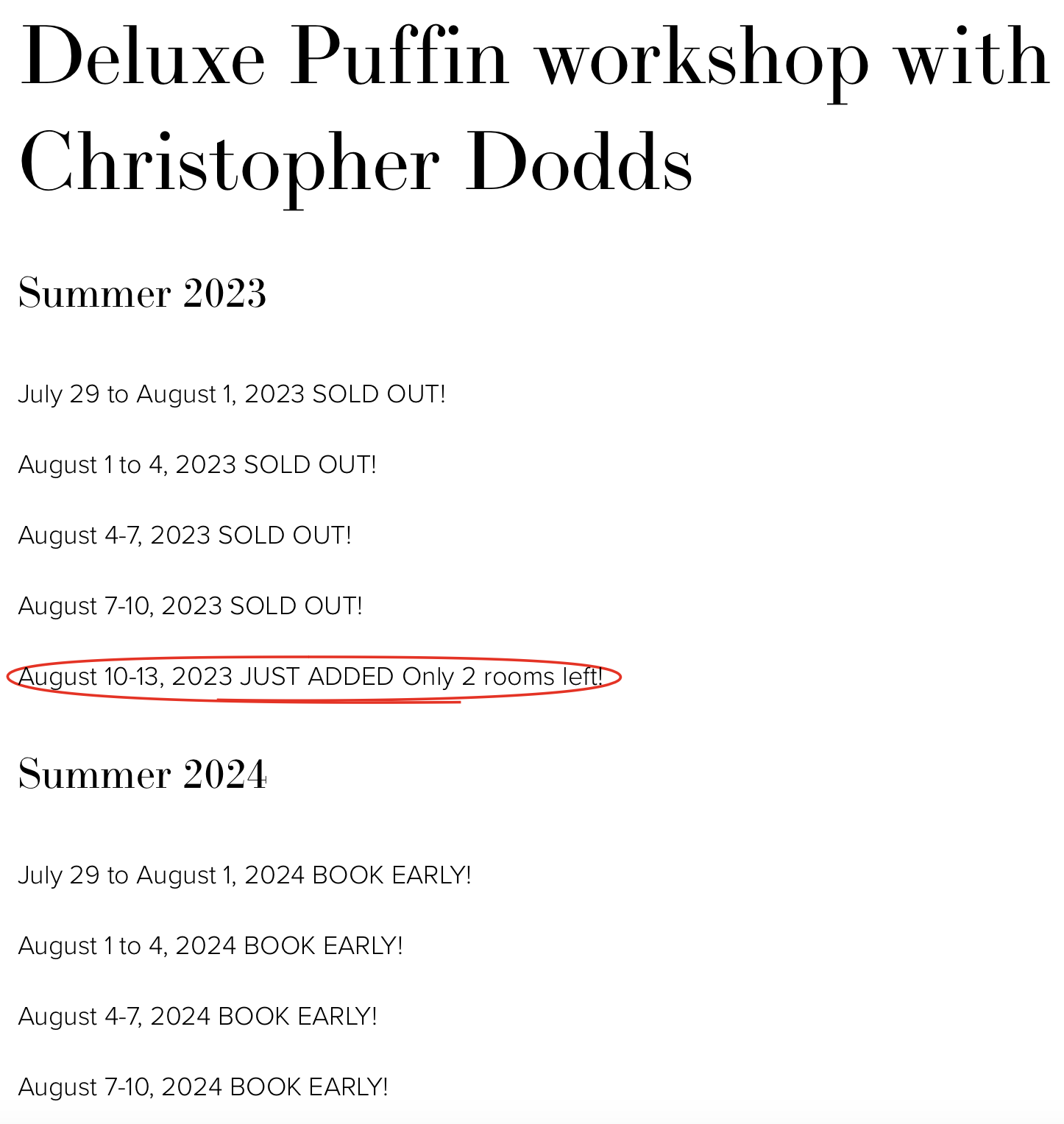
Spaces for this exceptional adventure are extremely limited. Now is your chance if you've ever dreamt of getting up close and personal with Atlantic puffins in a truly unique and luxurious setting. Visit THIS PAGE to learn more about this dream puffin photography adventure with Christopher Dodds. Don't miss out on this incredible opportunity to celebrate International Puffin Day by embarking on the journey of a lifetime!

Atlantic Puffin flying with fish at first light (Fratercula arctica, Macareux moine, ATPU) from my Deluxe Puffins Galore Lighthouse Island Workshop Adventure. Mingan Archipelago National Park Reserve, Quebec, Canada. Image Copyright ©Christopher Dodds. Sony Alpha 1 Mirrorless camera & Sony FE 600mm f/4 G Master OSS Lens with Sony FE 2X Teleconverter @1,200mm. ISO 8,000, f/8 @ 1/3,200s Manual exposure. Full frame image.

The Magic of Bokeh: Elevating Your Bird Photography

Bokeh, that dreamy blur, that soft kiss of out-of-focus foreground and background. It is not just about aesthetics; it is a powerful tool.

Take this willet I photographed during my recent Florida Workshop. If I lowered the camera far enough, I created a soft & dreamy out-of-focus foreground. Some might see that as an obstacle or something to avoid. But for me, it became an advantage. That smooth, blurred foreground acted like a natural frame, drawing your eye inexorably to the sharp detail of the bird itself. It created a sense of depth, almost like the willet was emerging from a gentle mist or sandstorm.

And that is the magic. When you intentionally let the foreground and background melt away into a creamy bokeh, you are not just making a pretty picture; you are isolating your subject, stripping away distractions, and allowing its form, posture, and essence to take center stage. That soft blur can whisper of the environment without shouting, providing context without clutter.

It is about guiding the viewer's gaze, telling a story with selective focus. It transforms a simple snapshot into something more evocative that resonates with the quiet beauty of the natural world. So the next time you're out there, don't shy away from that out-of-focus element. Embrace it. It is the secret ingredient to elevating your bird photography.

Willet Portrait (Tringa semipalmata, Chevalier semipalmé, Playero aliblanco, WILL). From my recent Ospreys Galore Workshop Lake Blue Cypress on April 9, 2025 at Sebastien, Florida, USA. Image Copyright ©Christopher Dodds. Sony a9 III Mirrorless camera & Sony FE 400-800mm f/6.3-8 G OSS Lens with Sony 1.4X Teleconverter @71,120mm ISO 10,000, f/11 @ 1/2,500s. Manual exposure.

Less is More: Finding Freedom with only the Sony a9 III and 400-800mm in Florida

I am live and buzzing in the Florida sunshine, ready for the start of my Ospreys Galore Workshop tomorrow! I just landed yesterday, and this morning, I was out before the sun rose and the dew fully lifted. And let me tell you, the light? Absolutely glorious. The wind? Just a whisper, and in the perfect direction. And the subjects? Spectacular roseate spoonbills. Pink perfection against the early morning glow.

Roseate Spoonbill landing in spectacular first light (Platalea ajaja, Spatule rosée, Espátula rosada, ROSP). Image made April 4, 2025, while scouting for my Ospreys of Florida Workshop. Image Copyright ©Christopher Dodds. Sony a9 III Mirrorless camera & Sony FE 400-800mm f/6.3-8 G OSS Lens @400mm ISO 4,000, f/6.3 @ 1/5,000s. Manual exposure. Full frame image

I made a rather deliberate choice for this trip: JUST the revolutionary Sony a9 III and the brand-spankin'-new Sony FE 400–800 mm F6.3–8 G OSS. Just one incredible camera body and one incredible zoom lens. And after this morning’s session, any lingering doubt I might have had has completely vanished.

Getting here was a breeze, literally. Travelling with a single, lightweight, small camera bag (an 18-litre bag with room to spare) felt unbelievably liberating. No more juggling multiple cases, no more strategic repacking in airport security. It was a refreshing reminder that less truly can be more, even before you click the shutter.

But this morning… this morning was the real confirmation. Those spoonbills, with their vibrant plumage and elegant movements, were simply breathtaking. And having the reach and versatility of that 400-800mm lens allowed me to capture them in ways I could only have dreamed of with a more restrictive setup. Whether I was framing a tight portrait of their unique bill or capturing a closer scene of them landing directly toward me, the camera and lens delivered. And the a9 III’s speed and responsiveness? It’s like the camera anticipates the action.

There’s a certain joy in simplifying your tools. You become more attuned to your surroundings and more focused on the moment. You’re not fumbling through a bag of lenses, second-guessing your choices. You’re present, you’re ready, and you’re making the most of the gear you have.

Seeing those spoonbills in that perfect light, knowing I had the right tool for the job, was pure magic. This single-lens approach isn’t a limitation; it’s a focused freedom. And after such a spectacular start, I’m even more excited to see what the rest of my Florida adventure holds. Stay tuned!

Common Raven Firesky Shilouette

Ah, Raven! That feathered fiend, that sly sky-pirate of pranks! Forget your garden-variety trickster; Raven doesn't just pull a fast one; they orchestrate elaborate, gravity-defying, giggle-inducing spectacles! Picture this: a perfectly normal Tuesday, then poof! Suddenly, the sun's wearing a monocle, fish are singing opera, and your shoes are inexplicably filled with feathers. With a wink and a cackle, Raven dances through the chaos, a master of metamorphosis, turning the world into their personal, delightfully absurd playground. They're not just mischievous; they're a whirlwind of whimsical transformations, leaving everyone wondering if reality itself has joined the April Fool's festivities.

Common Raven Firesky Silhouette (Corvus corax, Grand corbeau, CORA). Quebec, Canada, while testing the new Sony 400-800mm zoom lens. Image Copyright ©Christopher Dodds. Sony a9 III Mirrorless camera & Sony FE 400-800mm f/6.3-8 G OSS Lens @800mm ISO 3,200, f/8 @ 1/5,000s Manual exposure.

Snowy Owl Workshop Update - They are back!

I have been predicting a good winter for Snowy Owls, and although it is too early to know for sure, it looks more and more like it will be. I had my first Snowy Owl on the drive back to Montreal from Toronto after my Sony Presentations at ProFusion Expo! It was perched beside the highway at a truck scale, making it an easy choice to stop and grab my 100-400 for a portrait - and it never flew away - smile.

Since the February 3-7 trip sold out in record time, I have added another workshop from Feb. 10-14, 2024. Click the image to learn more or sign up.

Snowy Owl (Bubo scandiacus, Harfang des neiges, SNOW) Quebec, Canada. Sony a1 mirrorless camera body Sony & Sony FE 100-400mm f/5.6-6.3 G OSS Lens @400mm F/5.6 ISO 5,000 @ 1/5,000s.

Happy Fourth of July

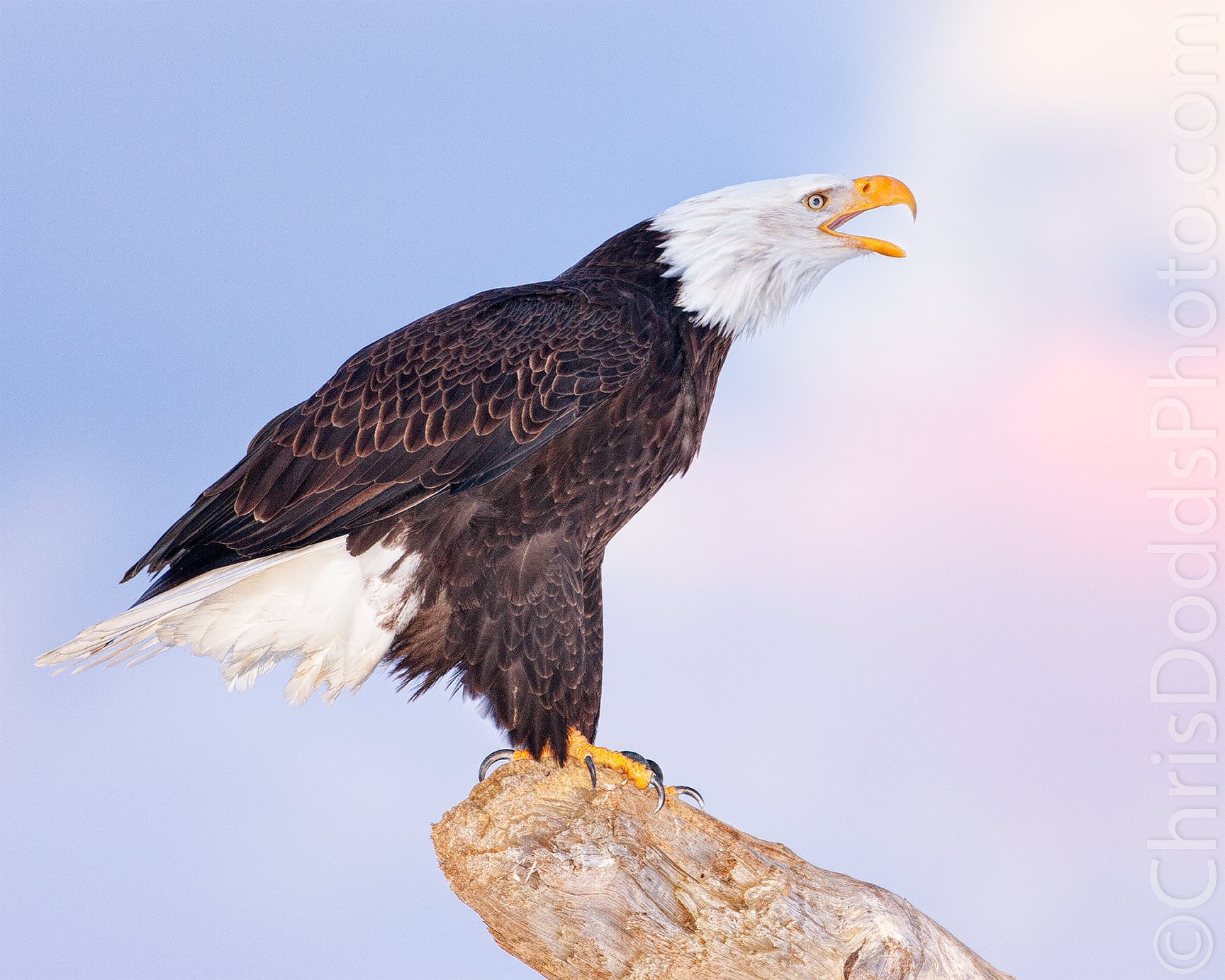
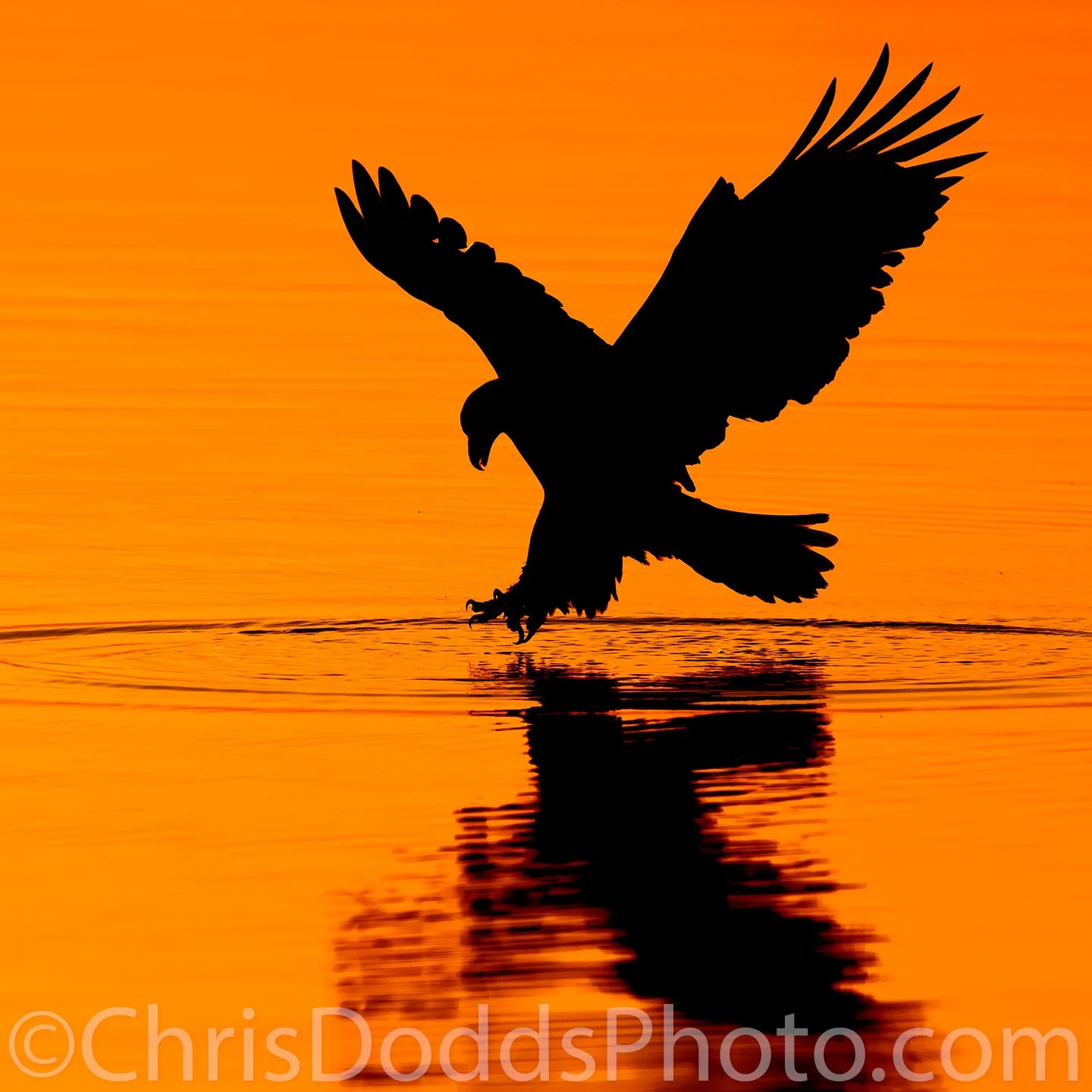
Happy Fourth of July to all of my American friends and family. This image was made during my annual Eagles Galore Workshop in Alaska every March. The predawn colours in the sky were a fantastic pallet of pastels - and the Eagles were singing their morning chorus. What could be better?

Bald Eagle Call of the Wild (Haliaeetus leucocephalus, Pygargue à tête blanche, BAEA) near Homer, Alaska. Image copyright ©Christopher Dodds Sony Alpha 1 Mirrorless camera & Sony FE 600mm f/4 G Master OSS Lens with Sony FE 2X Teleconverter @1,200mm ISO 6,400, f/8 @ 1/3,200s. Manual Exposure mode. Join me for my Eagles Galore workshop in March. To learn more, CLICK HERE.

Yellow Warbler Baby eating a Mayfly

An image from 20 years ago that I just reprocessed for publication. A baby Yellow Warbler photographed just seconds after a Mayfly was delivered by its father for breakfast. Flashback 20 years, and you will find me with my first professional digital camera, the Nikon 1DX, paired with a Nikon 300mm f/2.8 doubler with a flash and a Better Beamer flash extender to add a little catchlight and fill the shadows. There have been so many advances in the digital photography world …….

Yellow warbler baby eating a Mayfly (Setophaga petechia, Pauline jaune, YEWA) From long ago on June 18, 2004. ©Christopher Dodds All Rights Reserved. Nikon 1DX & Nikon 300mm f/2.8 Lens with Nikon 2X Teleconverter @600mm. ISO 400, f/7.6 @ 1/2,50s Manual exposure with fill flash and Better Beamer flash extender.

Free Photo Walks in Montréal Sponsored by Sony and Gosselin Photo

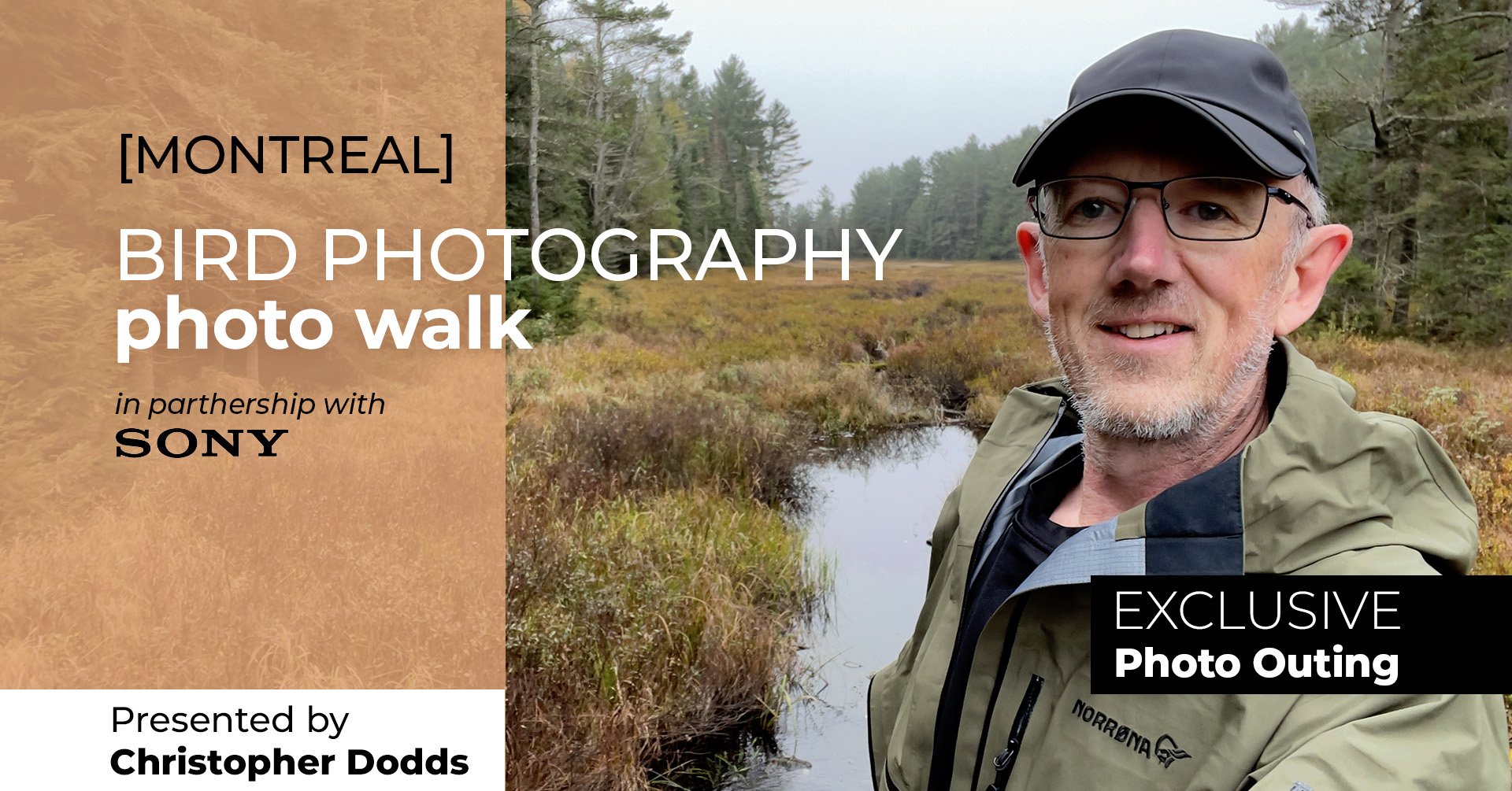
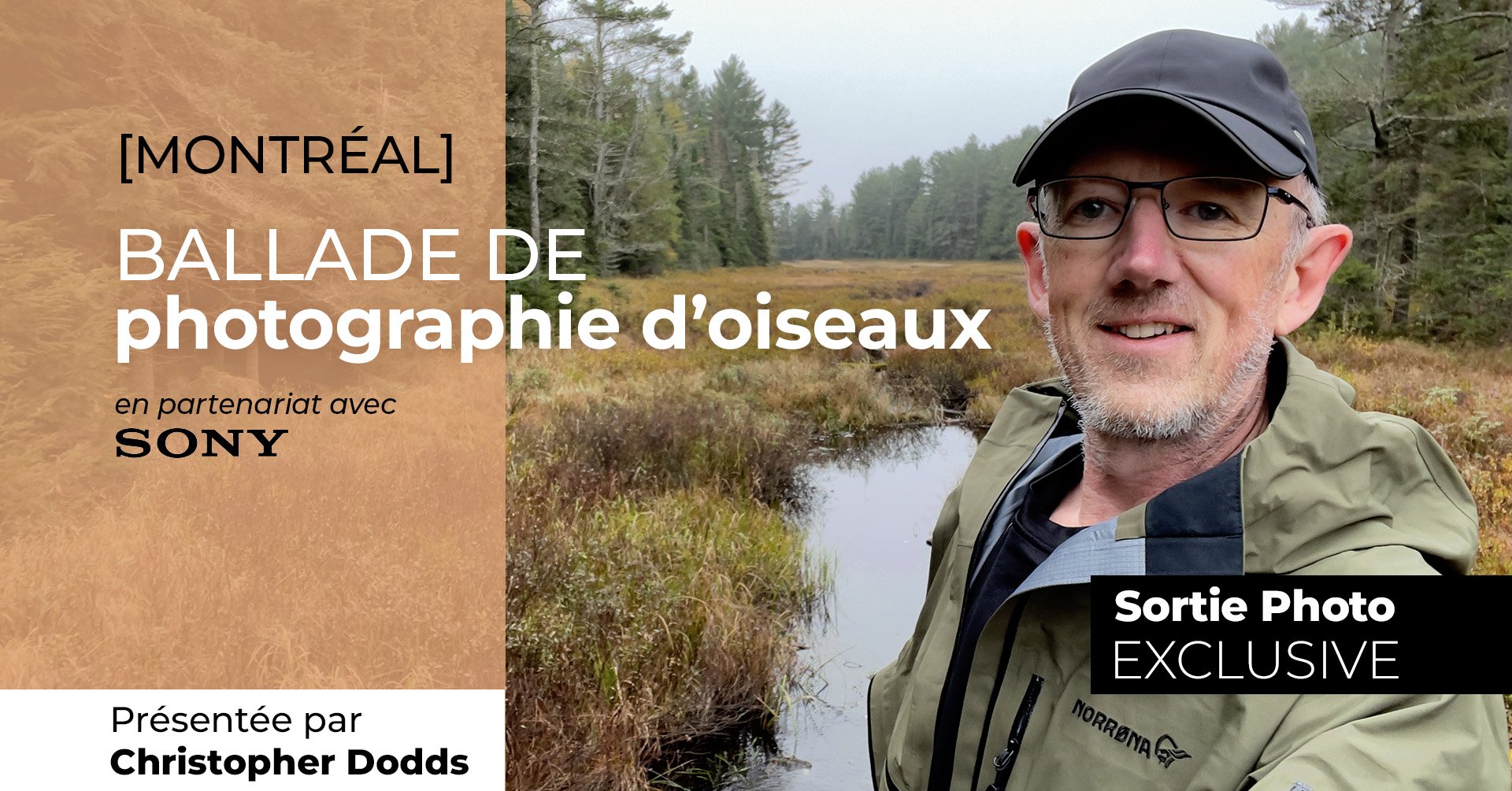
Proud to announce that I will be hosting free photo walks with Sony of Canada and Gosselin Photo at Parc-nature du Bois-de-L'Île-Bizard in Montréal, Québec, on May 27 in English and May 28 in French. Sony will have some cameras and lenses for you to try, and both Gosselin Photo and Sony will have staff helping out. There is limited space, so book your spot soon! Follow the links below to learn more.

Fière d'annoncer que j'organiserai des marches photo gratuites avec Sony du Canada et Gosselin Photo au Parc-nature du Bois-de-L'Île-Bizard à Montréal, Québec, le 27 mai en anglais et le 28 mai en français. Sony aura des appareils photo et des objectifs à essayer, et Gosselin Photo et Sony auront du personnel pour vous aider. Le nombre de places est limité, alors réservez vite votre place ! Suivez les liens ci-dessous pour en savoir plus.