Bonaventure Island Trip Report: Common Murre or Common Guillemot (Uria aalge, guillemot marmette, COMU)

Common Murre or Common Guillemot Flying (Uria aalge, guillemot marmette, COMU) Parc national de l'Île-Bonaventure-et-du-Rocher-Percé (Bonaventure Island and Percé Rock National Park) Bonaventure Island, Quebec. Image Copyright ©Christopher Dodds www.chrisdoddsphoto.com All Rights Reserved. Canon EOS-1D MKIV, 800mm F5.6 L IS. ISO 800, 1/2500s F5.6 Manual. Hand held from Zodiac Hurricane 733. Full Frame. CLICK HERE TO PURCHASE A PRINT or LICENSE IMAGE FOR PUBLICATION.

Common Murre or Common Guillemot Banking (Uria aalge, guillemot marmette, COMU) Parc national de l'Île-Bonaventure-et-du-Rocher-Percé (Bonaventure Island and Percé Rock National Park) Bonaventure Island, Quebec. Image Copyright ©Christopher Dodds All Rights Reserved. Canon EOS-1D MKIV, 800mm F5.6 L IS. ISO 800, 1/2500s F5.6 Manual. Hand held from Zodiac Hurricane 733. Full Frame. CLICK HERE TO PURCHASE A PRINT or LICENSE IMAGE FOR PUBLICATION.

Bonaventure Island Gannets Galore Nature Photography Photo Safari Workshop

One of the highlights of the Gannets Galore Photo Safari is the daily (weather permitting) Zodiac trips to, and around, Bonaventure Island. This year, we had two back-to-back perfect mornings with mirror-like water and virtually no swell; a perfect recipe for photography from a Zodiac Hurricane 733. There were many Common Murres, Razorbills, Black Guillemots, Black-legged Kittiwakes, and even some Puffins floating on the water around the Zodiac, but the crown jewels for the nature photographers on board are always the birds in flight shots of these birds that fly at 80km per hour. I was just thrilled to have a CPS Loaner Canon Mark IV and 800mm F5.6 IS L on loan from Canon Canada for the workshops; most everyone, who wanted, got to try this impressive bird photography rig. I must confess to have fallen in love with the lens after creating these razor sharp images on the second morning of the first (of three) workshops.

If you find yourself trying to photograph seabirds from near their cliff-edge nesting sites, it's best to skip the outbound birds and focus on the inbound birds; Razorbills, Murres, etc., typically nest under other species like Northern Gannets on the cliff face and are typically covered in bird poop when leaving the nest - inbound birds are just back from fishing, so they are all nice and clean. Try to lock onto them before they slow to land  on the water or bank for best results.

More Kudos

I just wanted to take a moment to thank you for an amazing trip. I especially enjoyed shooting from the zodiac for all kinds of great shots. You lead an outstanding tour, and I would certainly consider future trips with you. I can tell that you could be of great help as I finish off my wish list of species for the new waterbirds book, as you know many of the key spots for specific species and behavior. I also have a lot to learn about the digital process, and you are gifted in this area. Many thanks my friend!
-Middleton Evans | Baltimore | MD

Herring Gull (Larus smithsonianus, Goeland argente, HERG)

American Herring Gull Emerging with fish (Larus smithsonianus, Goeland argente, HERG) Parc national de l'Île-Bonaventure-et-du-Rocher-Percé, Bonaventure Island, Quebec. Image Copyright ©Christopher Dodds www.chrisdoddsphoto.com All Rights Reserved. Canon EOS-1D MKIV, 800mm F5.6 L IS. ISO 400, 1/2000s F5.6 Manual. 580EXII Flash manual full power . Tripod & Wimberley Head II. Full Frame. CLICK HERE TO PURCHASE A PRINT or LICENSE IMAGE FOR PUBLICATION.

A quick post today to further demonstrate the power of side light to make dramatic, action stopping images in harsh light. This is another image from a good collection produced while Bonaventure Island was closed to visitors during a recent Gannets Galore Bonaventure Island Bird Photography workshop. We made the most of the day by visiting a favorite spot for Common Eider Ducks (we had males, females and babies really close). The gulls (Herring and Great Black-backed) would harass and steal fish from the diving Eiders.

Gannets Galore August 13-15, 2010 - still space available - more information HERE

Canon 800mm F5.6 IS L First impressions....

Yowsa, what an amazing piece of glass! This lens was razor sharp, fast and snappy to acquire auto-focus when used with my EOS 1D Mark IV camera body. Special thanks to Canon Canada for the loan and for giving a chance for workshop participants a chance to "get behind the wheel" and give it a try. New coatings, IS system and design all add up to make this a must have lens - anyone wanna chip-in? (grin).

Gannets Galore Bonaventure Island Workshop Report & Side Light for Nature Photography

Great Black-backed Gull Emerging with fish (Larus marinus, Goeland marin, GBBG) Parc national de l'Île-Bonaventure-et-du-Rocher-Percé, Bonaventure Island, Quebec. Image Copyright ©Christopher Dodds www.chrisdoddsphoto.com All Rights Reserved. Canon EOS-1D MKIV, 800mm F5.6 L IS. ISO 400, 1/2000s F5.6 Manual. 580EXII Flash manual full power. Tripod & Wimberley Head II. Full Frame. CLICK HERE TO PURCHASE A PRINT or LICENSE IMAGE FOR PUBLICATION.

Gannets Galore Bonaventure Island Workshop Report I:

Julie and I made the 12 hour drive to Percé on June 8th, arriving in town early in the afternoon that day. We scrambled up to the Northern Gannet colony on Bonaventure Island the next day to see that all is well and the colony is continuing to grow as expected. Photographic conditions continue to be the very best that Bonaventure Island has to offer.
Middleton Evans (author of Rapsody in Blue: A Celebration of North American Waterbirds), Gordon Kadonoff, Pat, Stokes & Denise Fishburne, Nick Honig & Tuma Young, Provash Ganguli, Amanda Reed, Ron Kellner, Ellen Goff and Wojciech Bedkowski all were simply a pleasure to spend time with, each having great spirits and all adding to the many great memories of yet another great spring on Bonaventure Island. Photographic opportunities from the morning Zodiac outings continue to get better with every trip. Harlequin Ducks, Common Eider, Atlantic Puffins, Common Murre, Razorbill, Black-legged Kittiwake, Black Guillemots, Great Cormorants, Great Black-backed Gulls, Herring Gulls and Grey Seals all gave award winning appearances.

Side Light for Nature Photography

During the second workshop, on June 15th, Bonaventure Island was closed due to strong winds from the North that pushed big waves onto the wharf and prevented landings. This was good news as we went out and photographed Black Guillemots, Common Eiders, Herring Gulls and Black-backed Gulls from shore. With the birds doing what birds do, and flying into the wind, I seized the opportunity to make dramatic action shots of the gulls taking flight after snatching fish from the Common Eiders. Pretty amazing to see the female Eiders lunge out of the water and attack the Gulls. I knew the moment the first Gull emerged from the water that I had to use the side light, at 90 degrees off to the right, to add dimension, texture and life to the image and sparkle to the water. I caught myself, more than once, asking my groups to remember that Gulls are beautiful, and worthy photographic subjects, too.

Kudos

"Thanks for a great weekend.  I got some great shots, learned some new things and met some terrific people.  You and Julie were perfect hosts.  I really appreciated your patient, attentive instruction........ "

- Amanda Reed Cape Cod, Massachusetts

Photoshop CS5 First Impressions and Guide to Photographing the Black Tern (Chlidonias niger, Guifette noire, BLTE)

Black Tern Hovering Vertical (Chlidonias niger, Guifette noire, BLTE) Missisquoi National Wildlife Refuge, Vermont, USA. Image Copyright ©Christopher Dodds www.chrisdoddsphoto.com All Rights Reserved. Canon EOS-1D MKII, 70-200mm F2.8L IS (version I) @200mm. ISO 400, 1/1000s F5.6. Hand-held (vertical) from kayak. Cropped slightly top & bottom to fit this aspect ratio. CLICK HERE TO PURCHASE A PRINT or LICENSE IMAGE FOR PUBLICATION.

Photoshop CS5 First Impressions

“The past two decades have demonstrated an amazing interplay between customers who want to push the limits of their personal creativity and a passionate team of Adobe engineers who make those visions a reality,” said Kevin Connor, vice president of product management for professional digital imaging at Adobe. “We experienced this firsthand when we posted a ‘sneak peek’ video of the team’s work on the Content Aware Fill feature a few weeks ago. It quickly became the number one viral video online, with close to 2 million views and its ‘magic’ was one of the top trending Twitter topics of discussion. This version of Photoshop has some of the most innovative and extraordinary technologies to ever come from our labs and clearly customers are already clamouring for it.”
Redefining the Image-Editing Experience
Now a native 64-bit application on both Mac and Windows®, Photoshop CS5 delivers superior tools and creative control so users can perform advanced image manipulations and compositing with ease. Revolutionary image intelligence behind Content-Aware Fill magically removes any image detail or object, examines the surroundings and seamlessly fills in the space left behind. Lighting, tone and noise of the surrounding area match perfectly, looking as if the removed content never existed. New Refine Edge makes nearly-impossible image selections possible. This innovative technology precisely detects and masks the trickiest types of edges, such as hair and foliage, while eliminating background color contamination.
For photographers, Photoshop CS5 now offers next-generation high dynamic range (HDR) capabilities. When combining multiple exposures into a single HDR image, Photoshop CS5 preserves the full tonal range of a scene with unprecedented speed and accuracy. The new HDR Pro offers exceptional ghost artifact removal and greater tone mapping and adjustment control. With HDR toning, users can emulate the striking look of an HDR image with any single-exposure image.     -Adobe Press Release April 12, 2010

I'm locked away having fun re-visiting and re-processing older files (this one from 2005) in PhotoShop CS5 - it’s a whole new world for some images. Truth be told; I'm always learning about Photoshop and refining my post capture workflow (usually trying to spend less time working on each image), so it's about time I revisited some older files to apply my new workflow and get the most out of the RAW capture.

While I only barely touch the surface of the plethora of tools in PhotoShop, I am somewhat disappointed with the "content aware" thing that drove their marketing campaign as a “magic eraser tool”. Got an image of a breathtaking vista that has an ugly telephone pole and electric wires across it? No problem: Content Aware  to the rescue (it works with the Spot Healing Brush and is an option of the Fill tool); it fills a selected area with data from the surrounding area, so that the lighting, texture, and tonality all match the rest of the image. It didn't work as well as the video that Adobe circulated virally on the web; I had to cleanup with the Clone and Patch tools. But, overall, it is an impressive time-saving feature that will surely evolve by the next release of Photoshop.

The Refine Edge selection dialog box has been redesigned to allow more accurate selections, especially of difficult textured edges, such as a bird’s feathers or tree bark. Not to say that creating masks are now child's play, but with the Refine Radius and Erase Refinements brushes, along with Smart Radius analyzing the edges, the task of working on such difficult subjects isn't as arduous and time consuming. In addition, the Color Decontaminant option helps remove excess background that you might have mistakenly included in your mask.

CS5's HDR-Pro offers enhanced options and new algorithms. Curve tool and sliders for adjusting Vibrance, Saturation, Exposure, Detail provide more precise, highly creative control over the dynamics. The auto deghosting works well at removing artifacts caused by slight differences among the merged photos, like a leaf that might have moved between captures. You can choose which of your original images is to be used as the defining reference to resolve visual conflicts, such as a cloud that might have changed shape between frames. One of the problems with HDR is that you have to start with a series of nearly identical photos, taken at various exposures. The new HDR Toning in CS5 allows you to emulate HDR, using a single image. The controls are quite similar to HDR-Pro, and the tool provides a high degree of creative potential.

The real value to the upgrade, in my humble opinion, is the re-worked Camera Raw converter, ACR (now version 6.1). There are some great new, highly anticipated, enhancements that include the new noise reduction algorithms that now includes sliders for both luminance and color noise (this is worth the price of  the upgrade alone), sharpening, grain and post-crop vignette tools. Now you can apply profile-based corrections to accommodate geometric distortions, chromatic aberration and lens vignette effects. Manual corrections for geometric distortion & vertical and horizontal perspective transforms are also available. A handful of lens profiles are included for automatic correction and more can be created by the community with the Adobe Lens Profile Creator. (http://labs.adobe.com/technologies/lensprofile_creator/)

Where to photograph the Black Tern

Black Tern is considered "species at risk" in Vermont, and "species of concern" in Ontario. There's a healthy population at Point Pelee in Ontario and Missisquoi National Wildlife Refuge in Vermont. There is also some great opportunities at L'ile Bizard in Quebec. The most accessible (without boat) are at L'ile Bizard in Quebec and then Point Pelee National Park in Ontario. Species status in Vermont has forced the authorities to increase the size of the protected nesting zone at Missisquoi National Wildlife Refuge in Vermont, but you can still shoot them from the road (there's a culvert big enough for a canoe to pass through near the fishing hole / boat ramp that they like to hang around) - it is hit, or miss, though, but there are plenty of low Osprey nests to entertain you if you aren't lucky with the Terns.

Black Tern (Chlidonias niger, Guifette noire, BLTE)

The Black Tern (Chlidonias niger, Guifette noire, BLTE) is a small tern generally found in or near inland water in Europe and North America. As its name suggests, it has predominantly dark plumage. Adult are 25 cm (9.75 in) long, with a wing span 61 cm (24 in), and weigh 62 g (2.2 oz). They have short dark legs and a short, weak-looking black bill, measuring 27-28 mm, nearly as long as the head. The bill is long, slender, and looks slightly decurved. They have a dark grey back, with a white forehead, black head, neck (occasionally suffused with gray in the adult) and belly, black or blackish-brown cap (which unites in color with the ear coverts, forming an almost complete hood), and a light brownish-grey, 'square' tail. The face is white. There is a big dark triangular patch in front of the eye, and a broadish white collar in juveniles. There are grayish-brown smudges on the ides of the white breast, a downwards extension of the plumage of the upperparts. These marks vary in size and are not conspicuous. In non-breeding plumage, most of the black, apart from the cap, is replaced by grey. The plumage of the upperparts is drab, with pale feather-edgings. The rump is brownish-gray. In flight, the build appears slim. The wing-beats are full and dynamic, and flight is often erratic as it dives to the surface for food; similar to other tern species. The Black Tern is very social. It breeds in loose colonies and usually forages, roosts, and migrates in flocks of a few to more than 100 birds, occasionally up to tens of thousands. Point Pelee National Park in Canada boasts a robust population of black terns. It is considered threatened in Vermont, though there is a thriving population at Missisquoi National Wildlife Refuge on the astern shore of Lake Champlain near the Canadian border in Franklin County, Vermont.

Marsh Wren (Cistothorus palustris, Troglodyte des marais, MAWR) & Bokehlicious Backgrounds

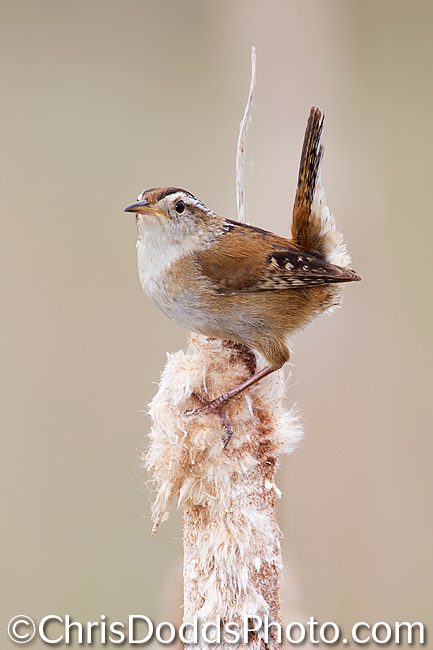
Marsh Wren vertical portrait (Cistothorus palustris, Troglodyte des marais, MAWR) Bois de I'Ile Bizard Nature Park,  L'ile Bizard, Montreal, Quebec, Canada. Image Copyright ©Christopher Dodds www.chrisdoddsphoto.com All Rights Reserved. Canon EOS-1D MKIV, 500mm F4L IS USM and 2X II Tele-extender. ISO 800, 1/320s F9. Canon 580 EX II Flash in manual mode. Tripod and Wimberley Head II. CLICK HERE TO PURCHASE A PRINT or LICENSE IMAGE FOR PUBLICATION.

Marsh Wren vertical portrait on beige (Cistothorus palustris, Troglodyte des marais, MAWR) Bois de I'Ile Bizard Nature Park,  L'ile Bizard, Montreal, Quebec, Canada. Image Copyright ©Christopher Dodds www.chrisdoddsphoto.com All Rights Reserved. Canon EOS-1D MKIV, 500mm F4L IS USM and 2X II Tele-extender. ISO 800, 1/320s F9. Canon 580 EX II Flash in manual mode. Tripod and Wimberley Head II. CLICK HERE TO PURCHASE A PRINT or LICENSE IMAGE FOR PUBLICATION.

I enjoyed a great afternoon at Bois de I'Ile Bizard Nature Park,  L'ile Bizard (Montreal) with clients/friends Tuma Young and Nick Honig from Halifax, NS (both of whom I’ll be seeing them again very soon at my workshop on Bonaventure Island). The star performer yesterday was surly this Marsh Wren that was building it’s nest right along the boardwalk trail.

PRO TIP: Silky Smooth Bokehlicious backgrounds for Birds

Whenever I find a co-operative subject in a place where there could potentially be a distracting, cluttered background (like a marsh full of reeds and bulrushes), I almost always immediately slap a 2X tele-converter onto my 500mm lens. I do this to take advantage of a narrower field of view (less distracting elements included in the frame) and the smaller depth of field that narrows as the focal length increases; creating smooth out-of-focus backgrounds (also known as bokeh).

Canon announces firmware update Version 2.0.7 for the EOS 5D Mark II DSLR.

his firmware update (Version 2.0.7) incorporates the following improvements and fixes.

  1. Fixes a phenomenon in which the aperture exhibits abnormal movement when shooting movies in manual exposure mode and Aperture Priority AE (Av mode) using some Canon lenses (such as macro lenses).
  2. Fixes a phenomenon in which the exposure level shown in the LCD panel differs from what is shown in the viewfinder when shooting still images in manual exposure mode.
  3. Fixes a phenomenon in which the Wireless File Transmitter (WFT-E4 or WFT-E4 II) may not automatically power off when used for FTP transfers.

These phenomena only occur with the Version 2.0.4 and Version 2.0.3 firmware. The Version 2.0.7 firmware being released this time is for cameras with firmware up to Version 2.0.4. If the camera's firmware is already Version 2.0.7, it is not necessary to update the firmware.

To find out the exact download instructions and to download EOS 5D Mark II firmware Version 2.0.7 please click here. Please note that before downloading firmware Version 2.0.7 you should read the entire contents of the page linked to above.

For all current Canon EOS firmware downloads please click here.

Marsh Wren (Cistothorus palustris, Troglodyte des marais, MAWR)

The Marsh Wren (Cistothorus palustris, Troglodyte des marais, MAWR) is a small North American songbird of the wren family. It is sometimes called Long-billed Marsh Wren to distinguish it from the Sedge Wren, also known as Short-billed Marsh Wren. The Marsh Wren is a secretive bird; even when singing the territorial male remains well hidden, briefly climbing a cattail for a look at an intruder. Males destroy eggs and nestlings of neighboring birds. They will even attack their own eggs if the female is removed from the nest. This behavior reduces competition for food in their area.
Adults have brown upper-parts with a light brown belly and flanks and a white throat and breast. The back is black with white stripes. They have a dark cap with a white line over the eyes and a short thin bill. Bewick's Wren is similar but has unstreaked back. Sedge Wren has less distinct supercilium and streaked crown.
The male's song is a loud gurgle used to declare ownership of territory; western males have a more varied repertoire. Learning continues throughout their adult life; it has been shown they will imitate songs presented to them on a tape recording or by a live tudor.
Their breeding habitat is marshes with tall vegetation such as cattails across North America. In the western United States, some birds are permanent residents. Other birds migrate to marshes and salt marshes in the southern United States and Mexico.
These birds forage actively in vegetation, sometimes flying up to catch insects in flight. They mainly eat insects, also spiders and snails.
The nest is an oval lump attached to marsh vegetation, entered from the side. The clutch is normally 4–6 eggs, though the number can range from 3–10. The male builds many unused nests in his territory; he may puncture the eggs of other birds nesting nearby.
This bird is still common, although its numbers have declined with the loss of suitable wetland habitat. Wholesale draining of marshes will lead to local extinction. Still, this species is widespread enough not to qualify as threatened according to the IUCN.


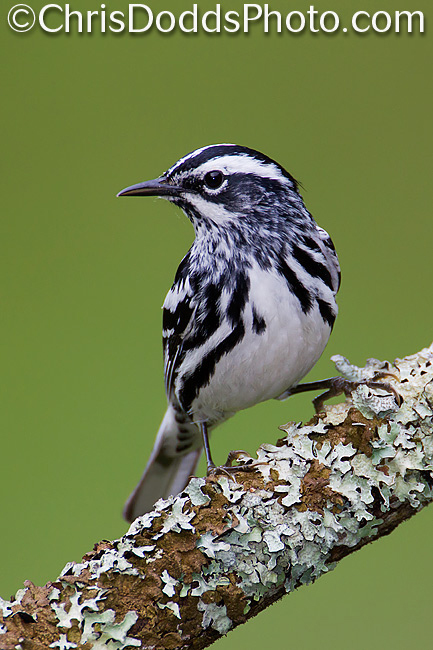
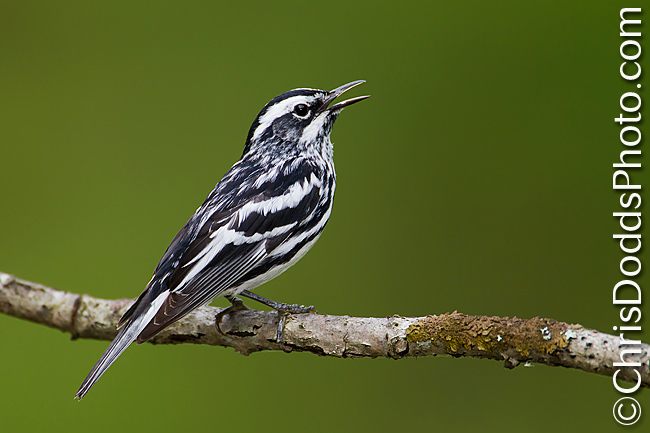
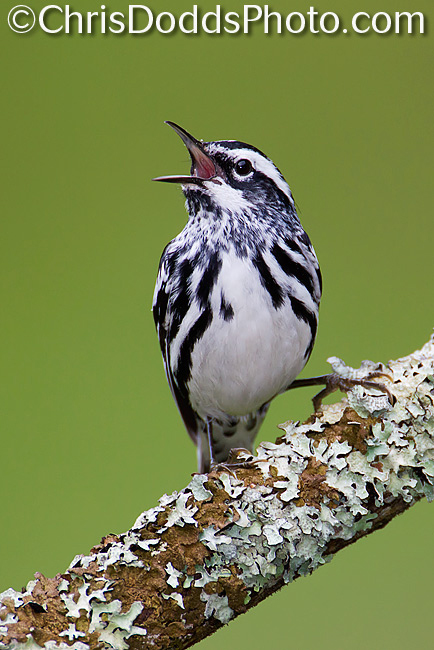
Black-and-White Warbler (Mniotilta varia, Paruline noir et blanc, BAWW)

Black-and-white Warbler vertical portrait (Mniotilta vary, Paruline noir et blanc, BAWW) Point Pelee National Park of Canada (Southwestern Ontario, Canada). Image Copyright ©Christopher Dodds www.chrisdoddsphoto.com All Rights Reserved. Canon EOS-1D MKIV, 500mm F4L IS USM and 2X II Tele-extender. ISO 800, 1/320s F9. Canon 580 EX II Flash in manual mode. Tripod and Wimberley Head II. CLICK HERE TO PURCHASE A PRINT or LICENSE IMAGE FOR PUBLICATION.

Black-and-white Warbler singing (Mniotilta vary, Paruline noir et blanc, BAWW) Point Pelee National Park of Canada (Southwestern Ontario, Canada). Image Copyright ©Christopher Dodds www.chrisdoddsphoto.com All Rights Reserved. Canon EOS-1D MKIV, 500mm F4L IS USM and 2X II Tele-extender. ISO 800, 1/320s F9. Canon 580 EX II Flash in manual mode. Tripod and Wimberley Head II. CLICK HERE TO PURCHASE A PRINT or LICENSE IMAGE FOR PUBLICATION.

Black-and-white Warbler singing vertical portrait (Mniotilta vary, Paruline noir et blanc, BAWW) Point Pelee National Park of Canada (Southwestern Ontario, Canada). Image Copyright ©Christopher Dodds www.chrisdoddsphoto.com All Rights Reserved. Canon EOS-1D MKIV, 500mm F4L IS USM and 2X II Tele-extender. ISO 800, 1/320s F9. Canon 580 EX II Flash in manual mode. Tripod and Wimberley Head II. CLICK HERE TO PURCHASE A PRINT or LICENSE IMAGE FOR PUBLICATION.

Point Pelee Workshop report ... continued

In keeping with tradition, my annual bird photography workshop at the Southernmost tip of land in Canada, Point Pelee National Park of Canada, kept us all on our feet for hours at a time. We hiked far and wide while carrying our camera gear; Robert Parent (from Quebec) called it "Extreme Bird Photography". I would hate to think just how far we really did walk each day. Everyone in the group remained in good spirits, despite the cold, and sometimes wet, weather. These images of this Black-and-white Warbler were all made within minutes of each other, they are the same bird we found foraging a pile of discarded sticks along Woodland trail early in the workshop. I enjoyed using the relatively noiseless high ISO capabilities of Canon's newset professional camera body, the Canon EOS 1D mark IV. I have always forced myself to never use more than ISO 400 with it's predecessor, so pulling-off consitently sharp images in low light during this trip was much easier than with earlier cameras.

Canon Auto-focus, Instruction book, firmware, and LensAlign

I was sitting on the tram on the way to the tip discussing Canon's latest camera bodies when a well known photographer said that he wasn't happy with the 7D he had purchased for his wife. Quick check of the custom settings showed it still had the old firmware, few of the custom functions had been properly set-up , the camera was even set to sRGB colorspace and there had been no micro-adjustment made. I downloaded the latest firmware that night and installed it the next morning for him; making a few adjustments to his custom settings. "Its much better now" was shouted-out across the parking lot that afternoon.

Perhaps Canon unleashed a beast when they decided to offer such a wide variety of user defined custom functions; few people read the instruction manual and really know how to set them. Before you decide that your camer'a AF isn't working properly, take the time to make sure it is set-up and be sure to micro-calibrate each of your lenses using LensAlign Pro.....please!

Black-and-White Warbler (Mniotilta varia, Paruline noir et blanc, BAWW)

The Black-and-white Warbler, Mniotilta vary, Paruline noir et blanc, BAWW, has an unusually long hind toe and claw on each foot. This adaptation allows it to move securely on the surface of tree bark. They are known for their habit of creeping around tree trunks and along larger branches in search of insect food in crevices or under the bark; hence its old name, "Black-and-white Creeper." Unlike the Brown Creeper, which only moves up a tree, the Black-and-white Warbler can climb in any direction. Unusually aggressive for a warbler, the Black-and-white Warbler sometimes attacks and fights Red-breasted Nuthatch, Black-capped Chickadee, Tennessee Warbler, and other species. It is the only member of the genus Mnitila, which means "moss plucking".

Gannets Galore Bird Photography Photo Tour / Workshop / Safari June 10-12 & August 13-15, 2010

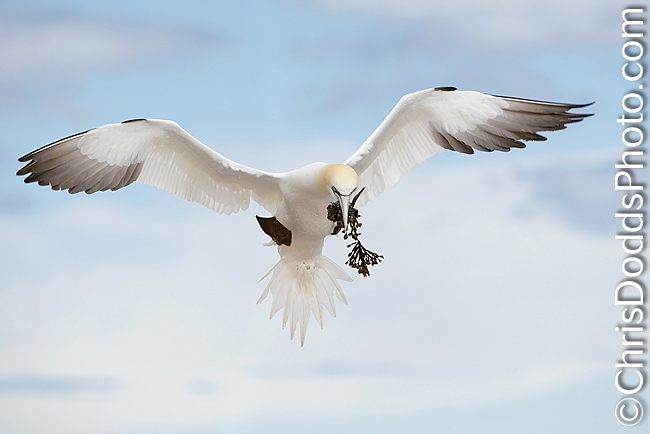
Northern Gannet landing with sea weed (Morus Bassanus, Fou de Bassan, NOGA) Parc national de l'Île-Bonaventure-et-du-Rocher-Percé, Bonaventure Island, Quebec Image Copyright ©Christopher Dodds www.chrisdoddsphoto.com All Rights Reserved. Canon EOS 1D MKIII, 70-200mm F2.8 IS, (@200mm). ISO 400, F5.6 1/2500s Manual. Canon 580 EXII Flash in Manual - full power. Full Frame. PURCHASE A PRINT or LICENSE IMAGE FOR PUBLICATION HERE.

Gannets Galore Bird Photography Photo Tour / Workshop / Safari June 10-12 & August 13-15, 2010

I still have limited space available for my June 10-12 and August 13-15, 2010 Gannets Galore Photo Tour / Workshop / Safari (June 14-16 & 18-20 are SOLD OUT; Thanks to those who registered). This is THE best place on earth to learn the art of avian photography. There is non-stop action and a plethora of artistic models at close range. Sure to be the photographic adventure of your lifetime, the daily (weather permitting) four hour Zodiac cruise under the largest Northern Gannet colony in the world offers close views of thousands of Black-legged Kittiwakes, Common Murres, Razorbills, grey seals & whales and, of course, diving Gannets.

Be sure to read client TESTIMONIALS HERE

JUNE 10-12, 2010 GANNETS GALORE INFORMATION HERE

AUGUST 13-15, 2010 GANNETS GALORE INFORMATION HERE


Lincoln's Sparrow & Point Pelee Workshop / Safari Report

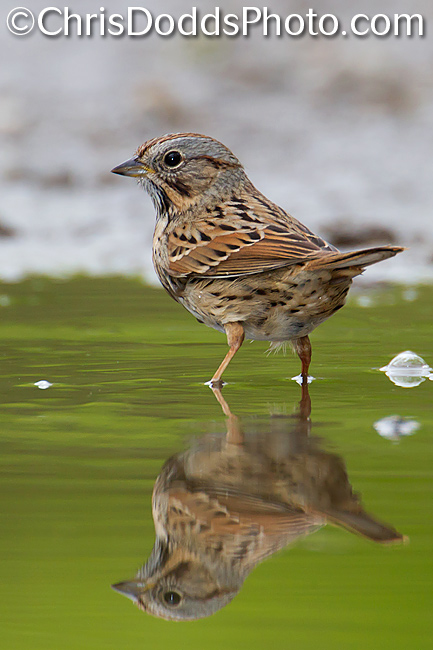
Lincoln's Sparrow vertical look-back with reflection, Melospiza lincolnii (Bruant de Lincoln) Point Pelee National Park of Canada (Southwestern Ontario, Canada). Image Copyright ©Christopher Dodds www.chrisdoddsphoto.com All Rights Reserved. Canon EOS-1D MKIV, 500mm F4L IS USM and 2X II Tele-extender. ISO 800, 1/200s F9. Canon 580 EX II Flash in manual mode. Tripod and Wimberley Head II. CLICK HERE TO PURCHASE A PRINT or LICENSE IMAGE FOR PUBLICATION.

Point Pelee Spring Songbird bird photography workshop / safari report

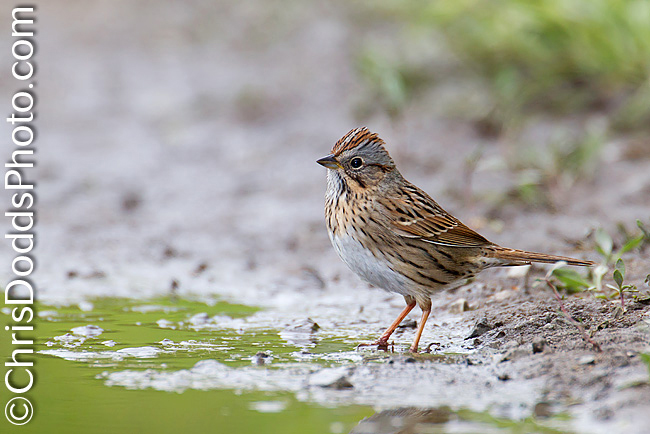
Just back from leading my annual spring bird photography workshop / safari at Point Pelee National Park near Leamington, Ontario. I was joined by Robert Parent & Sylvie Desjardins of Lac-Beauport (Quebec), Gail Bisson of Sydney (Nova Scotia), Multiple workshop veterans (and friends) Rick & Melody Curtis of Flower Mound (Texas) and Jerry Purdy of Kalamazoo (Michigan); a fine crew. There was lots of speculation about what kind of photography would be possible with the early leaf-out and unusually warm spring. Things did start slowly and, in keeping with tradition Jerry Purdy had to leave early to take care of business; sparking the start to the best spring migration I've ever witnessed at Point Pelee (sorry Jerry). The days are all blurred into one in my memory, but once things got started, the quantity and quality of birds dripping out of trees keep increasing. Unfortunately, the most memorable moments were the afternoon after the workshop had ended, so only Rick and Melody Curtis joined Julie and I for the dozens of Blackburnian Warblers dripping from the trees in Tilden Woods that afternoon. The next morning brought a gorgeous male Kirtland's Warbler that stuck around all day on East beach. Suffice it to say; it was the best I have ever seen it at Point Pelee! My only wish would have been for everyone in the workshop to have witnessed Pelee's best.Lincoln's Sparrow , Melospiza lincolnii (Bruant de Lincoln) Point Pelee National Park of Canada (Southwestern Ontario, Canada). Image Copyright ©Christopher Dodds www.chrisdoddsphoto.com All Rights Reserved. Canon EOS-1D MKIV, 500mm F4L IS USM and 2X II Tele-extender. ISO 800, 1/200s F9. Canon 580 EX II Flash in manual mode. Tripod and Wimberley Head II. CLICK HERE TO PURCHASE A PRINT or LICENSE IMAGE FOR PUBLICATION.

Hydrophobia to the rescue

The weather ranged from cold to freezing cold with a fair mix of rain and cloud. Greg Downing (NatureScapes.net) and Bian Erwin (Think-Tank Photo) conspired to send me a rather thoughtful assortment of rain gear for my camera as an early birthday gift (it was my birthday on May 6 when I drove to Pelee); suffice it to say that their timing was impeccable and the Hydrophobia 300-600, Hydrophobia 70-200 & Hydrophobia 70-200 Flash were all put to good use - watch for a full review after more field testing during my Bonaventure Island Gannets Galore workshop series in June. We even endured hail and sleet between a rather monsoonish downpour while photographing at our set-ups at Rondeau Provincial Park. This gear is the ONLY camera rain covers that have ever worked for me; Thank-you Greg & Brian.

Kudos...

"Hey Chris, 

We wanted to thank you for the great time and wonderful experience.  It was just awesome to see so many birds including all the Warblers and Tanagers all in one area.  "I got a feeling" that having the rare opportunity to photograph and hear the Kirkland Warbler singing was an experience that many birders would have been very envious of.  The Yellow Billed Cuckoo was outstanding to see and we were got some marvelous shots even for the Texas Zoomers.  We had the opportunity to take great shots of the Northern Parula, Tennessee, Chestnut-sided, Black-throated Blue, Cape May, Black-throated Green, Blackburnian, Pine, Black-and-white and  American Redstart Warblers.  We saw many other birds and Warblers adding to the excitement of the workshop (even the "OMG" Bay-breasted Warbler).

It was a fun workshop and a pleasure to met Julie, Jerry, Robert, Sylvie, and Gail.  Thanks again for all your advice, counsel and exercise (hahaha).  Looking forward to another workshop in the future and anytime you are in Texas give us a shout.  
Sincerely,
Texas Zoomers (aka Rick & Melody Curtis from Flower Mound, Texas)"

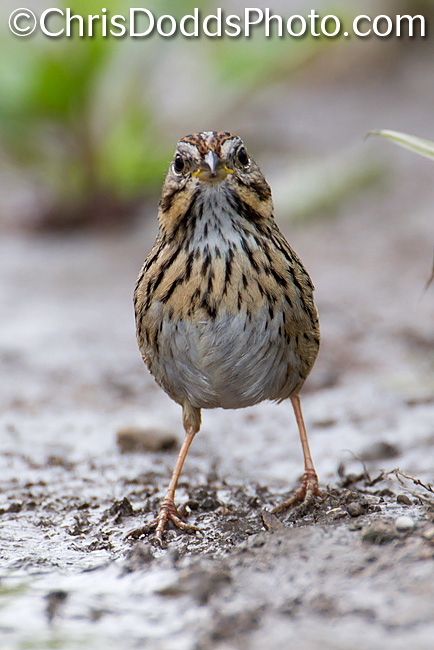
Lincoln's Sparrow with crest raised, Melospiza lincolnii (Bruant de Lincoln) Point Pelee National Park of Canada (Southwestern Ontario, Canada). Image Copyright ©Christopher Dodds www.chrisdoddsphoto.com All Rights Reserved. Canon EOS-1D MKIV, 500mm F4L IS USM and 2X II Tele-extender. ISO 800, 1/200s F9. Canon 580 EX II Flash in manual mode. Tripod and Wimberley Head II. CLICK HERE TO PURCHASE A PRINT or LICENSE IMAGE FOR PUBLICATION.Lincoln's Sparrow vertical portrait, Melospiza lincolnii (Bruant de Lincoln) Point Pelee National Park of Canada (Southwestern Ontario, Canada). Image Copyright ©Christopher Dodds www.chrisdoddsphoto.com All Rights Reserved. Canon EOS-1D MKIV, 500mm F4L IS USM and 2X II Tele-extender. ISO 800, 1/100s F9. Canon 580 EX II Flash in manual mode. Tripod and Wimberley Head II. CLICK HERE TO PURCHASE A PRINT or LICENSE IMAGE FOR PUBLICATION.

Lincoln's Sparrow Melospiza lincolnii (Bruant de Lincoln, LISP)

A species only seen during migration for most Great Lakes Region birder, William Brewster (1936, in Bent 1968) describes the Lincoln's Sparrow as "a keen, intelligent little traveler, evidently, quite alive to the fact that dangers threatened at all times, but too cool-headed and experienced to be subject to the needless and foolish panics which seize upon many of the similar birds." Lincoln's Sparrows are remarkable for staying well hidden, but a careful observer, with patience, can often get quite a good look. These Sparrows often raise their crown feathers when alert or concerned, giving their heads a bit of a peaked appearance. The Lincoln's Sparrow, Melospiza lincolnii, bruant de lincoln, is a medium-sized sparrow. Adults have dark-streaked olive-brown upperparts with a light brown breast with fine streaks, a white belly and a white throat. They have a brown cap with a grey stripe in the middle, olive-brown wings and a narrow tail. Their face is grey with brown cheeks, a brown line through the eye and an eye ring. They are somewhat similar in appearance to the Song Sparrow. Their breeding habitat is wet thickets or shrubby bogs across Canada, Alaska and the northeastern and western United States; this bird is less common in the eastern parts of its range. The nest is a well-concealed shallow open cup on the ground under vegetation. These birds migrate to the southern United States, Mexico and northern Central America; they are passage migrants over much of the United States, except in the west. They forage on the ground in dense vegetation, mainly eating insects and seeds.
They are very secretive. Their song is a musical trill, but this bird is often not seen or heard even where they are common. This bird was named by Audubon after his friend, Thomas Lincoln, of Dennysville, Maine. Lincoln shot the bird on a trip with Audubon to Nova Scotia in 1834, and Audubon named it "Tom's Finch" in his honor.

Great Grey Owls IN LOVE & Canon EF 100-400mm f/4.5-5.6 L IS USM Lens saves the day

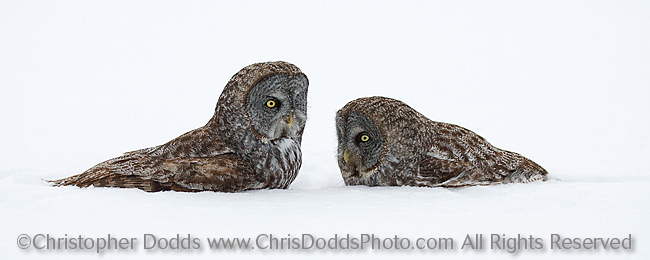
Great Grey Owls IN LOVE (Strix nebulosa Chouette Lapone) January 2005 Bracebridge, Ontario, Canada ©Christopher Dodds http://www.chrisdoddsphoto.com All Rights Reserved. Canon EOS 1D Mark II, 100-400mm @ 120mm. ISO 250, F6.3 1/800s Manual Exposure. CLICK HERE TO PURCHASE A PRINT or LICENSE IMAGE FOR PUBLICATION.
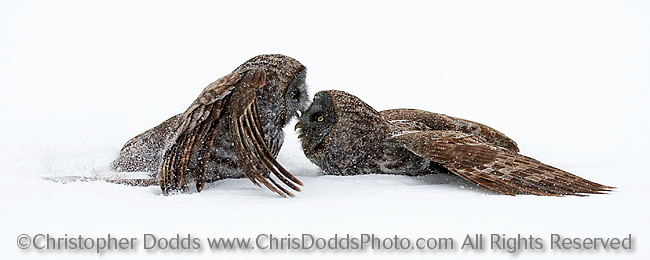
Great Grey Owls IN LOVE (Strix nebulosa Chouette Lapone) January 2005 Bracebridge, Ontario, Canada ©Christopher Dodds http://www.chrisdoddsphoto.com All Rights Reserved. Canon EOS 1D Mark II, 100-400mm @ 120mm. ISO 250, F6.3 1/800s Manual Exposure. CLICK HERE TO PURCHASE A PRINT or LICENSE IMAGE FOR PUBLICATION.
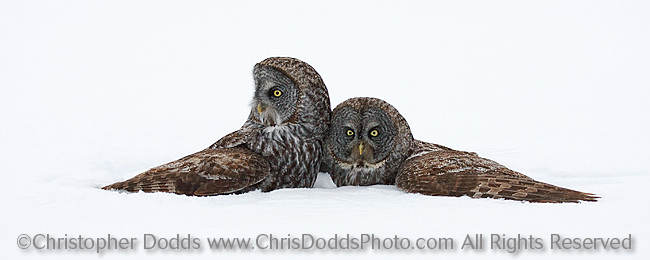
Great Grey Owls IN LOVE (Strix nebulosa Chouette Lapone) January 2005 Bracebridge, Ontario, Canada ©Christopher Dodds http://www.chrisdoddsphoto.com All Rights Reserved. Canon EOS 1D Mark II, 100-400mm @ 120mm. ISO 250, F6.3 1/800s Manual Exposure. CLICK HERE TO PURCHASE A PRINT or LICENSE IMAGE FOR PUBLICATION.
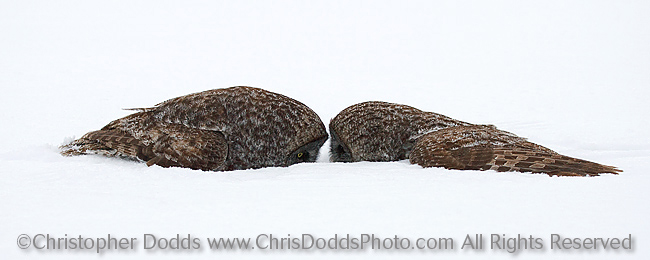
Great Grey Owls IN LOVE (Strix nebulosa Chouette Lapone) January 2005 Bracebridge, Ontario, Canada ©Christopher Dodds http://www.chrisdoddsphoto.com All Rights Reserved. Canon EOS 1D Mark II, 100-400mm @ 120mm. ISO 250, F6.3 1/800s Manual Exposure. CLICK HERE TO PURCHASE A PRINT or LICENSE IMAGE FOR PUBLICATION.
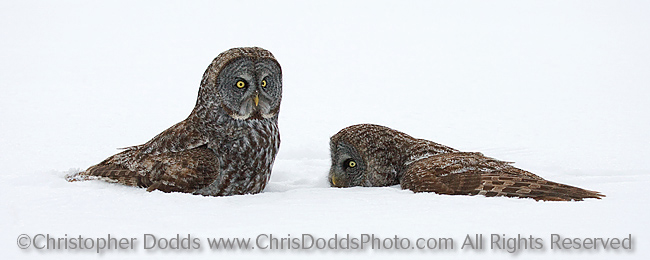
Great Grey Owls IN LOVE (Strix nebulosa Chouette Lapone) January 2005 Bracebridge, Ontario, Canada ©Christopher Dodds http://www.chrisdoddsphoto.com All Rights Reserved. Canon EOS 1D Mark II, 100-400mm @ 120mm. ISO 250, F6.3 1/800s Manual Exposure. CLICK HERE TO PURCHASE A PRINT or LICENSE IMAGE FOR PUBLICATION.
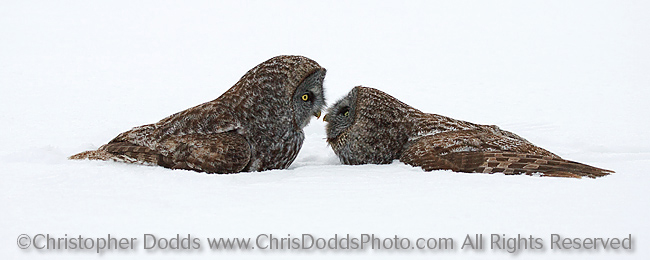
Great Grey Owls IN LOVE (Strix nebulosa Chouette Lapone) January 2005 Bracebridge, Ontario, Canada ©Christopher Dodds http://www.chrisdoddsphoto.com All Rights Reserved. Canon EOS 1D Mark II, 100-400mm @ 120mm. ISO 250, F6.3 1/800s Manual Exposure. CLICK HERE TO PURCHASE A PRINT or LICENSE IMAGE FOR PUBLICATION.
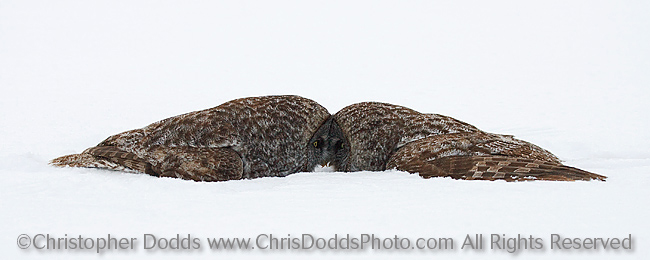
Great Grey Owls IN LOVE (Strix nebulosa Chouette Lapone) January 2005 Bracebridge, Ontario, Canada ©Christopher Dodds http://www.chrisdoddsphoto.com All Rights Reserved. Canon EOS 1D Mark II, 100-400mm @ 120mm. ISO 250, F6.3 1/800s Manual Exposure. CLICK HERE TO PURCHASE A PRINT or LICENSE IMAGE FOR PUBLICATION.
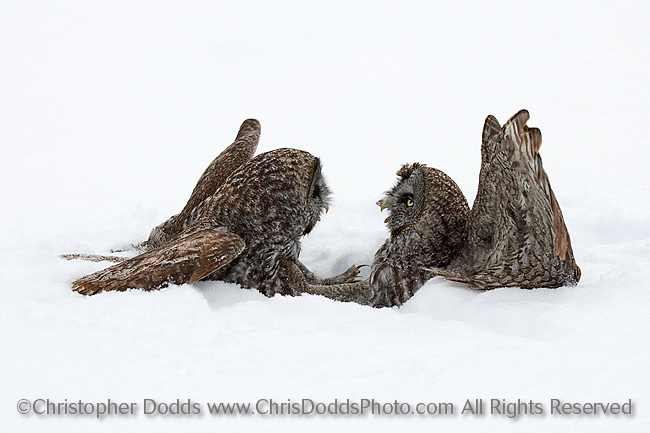
Great Grey Owls IN LOVE (Strix nebulosa Chouette Lapone) January 2005 Bracebridge, Ontario, Canada ©Christopher Dodds http://www.chrisdoddsphoto.com All Rights Reserved. Canon EOS 1D Mark II, 100-400mm @ 120mm. ISO 250, F6.3 1/800s Manual Exposure. CLICK HERE TO PURCHASE A PRINT or LICENSE IMAGE FOR PUBLICATION.
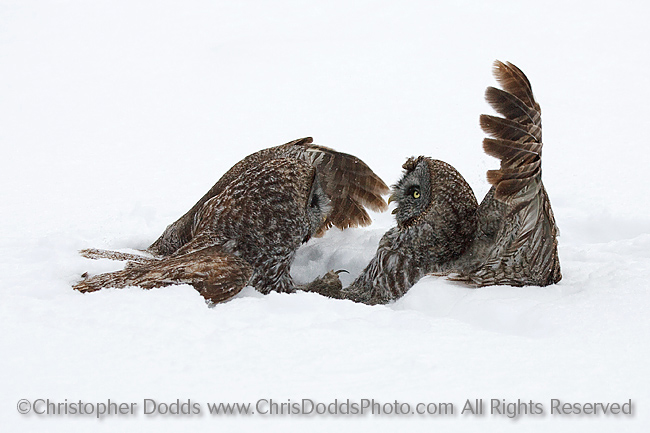
Great Grey Owls IN LOVE (Strix nebulosa Chouette Lapone) January 2005 Bracebridge, Ontario, Canada ©Christopher Dodds http://www.chrisdoddsphoto.com All Rights Reserved. Canon EOS 1D Mark II, 100-400mm @ 120mm. ISO 250, F6.3 1/800s Manual Exposure. CLICK HERE TO PURCHASE A PRINT or LICENSE IMAGE FOR PUBLICATION.

LEARN ABOUT MY WINTER SNOWY OWL WORKSHOPS HERE


Canon EF 100-400mm f/4.5-5.6 L IS USM Lens saves the day!

There’s no shortage of critics when it comes to Canon’s EF 100-400mm f/4.5-5.6 L IS USM Lens; just google it and see how many people complain about the image quality and an apparent lack of consistently sharp results from one copy to another. I’m not about to try to convince you it is as sharp as my primary telephoto 500mm F4 IS USM lens, because it isn’t! It is a sharp lens, and a very versatile one to carry over your shoulder on a second camera body.The Canon EF 100-400mm f/4.5-5.6 L IS USM Lens has, perhaps,  the most useful focal length range that includes the longest focal length found in a Canon zoom lens - 400mm. This long focal length and focal length range combine with very good image and build quality to make the 100-400 one of the most popular serious wildlife and sports lenses Canon sells

While photographing Great Grey Owls in Quebec and Ontario during the great irruption that occurred during the winter of 2004-2005, I always had my second camera body mounted on my trusty EF 100-400mm f/4.5-5.6 L IS USM lens, and many of the images I made with it have since been published around the globe and have been amongst my most successful print sales. Simply put: this is perhaps the most special moment I've witnessed in nature (and there have been many), and without the versatility of this zoom lens, it would have been missed. There are very few people on this earth that have witnessed this behaviour, and even fewer that have photographed it. You see, I was walking around with my 500mm and a 2X tele-extender, so the resulting images would have been very, very different.

In my mind, there simply is no other lens out there that offers so much versatility for your money. Canon has been busy replacing many of their lenses with new, improved optics, coatings and adding the latest image stabilizer systems; I do hope that they have a version II in the plans soon, all good things can be better, but the sequence of events recorded above (and the 51 other images in it) would not have been possible without it.

The Great Grey Owl

The Great Grey Owl or Lapland Owl (Strix nebulosa, Chouette lapone) is a very large owl, distributed across the Northern Hemisphere. In some areas it is also called the Great Gray Ghost, Phantom of the north, Cinerous Owl, Spectral Owl, Lapland Owl, Spruce Owl, Bearded Owl and Sooty Owl.
Courtship involves feeding and mutual preening between mates and begins in midwinter. The male typically approaches the female, holding food in its beak, which is passed with both birds closing their eyes. The male selects possible nest sites and attracts its mate with calls. Several sites are inspected before she chooses the nest site. The Great Gray Owl nests primarily in stick nests made by hawks, ravens, or crows, in the hollowed out top of large-diameter snags, or on the top of clumps of mistletoe, and in Europe sometimes on the forest floor. Northern Goshawks are very common providers of nest sites for Great Gray Owls. They also readily take to artificial platforms or nests placed in suitable habitat. Nests are usually in a forest, but with a large clearing or meadow located within 1.3km (0.8 miles). Unlike most other Owls, nests are usually tidied up and refurbished before use. Nest linings include conifer needles, deer hair, moss, and shredded bark. 2 to 5 (average 3) eggs are laid, each separated by 1 to 2 days. Incubation commences with the first egg laid and lasts 28 to 29 days. The female does all incubation and the male provides all food to the female and young. The female tears food into small pieces and feeds the young. Young leave the nest at 3 to 4 weeks and can climb well. Fledging occurs after about 8 weeks and young remain near the nest for several months, with the female caring for them.
Great Gray Owls are single-brooded but will readily lay replacement clutches if the first clutch or brood is lost. Males and females aggressively defend nests and have been known to drive off predators as large as black bears. Among other threats, ravens and Great Horned Owls prey on eggs and nestlings.
Great Gray Owls are semi-nomadic, with irregular site or mate fidelity between years. They tend to settle and nest in areas with high food resources and this may lead them to occupy the same nest for several years or move off to new areas. Nesting territories are defended from other Great Gray Owls, but foraging areas are widely overlapping. This leads to higher than expected densities, for a large bird of prey. In areas of good habitat this may be as high as 1 pair/58 hectares (5 pairs/square mile).
These birds wait, listen, and watch for prey, then swoop down; they also may fly low through open areas in search of prey. Their large facial disks, also known as "ruffs", focus sound, and the asymmetrical placement of their ears assists them in locating prey, because of the lack of light during the late and early hours in which they hunt. On the nesting grounds, they mainly hunt at night and near dawn and dusk; at other times, they are active mostly during the night. They have excellent hearing, and may locate (and then capture) prey moving beneath 60 cm (2 feet) of snow in a series of tunnels solely with that sense. These owls can crash through snow that could support the weight of a 180-pound person.[citation needed] Unlike the more versatile eagle and horned owls, Great Grey Owls rely almost fully upon small rodents, with voles being their most important food source. Locally, alternative prey animals (usually comprising less than 20% of prey intake) include hares, moles, shrews, weasels, thrushes, grouse, Gray Jays, small hawks and ducks. Great Grey Owl juveniles may themselves fall prey to bears, fishers, and large hawks, especially Northern Goshawks; while adults may fall prey to Bubo owls and lynxes.
Every few years, great grey owls move—usually en masse—from their boreal breeding grounds, typically in search of food. The last great irruption (as these movements are called) happened in 2004-2005. It was so large that it caught the attention of photographers, bird lovers, environmentalists, and the mainstream media from around the world.

The Northern Parula & Canon Professional Services (CPS) Revamped

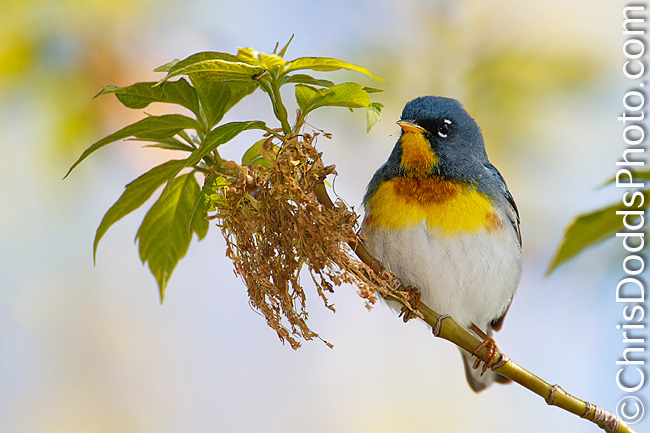
 Northern Parula Male , Parula americana (Paruline à collier) Point Pelee National Park of Canada (Southwestern Ontario, Canada). Image Copyright ©Christopher Dodds www.chrisdoddsphoto.com All Rights Reserved. Canon EOS-1D MKIII, 500mm F4L IS USM and 2X II Tele-extender. ISO 400, 1/500s F9 Manual mode. Canon 580 EX II Flash in manual mode. Tripod and Wimberley Head II. CLICK HERE TO PURCHASE A PRINT or LICENSE IMAGE FOR PUBLICATION.
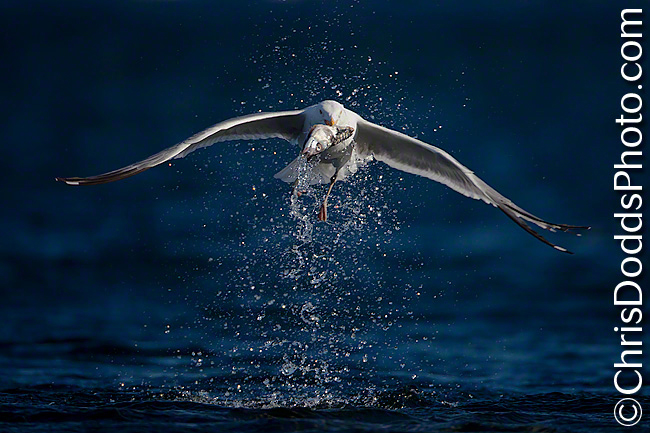
Just going through some images from last year's Point Pelee bird photography workshop while preparing for this years. Photographing migrant Warblers is probably the most challenging type of bird photography; there is no food, bird calls or water drips to attract your subject. There's no choosing nice perches, and choosing great backgrounds is a result of your ability to move faster than your speedy subject. Migrant bird photography at a place like Pelee can be quite rewarding, though, many of the tree-top dwellers forage for fuel at near eye-level while migrating. The total number of bird species recorded at Point Pelee is 372, of which at least 340 of these species have been recorded during the spring migration period. The stream of birds in the spring is not a steady flow from the south. The birds usually arrive in intermittent waves, a pattern unique to eastern North America. In some years these are well marked but, in others the fluctuations in numbers and variety is so meagre that a wave in difficult to detect. A "wave" occurs as a result of a warm weather front advancing from the south or southeast meeting a cold weather front from the north or northwest. Two situations will cause the birds to descend. One is when the two fronts meet at ground level. The other is when a warm front in which migrating birds are flying overrides a cold front. The rising warm air becomes cooler with the increasing altitude until it is finally too cold for the birds and they descend.

If these nocturnal (night-time) migrants find themselves over Lake Erie near sunrise they must continue onwards or drown. After flying perhaps hundreds of kilometres in one night, it is this extra 30 to 40 kilometres across the lake that really demands their last strength. This explains why exhausted birds are sometimes found at the tip of the Point. A similar situation, but on a larger scale, occurs when migrants cross the 800 to 1000 kilometres of the Gulf of Mexico. If the weather is good they continue inland in one continuous flight without stopping, but with a north wind and rain they descend on the coast in great numbers, often in an exhausted state.

Do consider joining me at Point Pelee National Park this May 8-12, 2010 as I still have two spots available due to last minute cancellation. More information can be found HERE.

Canon Professional Service Revamped in Canada

Canon Canada has announced their revamped paid CPS program. Choose between Gold and platinum paid levels HERE. It seems to me that we are getting more for less, when compared the the Canon USA CPS program HERE while the Canon EUROPE CPS program is currently still offered FREE HERE.

There's a rumor circulating in Canada that the current discount on professional camera bodies and L Series lenses that Canadian CPS members currently enjoy will no longer be offered; this because there is no mention of it on the new CPS web site. Well my sources at Canon Canada tell me that CPS benefits never really did include a discount, it was offered to CPS members by the Canon Canada marketing people to offset the currency exchange rate that sent many pros across the border into the USA to shop. The good new is that the discount is still offered, and that there is no forseen end to it.

Nikon professional services, or NPS, in the USA is offered FREE HERE, in Canada, it's  FREE HERE and in Europe (Nikon Professional User) it's  FREE HERE

Photographing the Northern Fulmar (Fulmarus glacialis) of Iceland

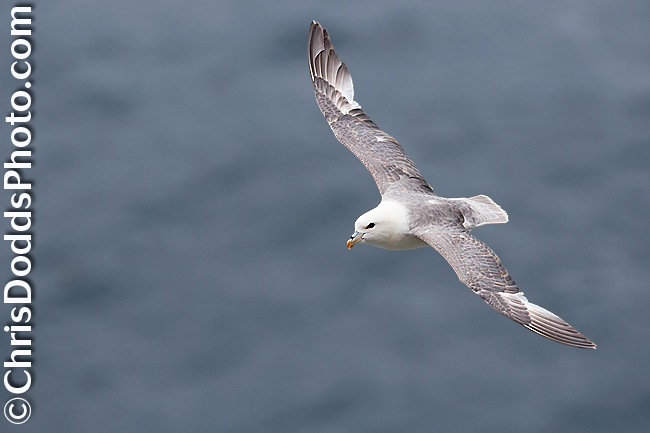
Northern Fulmar Portrait , Fulmarus glacialis (Fulmar boréal) Látrabjarg, Iceland ©Christopher Dodds www.chrisdoddsphoto.com All Rights Reserved Canon EOS-1DsMKII, 300mm F2.8IS. ISO 400, 1/320s F5.6 Manual mode. Canon 550 EX Flash in manual mode. Tripod and Wimberley Head. CLICK HERE TO PURCHASE A PRINT OR LICENSE IMAGE FOR PUBLICATION.

Northern Fulmar Dorsal View , Fulmarus glacialis (Fulmar boréal) Látrabjarg, Iceland ©Christopher Dodds www.chrisdoddsphoto.com All Rights Reserved Canon EOS-1DsMKII, 300mm F2.8IS. ISO 250, 1/1000s F4.5 Manual mode. Canon 550 EX Flash in manual mode. Hand-held. CLICK HERE TO PURCHASE A PRINT OR LICENSE IMAGE FOR PUBLICATION.

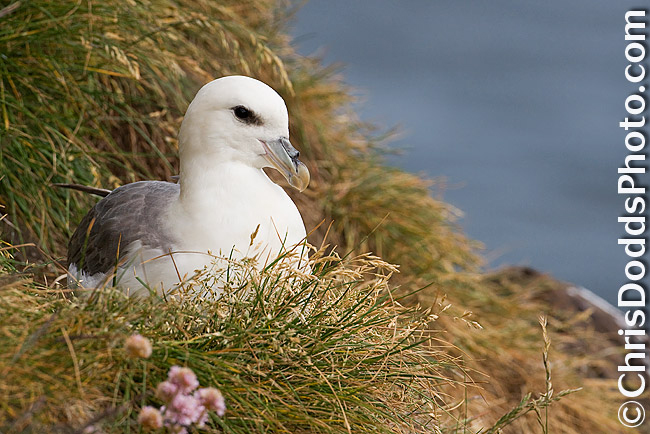
Northern Fulmar on nest , Fulmarus glacialis (Fulmar boréal) Látrabjarg, Iceland ©Christopher Dodds www.chrisdoddsphoto.com All Rights Reserved Canon EOS-1DsMKII, 500mm F4IS. ISO 400, 1/800s F8 Manual mode. Canon 550 EX Flash in manual mode. Tripod and Wimberley Head. CLICK HERE TO PURCHASE A PRINT OR LICENSE IMAGE FOR PUBLICATION.

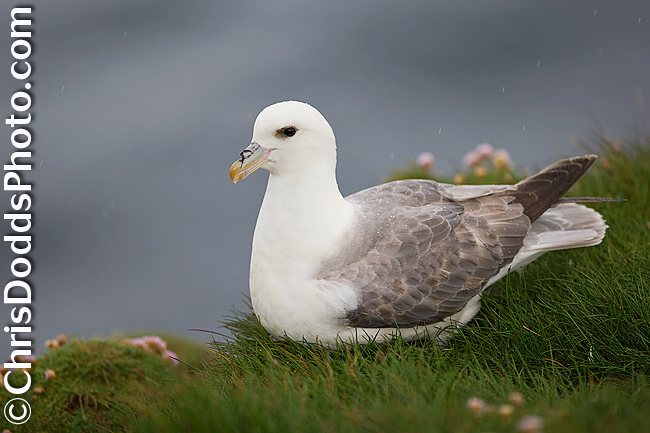
Northern Fulmar on cliff edge in rain , Fulmarus glacialis (Fulmar boréal) Látrabjarg, Iceland ©Christopher Dodds www.chrisdoddsphoto.com All Rights Reserved Canon EOS-1DsMKII, 300mm F2.8IS. ISO 250, 1/800s F2.8 Manual mode. Canon 550 EX Flash in manual mode. Tripod and Wimberley Head. CLICK HERE TO PURCHASE A PRINT OR LICENSE IMAGE FOR PUBLICATION.

Cool Northern Fulmar Facts:

  • The Northern Fulmar is one of the longest-lived birds. Data from one study indicate a mean adult life span of about 32 years. In Scotland, several Northern Fulmars banded as adults in 1951 were still breeding in 1990, at ages likely greater than 50 years.
  • The Northern Fulmar begins breeding at an exceptionally old age. Most do not breed until they are at least 8 to 10 years old; one study found an individual that started breeding at age 20.
  • The Northern Fulmar is well known among commercial fishermen for its avid scavenging of offal thrown from whaling and fishing boats.
  • The population of Northern Fulmars in the northeast Atlantic has dramatically increased over the past 250 years. Once only one colony was found in northern Iceland, and none off the Faeroes or the British Isles. Now hundreds of colonies exist across all the coasts of these islands. It is unclear whether this change has resulted from natural oceanographic changes, from increased food availability from fishing vessels, or from some other factor.
  • The Northern Fulmar can dive to a depth of at least 3 meters (10 feet).

LensFlare Live & NatureScapes Radio LIVE:

On Tuesday, April 6th, 2010, I was honoured to be the first invited guest on the new NatureScapes Radio Live. Hosted by LensFlare 35's very own Dave Warner, with Greg Downing and E.J. Peiker of NatureScapes.net. Be sure to give it a listen HERE:

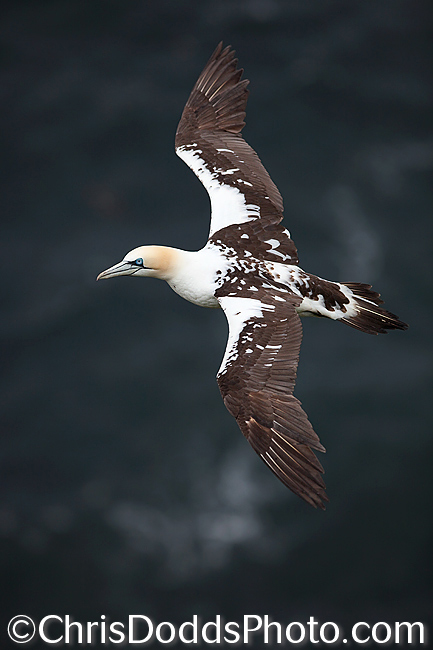
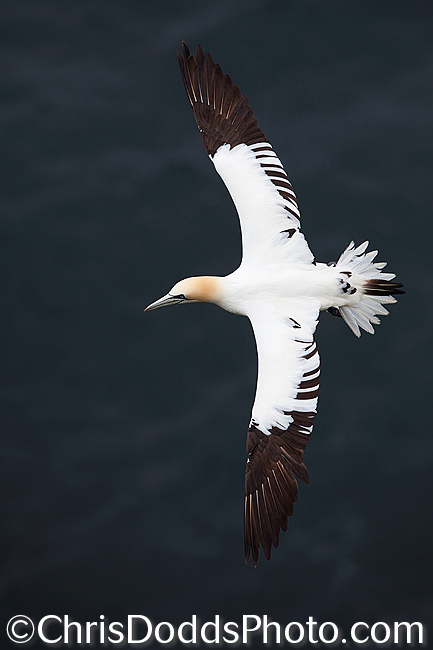
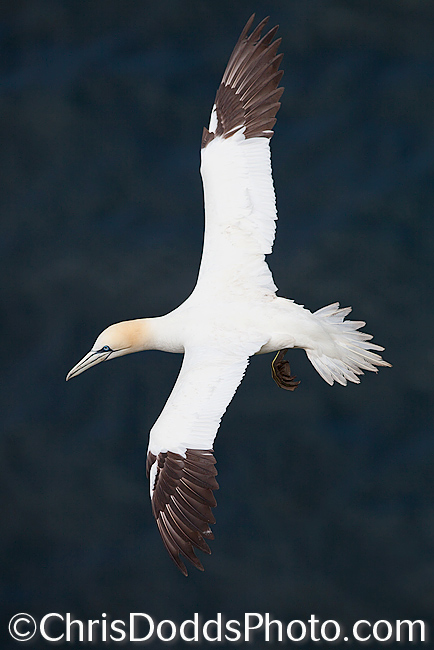
How to age the Northern Gannet (Morus bassanus)


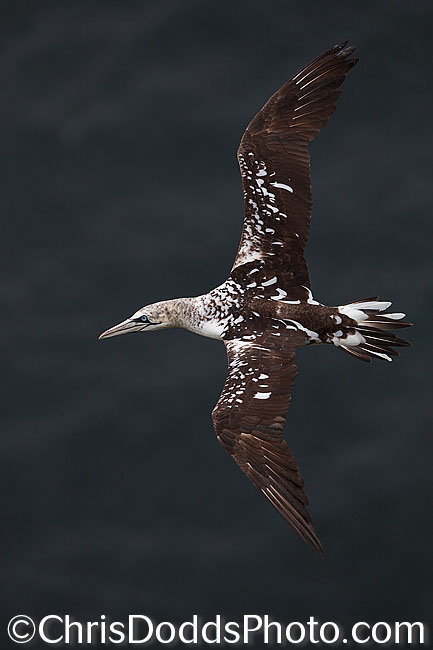
Northern Gannet second year Dorsal View, Morus Bassanus, Fou de Bassan Parc national de l'Île-Bonaventure-et-du-Rocher-Percé, Bonaventure Island, Quebec Image Copyright ©Christopher Dodds www.chrisdoddsphoto.com All Rights Reserved. Canon EOS 5D MKII, 300mm F2.8 IS Hand-held.  ISO 250, F4 1/2500s Manual. Full Frame. CLICK HERE TO PURCHASE A PRINT or LICENSE IMAGE FOR PUBLICATION.

Northern Gannet third year Dorsal View, Morus Bassanus, Fou de Bassan Parc national de l'Île-Bonaventure-et-du-Rocher-Percé, Bonaventure Island, Quebec Image Copyright ©Christopher Dodds www.chrisdoddsphoto.com All Rights Reserved. Canon EOS 5D MKII, 300mm F2.8 IS Hand-held.  ISO 250, F3.5 1/2500s Manual. Full Frame. CLICK HERE TO PURCHASE A PRINT or LICENSE IMAGE FOR PUBLICATION.

Northern Gannet fourth year Dorsal View, Morus Bassanus, Fou de Bassan Parc national de l'Île-Bonaventure-et-du-Rocher-Percé, Bonaventure Island, Quebec Image Copyright ©Christopher Dodds www.chrisdoddsphoto.com All Rights Reserved. Canon EOS 5D MKII, 300mm F2.8 IS Hand-held.  ISO 250, F4 1/2500s Manual. Full Frame. CLICK HERE TO PURCHASE A PRINT or LICENSE IMAGE FOR PUBLICATION.
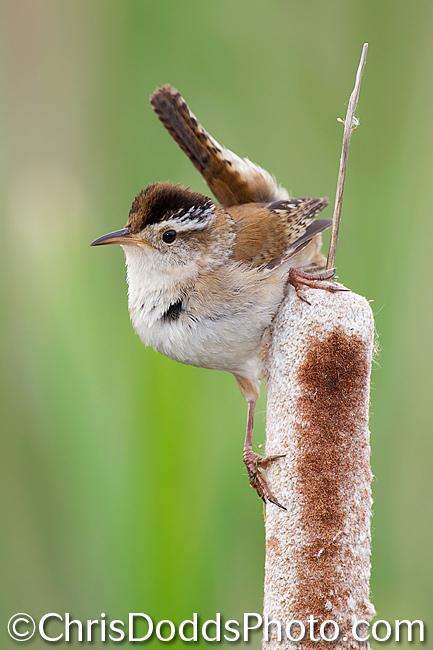
Northern Gannet fifth year Mature Adult Dorsal View, Morus Bassanus, Fou de Bassan Parc national de l'Île-Bonaventure-et-du-Rocher-Percé, Bonaventure Island, Quebec Image Copyright ©Christopher Dodds www.chrisdoddsphoto.com All Rights Reserved. Canon EOS 5D MKII, 300mm F2.8 IS Hand-held.  ISO 250, F4.5 1/2500s Manual. Full Frame. CLICK HERE TO PURCHASE A PRINT or LICENSE IMAGE FOR PUBLICATION.
After spending more than 350 days ,over the years, up at the Northern Gannet colony on Bonaventure Island, I have quite a collection of images. Last year, I found a new spot to photograph vertical dorsal views of these striking seabirds. Spending time with your subject is the best way to study and learn about their every behavior. Always remember to try to cover every aspect of behavior and every age possible. Remember that you can turn your camera to vertical for a fresh perspective.

There are still a couple of spots left for the June 18-20, 2010 Gannets Galore Photo Safari Workshop

Viola Wildlife Photographer of the Year Competition

If you haven't done so already, there's still time to enter this prestigious competition. Entries can be submitted HERE until 9AM, Monday, March 8th, 2010. Be sure to read the new rules, most notably the need to submit images from a DSLR with a minimum 10 Mega pixel resolution. Why the new rules? ... Who knows? You are allowed to lightly crop your image, so perhaps the rule would have been better stated as a minimum file size, instead of making every image from the single most popular wildlife photography camera in recent history, the Canon EOS 1D Mark II (and the EOS 1D Mark IIN), ineligible.

Even when this was called the BBC Wildlife Photographer of the year, I though (and still do) that this competition should be called the wildlife IMAGE of the year competition. I really do feel that such a prestigious title should be awarded to the photographer with the best portfolio of wildlife images. One lucky shot shouldn't earn the title of Nature Photographer of the year in my humble opinion.

Canon EOS 5D Mark II Firmware Update 2.0.3

Canon has announced that the long awaited, video-related firmware for its EOS 5D Mark II will be available from mid-March. Firmware version 2.0.3 enables full 1080p HD video recording at 24, 25 and 29.97fps to match the PAL and NTSC broadcast standards. It also adds a new histogram display while shooting movies and allows users to manually control sound recording levels. Audio sampling frequency has also been increased to match broadcast material standards.
Press Release:
Canon adds 24 and 25fps HD Movie recording 
to the EOS 5D Mark II with Firmware 2.0.3
London, 2nd March 2010 – Canon today pre-announces the release of a firmware update for the multiple award-winning EOS 5D Mark II. Originally announced in late 2009, the update adds 24* and 25 frames per second (fps) recording to the camera’s EOS MOVIE video function, and will be available as a free download from the middle of March.

Developed following feedback from photographers and cinematographers, Firmware 2.0.3 further enhances the EOS 5D Mark II’s excellent video performance. The addition of new frame rates expands the camera’s video potential, providing film makers with the ability to shoot 1080p Full HD footage at 24fps (actual 23.976fps) – the optimum frame rate for cinematic video. 25fps support at both 1920x1080 and 640x480 resolutions will allow users to film at the frame rate required for the PAL broadcast standard, while the new firmware will also change the 30fps option to the NTSC video standard of 29.97fps. 

A new histogram display for shooting movies in manual exposure, shutter-priority (Tv) and aperture-priority (Av) have been added, and exposure modes will also be available in movie mode. Improved audio functionality will allow users to set sound record levels manually using a sound-level meter displayed on the LCD screen. The audio sampling frequency has also been increased from 44.1KHz to 48KHz, providing the optimum audio signal typically required for professional or broadcast material.

With its full frame CMOS sensor and compatibility with Canon’s wide range of premium lenses, the EOS 5D Mark II is already recognised for its outstanding HD video performance. Launched in September 2008, the camera immediately created a wide range of new possibilities for photographers and videographers, and the addition of new frame rates and manual audio levels extends those possibilities even further – allowing movie makers to shoot stunning movies to suit practically any creative purpose.
Extreme sports photographer Richard Walch was one of the first to be given the chance to use the newly updated EOS 5D Mark II to shoot the snowboarding movie “I Love My Friends”. Commenting on the EOS 5D Mark II’s video performance, Richard said: “The addition of the new frame rates opens up a whole new range of possibilities. If you’re a cinematographer, independent film maker or just enthusiastic about making your own movies, get out there and give it a try”. 

“I Love My Friends” shot by Richard Walch on the EOS 5D Mark II with the new firmware includes a look behind the scenes video is available to view at http://www.canon-europe.com/eos5dmarkII. 

The firmware will be available to download from mid-March from the Canon website http://www.canon.com/eos-d/


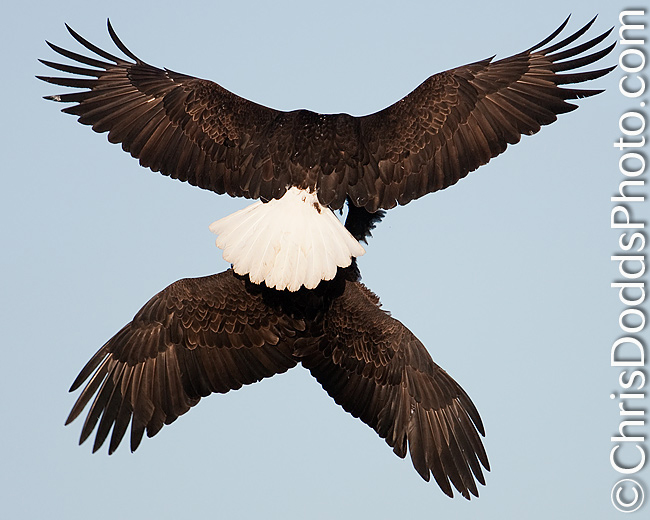
American Bald Eagles Tumbling - Breaking the rules - Save 25% off Point Pelee Annual Pass

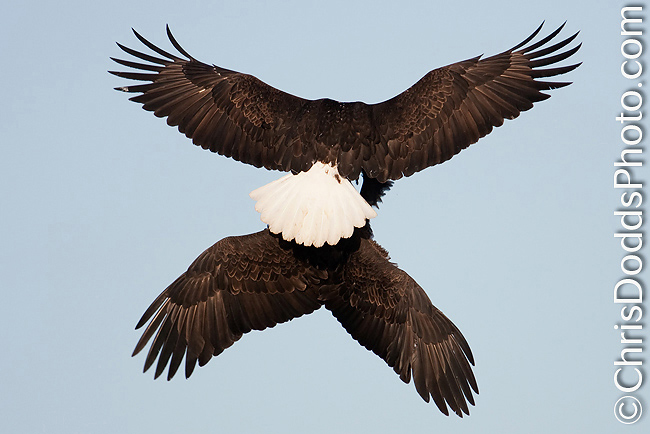
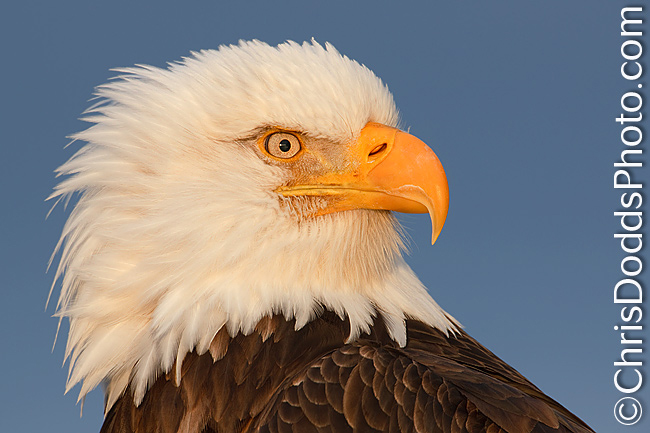
 Bald Eagle Tumble Abstract (Haliaeetus leucocephalus Pygarge à tête blanche) Kachemak Bay, Homer Alaska, USA. ©Christopher Dodds http://www.chrisdoddsphoto.com All Rights Reserved. Canon EOS 1D Mark III, 500mm F4 IS, 1.4X II Tele-converter, Gitzo tripod and Wimberley Head II. ISO 400, F5.6 1/1600s Manual Exposure. Full Frame. Cropped from left and right to 4x5 Aspect Ratio for visual impact. BUY A PRINT OR LICENCE IMAGE FOR PUBLICATION HERE.

Bald Eagle Tumble Abstract  (Haliaeetus leucocephalus Pygarge à tête blanche) Kachemak Bay, Homer Alaska, USA. ©Christopher Dodds http://www.chrisdoddsphoto.com All Rights Reserved. Canon EOS 1D Mark III, 500mm F4 IS, 1.4X II Tele-converter, Gitzo tripod and Wimberley Head II. ISO 400, F5.6 1/1600s Manual Exposure. Full Frame. Here is the original, un-cropped image. BUY A PRINT OR LICENCE IMAGE FOR PUBLICATION HERE.

Breaking the rules...

I strive to always challenge myself to break the standard rules of art, composition and photography; especially when mother nature works against me. In the case of the image above, I was simply making the most of a bad situation; the wind was blowing against the afternoon sunlight and all of the other photographers had opted to take the afternoon off to rest or edit their images. I watched and saw that I might have a chance at something artsy, or abstract, to salvage the afternoon. As I typically challenge myself to compose my images in-camera and shoot full-frame, without cropping, I thought I would include the original, un-cropped version for you to see how cropping, or changing the images aspect ratio, changes the visual impact of the image. While it's generally a good idea to include your subject's face, or eyes(preferably with good eye contact); once in a very great while you can create something nice without including either.

The broken rules:

  • Always photograph birds-in-flight with the wind and sun at your back.
  • Always include your subject's face
  • Always ensure at least one eye is critically sharp & in-focus
  • Always ensure strong eye contact between viewer and subject
  • always follow the rules

Kudos

"I wanted to thank you for a wonderful owling trip last week.  It was great to be in the field with you and I learned a great deal about the birds, environment and my camera.  Thanks so much for being such a great naturalist, photographer and trip leader.  I will go on another trip with you in the future."                                                                                                                                                         - Lynda Goff Santa Cruz, CA (Professor Emeritus Ecology & Evolutionary Biology UC Santa Cruz)

Save 25% on your Season pass to Point Pelee National Park of Canada

Buy or renew your annual pass to Point Pelee National Park of Canada and save 25%. From February 1, until March 31, 2010, take advantage of this great offer to start your preparations for this year's spring migration. Simply call (519) 322-2365, extension 200 from Monday to Friday from 8:30 am until 4:30 pm. I always recommend the Family (or group) pass, as this let's you enter through the automated gate and skip the sometimes lengthy line-ups each morning.

Red-legged Honeycreeper (Cyanerpes cyaneus)

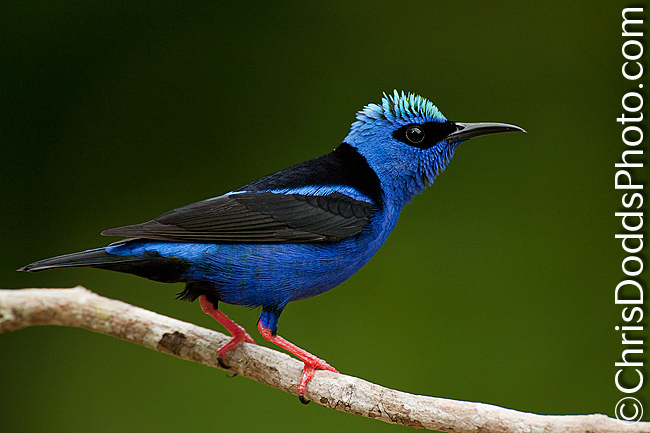
Male Red-legged Honeycreeper   (Cyanerpes cyaneus) Gamboa Reserve, Panama. Image Copyright ©Christopher Dodds  www.chrisdoddsphoto.com All Rights Reserved. Canon EOS 1Ds Mark III, 500mm F4 IS, 2X II Tele-converter, Canon 580 EXII Flash (manual mode) with Better Beamer, Gitzo tripod and Wimberley Head II  ISO 650, F9 1/160s Manual Mode. Full Frame. The Red-legged Honeycreepers were the star performers at the hummingbird feeders during a recent photography trip to Panama. Click HERE to buy a print or license image for publication.

Book Review: Nature Photography Learning from a Master

Published in 2003, before the advent of professional digital cameras, this is still among my favorite go-to books for inspiration and creative techniques. Using this exceptional book as a guide, would-be nature photographers embark on a journey of learning and discovery as they master, step by step, the technical know-how they will need to achieve excellent results when venturing into the wild with camera in hand. Beginning with the basics of selecting equipment and moving on to the essential photographic techniques of exposure, focus, and lighting, the book then offers tips on how to compose a shot, how to get close-ups, and how to explore the possibilities of medium-format, large-format, and panoramic cameras.
The striking color photographs-of seals in Antarctica, zebras on the savanna, rhinoceroses in the tropical forest, and much more-are of a quality seldom found in how-to manuals. Fascinating and beautiful in their own right, they illustrate the challenges and joys that are the rewards of nature photography, and will inspire many to take to the sea, to the air, and to an array of different environments to capture their photographic prey. The book concludes with useful strategies for making the leap from talented amateur to professional photographer.
Gilles Martin has been a photographer for more than 30 years, capturing nature in all of its variety and richness. His subjects have ranged from the 12-foot baleen whale to minuscule insects. His work has appeared internationally in such publications as GEO, Paris Match, Life, and National Geographic. Denis Boyard, a journalist and photographer, is the chief technical editor of the magazine Chasseur d'Images.


Canon 1D Mark IV

Canon's latest professional digital SLR (Single Lens Reflex) camera has now shipped. If you've been holding off to see how it's autofocus system works, then here's some reviews:

An analysis of EOS-1D Mark IV autofocus performance by Rob Galbraith

Canon EOS-1D Mark IV Review by Richard Butler on dpreview.com

Canon EOS 1D Mark IV White Paper from Canon


Let's not forget Haiti!

Thick-billed Euphonia

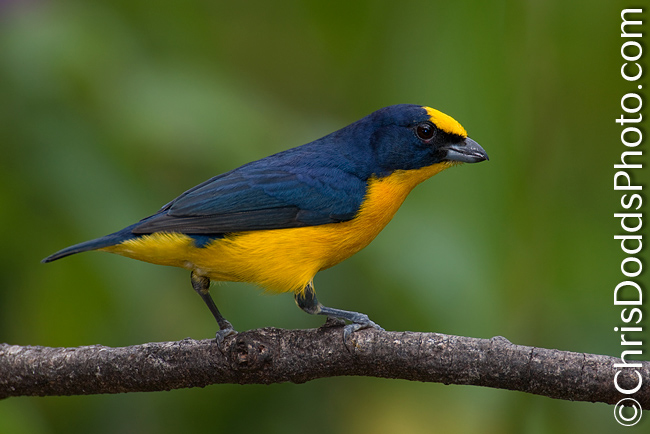
Male Thick-billed Euphonia   (Euphonia Laniirostris) Canopy Lodge, El Valle de Antón, Panama. Image Copyright ©Christopher Dodds  www.chrisdoddsphoto.com All Rights Reserved. Canon EOS 1Ds Mark III, 500mm F4 IS, 2X II Tele-converter, Canon 580 EXII Flash (manual mode) with Better Beamer, Gitzo tripod and Wimberley Head II  ISO 250, F8 1/160s Manual Mode. Full Frame. Click HERE to order a print or license image for publication.

Christopher Dodds Photo Safaris

Why a Christopher Dodds Nature Photography Workshop? I'll let my clients (many repeats) tell you HERE.

Basic Exposure Theory: The Sunny F/16 Rule Explained

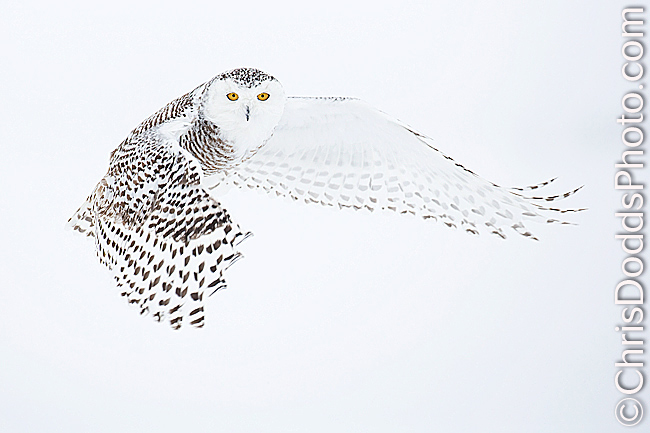
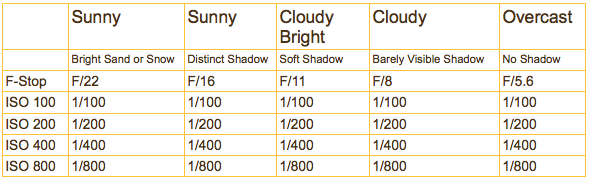
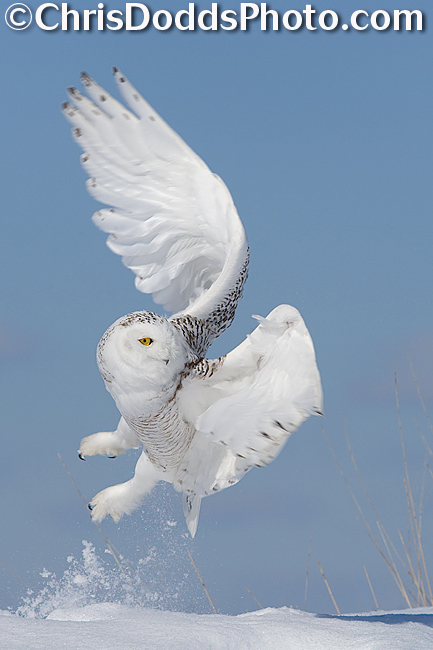
Snowy Owl Bubo scandiacus (Harfang des neiges) Casselman, Ontario. Image Copyright ©Christopher Dodds  www.chrisdoddsphoto.com All Rights Reserved. Canon EOS 1DsMKII, 500mm F4 IS ISO 400, F5.6 1/1600s Manual mode. Full Frame. The chart below (in the cloudy bright column) shows the correct exposure to be ISO 400 F/11 @ 1/400s. I chose to stop the action by using a higher shutter speed, so I used the equivalent exposure of ISO 400 F/5.6 @ 1/1600 second. I also knew to expect less detail in the snow and white feathers, because there are no shadows to help define them.

What you shooting at there, Dodds?” echoed across the landscape as I set-up to photograph Snow Geese and Sandhill Cranes in New Mexico about a year ago. “What exposure you at Dodds?” was the question asked by the same gifted photographer just recently. I don’t want to embarrass anyone, so I won’t mention any names here. I truly do think that he is a gifted and talented photographer. He’s widely published and is also the first person to admit that he doesn't really know all the “techie” stuff.....and he was much closer to my exposure this year, than last. 

The single most important skill a photographer should have is a basic understanding of the fundamentals of photography. The most important tool, and the least understood aspect of photography is exposure theory. I learned photography with a totally manual camera and used slide film (seems like so long ago), so a basic understanding was necessary to make successful images.

 Q: Why bother when I can just keep things simple and take a picture, check the histogram and make any adjustments necessary? 

 A: Because having an intimate knowledge of exposure theory and your cameras functions and controls helps you grow and improve as a photographer, make better decisions and better images as a result.

In it’s simplest form, the Sunny 16 rule (or Sunny F/16 rule) states: On a bright, sunny day, the correct exposure for any middle tone subject is F/16 at the shutter speed nearest to the reciprocal of the film speed. For example:

ISO 100 = 1/100 second @ F/16

ISO 200 = 1/200 second @ F/16

ISO 400 = 1/400 second @ F/16

ISO 800 = 1/800 second @ F/16

Now we have established the correct exposure, it’s time to decide if we need more depth of field or shutter speed. Each step up, or down, of one variable represents a doubling, or halving, of any other variable. If you need more shutter speed than 1/100 second @ F/16 (ISO 100), then an equivalent exposure would be ISO 100 1/1600 second @ F/4.


This chart illustrates the equivalent exposures for ISO 100 and 200. Each setting above will allow the same amount of light to fall on your digital cameras sensor, or film cameras film. The exposure is the same, with the only difference being either your shutter speed (to freeze or blur action) or the depth of field (very narrow to blur the background, or very large to capture an entire grand landscape sharp).

But wait! It got cloudy. Now what? The Sunny F/16 rule is actually the correct ambient exposure for an average subject under bright sunny conditions. If the sun goes behind a cloud, then the light falling onto your subject is decreased and you must make an adjustment to your basic exposure settings. Here are some aperture settings for some different daylight situations:


This is intended as a starting point, so there are exceptions. Backlight or sidelight both require adjustments to reach the correct exposure. It’s a good idea to expose to the right with your digital camera; 50% of the recorded data is recorded on the right fifth (or 20%) of your digital cameras histogram. With very light subjects in very bright conditions, I routinely subtract light so as not to clip the highlights. With very dark or black subjects, I tend to add light to maximize the recorded detail. Notice the technicals for the Snowy Owl in my previous post; ISO 200 F9 1/1600 second = ISO 200 F22 1/1250 second (or Sunny F/16 rule for light sand or snow) minus 1/3 stop to preserve all of the details in the whites without clipping (or loosing) any data.

Sounds complicated, but if you spend some time digesting and thinking about everything here; you'll be able to get that once in a lifetime shot accurately and consistently with confidence. Not to mention how much you will impress the boys (or girls) when you are all standing around waiting for the shot or talking shop.

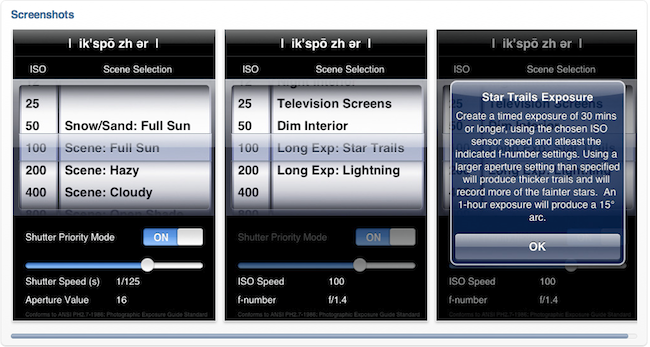
If you own an iPhone or iPod touch, there's a great application available for $1.99 called Exposure Calc. I just found it while writing this blog entry and think it is a great learning aid and pocket reference.

If you don't get it, and need to take a test shot, check the histogram, make adjustments, take another test shot; that's okay too, as long as you're having fun and making the odd good image to keep you interested.

Comments welcome & appreciated.

The Business of Photography: Negotiation


Snowy Owl Blast-off Bubo scandiacus (Harfang des neiges) Quebec. Image Copyright ©Christopher Dodds www.chrisdoddsphoto.com All Rights Reserved. Canon EOS 1DsMKII, 300mm F2.8 ISO 200, F9 1/1600s Manual mode. Full Frame. CLICK HERE TO PURCHASE A PRINT or LICENSE AN IMAGE FOR PUBLICATION.

Top 10 Negotiation Tips:

To succeed in any business, particularly as a photographer, we have to compromise from time to time. The trick is to compromise without loosing what you really need to accomplish your goals.
  1. Learn to ask for what you want: We often fail to ask for a better price or better terms because we are afraid of failure. A good negotiator starts with a clear understanding of what they want, and what they don’t want. People new to negotiation feel it’s awkward to ask for a lower price or better terms. Anyone trying to buy or sell anything will be happy to consider any reasonable offer to help close the deal.
  2. Eliminate disadvantages by acting quickly and decisively. Having a plan and knowing what your goals are is the best way to react quickly to offers or counteroffers. In todays connected world, waiting to reply during negotiations allows the other party time to seek other options.
  3. Deal with the decision maker, but don’t be afraid to have someone who isn’t the decision maker negotiate for you. Use the power of your friendships with other people in the organization you are dealing with to help move the negotiations along in your favour.
  4. Learn to listen. If you are talking; then you are not listening. Good negotiators are good listeners and good communicators. Those that do all of the talking during the negotiation process are usually the ones who loose; they don’t take the time to hear the other sides needs and concerns. By learning to listen, the other side will quite often tell you everything you need to know to win.
  5. Leave your emotions out of the negotiation process and keep your cool. The moment you get angry is the moment you loose. You should not avoid discussing important issues, just avoid discussing them in a heated argument. Negotiations should not be arguments, but avoiding tough issues is not productive.
  6. Don’t make a threat unless you are ready to follow through. 
  7. Remember the power of conversation. It’s easy to misinterpret the tone of an email. Don’t be shy to pick-up the phone and make a phone call. Embrace the spoken word.
  8. Don’t negotiate away from what’s important to you. Remember rule number one.
  9. Don’t be afraid to walk away from a bad deal. Better to have no deal than one you will regret with time.
  10. Get it in writing. I find the best usage licenses are the ones I’ve written myself. Using a standard form contract is a good indication that no negotiations took place.


                         Learn it all. Learn it fast. Learn it now.


Happy New Year

Bald Eagle Sun-riser (Haliaeetus leucocephalus Pygarge à tête blanche) Homer Alaska, USA. ©Christopher Dodds http://www.chrisdoddsphoto.com All Rights Reserved. Canon EOS 1Ds Mark III, 500mm F4 IS, 2X II Tele-converter,1.4X II Tele-converter, Gitzo tripod and Wimberley Head II. ISO 400, F11 1/60s Manual Exposure and Manual Focus. Full Frame. CLICK HERE TO PURCHASE A PRINT or LICENSE AN IMAGE FOR PUBLICATION.

Welcome to tomorrow. It's 2010; a New Year and a New Decade. It's a good time to look back over the last year; the trips, the images and the people. What a year I had! Thank you to all of my loyal followers (and there are many of you).   My new year's resolution? to get out and shoot more, learn more and share more with you here at Nature Photography Blog .com.

I'm renewing my annual subscription to lynda.com software tutorials; probably a workshop leaders best kept secret! Ever wonder where we learn all about Adobe Photoshop, Lightroom, Aperture and just about any other software out there?; lynda.com software tutorials is probably the most valuable investment I make each year. Help support this site and subscribe by clicking on the banner below.

                         Learn it all. Learn it fast. Learn it now.

Free Site Guide: Photographing the Snow Geese of Victoriaville, Quebec

Snow Goose (Chen caerulescens, Oie des neiges) Réservoir Beaudet, Victoriaville, Quebec, Canada. Image Copyright ©Christopher Dodds http://www.chrisdoddsphoto.com All Rights Reserved. Canon EOS 1D Mark III, 500mm F4 IS, 2X II Tele-converter, Gitzo tripod and Wimberley Head II. ISO 320, 1/1250s F8 Manual Exposure. Full Frame. CLICK HERE TO BUY A PRINT or LICENSE AN IMAGE FOR PUBLICATION.

Réservoir Beaudet is immediately adjacent to the city of Victoriaville, in the Eastern Townships of southern Québec. During migration, this site harbours significant numbers of gulls and geese. Since 1996, high numbers of Greater Snow Geese have been recorded here. So far, 224 species of birds have been recorded at this site. The high concentration of waterbirds using the reservoir is probably linked to the absence of hunters. At peak times in October, ducks, geese, and gulls numbers exceed 1000,000 individuals. Several species of land birds also use the reservoir in high numbers for roosting in the fall. The following are some of the peak counts for certain species: 4,000 American Crows (1989), 17,251 European Starlings (1989), 2,500 Red-winged Blackbirds (1988), 1,000 Common Grackles (1988) and 700 Brown-headed Cowbirds (1988).
Photography is relatively easy here; only a short walk from the parking lot is a boat ramp (GPS co-ordinates: 46° 4'6.37"N , 71°58'35.94"W) that is about the best place to be when the wind is from the west in the afternoon. April-May and October-November are the best times of year for photography.


View Larger Map The green arrow indicates the exact location that I like to be in the afternoon when the wind is from the west. GPS co-ordinates are: 46° 4'6.37"N , 71°58'35.94"W

Vested Interest Photo Vests

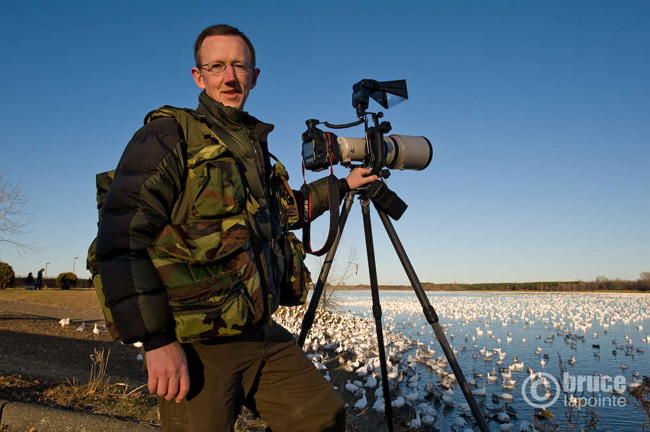
John Storrie of The Vested Interest (a division of Storrie Parachute Works Inc.) sent me a Khumbu Photography vest and I am thrilled. True to his solid background in building safe, strong and rugged parachutes, John's The Vested Interest produces top quality photo vests. I wanted a vest, but had very specific needs that only John could address. I wanted a way to transport my camera equipment like a backpack, but allow access to camera bodies and lenses while I hiked without removing a backpack, having to lay it down and unzip it, etc.. I chose the Kumbu model because of the large padded pocket on the back that holds either my 500mm F4 IS or my 300 F2.8 IS Canon lenses. I spend a lot of time photographing from a Zodiac, and that large rear "drop-in" lens pouch on the back is perfect even if I were to take the whole kit off; I simply wrap the whole vest around the mast of the flying bridge and secure with the zipper. Unlike a photo-backpack, where the whole contents are at risk of a spill when open, this vest protects all of my gear and still allows access to each component while protecting the rest. I recently took the vest to photograph Snow Geese in Quebec where there are simply too many people to lay equipment down and not worry about it. The vest held everything I needed and still had plenty of room to spare. It's simply a study in astounding build quality, and design genius; there are even brilliantly designed padded shoulders which not only cushion the weight of your shouldered camera, lens and tripod, but they also disperse it. Built of military grade (just about bomb-proof) parachute nylon, this vest will easily outlast me; it's easy to see why the military buy these for their photographers. Be sure to visit The Vested Interest and check out the various vest designs - most of which can be customized to your specific needs.

That's me, Christopher Dodds, with my Vested Interest Khumbu Photo Vest. Notice just how many pockets there are and that it fits over my down winter jacket. Image copyright & courtesy of Bruce Lapointe.
Pro Tip: GET A GRIP!

I often have many thousands of dollars of equipment set-up on my tripod and carry it around on my shoulder while following my subjects around the wilds. From the moment I leave my car, I risk slipping on packed snow or ice. I keep a pair of MICROspikes with me at all times in the winter. It's like having the very best winter tires with studs and chains and is a relatively small investment to protect both myself and my gear. Wether I'm looking for owls in Owl Woods where it is often icy, or just walking my dog, T-Bone; MICROspikes is the product I use. A less expensive product is offered by Yak-Trax, which I used to use until I discovered MICROspikes - both are good, but MICROspikes are more aggressive, robust, long lasting and less likely to get stuck on something and lost.


Comments welcome & appreciated.


Emperor Goose

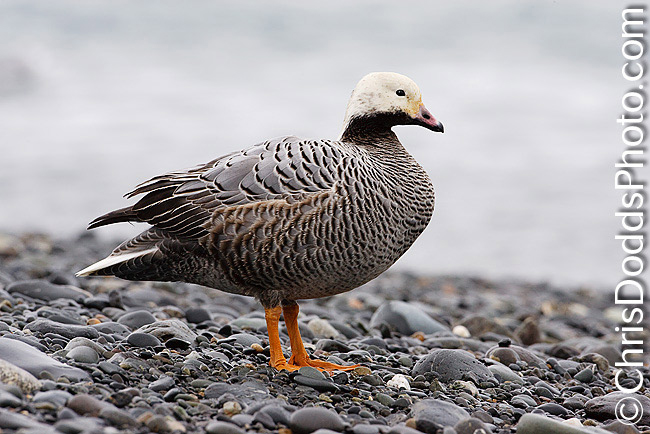
Emperor Goose (Chen canagica, Oie empereur) Homer Spit, Homer, Alaska, USA. Image Copyright ©Christopher Dodds http://www.chrisdoddsphoto.com All Rights Reserved. Canon EOS 1D Mark II, 500mm F4 IS, Gitzo tripod and Wimberley Head. ISO 400, 1/100s F11 Manual Exposure. Full Frame.
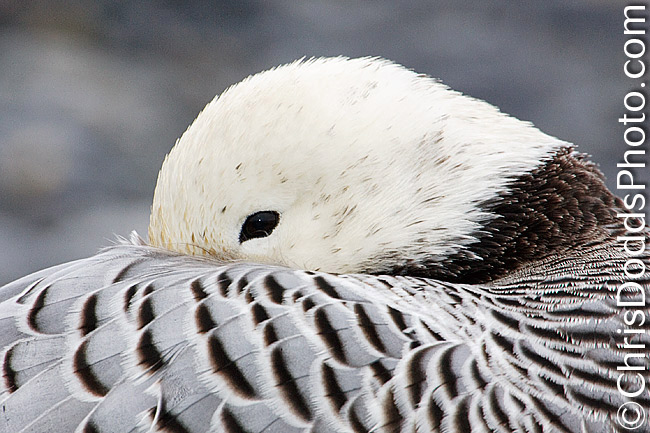
Emperor Goose Close-up detail (Chen canagica, Oie empereur) Homer Spit, Homer, Alaska, USA. Image Copyright ©Christopher Dodds http://www.chrisdoddsphoto.com All Rights Reserved. Canon EOS 1D Mark II, 500mm F4 IS, 2X II Tele-converter, Gitzo tripod and Wimberley Head. ISO 400, 1/30s F20 Manual Exposure. Canon 550EX II flash in manual mode. Full Frame.

Perhaps the most striking goose in North America, this small goose is seldom seen because of it's high-arctic haunts, where it is never far from coastal tundra. The Emperor Goose, Chen canagica, breeds on the coast of northwestern Siberia, St. Lawrence Island, and around the Bering sea, mostly in coastal northwestern Alaska. Winters mainly in the Aleutian Islands but wanders also down the North American western coast as far as California. Due to its low population size, and restricted range, the Emperor Goose is especially vulnerable to local catastrophic events, such as oil spills. In winter, the majority of the global population of this species can be found in the Aleutian Islands. Eskimos once rounded up thousands in "goose drives" during post-breeding, the flightless molt period, then drove them into traps to be killed for food. The Emperor Goose population is thought to be on the rise in Alaska after an unexplained decline from an estimated 139,000 in 1964 to only 42,000 in 1986.

Inner Game of Outdoor Photography

(Galen Rowell ISBN13: 978-0-691-14069-8) After posting the book reviews in my last entry, I received numerous requests for more; mostly from people looking for the perfect Holiday or Christmas present for photographers. If I could make a single suggestion for anyone interested in outdoor photography, It would be Galen Rowell's Inner Game of Outdoor Photography. Rowell, his wife Barbara Cushman Rowell, pilot Tom Reid, and Reid's friend Carol McAffee, were killed in a plane crash near the Inyo County Airport in Bishop, California on the 11th of August, 2002. They were returning from a photography workshop in Alaska.

“Galen Rowell was a man who went into the mountains, into the desert, to the edge of the sea, to the last great wild places in the world to be absorbed by their grace and grandeur. That is what he did for himself. For the rest of us, he shared his vision with—click—the release of a shutter, creating photographs as timeless, as stunning, and as powerful as nature itself.” –Tom Brokaw, from the foreword of Galen Rowell: A Retrospective

In sixty-six essays based on his popular Outdoor Photographer monthly column and with more than 160 color photographs, Galen illustrates how he transforms what he sees into vivid, memorable works of art. He clearly explains why “pre-visualizing” a photograph before exposing any film is one key to making an arresting image rather than a mere replica of what we see through the viewfinder. Includes advice on practical, technical matters, packing for travel, pushing film to extremes, and when to use fill flash and smart flash. Galen was instrumental in my early development as a nature photographer. I remember reading, and re-reading, every word he wrote for Outdoor Photographer; and that was long before I had access to the internet. This book should be a "must have" for any outdoor photographer.

Comments welcome & appreciated.